
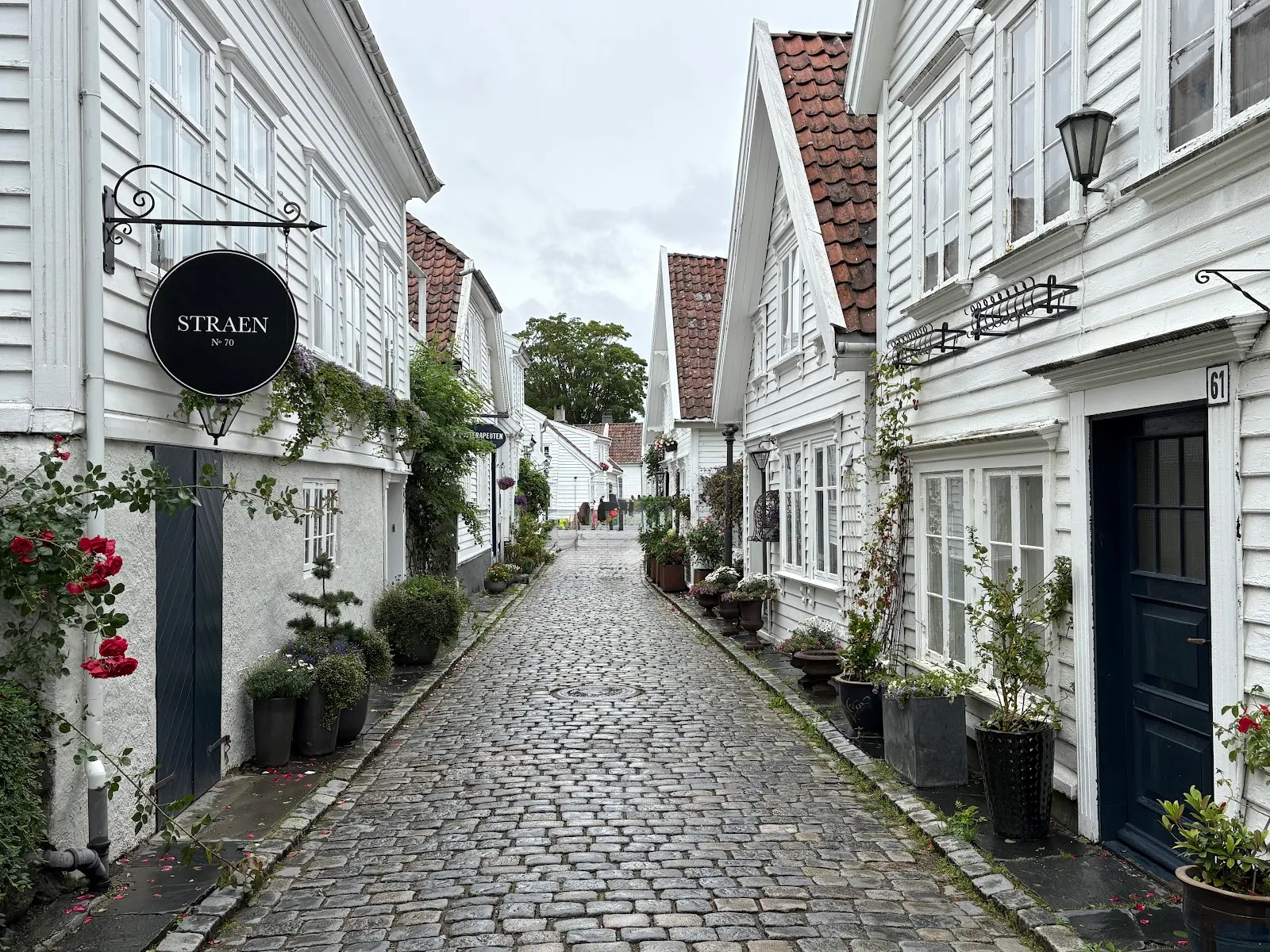
Gamle Stavanger, also called Old Stavanger, is the historic district on the west side of Vågen, the inner harbour, a short walk from the city centre. Its 173 white timber houses date mostly from the 18th and early 19th centuries, and most are still private homes. The pleasure is in the walking: cobbled lanes, flower boxes, small gardens and old-style lanterns. Some ground-floor rooms hold shops, galleries and cafes, so you can stop for a coffee. Allow time to wander slowly, take photos from the lanes and keep to the public paths.
From sardine canning town to protected district
The first houses went up in the 18th and 19th centuries for sailors, craftsmen and workers tied to the city's sea trade and its sardine canneries. The area on the western side of Vågen was a working neighbourhood of small, simple houses.
After the Second World War, many of the buildings were in poor condition, and the plan was to clear the district for modern concrete blocks. The city architect of the time saw the value in keeping the traditional structures. Conservation saved the area, and the run-down houses and businesses were restored. Today the old quarter is a sought-after place to own a home.
The houses, streets and colour
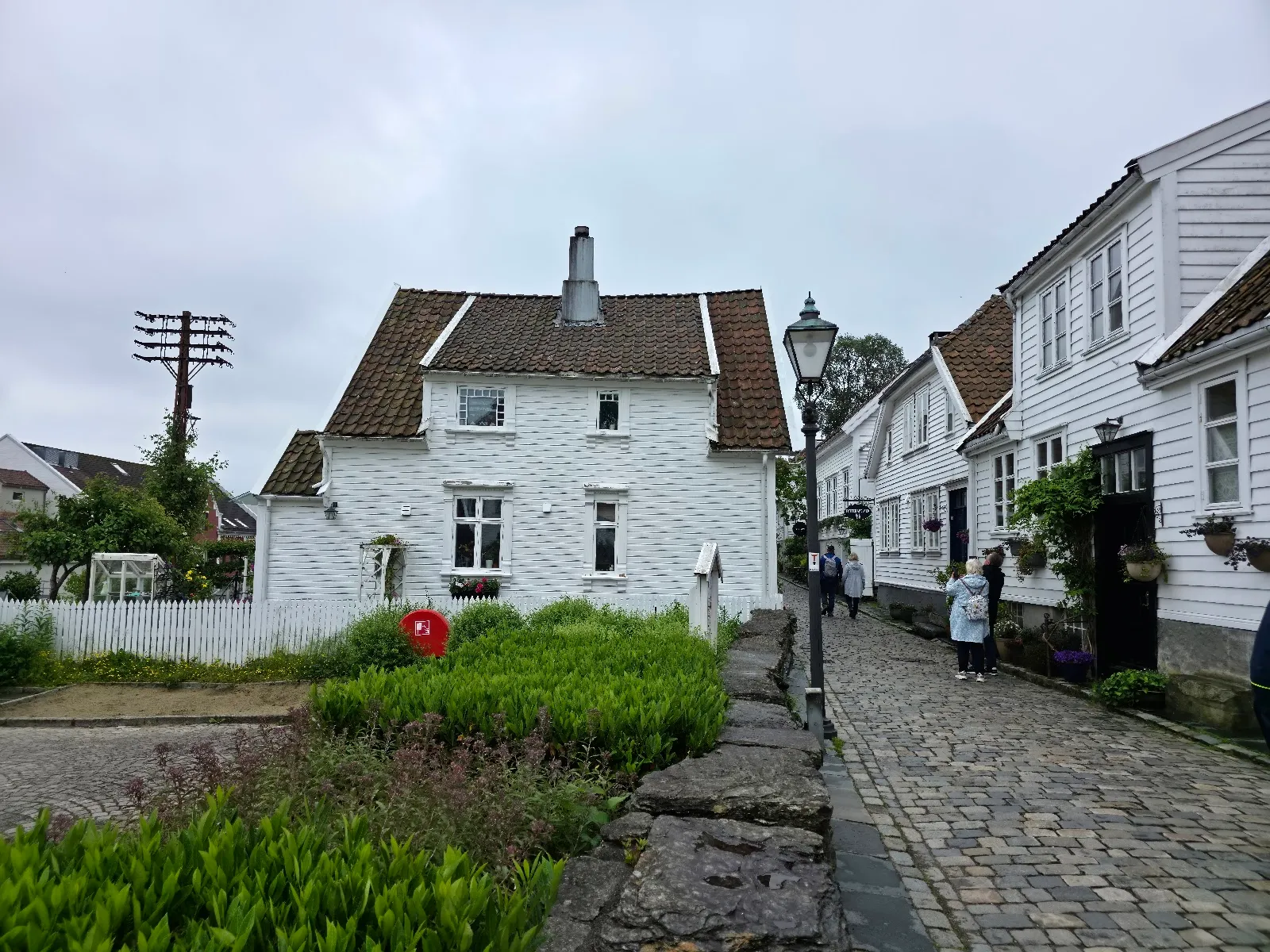
Most of the 173 houses are small, detached and painted white, with clapboard walls, many-paned windows and clay roof tiles. Each has its own character, and many have flower boxes, picket fences and small gardens. The lanes are cobbled, and old-style lanterns line them.
Colour comes more from doors and flowers than from the walls. A short walk away, Fargegata, which locals call colour street, is lined with brightly painted facades, so the two areas make a clear contrast.
Walking through as a visitor
Most houses are private homes, so stay on the public lanes. Looking into windows or walking into gardens is not welcome. Some ground-floor rooms hold shops, galleries and cafes, and those are the places to step inside.
The lanes are narrow, so stand aside for residents and anyone passing through.
Other sights to pair with the walk
Stavanger Cathedral is in the city. Its building began in the early 12th century under English craftsmen and is dedicated to St Swithun. Later rebuilding added elements from Romanesque to Baroque.
The Norwegian Petroleum Museum covers how oil and gas are found and produced in the North Sea. The Norwegian Canning Museum is housed in an old cannery and tells the story of the sardine trade that shaped the district.
For a longer trip, Preikestolen, the Pulpit Rock, is a demanding hike with views over the fjord below.
FAQ
Where is Gamle Stavanger?
It is on the west side of Vågen, the inner harbour, a short walk from the city centre. The listed address is Øvre Strandgate, 4005 Stavanger.
How long do you need in Gamle Stavanger?
A walk through the lanes typically takes 30 to 60 minutes. Add time if you plan to stop for a coffee or visit one of the museums nearby.
Is Gamle Stavanger wheelchair accessible?
The entrance and parking are listed as wheelchair accessible. The cobbled lanes and uphill sections make the walk harder going.
Can you go inside the wooden houses?
Most houses are private homes, so keep to the public lanes. Some ground-floor rooms hold shops, galleries and cafes that you can enter.


