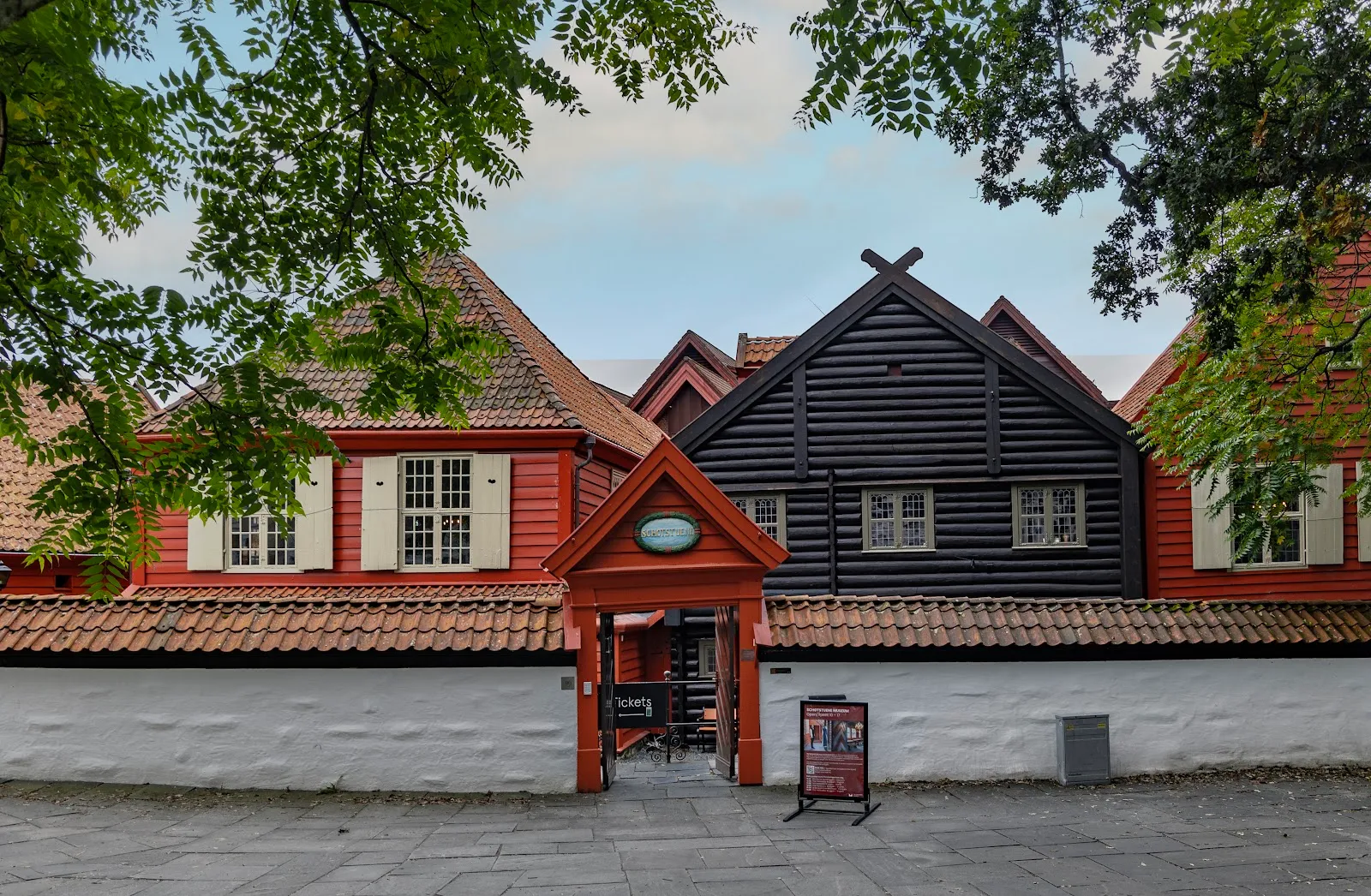
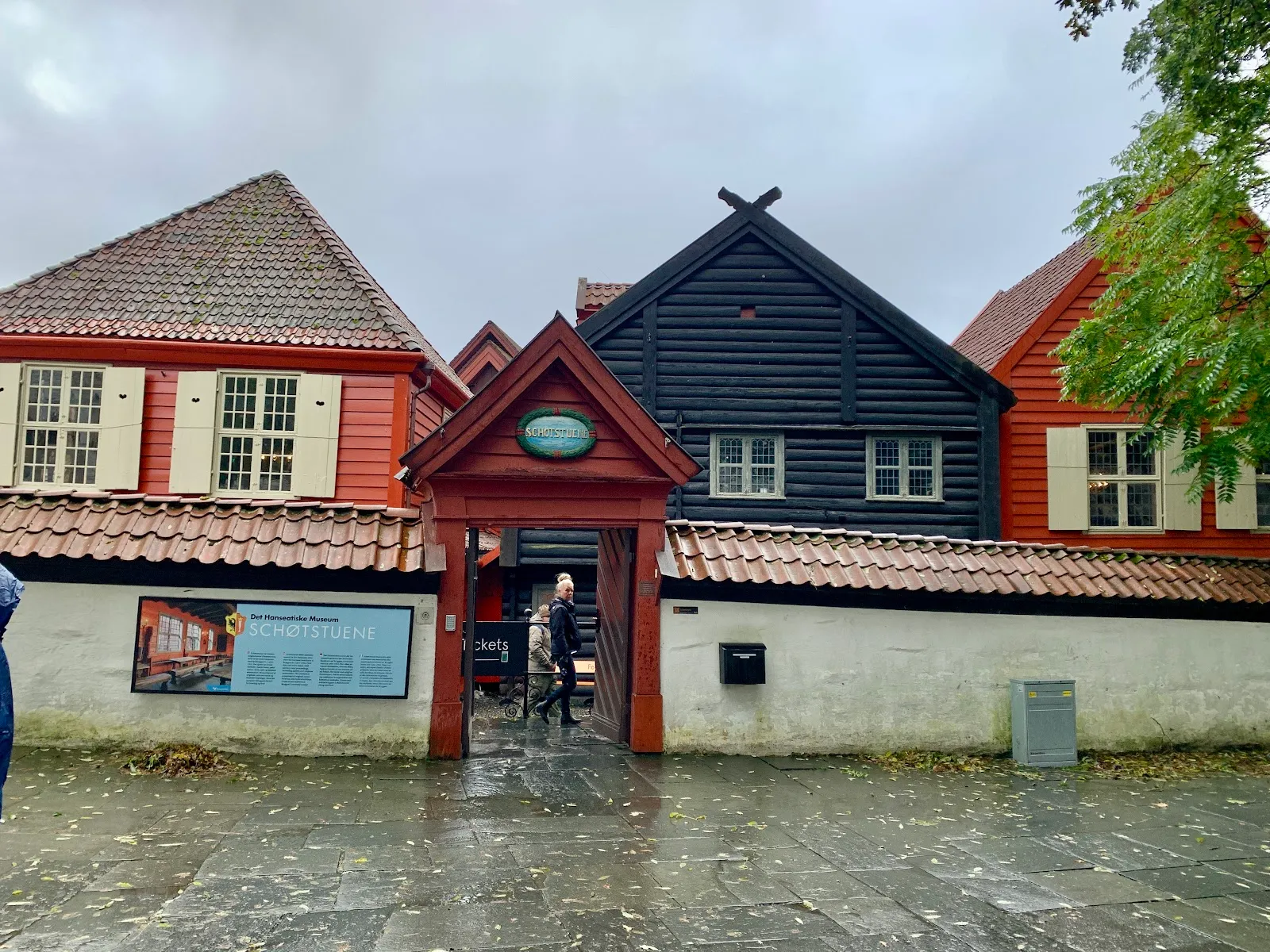
On Bryggen in Bergen, the Hanseatic Museum and Schøtstuene explain how German merchants lived and worked in the city’s trading district. Finnegården, a wooden merchant’s house dating to 1704, preserves rooms and interiors that show the plain, tightly regulated conditions of daily life. At Schøtstuene, the communal halls, you can see where merchants met, ate and held gatherings. A guided tour adds context to the buildings and Bergen’s place in Hanseatic trade. Check which parts are open during restoration before you plan your visit.
Bergen’s Hanseatic trading community
The museum traces the German merchants who lived and worked in Bergen as part of the Hanseatic League, a trading network that linked northern European ports. Their presence in Bergen lasted for centuries, from around the 14th century to the mid-18th century. Trade in dried fish was central to the city’s role in that network: merchants exchanged grain for stockfish brought from northern Norway.
The Hanseatic community shaped life around Bryggen. Its buildings were arranged for work, storage and communal living, under rules that governed daily conduct. The museum’s account connects this local story to Bergen’s development as a major trading centre.
Inside Finnegården
The Hanseatic Museum is housed in Finnegården, a wooden merchant’s building dating to 1704. Its surviving interior helps explain how trade and domestic life occupied the same premises. Rooms include a merchant’s office, compact sleeping quarters for apprentices and storage areas associated with stockfish and other goods.
The furnishings and objects give a sense of the practical routines of the merchant household. The rooms were designed for work and basic living, not comfort or display. Strict rules limited luxury and contact with Bergen residents, shaping the community’s daily life. The building itself is part of the visit: its timber structure and preserved interior place the exhibits within the setting where this work took place.
The communal rooms at Schøtstuene
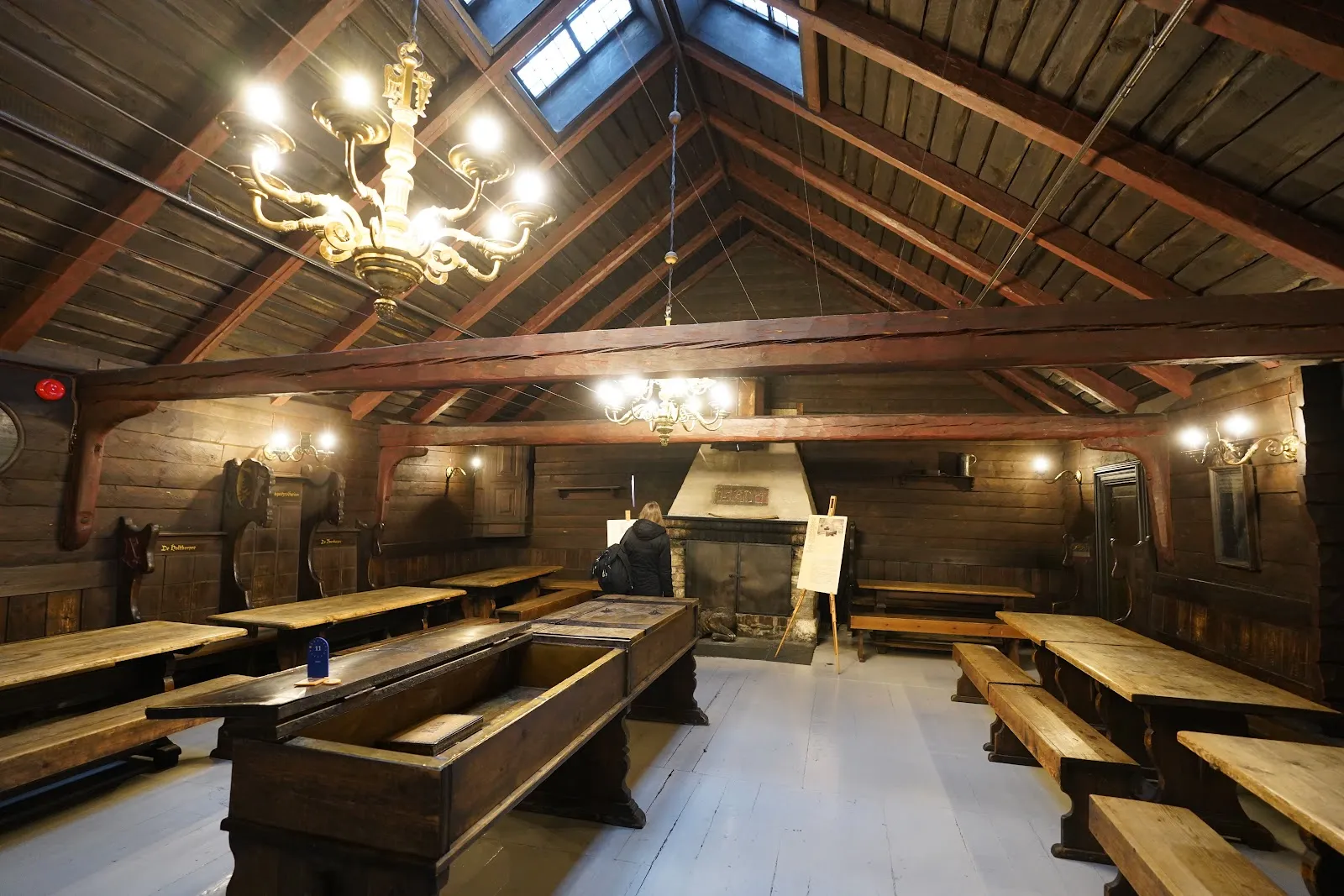
Schøtstuene, set behind Bryggen, were shared halls used by the Hanseatic community. Merchants gathered there for meals, meetings and seasonal social occasions. The halls were also among the few heated spaces in the district, giving them a practical role during Bergen’s cold winters.
The assembly rooms complement the merchant’s house by showing how the community came together beyond its individual trading premises. Their rooms have been associated with meetings, banquets and court proceedings. Visiting both sites helps connect private living and commercial work with the shared life of the Hanseatic district.
Restoration has affected the museum buildings and exhibitions, so access arrangements can change. Check the museum’s current information before visiting to confirm which parts are open and how the guided tour works.
FAQ
Where are the Hanseatic Museum and Schøtstuene?
They are in Bergen’s Bryggen district. The museum address is Øvregaten 50.
What can you see at the Hanseatic Museum?
Finnegården contains preserved merchant rooms, including an office, apprentice sleeping quarters and storage areas. Schøtstuene has the communal halls used by Hanseatic merchants.
Are guided tours available?
Guided tours are available and included with the ticket. Check current arrangements before your visit, as restoration work may affect access.
How long does a visit take?
Allow about 30 to 45 minutes to explore the museum.