Titanic Belfast is an interactive museum in the Titanic Quarter, built on the former Harland and Wolff shipyard site where the liner was constructed. Its galleries trace Belfast’s industrial past alongside the Titanic’s design, construction, voyage and legacy, with personal stories and a ride through a shipyard recreation. Allow at least three hours to explore at a steady pace. Outside, the slipways and markings help show the scale of the place where the ship was built; some ticket options also include the SS Nomadic.
On the Harland and Wolff shipyard site
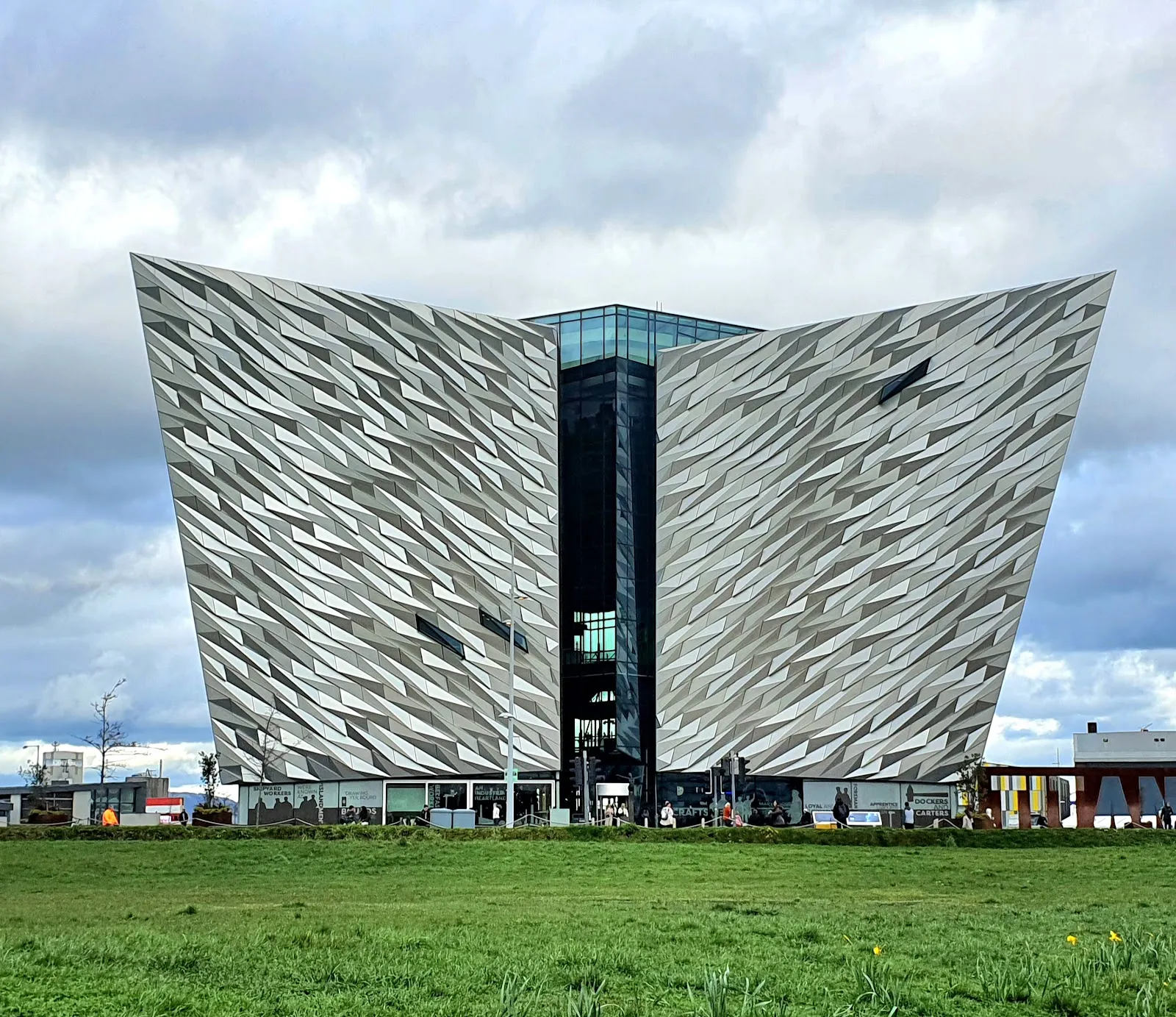
Titanic Belfast stands on the site where the RMS Titanic was built and launched. The museum opened in 2012, a century after the sinking. Its angular exterior recalls the lines of a ship’s bow, while its location puts the story beside the slipways and dock where the work took place.
The visit looks beyond the liner itself. Belfast’s growth as an industrial centre and the people behind the shipbuilding are part of the story, giving the Titanic’s construction a local setting. The galleries follow the ship from its conception and design through construction and launch, then turn to its maiden voyage, sinking and legacy.
From Belfast’s industry to the shipyard ride
The galleries begin with Belfast and its industrial history before moving into the shipbuilding story. Interactive displays, historic images, projections and sound bring different parts of that history into view. Personal accounts help connect the engineering and the ship’s construction with the people who built it and those who sailed aboard.
A ride through a recreation of the shipyard gives a closer sense of the work involved. It depicts the conditions and activity of the yards, rather than simply presenting their history on panels. The ride can develop a queue during busy periods, so factor that into your route if you want to include it.
The Titanic’s voyage and legacy
As the story moves from construction to the voyage, the exhibits address the disaster and its consequences with care. Displays cover what went wrong, the people aboard and the ship’s place in history. Reconstructions and interactive elements add detail to the account; the museum’s focus is on more than the sinking, following the liner’s story from its beginnings in Belfast through to its legacy.
The later galleries reward time. Leave room to read and take in the material rather than treating the museum as a quick walk-through. An audio guide is available for visitors who would rather listen, while the exhibit text provides information for those who prefer to explore at their own pace.
The slipways and SS Nomadic
After the galleries, step outside to the slipways and look for the markings that show where the Titanic was laid. The open ground gives a sense of the ship’s scale and the shipyard setting that is harder to grasp indoors.
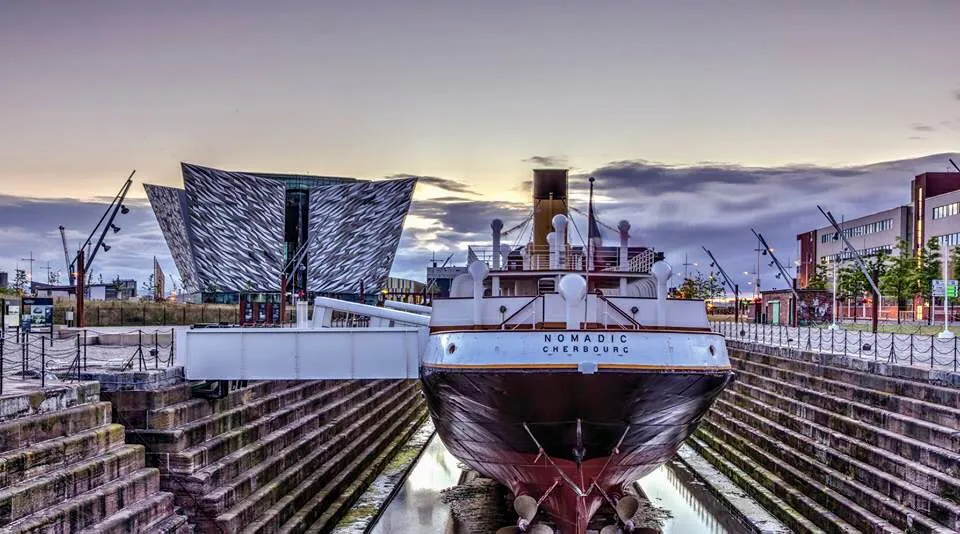
The SS Nomadic is another part of the Titanic story. Some ticket options include a visit to the ship, so check what is covered when choosing your ticket. Together, the museum and the outdoor site connect the exhibits to the place where the liner was made.
FAQ
How long do you need at Titanic Belfast?
Allow at least three hours for a thorough visit. You may want longer if you plan to read the exhibits in detail and include time outside.
Is the shipyard ride included in the visit?
The ride is part of the museum experience and takes visitors through a recreation of the shipyard. It is optional, and queues can form at busy times.
Can you visit the SS Nomadic with a Titanic Belfast ticket?
Some ticket options include the SS Nomadic. Check the details of your chosen ticket to see whether entry is covered.
What is there to see outside Titanic Belfast?
Walk the historic slipways and look for the markings where the Titanic was laid. The outdoor site helps show the scale of the shipyard.