Inside Melaka’s Stadthuys on Jln Kota, this museum follows the city’s story from its sultanate beginnings through Portuguese, Dutch, British and Japanese rule to independence. Its displays pair maps, porcelain, weapons and ceremonial objects with traditional clothing and life-sized scenes of community customs. The building’s Dutch-era rooms and view over Red Square add to the visit. Allow around 1.5 to 2 hours, and take time with the exhibit labels: there is a lot to take in.
The Stadthuys and its former role
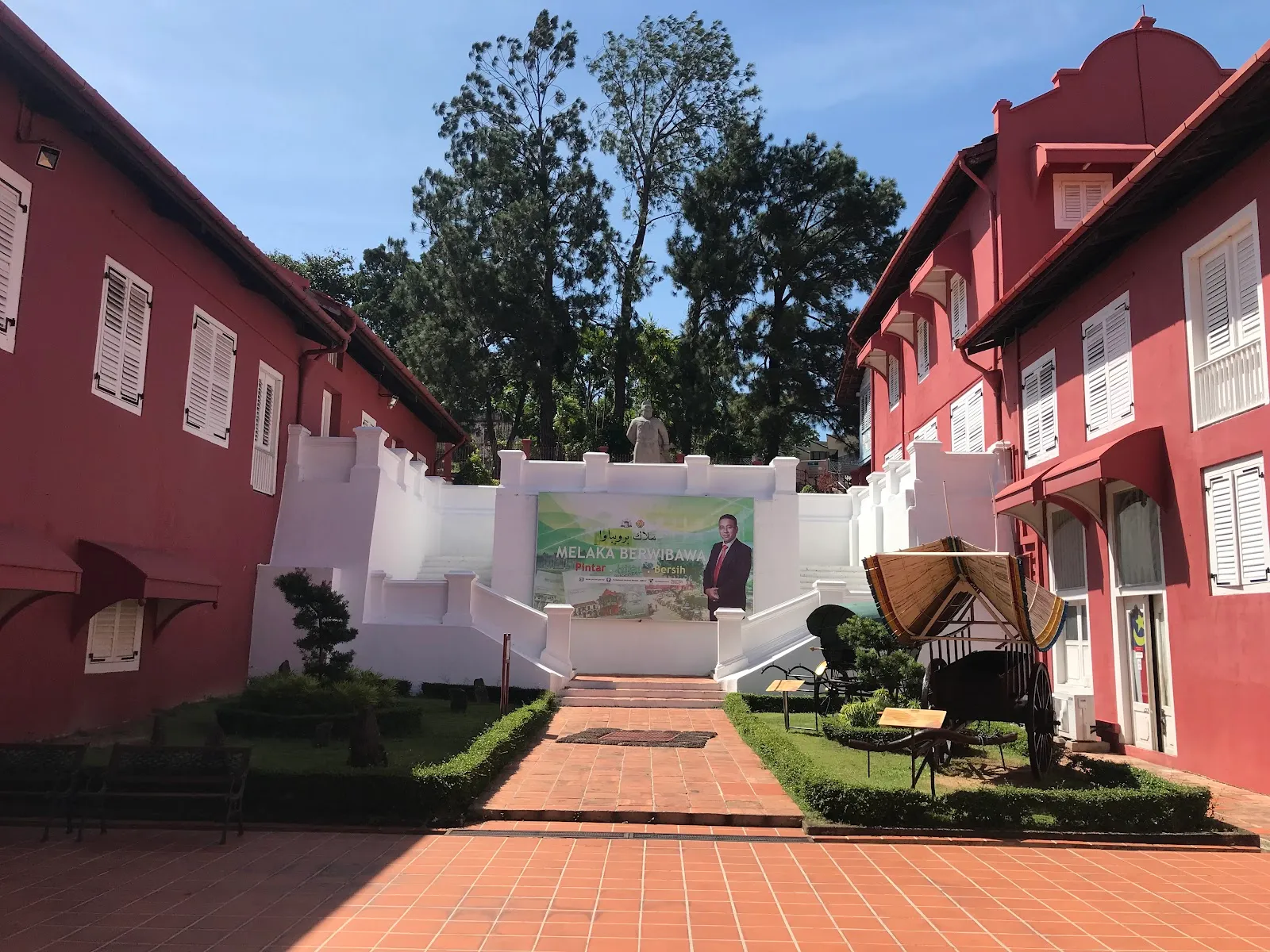
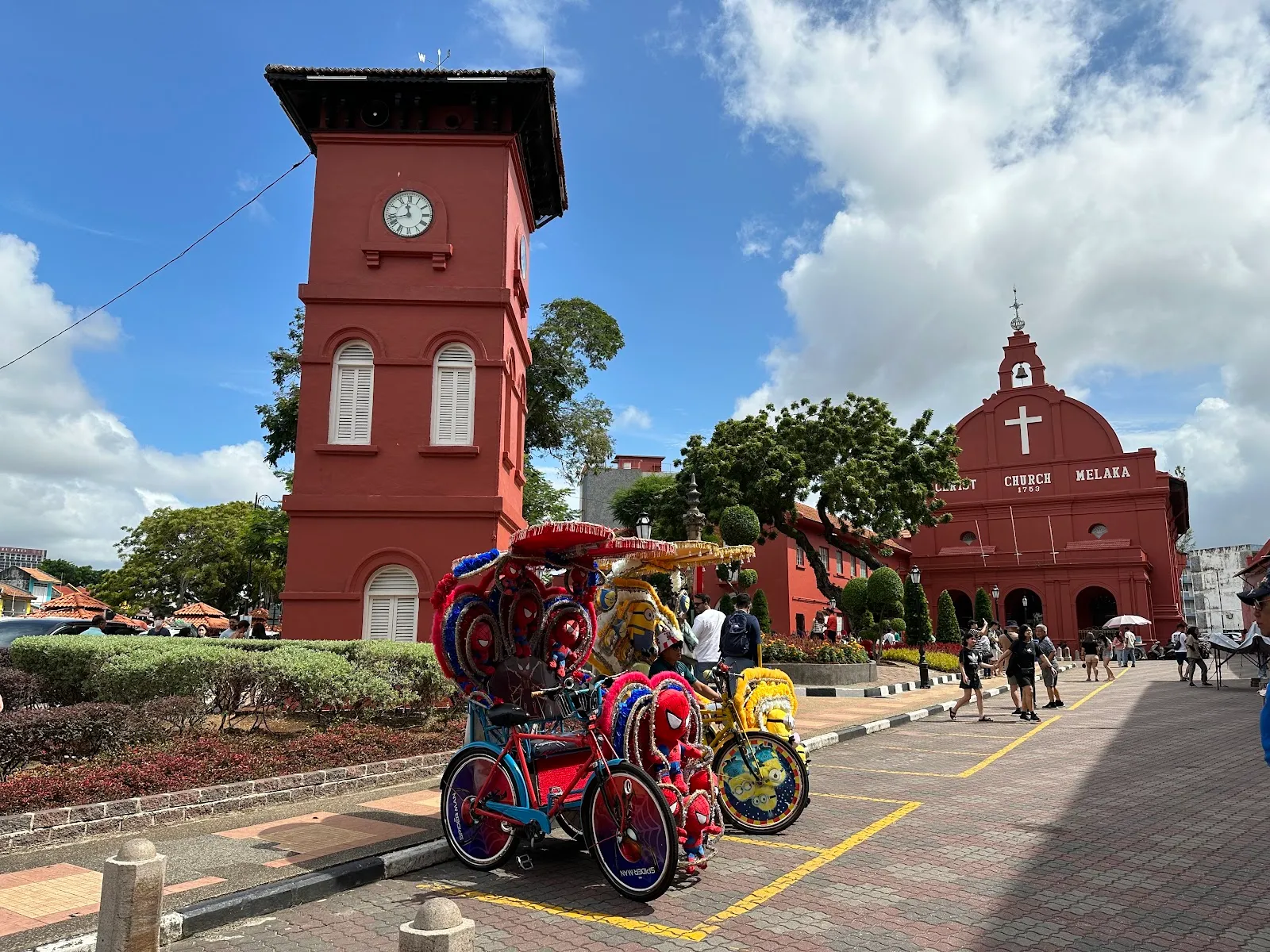
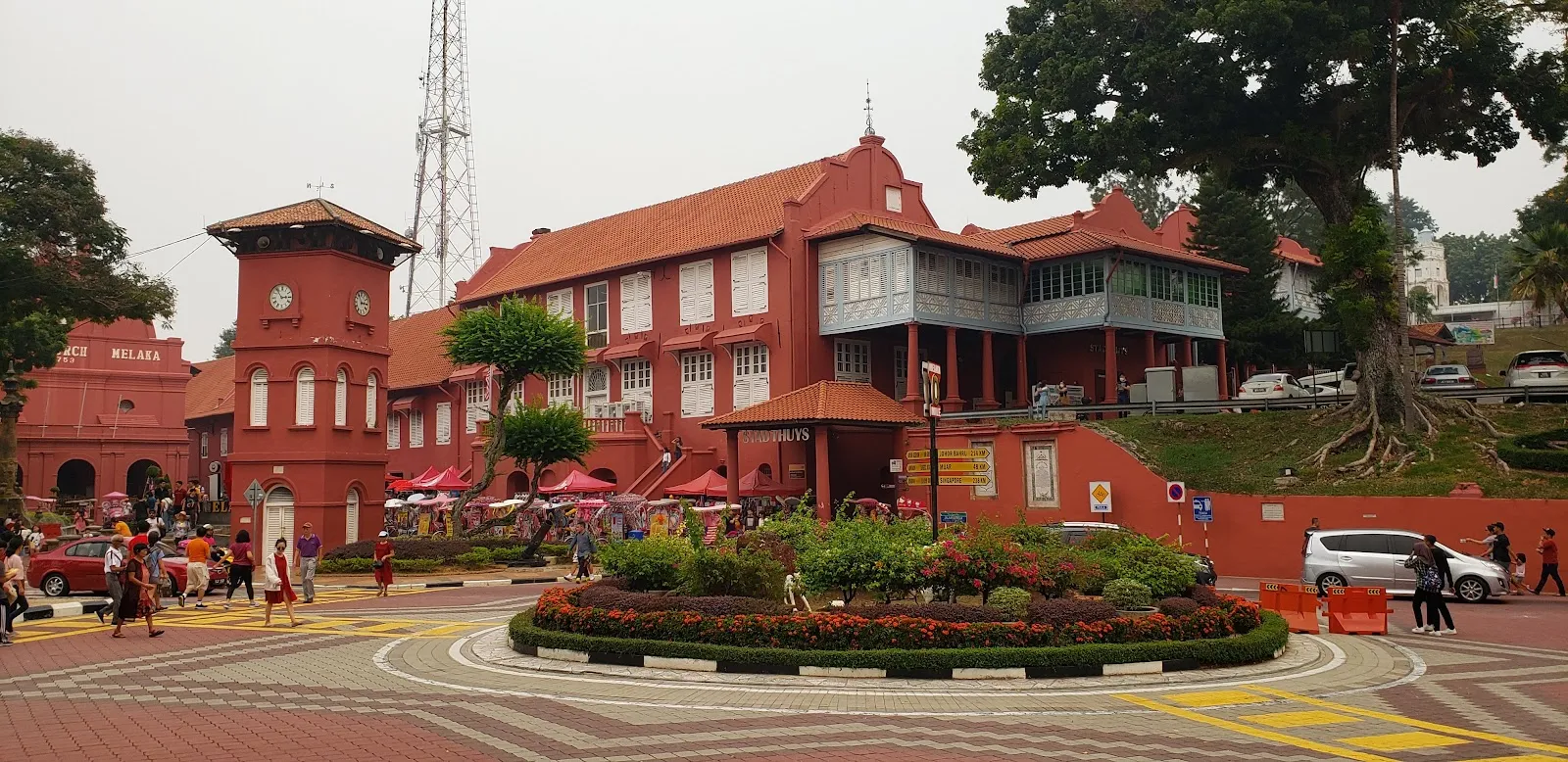
The museum occupies the Stadthuys, the red Dutch-era building at the centre of Dutch Square. Built in 1650, it was used as the residence of Dutch governors and as an administrative centre. Its heavy wooden doors, thick walls and inner courtyards give the building a sense of its earlier purpose before you reach the displays.
The Stadthuys is part of the experience, not just a setting for the collections. Look at the building’s interior as you move between rooms, and take in the view down towards Red Square. The museum occupies a three-storey building within the Stadthuys complex.
Following Melaka’s changing rulers
The exhibits trace the city’s history in chronological order. They begin with Melaka’s origins and the Malay Sultanate, then turn to Portuguese rule, the Dutch period, British influence and Japanese occupation before independence. Maps help show how the city changed over time, while artifacts and illustrated displays provide material detail alongside the historical timeline.
Look for objects connected with ceremony and trade, including porcelain, traditional weapons and ceremonial gifts. The collection also includes replicas of the keris associated with Hang Tuah and Hang Jebat. A section on the Chinese explorer Cheng Ho adds another thread to the city’s history.
Communities and everyday life
The ethnography displays focus on the customs and daily life of communities in the region, including Malay, Chinese, Baba-Nyonya, Indian and Indigenous groups. Traditional costumes and life-sized scenes depict cultural practices, with wedding chambers among the exhibits. These rooms shift the focus from political chronology to the people and traditions that shaped life in Melaka.
The displays are presented in a traditional museum style, with artifacts in cases and information on plaques. The layout can be difficult to follow, so use the labels to connect objects with the period or community they relate to. A careful visit gives you more context than a quick walk through the rooms.
Planning your visit
Set aside at least an hour and a half if you want to explore both the historical and ethnographic sections. The volume of material is substantial, so reading the labels as you go helps make the sequence easier to follow. The museum can be quieter on weekdays than at weekends.
Admission is charged, but the available information does not specify a current ticket price. Tickets are also reported to cover access to other museums in the Stadthuys complex; check the current ticket details before relying on that. The entrance is not wheelchair-friendly, and the floor is uneven, which can make access difficult for visitors with mobility needs.
FAQ
How long should I spend at the History and Ethnography Museum?
Allow about 1.5 to 2 hours to explore the historical and ethnographic displays.
What history does the museum cover?
Its exhibits follow Melaka from its origins and the Malay Sultanate through Portuguese, Dutch, British and Japanese rule to independence.
Is the museum inside the Stadthuys?
Yes. The museum is housed in the Stadthuys, a Dutch-era building constructed in 1650.
Is the museum open on Mondays?
No. It is closed on Mondays.