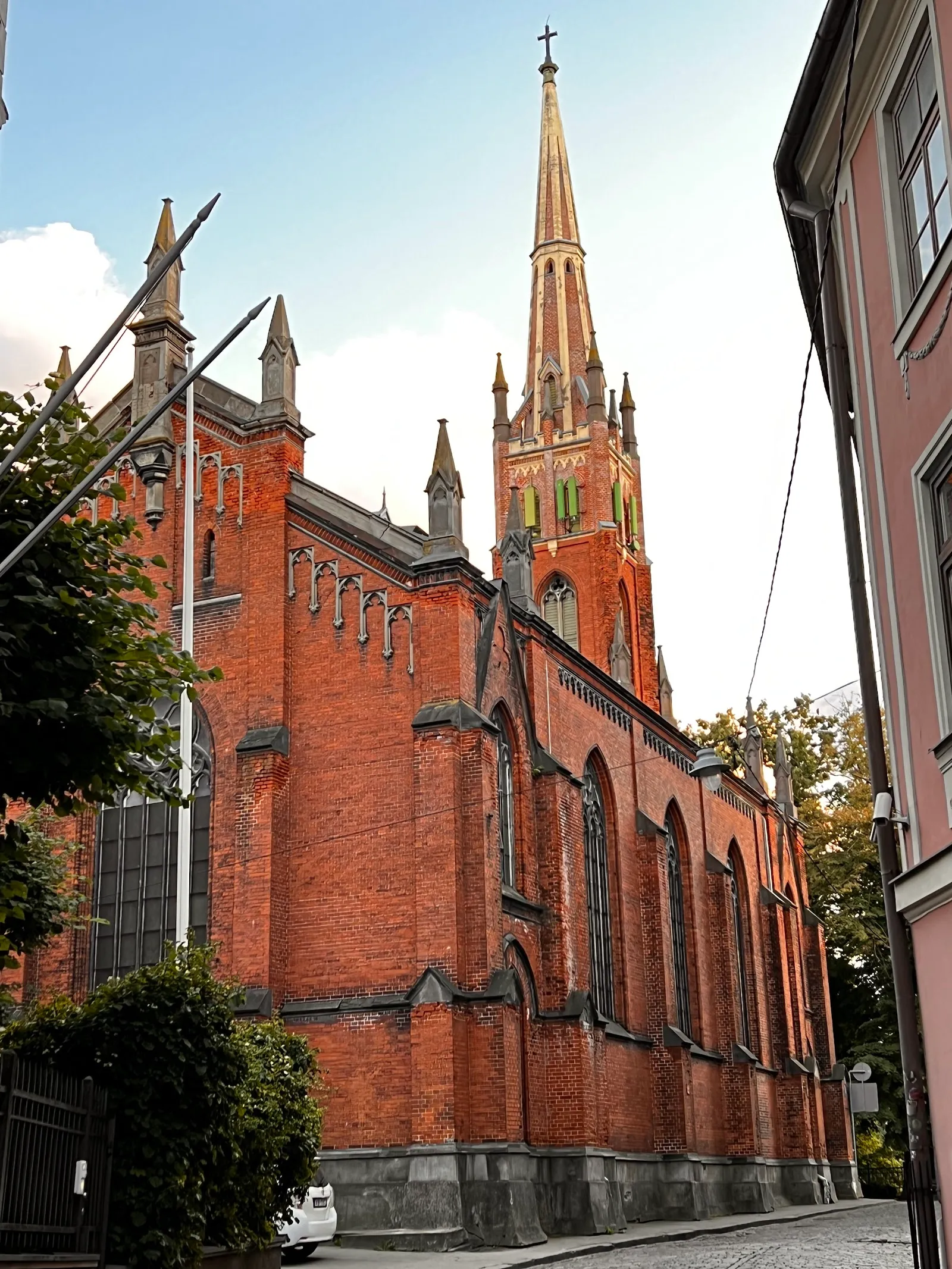
St. Saviour’s Anglican Church stands on Anglikāņu iela in central Rīga, near the Daugava River. Built for the city’s British traders and sailors, it was consecrated in 1859 and is known for its Victorian Gothic design and bricks brought from Britain. Today it remains an active church and community space. Stop in to see the architecture, look at the cards left by visitors, or catch live music on Wednesday at 13:00. The concerts are free, with donations welcome.
Built for Rīga’s British community
The Anglican community in Rīga was established in 1830. Before it had a church of its own, its members worshipped in borrowed spaces. In 1852, a plot near Castle Square was granted for a new building. British traders and sailors supported the project, creating a place for their community in the city.
The foundation stone was laid in 1857, and the church was consecrated on 26 July 1859. Its original purpose was to serve British people living and working in Rīga, including those connected with trade. The building remains a link to that history and to the presence of an English-speaking Anglican community in Latvia.
Victorian Gothic details
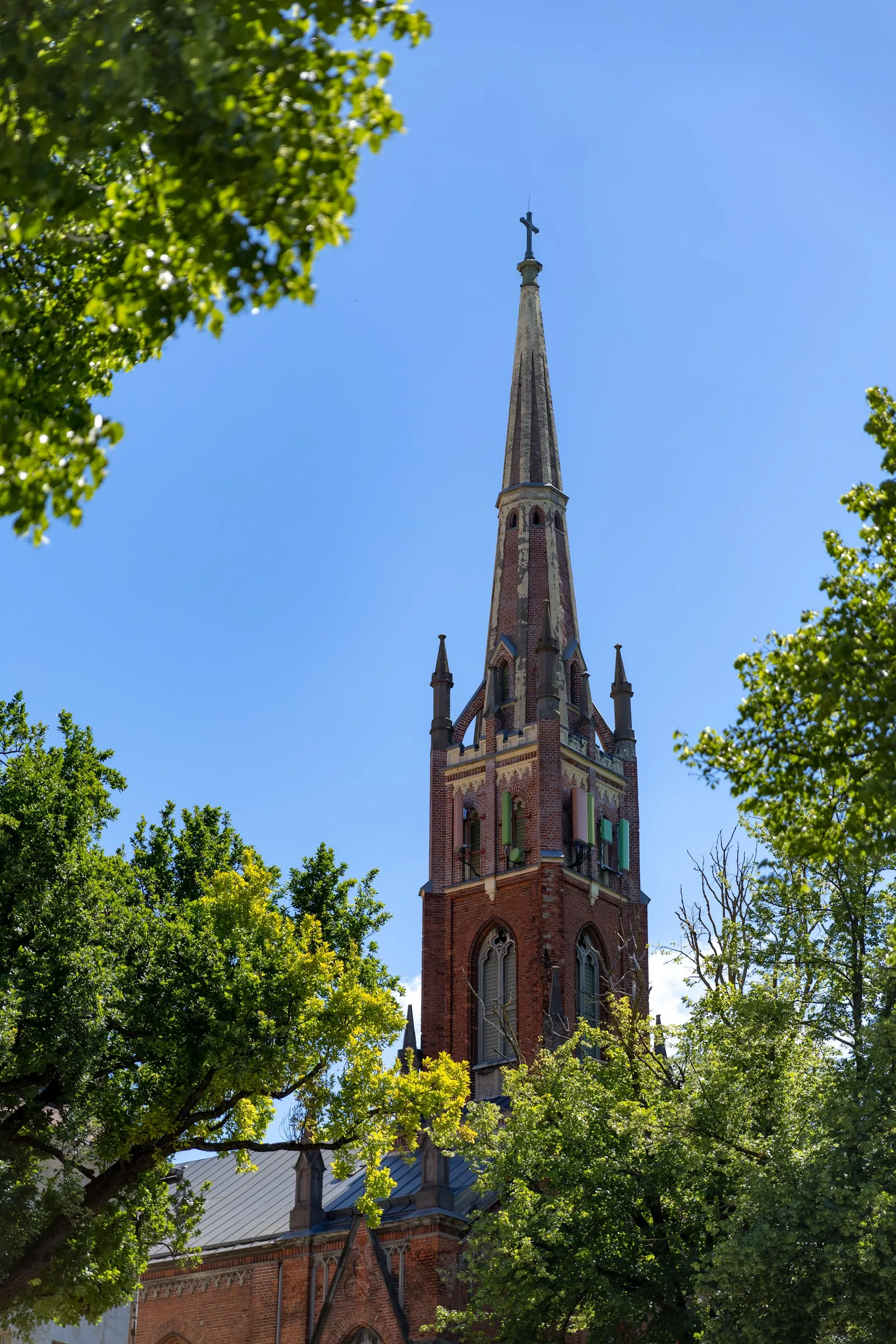
The church was designed by architect Johann Felsko in a Victorian Gothic style. Its exterior is built with bricks brought from Britain, a detail that connects the materials of the building to the community that funded it. A tall bell tower makes the church easy to recognise from outside.
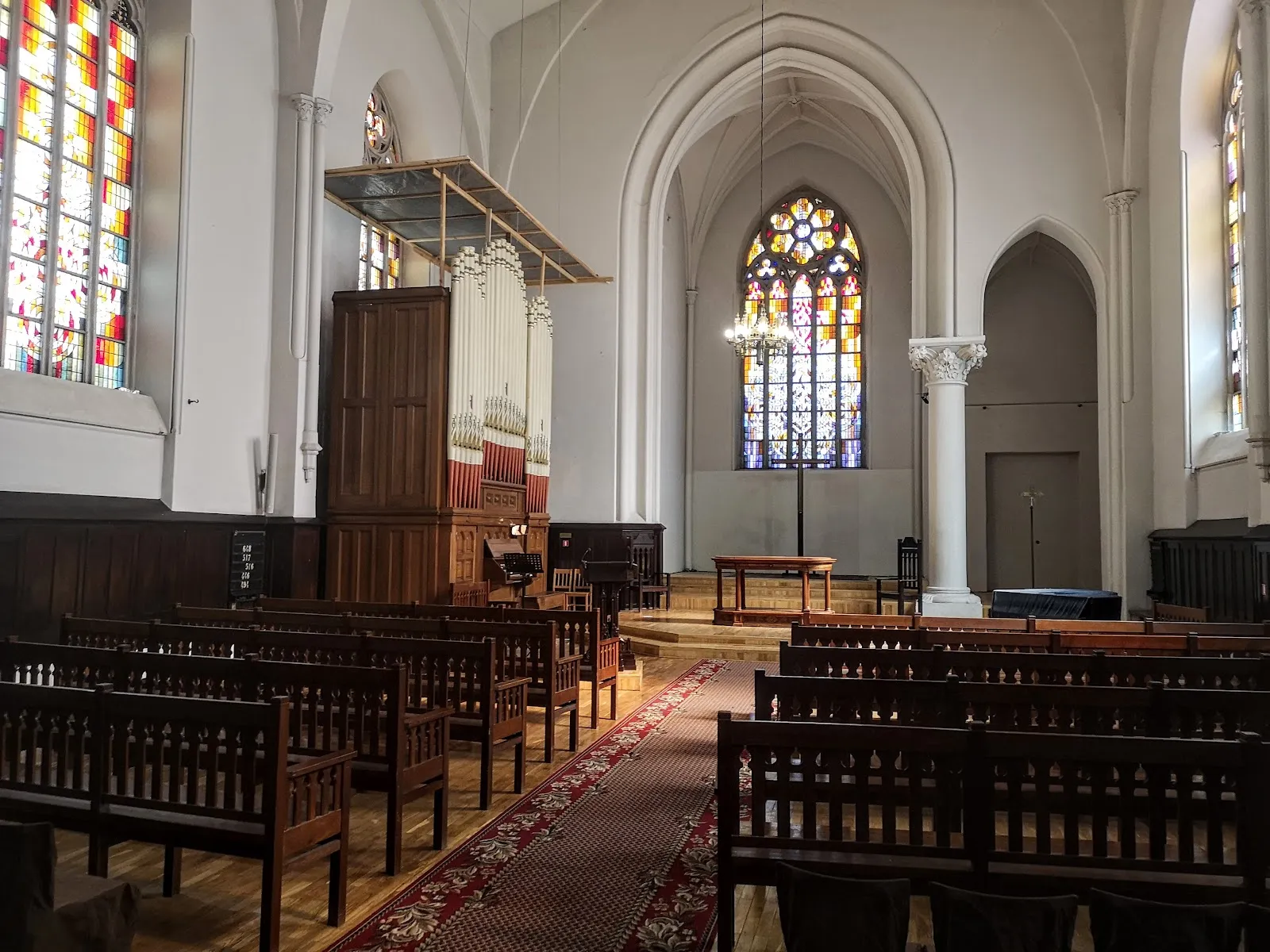
Inside, visitors can pause in the quiet space and look at cards left by people from around the world. The building’s history is not always explained through displays, so its architecture and the cards offer details to notice during a short stop.
A church and community space today
During the Soviet era, the building was used as a cultural centre. After Latvia regained independence, the Anglican community was revived, and the church returned to religious use. It now hosts Anglican services and community programmes, including a soup kitchen for people experiencing homelessness.
The church also holds small organ concerts and live music events. A Wednesday performance at 13:00 is a useful time to visit if you want to hear music as well as see the building. Concerts are free, with voluntary donations welcome. The church is near the Daugava River, making it easy to add a riverside walk to your visit.
FAQ
When was St. Saviour’s Anglican Church consecrated?
It was consecrated on 26 July 1859, after construction began in 1857.
What can you see inside the church?
You can see the church interior and cards left by visitors from around the world. The church also hosts music events.
When can I hear live music at the church?
A live music performance takes place on Wednesdays at 13:00. The concerts are free, with donations welcome.
What was the church used for during the Soviet era?
It functioned as a cultural centre. After Latvia regained independence, the Anglican community was revived.