On Rīga’s Town Hall Square, the House of the Black Heads pairs a vivid, ornamented façade with restored rooms and exhibitions about the city’s merchant past. The original building dates to the 14th century and was made for meetings and banquets; the present reconstruction was completed in 1999 after the earlier house was destroyed during the Second World War. Inside, explore the exhibition in the cellars, the silver collection and the grand halls upstairs. It’s a useful stop for architecture and local history in the Old Town.
A guild house on Town Hall Square
The House of the Black Heads stands at Rātslaukums 7, facing Rīga Town Hall. Its story begins in the 14th century, when the building served as a place for meetings and banquets. The Brotherhood of Blackheads, an association of unmarried merchants, shipowners and other foreign traders, later became closely connected with the house. Its name refers to the brotherhood’s emblem of Saint Maurice, depicted as a Black African soldier.
The association’s members were largely German merchants. Their house was a setting for commerce and formal gatherings, and its appearance changed over the centuries. Work in the 16th and 17th centuries added much of the decorative detail associated with the building today. The façade combines Gothic forms with Renaissance ornament, while statues, coats of arms and a clock add detail across its bright exterior.
Destruction and reconstruction
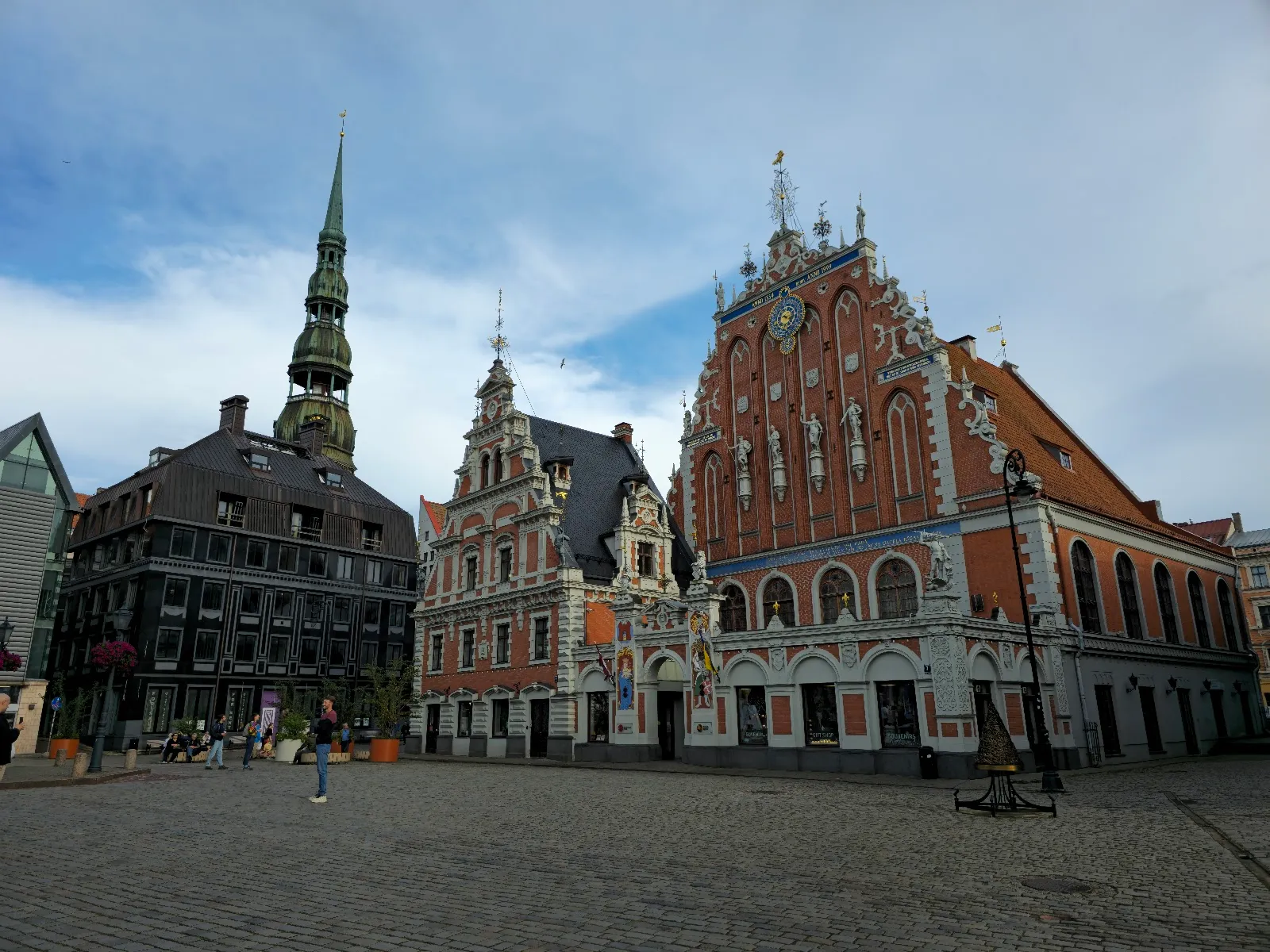
The building was heavily damaged by bombing in 1941 during the Second World War. Its remains were later demolished, and the house no longer stood on the square for several decades. Rīga rebuilt it in the 1990s, completing the reconstruction in 1999. The project restored the building’s historic appearance and returned a defining feature to Town Hall Square.
The reconstruction makes the house a place to consider both the city’s merchant history and the destruction of its built heritage in wartime. Its present-day rooms draw on the building’s former role as a venue for meetings and celebrations, while the museum displays focus on Rīga’s past and the Brotherhood of Blackheads.
Inside the house
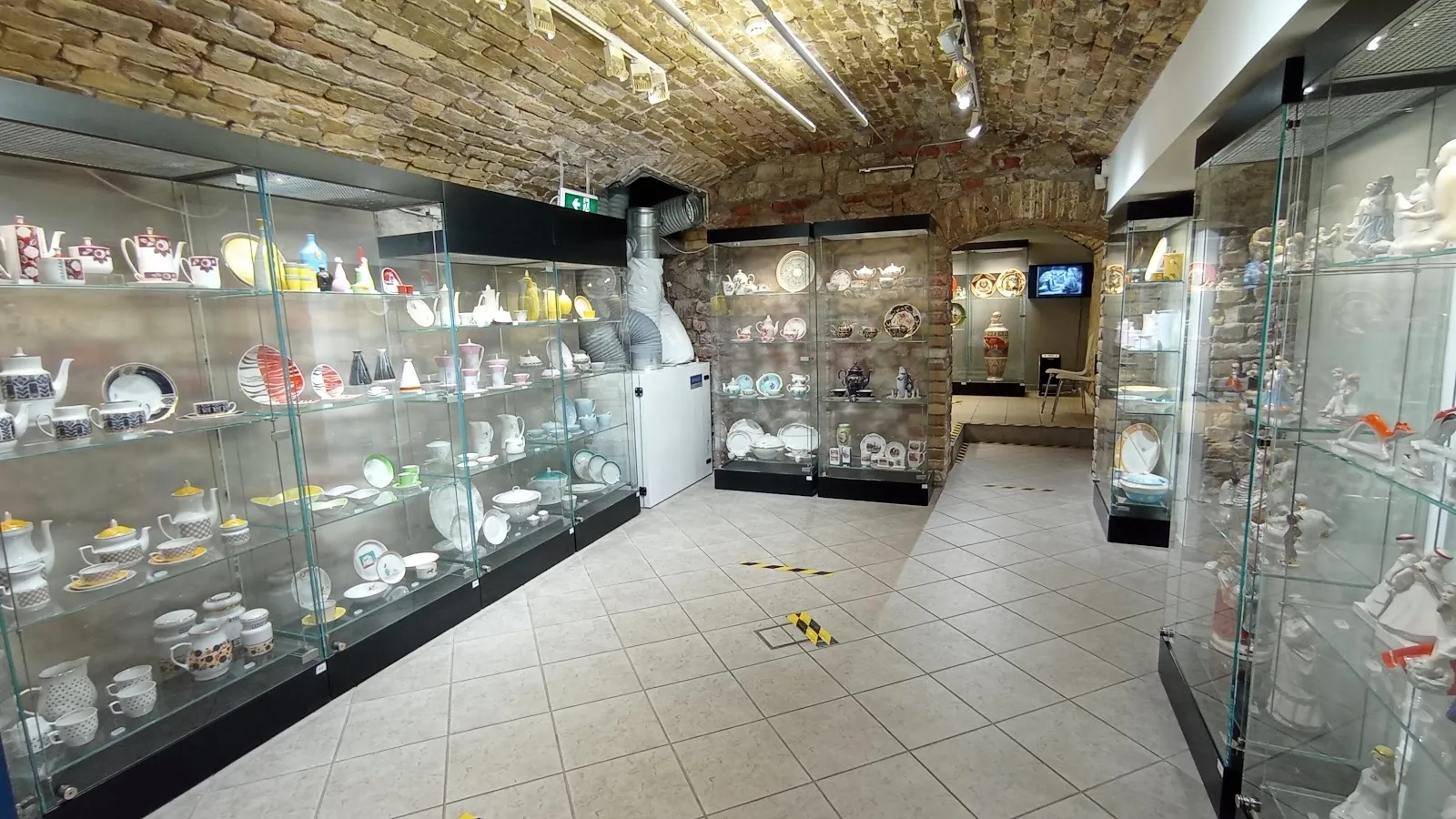
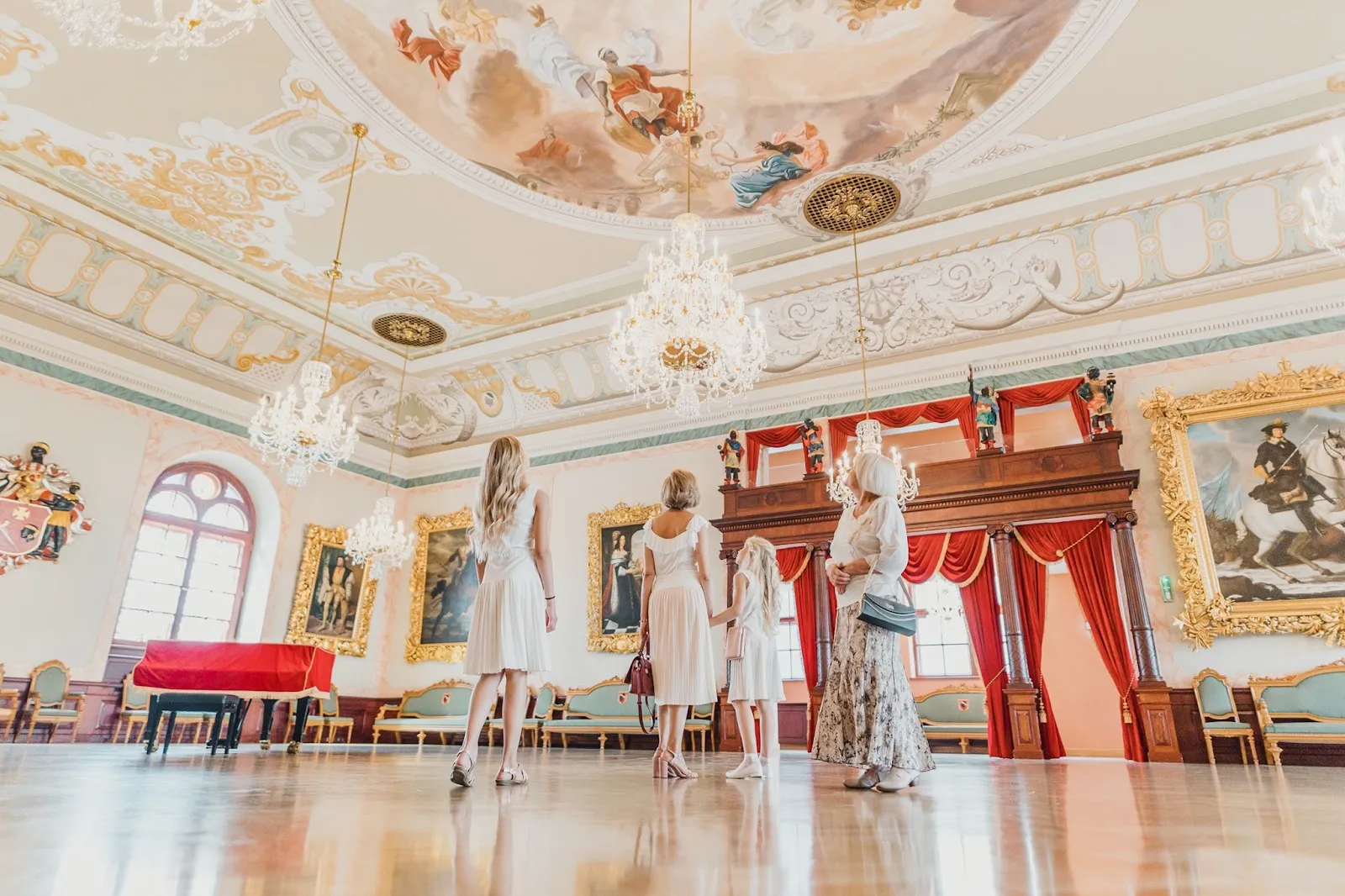
The visit takes you beyond the façade into restored halls and exhibition spaces. In the cellar, displays trace historical stories connected with the building and the city. The collection of silver is another point of interest, alongside exhibits about the merchants and guilds of medieval Rīga. An audio guide provides a structured way to follow the material.
Upstairs, the larger rooms recall the house’s ceremonial use. The grand hall and other stately spaces give a sense of how the building functioned as a setting for important gatherings. Look for the decorative details in the interiors as well as the objects on display. The museum is compact enough to combine with a walk around the square and the surrounding Old Town.
FAQ
Where is the House of the Black Heads?
It is at Rātslaukums 7 on Town Hall Square in Rīga’s Old Town, opposite Rīga Town Hall.
What can you see inside the House of the Black Heads?
The museum has exhibitions about Rīga’s history and the Brotherhood of Blackheads, a silver collection, cellar displays and restored halls upstairs.
When was the House of the Black Heads rebuilt?
The original building was destroyed during the Second World War. Its reconstruction was completed in 1999.
Can you see the building illuminated at night?
Yes. For an illuminated view, visit after dark. In June and July, nightfall comes late in Rīga.