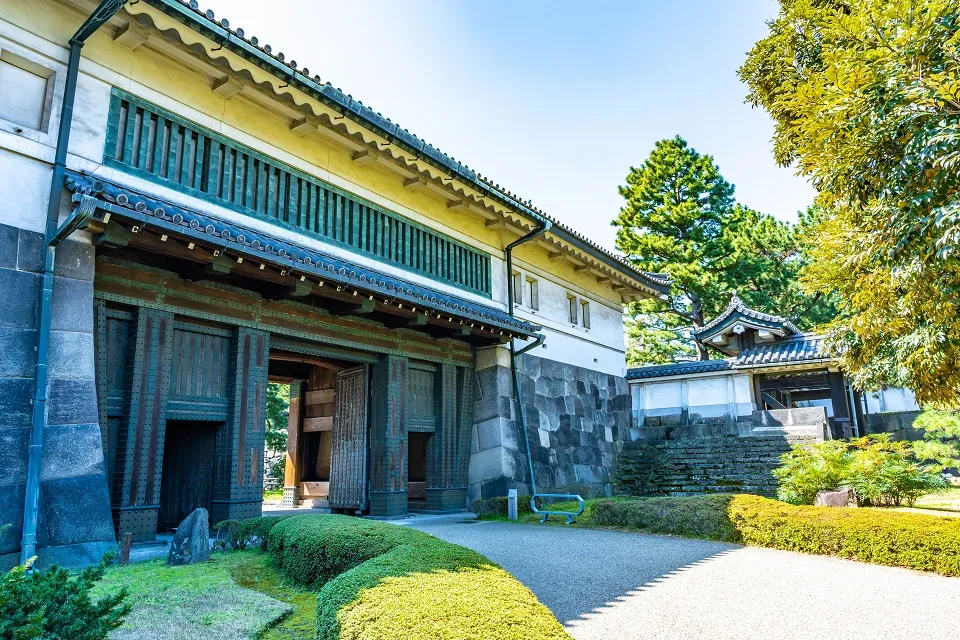
Kairakuen is a historic garden in Mito, known for its plum trees and its place among Japan’s three great gardens. Around 3,000 trees, representing about 100 varieties, flower in late winter and early spring. Beyond the blossom groves, follow paths through bamboo and Japanese cedar, then visit Kobuntei, a traditional villa with views across Senba Lake. The garden was created by Tokugawa Nariaki in the mid-19th century for the enjoyment of both the domain’s rulers and the public. In other seasons, expect a greener, quieter landscape.
A garden created for shared enjoyment
Kairakuen was established by Tokugawa Nariaki, the ninth lord of the Mito domain, in the mid-19th century. Its name expresses the idea of enjoying the garden together. Unlike gardens made for the exclusive use of a ruling family, Kairakuen was intended to be open to the people of the domain as well.
The garden was conceived alongside Kodokan, a domain school where retainers studied. The two places served different purposes: Kodokan was associated with study, while Kairakuen provided a place for recreation. A monument at the site refers to this pairing as a balance between effort and relaxation.
Plum trees and seasonal changes
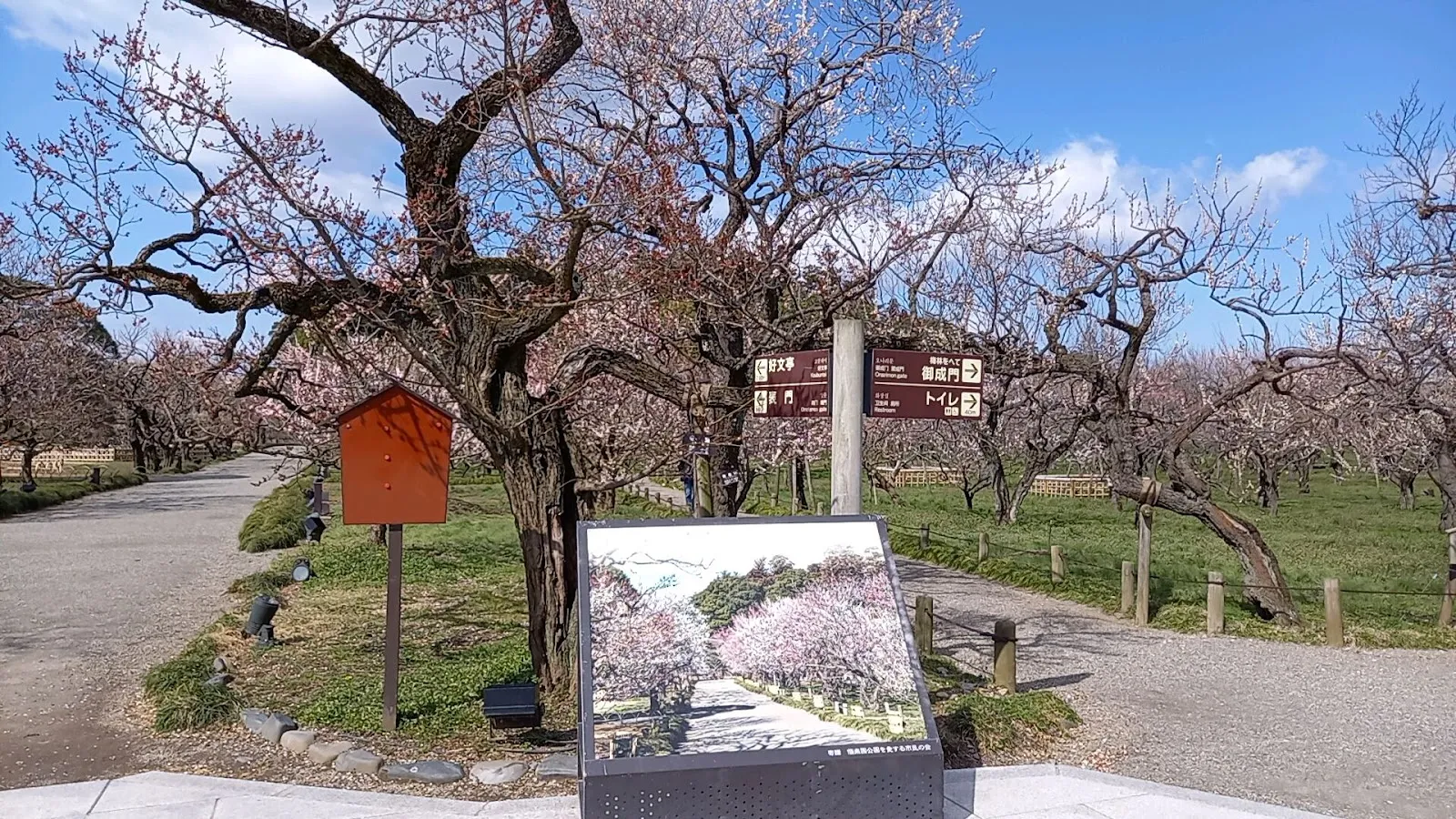
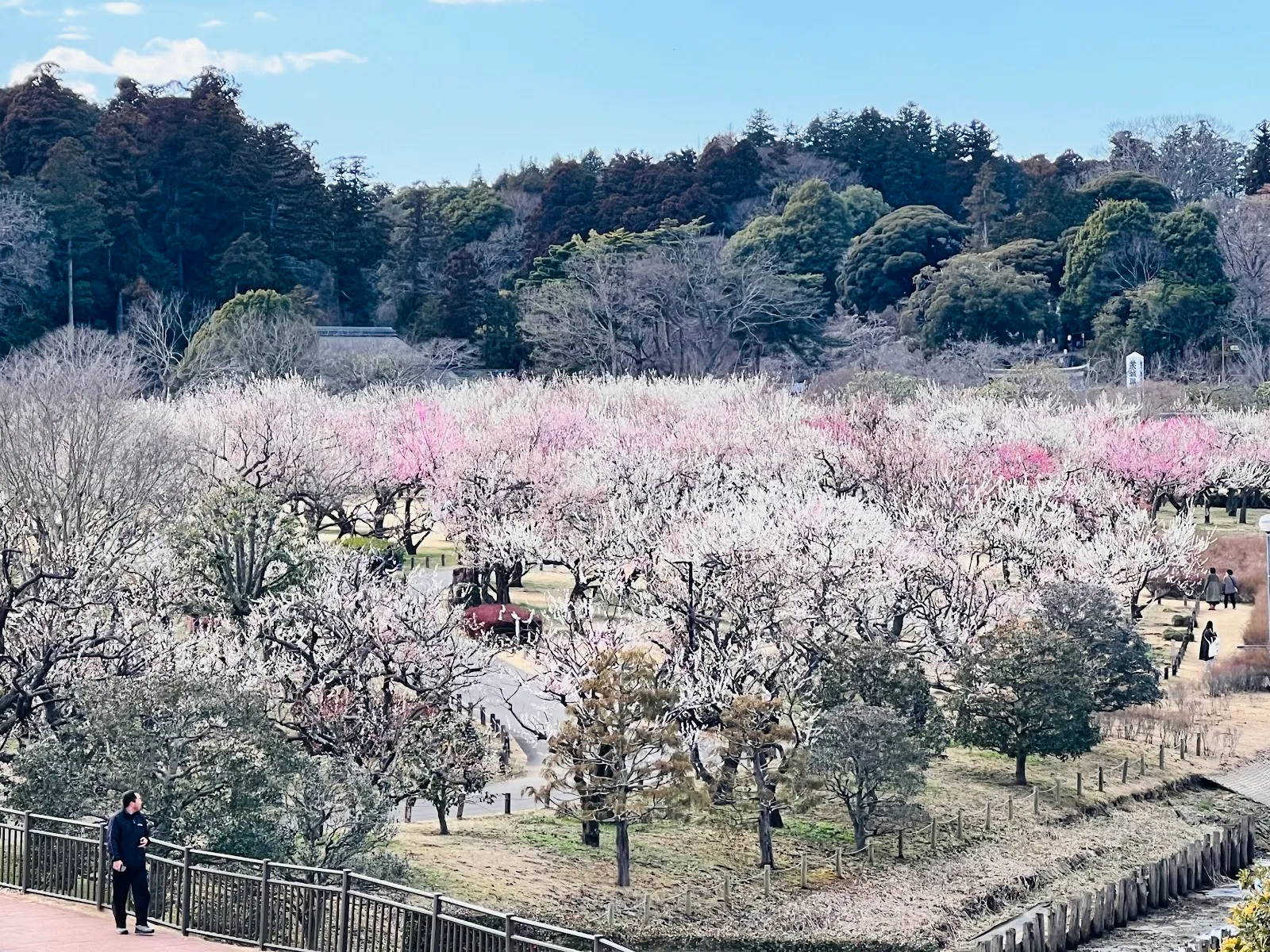
Kairakuen is especially known for its plum blossoms. Its grounds contain about 3,000 trees and roughly 100 varieties, which flower in late winter and early spring. Different varieties bring different colours to the orchard, so the display changes as the season progresses. The Mito Plum Blossom Festival is held at the garden during the flowering period.
Outside blossom season, the view changes. Summer brings a predominantly green landscape, while autumn colours have been noted around the entrance. The garden remains a place for a walk, but the plum orchard is the main reason to time a visit for late winter or early spring.
Kobuntei and the garden paths
Kobuntei is a traditional villa within Kairakuen. Visitors can go inside for an additional fee, and its upper floor looks across Senba Lake. Allow time to explore the building as well as the garden paths.
The grounds include bamboo groves and Japanese cedar beside the paths, offering a different atmosphere from the open plum orchard. There are also trees noted for their age and for flowers of different colours growing on the same branches. Take an unhurried route through the garden to see more than the main blossom area.
FAQ
When do the plum blossoms bloom at Kairakuen?
The main flowering season is in late winter to early spring, commonly around mid-February to late March. The exact display depends on the season.
Is there an extra fee to visit Kobuntei?
Yes. Kobuntei has an additional entrance fee.
How long should I spend at Kairakuen?
Allow about 60 to 90 minutes for the garden and Kobuntei.
What is Kairakuen known for?
It is known for its plum orchard, with about 3,000 trees of roughly 100 varieties, and is counted among Japan’s three great gardens.