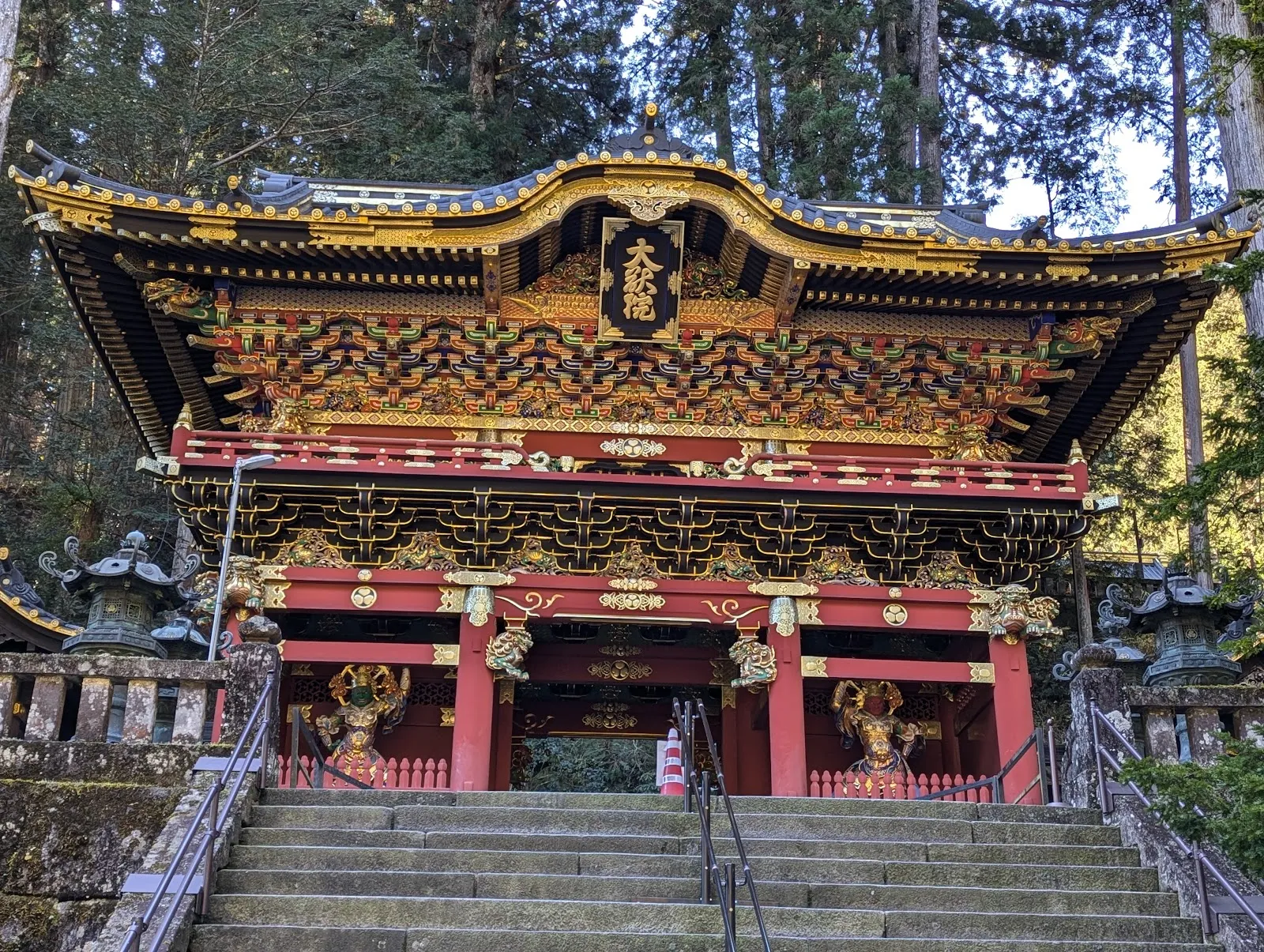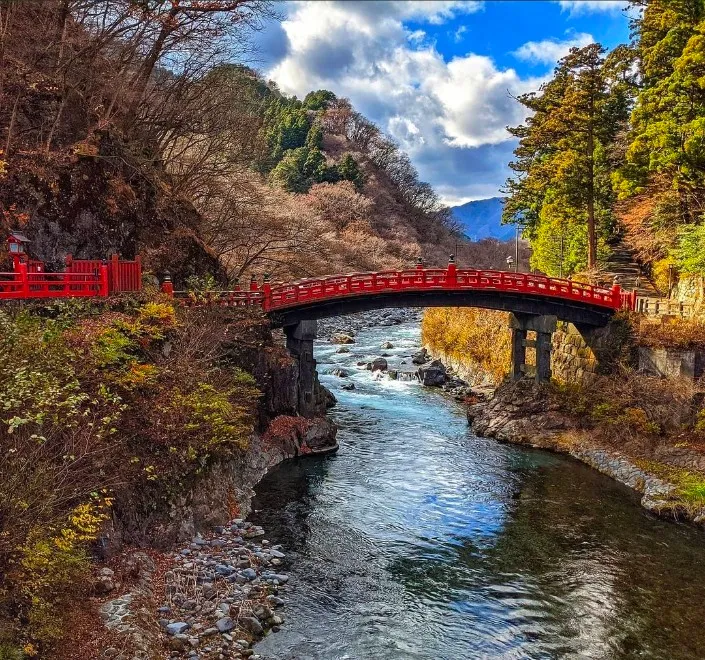
Shinkyo Bridge is a vermilion wooden bridge over the Daiya River in Nikko, Tochigi Prefecture. It stands at the entrance to the shrines and temples of Nikko and is counted among Japan's three finest bridges. You can see it and photograph it from the roadside at no cost. Crossing it is a separate matter, and access and fees have varied, so check before you plan around it. The bridge looks its best in autumn foliage season, and winter visits are often quiet.
The legend of the two serpents
Tradition holds that the monk Shodo Shonin, who later founded Rinnoji Temple, could not cross the fast Daiya River. He asked the mountain deities for help, and two serpents appeared and formed a bridge so that he could reach the sacred ground of Nikko. One account places the monk's journey in 766.
The story is the reason many visitors, children included, enjoy hearing about the bridge before they see it.
Built for officials, tied to the shrine
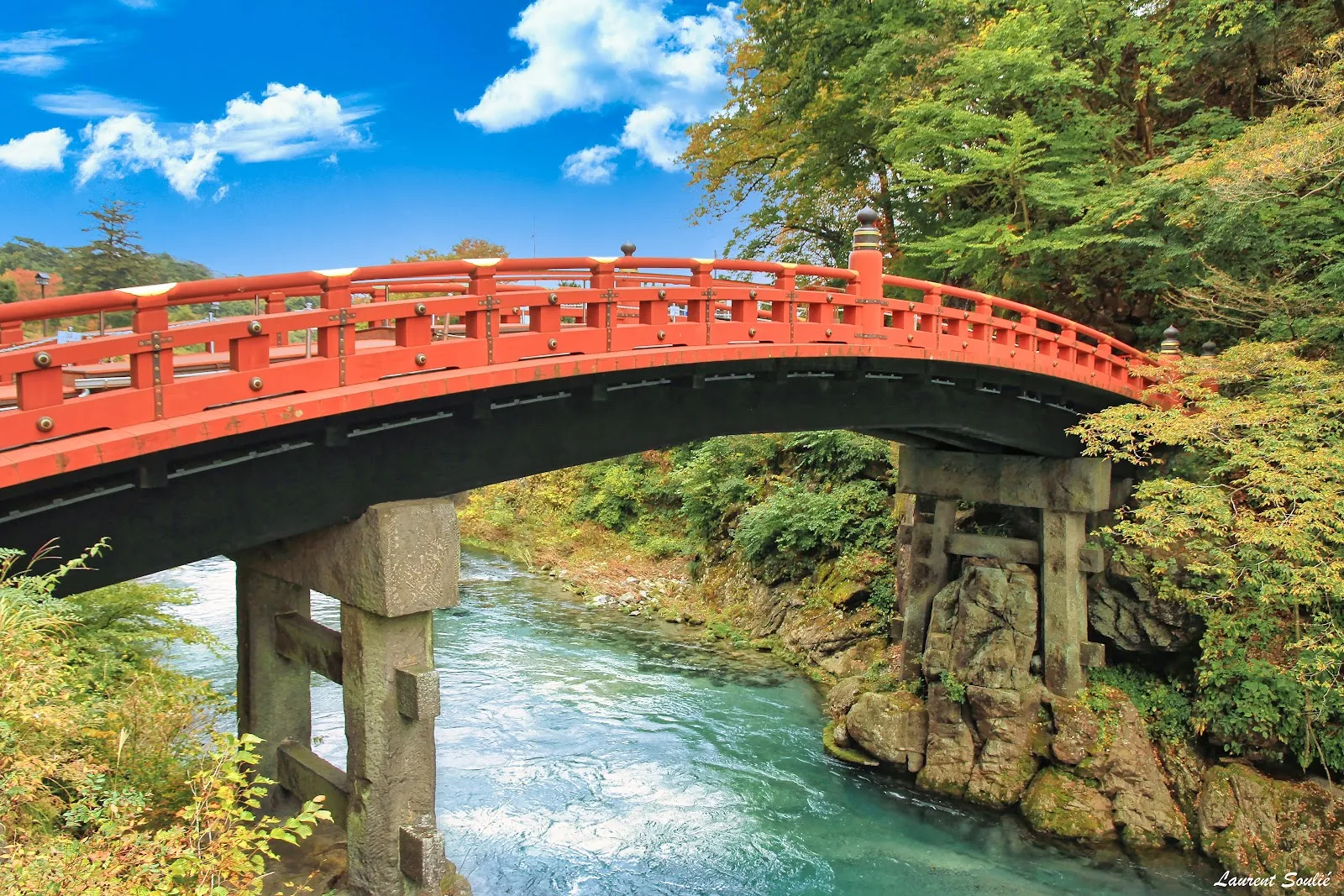
A bridge has stood on this spot since at least 1636. The original was lost in a flood, and the red-lacquered wooden structure seen today replaced it. The bridge belongs to Futarasan Shrine and is treated as part of the sacred site, not as an ordinary river crossing.
For centuries, use was limited to officials such as shoguns and imperial messengers. The bridge is about 28 metres long, around 7.4 metres wide, and stands roughly 10 metres above the water. It is designated an Important Cultural Property and is part of the Nikko World Heritage area.
Crossing the bridge
Visitors can walk across the bridge for a fee, but sources disagree on the price and on whether crossing is open at a given time. Check locally before your visit if walking over it matters to you.
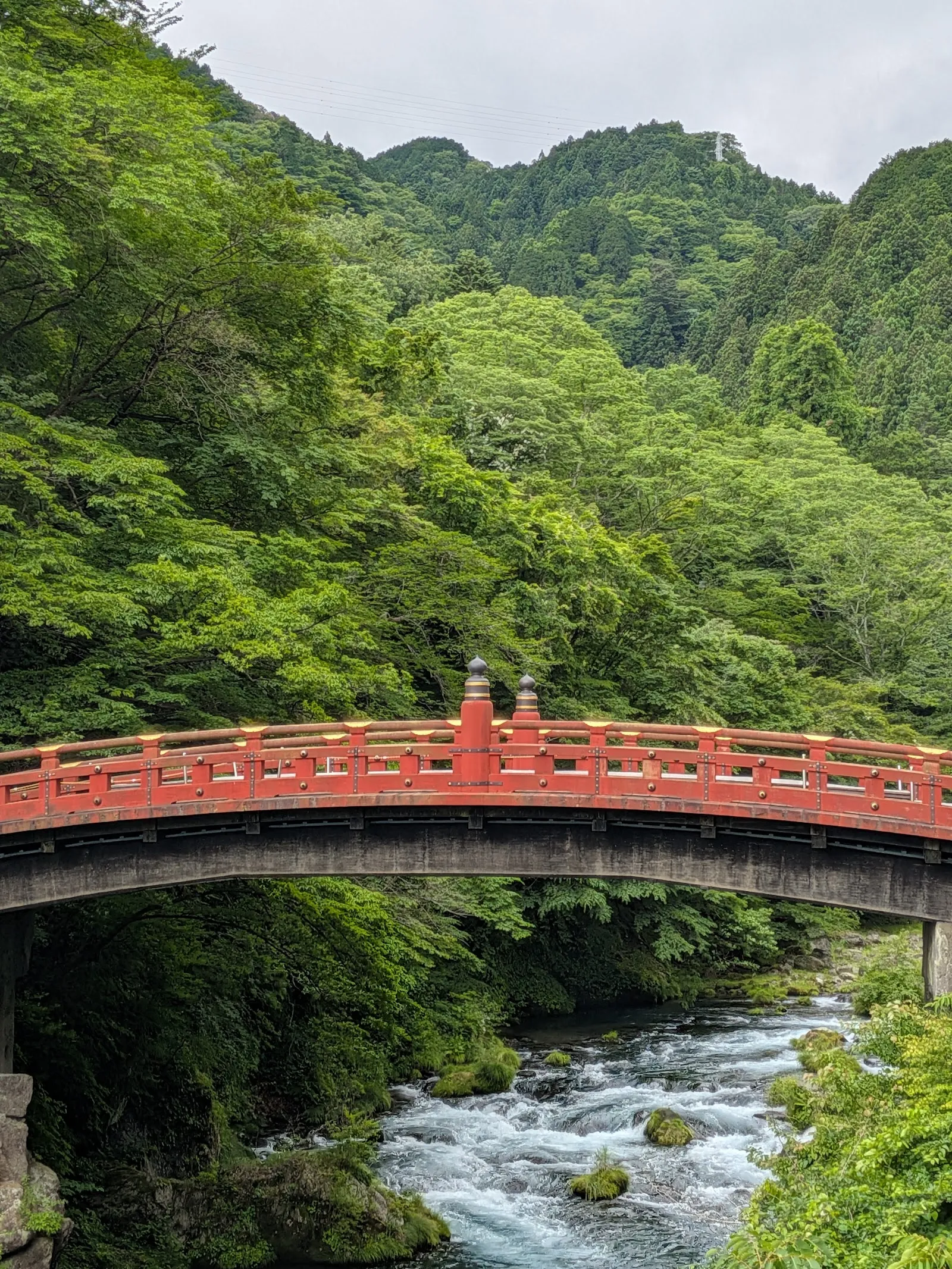
Whether or not you cross, the view from the roadside is complete. The bridge is set against the wooded hillsides, and the river runs beneath it.
Shrine customs and the December cleaning
Each December, priests in Heian-period court dress and shrine maidens in white and red use long bamboo poles to sweep the bridge clean before New Year.
The shrine and Futarasan Shrine offer goshuin, the temple seals written into a seal book. One of these books has an embroidered image of the bridge and Mount Nantai. Keep your voice low on the approach, and stay back if staff ask you to.
FAQ
Is there an entry fee to see Shinkyo Bridge?
You can see and photograph the bridge from the roadside at no cost. Crossing it is paid, and sources differ on the fee and on whether crossing is open, so check locally before you go.
Is there parking at the bridge?
There is no parking directly at the bridge. Paid parking lots and paid street parking are listed nearby, and one visitor parked a five to ten minute walk away.
How do I get to Shinkyo Bridge from Nikko Station?
It is about a 20-minute walk from the JR and Tobu Nikko stations. Buses from either station run up the main street to the bridge.
When is the best time to visit?
Early in the day has fewer crowds. Autumn foliage and cherry blossom seasons are the most striking, and winter visits are often calmer.