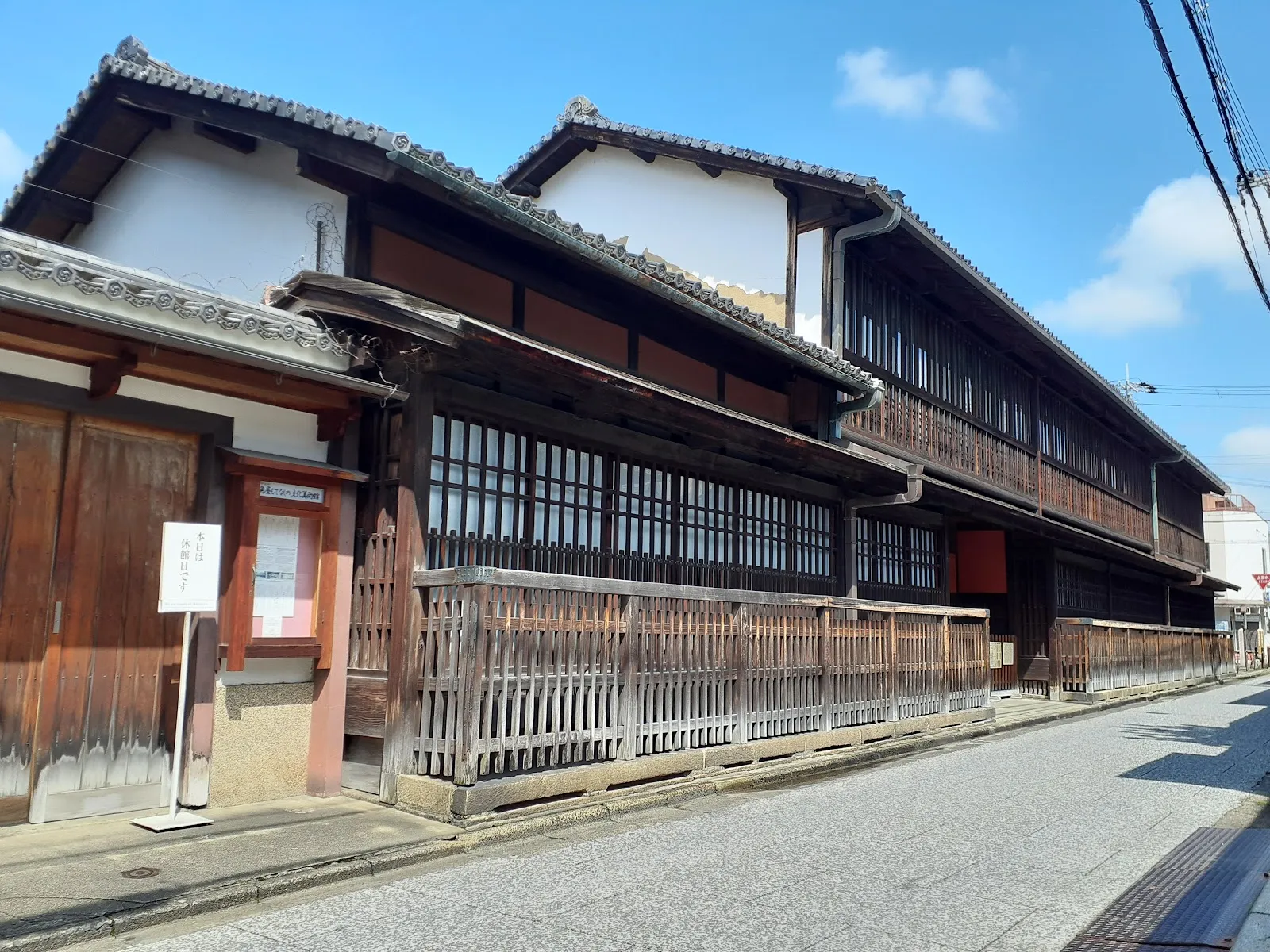
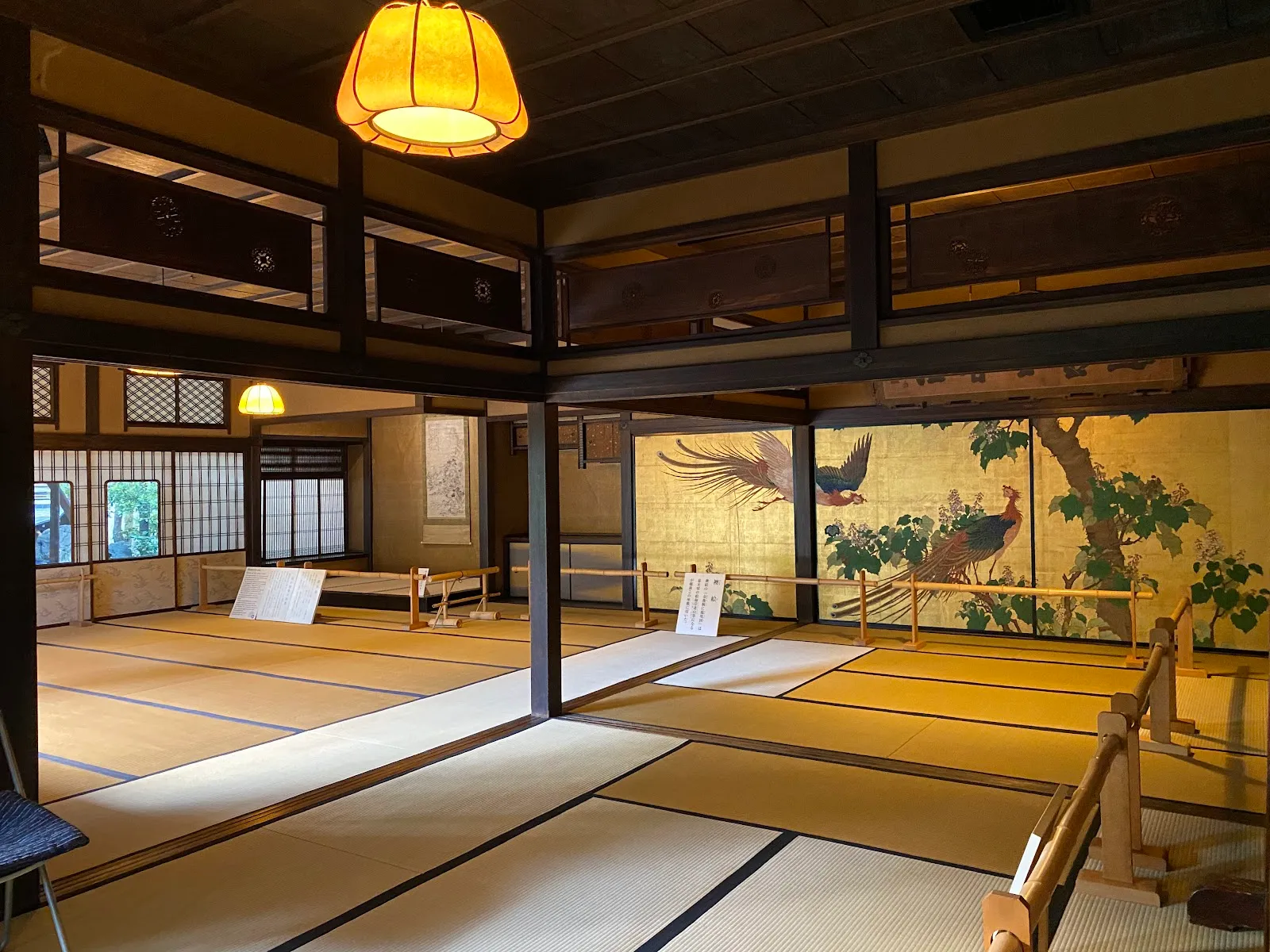
Sumiya Cultural Art Museum is a preserved ageya in Kyoto’s former Shimabara district. These elegant establishments hosted geisha and tayu, and Sumiya is described as the last remaining ageya in Japan. Its traditional rooms and architecture give a sense of the house’s Edo-period role; upstairs, displays include marks left by people who once lived and worked here. Photography is not allowed on the second floor. Tours focus on geisha traditions and samurai artifacts, though they are primarily in Japanese.
An ageya in Shimabara
Sumiya was once a high-end restaurant and brothel in Shimabara, a former red-light district in western Kyoto. Ageya were elegant establishments where geisha and tayu performed and lived. Sumiya is identified as the last surviving ageya in Japan, giving the building a direct connection to that part of Kyoto’s history.
Rooms and displays
The house’s traditional design is a central part of the visit. Upstairs, displays include marks and impressions left by past inhabitants. Photography is prohibited on the second floor, so plan to take in the rooms without taking pictures. Tours cover geisha traditions and samurai artifacts, but are primarily conducted in Japanese. English descriptions and pamphlets are available upstairs.
FAQ
Is Sumiya Cultural Art Museum an ageya?
Yes. It was once an ageya in Shimabara, where geisha and tayu performed and lived. It is described as the last remaining ageya in Japan.
Can you take photos inside Sumiya?
Photography is not allowed on the second floor.
Are tours available in English?
Tours are primarily conducted in Japanese. English descriptions and pamphlets are available upstairs.


