
Ninna-ji is a Shingon Buddhist temple in western Kyoto and part of the UNESCO-listed Historic Monuments of Ancient Kyoto. Its broad grounds hold the Niomon gate, a five-story pagoda and the Kondo main hall, alongside the Goten, a former residence of the head priest with gardens linked by covered corridors. In spring, the low-growing Omurozakura cherry trees bloom later than many varieties elsewhere in Kyoto, with the pagoda rising behind them. The grounds are usually free to enter, while the Goten and seasonal areas may require admission.
A temple founded by Emperor Uda
Ninna-ji is the head temple of the Omuro school of Shingon Buddhism and a UNESCO World Heritage Site within the Historic Monuments of Ancient Kyoto. Construction began in 886 at the request of Emperor Koko and was completed in 888 by Emperor Uda. The temple’s name comes from the era name at the time of its founding.
Members of the imperial family served as head priests for generations. The tradition continued until 1867, when the imperial household moved to Tokyo. Ninna-ji began as an imperial foundation and remains closely connected with that history.
The gate, pagoda and main hall
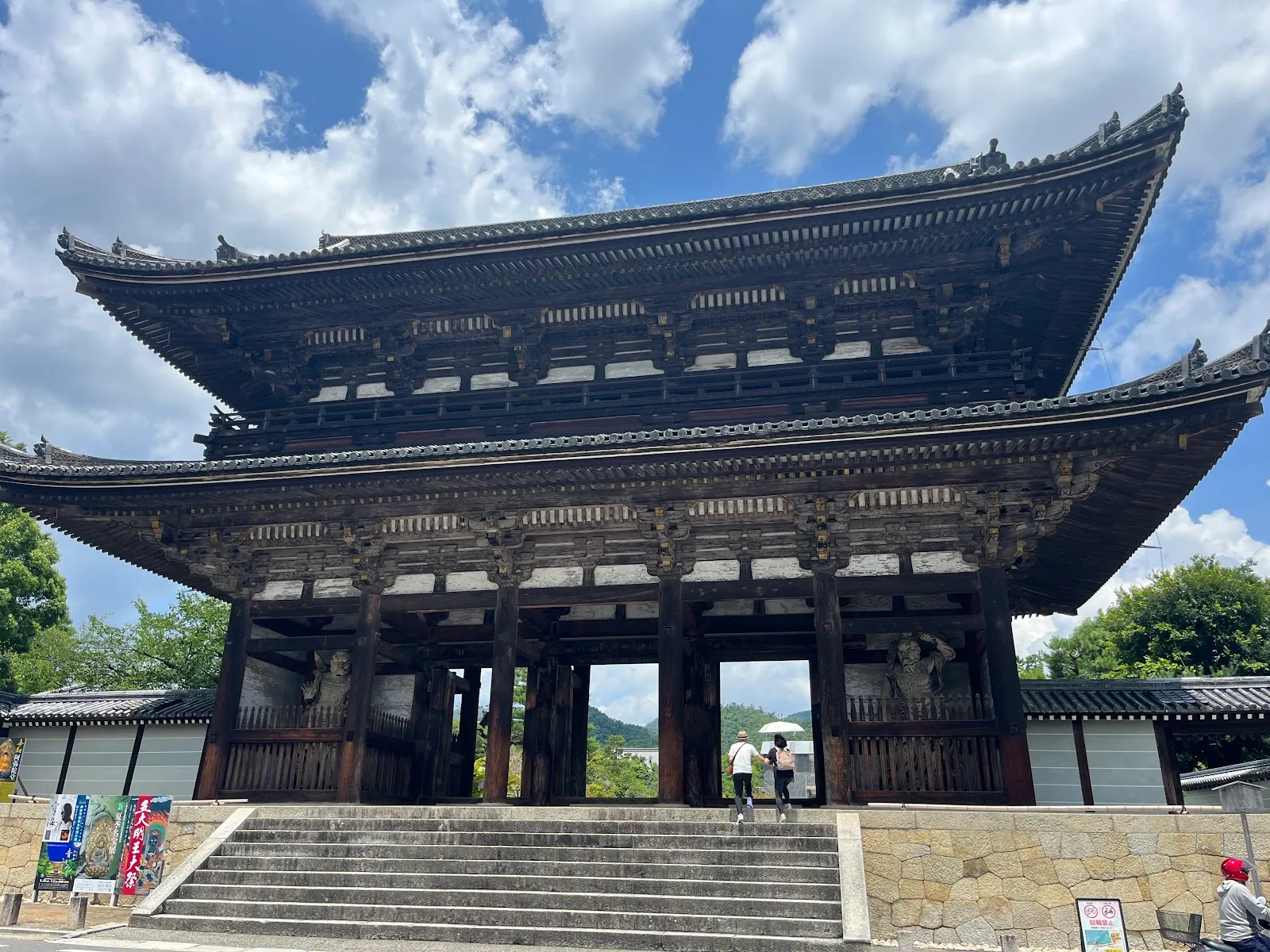
The Niomon is the temple’s large entrance gate, with guardian figures on either side. Inside the grounds, the five-story pagoda is an Important Cultural Property. The Kondo, the main hall, is a National Treasure and enshrines the Amida Triad. The buildings were destroyed during the civil war in the 15th century; the current structures were reconstructed between 1641 and 1644. The Kondo was brought from the Imperial Palace and rebuilt at Ninna-ji.
The complex also contains other historic buildings, including prayer halls and living quarters. Allow time to walk between them: the grounds cover about 90,000 square metres.
The Goten and its gardens
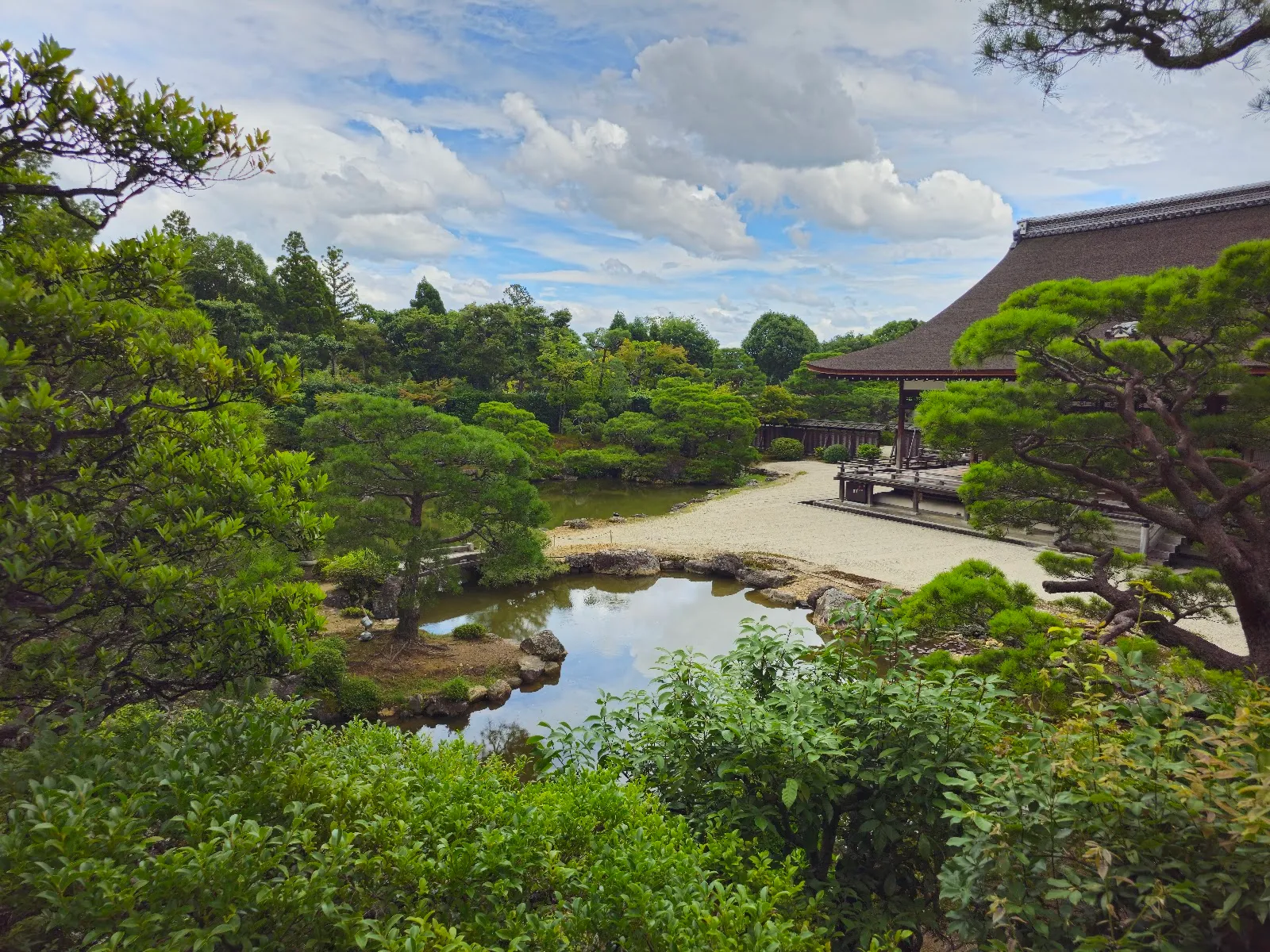
The Goten is the former residence of the head priest. Its buildings connect through covered corridors, with views onto gardens that have distinct designs. The North Garden has a pond and an artificial hill. The South Garden is laid out in white sand. Admission to the Goten is separate from access to most of the grounds.
The contrast between the gardens gives the palace area a different pace from the wider temple precincts. Take time to look from the corridors as well as moving through the buildings.
Omurozakura in spring
Ninna-ji is known for Omurozakura, a late-blooming cherry variety in the western part of the central grounds. The trees grow only a few metres high, so the blossoms sit close to eye level. Their flowering often follows the main cherry blossom displays in Kyoto; early to mid-April is the usual window given for viewing them, though the timing changes each year.
Around 200 cherry trees grow across the temple grounds, including weeping and Yoshino varieties. In spring, the five-story pagoda can be seen behind the blossoms. The grounds are especially busy during cherry blossom season, when admission may be charged for seasonal viewing areas.
Walking the 88-temple route
The Hachi-ju Haka-sho is a 3 km route around small temples within the grounds, inspired by Shikoku’s better-known 88 Temple Pilgrimage. It adds a longer walk to a visit focused on the main buildings and gardens. Check the route on arrival if you want to include it in your plan.
Ninna-ji is close to Ryoan-ji and Kinkaku-ji, so it can fit into a day exploring western Kyoto. The temple is also near Omuro-Ninnaji Station on the Keifuku Kitano Line.
FAQ
Is Ninna-ji free to enter?
Most of the grounds are usually free to enter. The Goten and seasonal areas, including cherry blossom viewing, may require a separate admission fee.
When do the Omurozakura bloom?
They typically bloom later than many other cherry varieties in Kyoto, often in early to mid-April. Exact timing changes by season.
How long does a visit to Ninna-ji take?
Allow about 1 to 2 hours for the main buildings and gardens. Add time if you plan to walk the 3 km Hachi-ju Haka-sho route.
What are the main sights at Ninna-ji?
The Niomon gate, five-story pagoda, Kondo main hall and Goten are among the key sights. The Goten has a pond garden and a white-sand garden.


