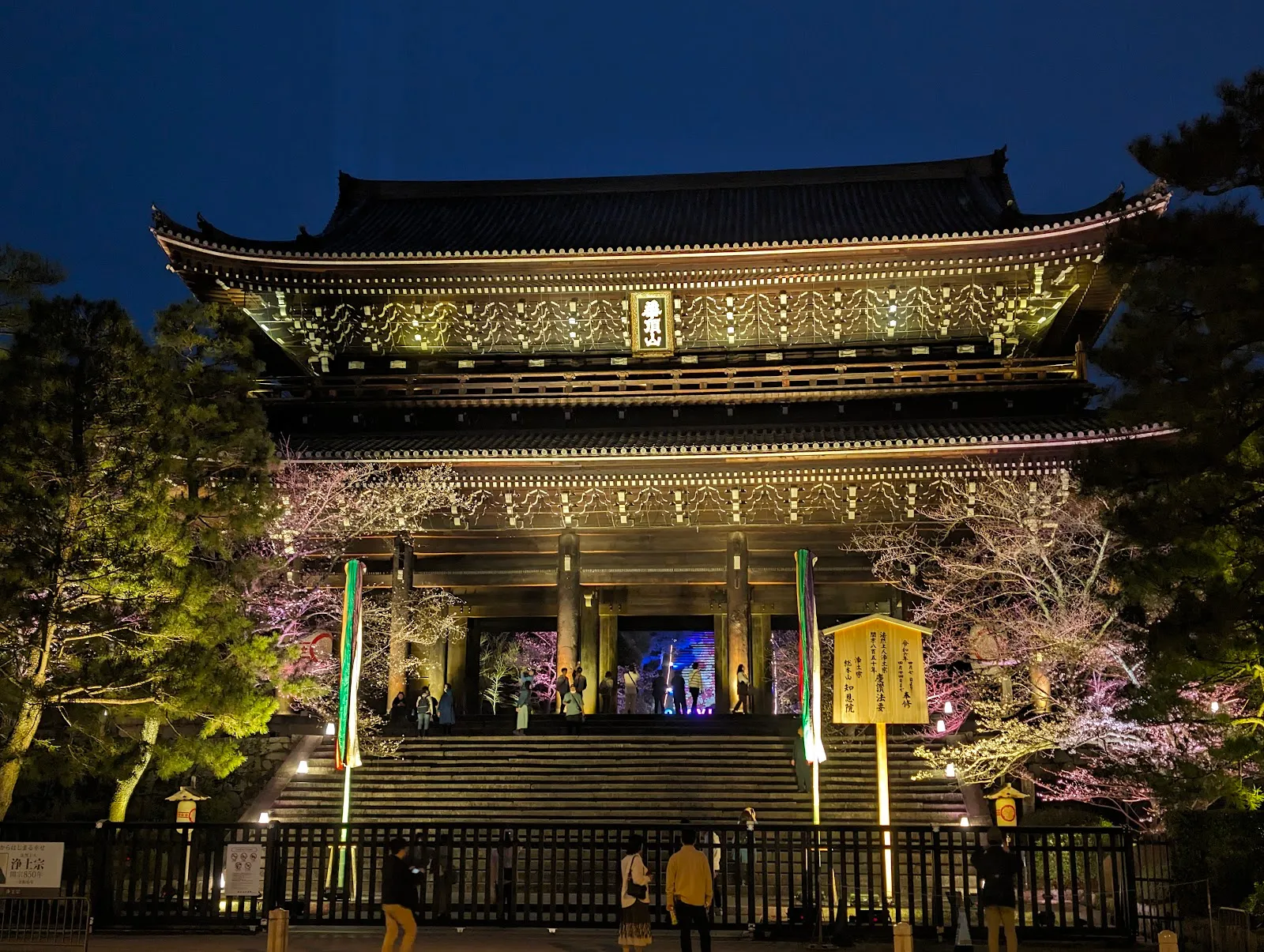
Chion-in is the head temple of Jōdo (Pure Land) Buddhism, in Kyoto’s Higashiyama district near Maruyama Park. Its huge Sanmon Gate gives way to broad grounds, temple halls and gardens. In Mieidō, a statue honors Hōnen, who founded the Jōdo sect; Amidado contains a statue of Amida Buddha. The steep Otoko-zaka steps lead toward the main hall, while the gentler Onna-zaka route is an alternative. Come for the scale of the architecture and the chance to explore an important Buddhist temple.
A temple at the centre of Jōdo Buddhism
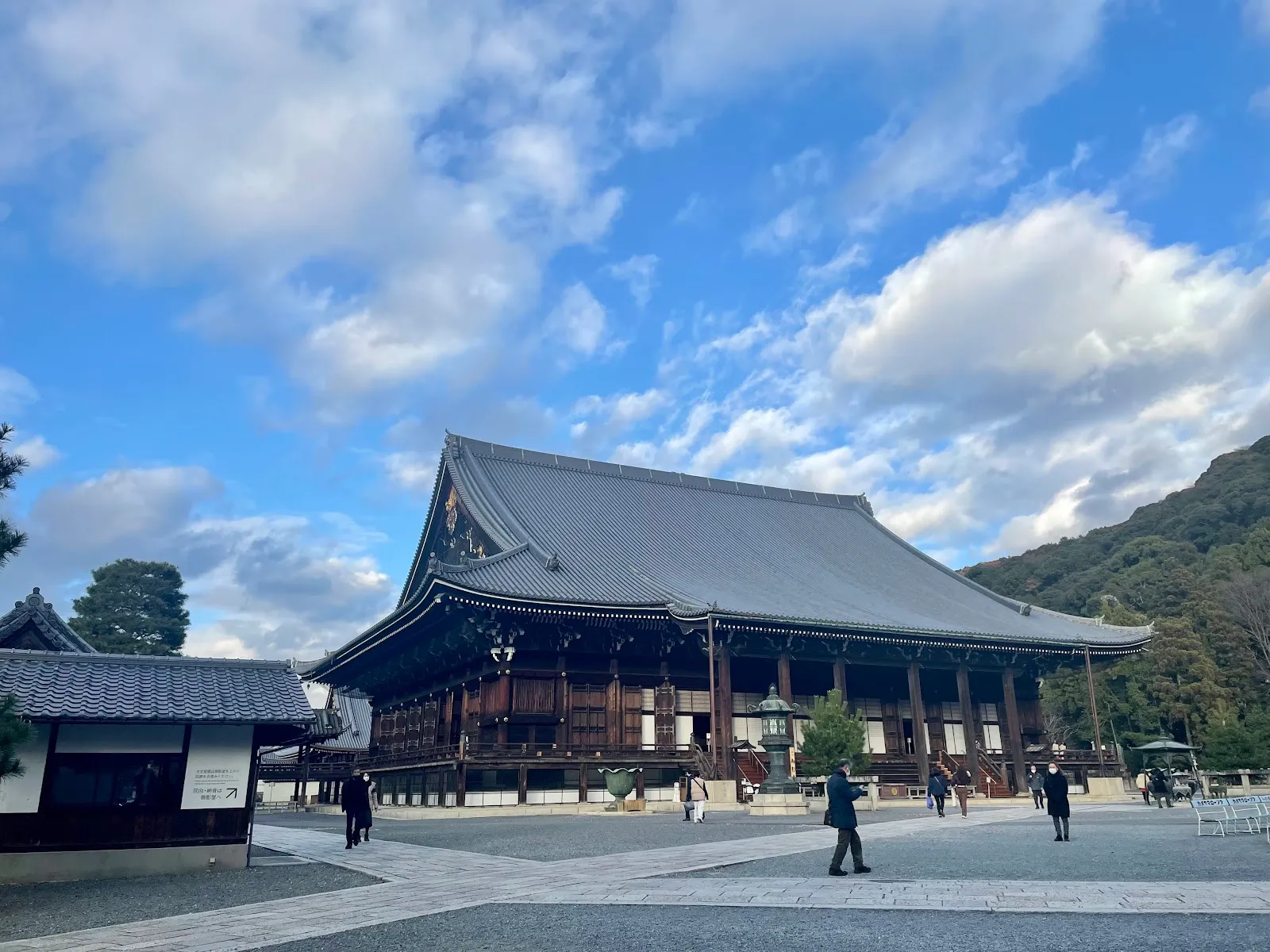
Chion-in is the head temple of the Jōdo Shū, or Pure Land, school of Buddhism. The tradition was founded by Hōnen, who is honoured at the temple. Its religious importance is reflected in the scale of the grounds and buildings, but visitors can explore the site without needing to follow a set route through the complex.
The temple stands in Kyoto’s Higashiyama district, close to Maruyama Park. Its position makes it possible to include Chion-in in a walk through this part of the city. The large Sanmon Gate is visible from the road and marks the approach to the grounds.
Sanmon Gate and the routes uphill
Sanmon is a two-storey wooden gate and one of Japan’s largest. It was built in the 1600s and measures about 50 metres across and 24 metres high. The structure makes an impressive first view of the temple, even for visitors who do not have time to explore further inside.
Beyond the gate, Otoko-zaka rises in a steep flight of 51 steps toward the main temple area. If you prefer a less demanding climb, follow Onna-zaka, a gentler sloping route. The grounds are extensive, and a free shuttle van can help with uphill sections.
Halls, gardens and temple customs
Mieidō is the main hall and houses a statue of Hōnen. Amidado contains a statue of Amida Buddha, central to the Jōdo tradition. These halls give visitors a chance to see how the temple honours the founder and the figure at the heart of its Buddhist practice.
Chion-in also has gardens, including Yuzen-en and Hojo Garden. Both are illuminated during the temple’s seasonal spring and autumn events. Some areas of the main temple do not allow photography or video, so check and follow the signs before taking out a camera. Keep a respectful manner in the halls, where ceremonies and chanting may take place.
FAQ
What is Chion-in Temple known for?
It is the head temple of Jōdo (Pure Land) Buddhism and is known for its very large Sanmon Gate, temple halls and gardens.
Who founded the Jōdo sect honoured at Chion-in?
Hōnen founded the Jōdo tradition and is honoured at Chion-in. A statue of him is housed in Mieidō.
Are there stairs at Chion-in Temple?
Yes. Otoko-zaka is a steep flight of 51 steps. Onna-zaka is a gentler sloping route toward the main temple area.
Can you take photos inside Chion-in Temple?
Photography and video are not permitted in some areas of the main temple. Follow the signs for each area.


