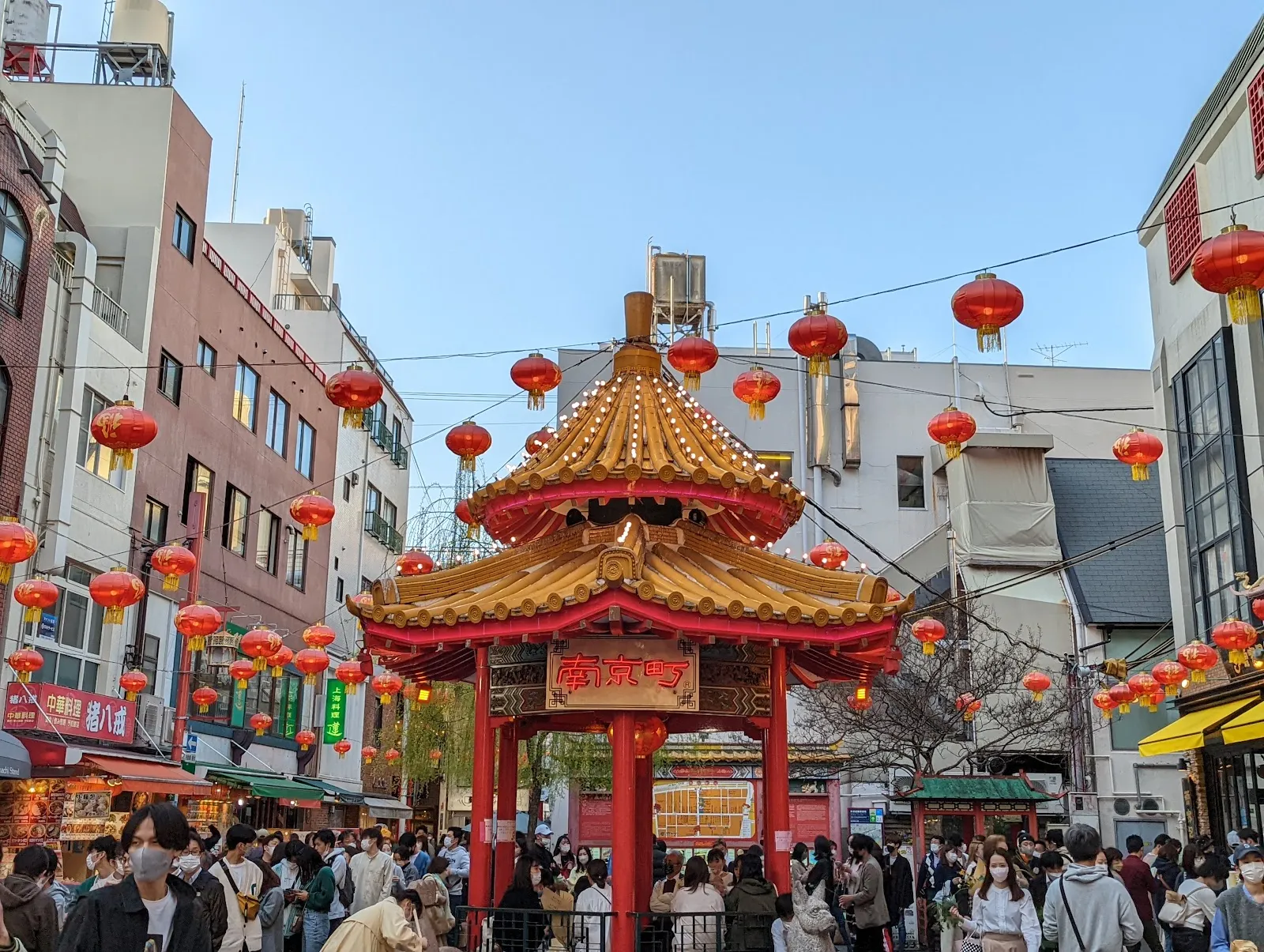
Nankinmachi is Kobe's Chinatown, a compact set of streets a short walk south of Motomachi Station in Chuo Ward. It grew from the Chinese merchants who settled near the port after 1868, and more than 100 restaurants, food stalls and shops now line it. Colourful gates mark the entrances, a hexagonal pavilion stands in the central square, and a small temple honours Guan Yu. Most of the food is made to eat as you walk: pork buns, dumplings, dim sum and sesame balls. Weekends and holidays are busy.
How Nankinmachi began
Nankinmachi dates to 1868, when Kobe's port opened to foreign trade. At that time there was no treaty between Japan and the Qing dynasty, so Chinese migrants could not live inside the foreign settlement. They settled just west of it and started businesses there, and the district grew from those merchants. The name refers to Nanjing, a former Chinese capital.
Over time the area became the centre of the Chinese community in the Kansai region. Kobe is one of three Chinatowns in Japan, along with Yokohama and Nagasaki, and the three share a link to the foreign settlements that followed the opening of the ports.
Gates, pavilion and temple
Three gates mark the boundaries: Chang'an Gate on the east, Xi'an Gate on the west and Nanlou Gate on the south. Guardian lions watch over the north side. The west gate was built after the 1995 Great Hanshin Earthquake and is seen as a symbol of recovery.
The two main streets meet at Nankinmachi Square, where the Azumaya pavilion stands. It was completed in 1983 and is a hexagonal gazebo with a two-tier roof and vermilion pillars, 6.8 metres high and 3 metres across. A dragon is painted on the ceiling, and statues of the Chinese zodiac animals surround it. The pavilion has been closed in for renovation at times, but the zodiac figures stay around it. Entertainment is sometimes set up in the square.
The district also has a Chinese temple dedicated to Guan Yu, a major figure of China's Three Kingdoms period. Mahjong clubs and variety shops sit among the restaurants. One shop, Kung Lung, sells Chinese clothing and a wide range of goods.
What to eat along the streets
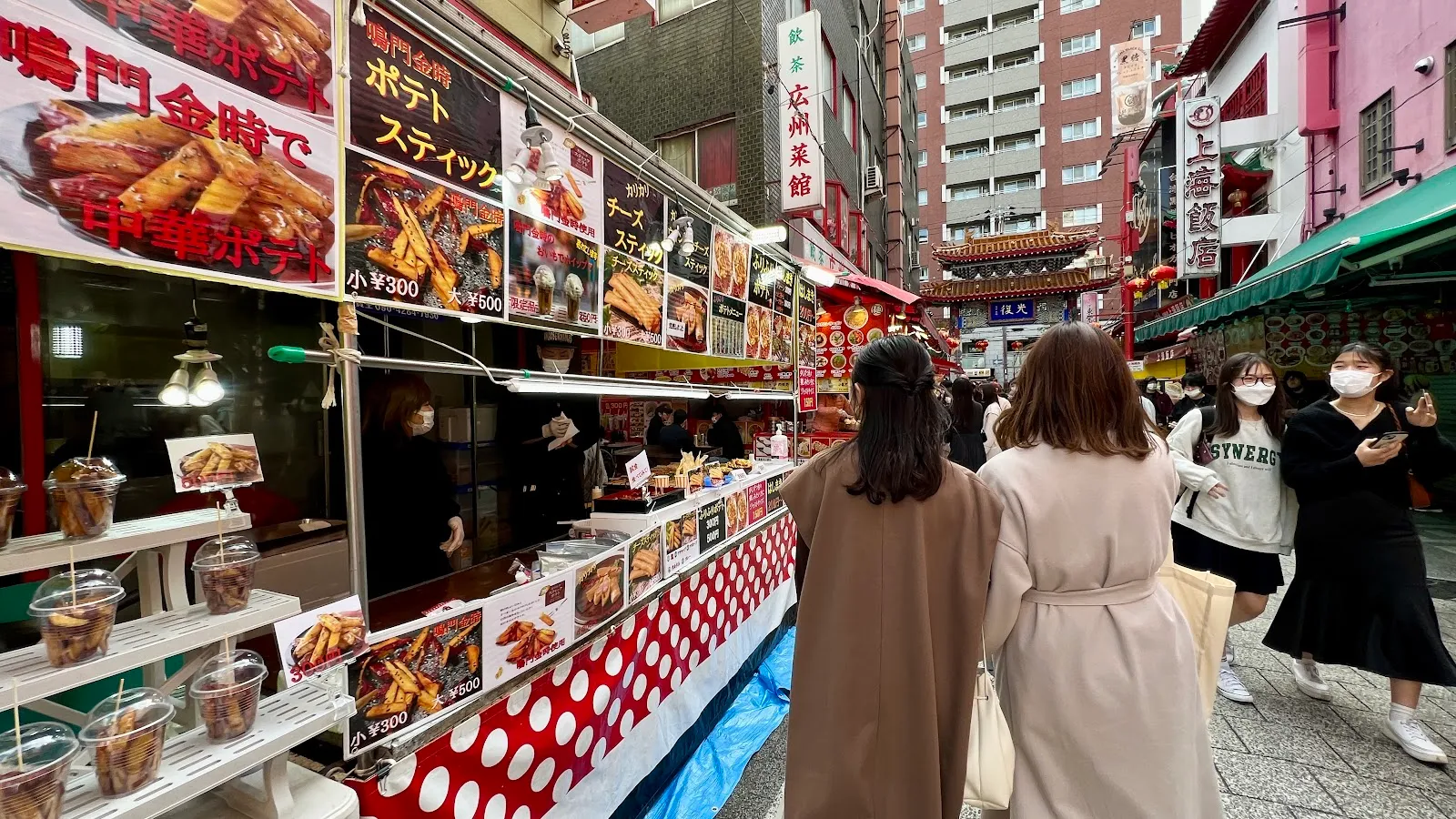
Many shops put their food on display stands at the front, so you can choose by sight. Common items are dim sum, dumplings, buns and Chinese pastries. Grilled shoronpo soup dumplings, Peking duck wraps and sesame balls are also easy to find, and some restaurants serve shark fin. Mixed Japanese and Chinese dishes appear too, such as ramen, milk buns and tapioca drinks, and some places serve wagyu beef.
A long-established pork bun shop, Roushoki, stands in Nankinmachi Square and often has a line for fresh buns. Besides Chinese restaurants there are Western steak houses and Japanese eateries. If you want a sit-down meal, there are restaurants ranging from long-established to recently opened. Shops that make their food from scratch are the better choice for a more traditional taste.
Seasonal festivals
Crowds are largest at the traditional festivals. At Lunar New Year, dragon dances and other performances take place, and New Year's sweets are sold. Around the Mid-Autumn Festival, mooncakes appear. A Lantern Fair is also held. Visit at these times if you want to see the district at its busiest, and expect the narrow streets to be crowded.
Combining it with a walk
Nankinmachi is a short walk from Motomachi Station, and about 10 minutes southwest of Sannomiya Station. The Former Foreign Settlement is around four minutes away on foot, Sorakuen Garden about ten minutes, and Ikuta Shrine about 15. The Motomachi shopping streets and Sannomiya Center Gai lie along the route between the stations, so you can browse on the way. The Kobe City Loop bus also stops at Chinatown.
FAQ
Where is Nankinmachi and how do you get there?
It is in Chuo Ward, Kobe, just south of Motomachi Station. From Sannomiya Station it is about a 10 minute walk southwest. The City Loop bus also stops here.
How long do you need at Nankinmachi?
One to two hours is enough to walk the streets, eat a few snacks and see the central pavilion. Add time if you plan a sit-down meal.
What should you eat in Nankinmachi?
Pork buns, dumplings, dim sum, grilled shoronpo soup dumplings, Peking duck wraps and sesame balls are the usual choices. Many are made to eat while walking.
When is Nankinmachi busiest?
Weekends, holidays and Golden Week are crowded, and the evening sees a steady flow of people. Lunar New Year and the Mid-Autumn season also draw large crowds.
What is there to see besides food?
There are three gates, the Azumaya pavilion with its painted dragon and zodiac statues, and a temple dedicated to Guan Yu. Souvenir and variety shops line the streets.