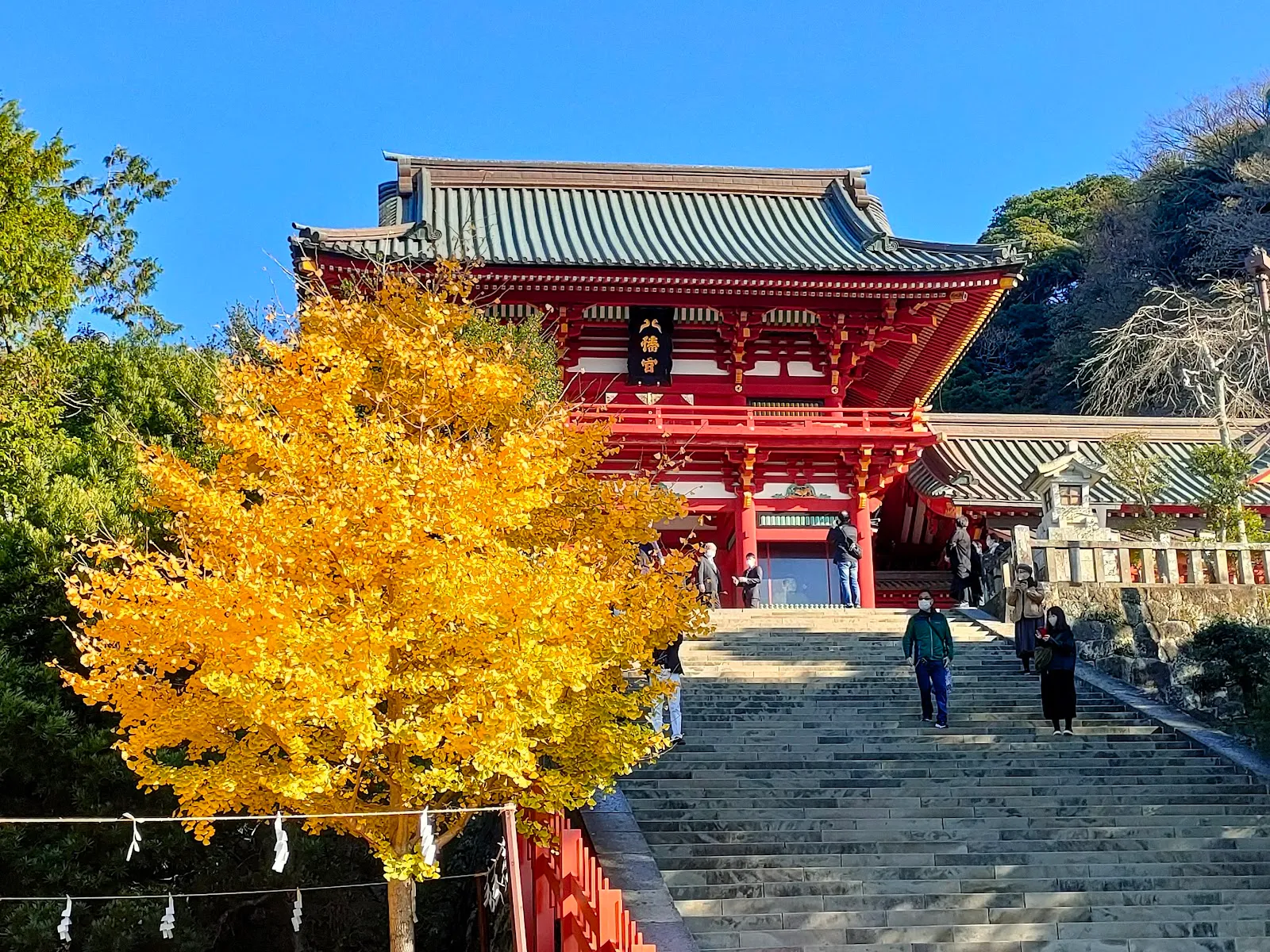
Tsurugaoka Hachimangu is Kamakura’s principal Shinto shrine, dedicated to Hachiman, a deity associated with the samurai. Founded in 1063 and moved to its present site by Minamoto no Yoritomo in 1180, it sits at the end of a long approach through the city. Walk beneath the torii gates, pause by the ponds and smaller shrines, then climb the broad stone staircase to the main hall and a view over Kamakura. The spacious grounds also host ceremonies and festivals; on busy days, quieter corners lie away from the central route.
A shrine at the centre of Kamakura
Tsurugaoka Hachimangu is dedicated to Hachiman, a deity closely associated with the Minamoto clan and the samurai. The shrine was founded in 1063 by Minamoto no Yoriyoshi, then moved to its present location in 1180 by Minamoto no Yoritomo, founder of the Kamakura shogunate. Yoritomo made the shrine a religious centre of his government and placed it at the heart of the city’s plan.
Wakamiya Oji, the main avenue, runs from the shrine towards the coast. The approach connects the grounds with Kamakura’s urban centre and gives a sense of the shrine’s place in the city. Torii gates mark the route, which passes ponds and bridges before reaching the main compound.
Ponds, shrines and the main hall
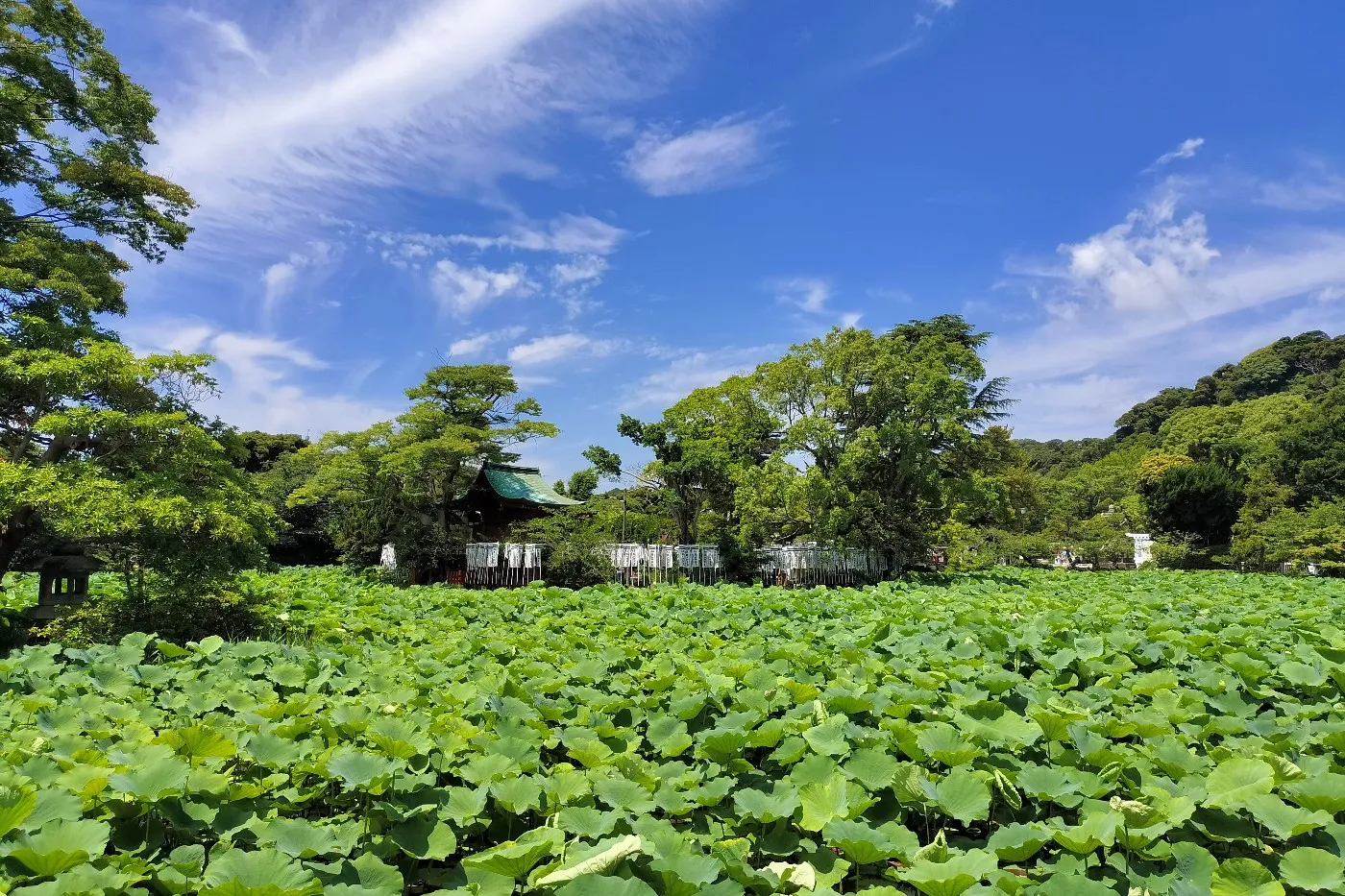
The grounds contain several shrine buildings, smaller shrines, gardens and ponds. The two ponds are known as Genji Pond and Heike Pond, names associated with the rival Minamoto and Taira clans. The islands in each pond carry the same historical symbolism: Genji Pond has three, while Heike Pond has four. The number four can also be read with a pronunciation associated with death in Japanese.
From the entrance, the broad stone staircase rises to the main hall, also called the Hongu or Jogu. The elevated position gives a view back over the city. There is also a small shrine museum by the staircase, displaying treasures belonging to the shrine. Take time to look beyond the central route for the smaller buildings and shaded paths.
Ceremonies and seasonal events
Tsurugaoka Hachimangu remains an active place of worship. Weddings and blessings may take place in the grounds, and ceremonies and festivals are held during the year. Reitaisai, the shrine’s major festival, includes yabusame, in which archers shoot at targets from horseback, as well as a procession of portable shrines, music and traditional dances.
Visitors may also come across ceremonies linked to the shrine’s history. One traditional building ritual includes carpenters carrying timber while singing, followed by ceremonial work by a master carpenter. If an event is under way, leave space for worshippers and participants, and observe quietly.
Planning your visit
The shrine is within Kamakura’s city centre and can be reached from Kamakura Station through Komachi-dori or by following the main avenue. The long approach begins towards the waterfront and passes through the city; you can also start closer to the shrine if you have less time.
Weekdays are a practical choice if you want to avoid some of the crowds. New Year and festival days can be especially busy, so allow extra time then. A visit of about 90 minutes gives you time to see the main hall, ponds and smaller shrines without rushing. Afterward, nearby cafés and shops provide places to continue exploring the area.
FAQ
How long should I spend at Tsurugaoka Hachimangu?
Allow about 90 minutes to explore the shrine grounds and main buildings.
What is Tsurugaoka Hachimangu dedicated to?
The shrine is dedicated to Hachiman, a deity associated with the Minamoto clan and the samurai.
When is Tsurugaoka Hachimangu busiest?
Expect especially heavy crowds around New Year and on festival days. A weekday visit can be quieter.
What can you see at Tsurugaoka Hachimangu?
The grounds include the main hall, smaller shrines, gardens and two ponds. A small shrine museum near the staircase displays treasures belonging to the shrine.