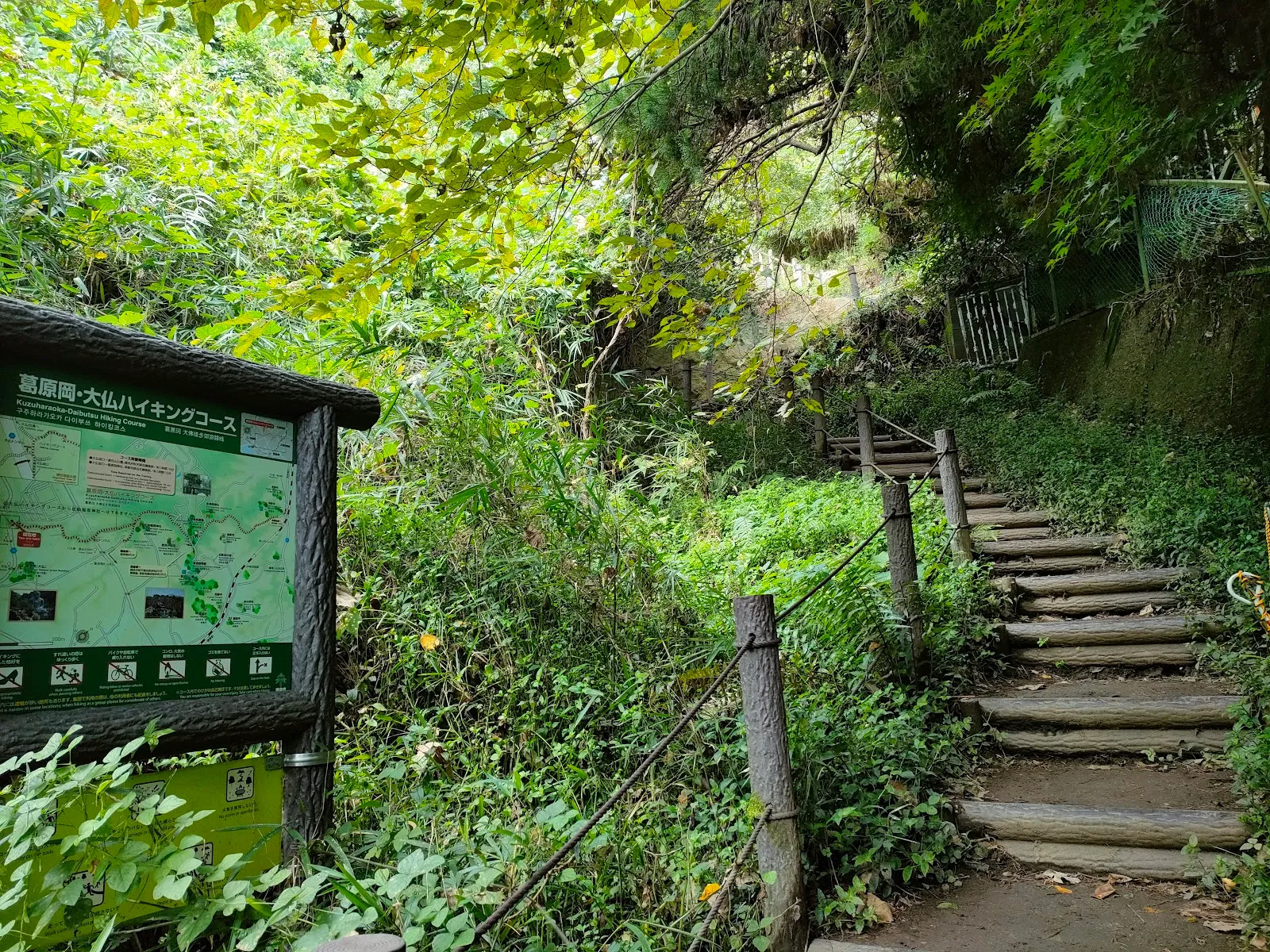
Engaku-ji is a major Zen temple in Kita-Kamakura, set on a wooded hillside beside Kita-Kamakura Station. Founded in 1282, it was built to honor those who died in the Mongol invasions and is now a spacious complex of halls, gates and paths. Look for the Sanmon gate, the Butsuden with its wooden Shaka Buddha, and the Shariden, which enshrines a tooth of the Buddha. The grounds also have quiet corners for reflection, and you can enjoy matcha or take part in sutra transcription.
A temple founded in 1282
Engaku-ji was founded in 1282 by Hōjō Tokimune, the regent who invited the Chinese Zen monk Mugaku Sogen to Kamakura. The temple was built after the Mongol invasions, with prayers offered for those who died in the fighting, including Japanese and Mongolian soldiers. Its memorial role remains part of the site’s history.
Engaku-ji became one of Kamakura’s leading Rinzai Zen temples and ranks among the city’s Five Great Zen Temples. It was also the head temple of the Engaku-ji branch of the Rinzai school. The grounds once held as many as 50 buildings; 18 remain today. The complex follows a wooded hillside, with paths and halls spread across different levels.
Halls, gates and sacred objects
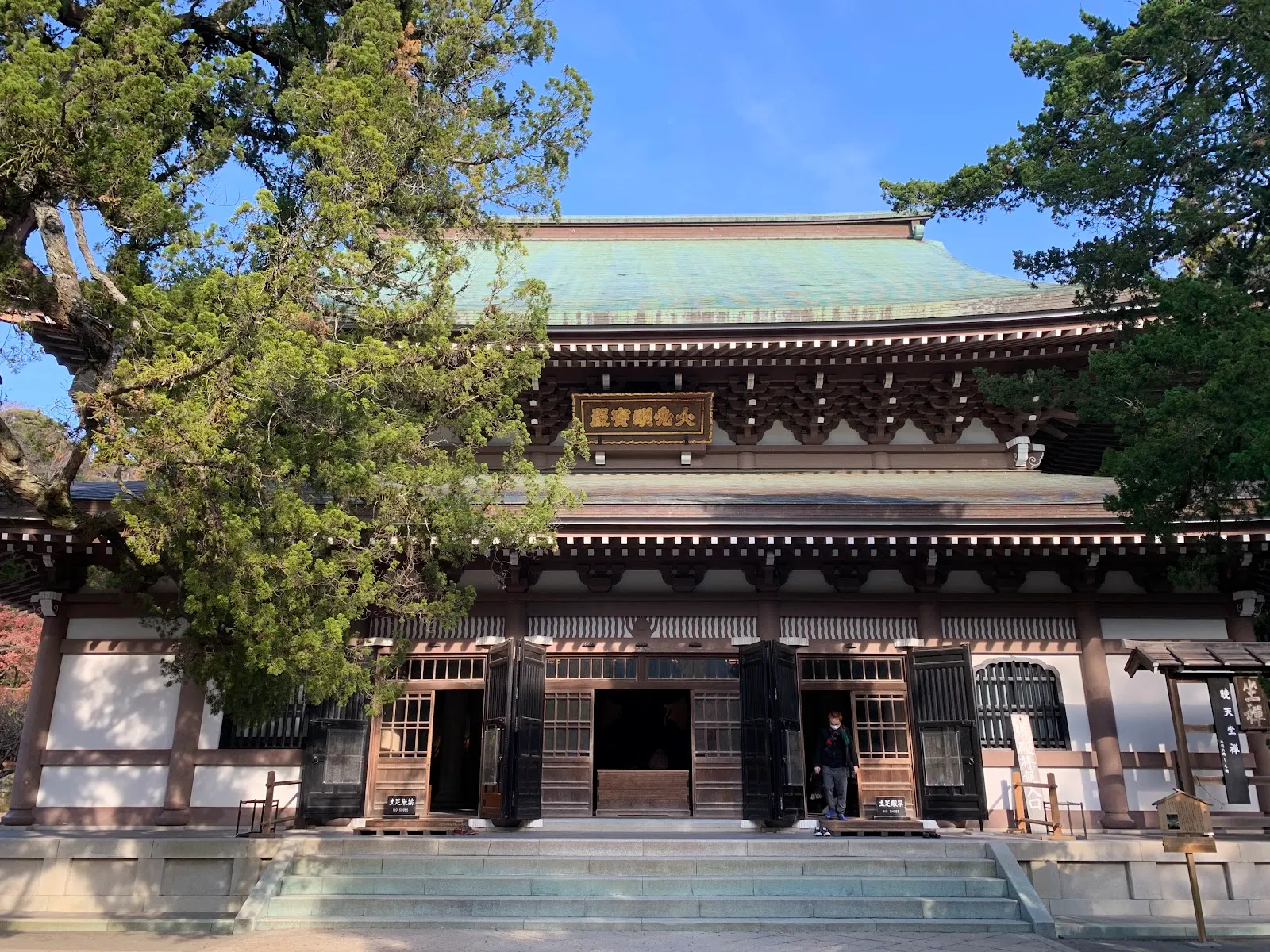
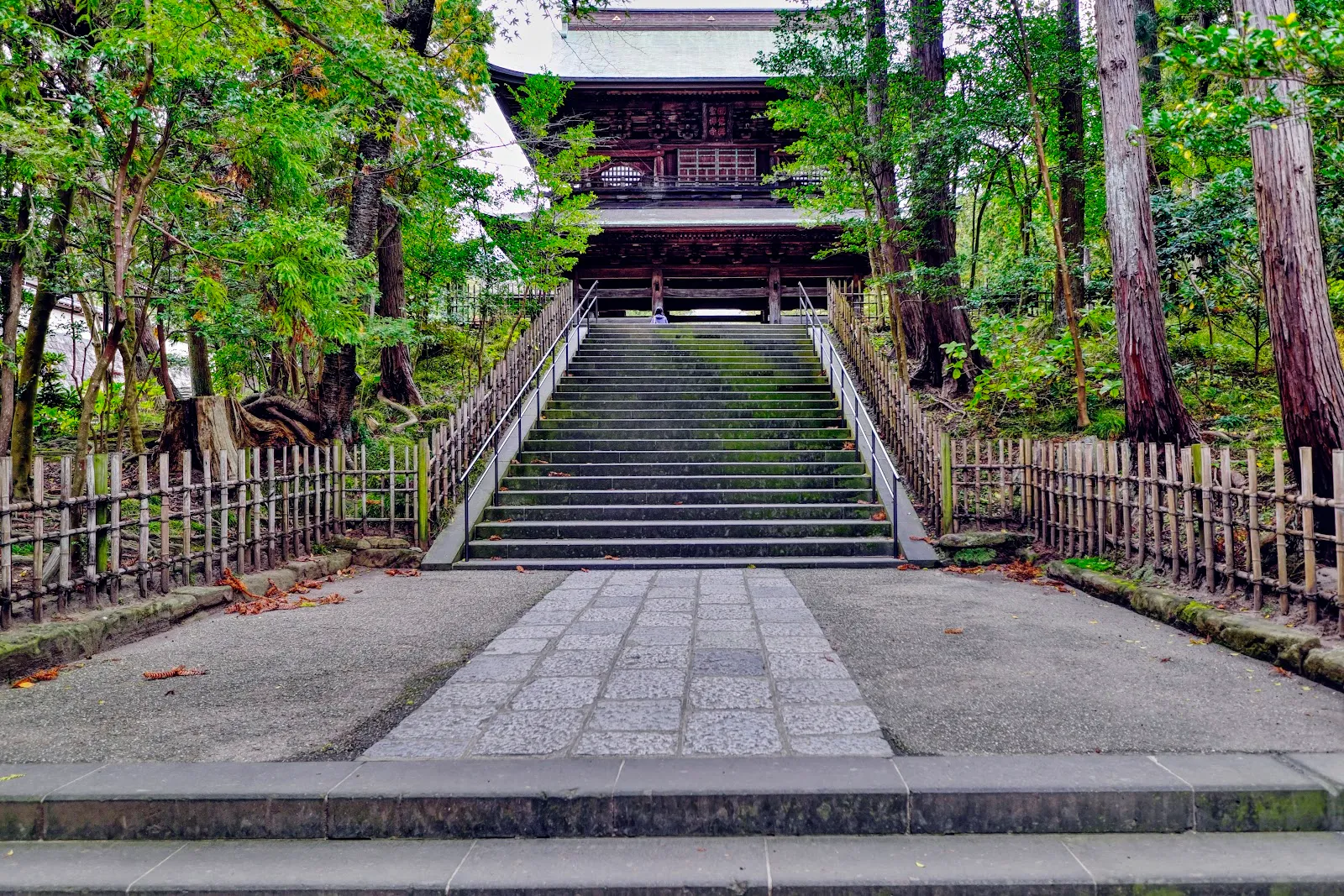
The Sanmon, or main gate, marks the approach to the temple grounds. Farther in, the Butsuden houses a large wooden figure of Shaka Buddha. The Shariden, a two-storey hall, enshrines a tooth of the Buddha said to have been brought to Kamakura from China. It is designated a National Treasure, as is the temple’s large bell, cast in 1301.
As you walk, notice the wooden halls and details associated with Zen temple architecture, including bell-shaped windows and wooden braces. The grounds combine built structures with mossy paths, bamboo and hillside vegetation. Views and quieter stretches open up as you climb away from the lower areas. Paths at the top include steps and uneven stone, so the whole complex is not equally easy to walk.
A slower visit in the grounds
Engaku-ji’s scale leaves room to move at a measured pace between its buildings. Inner courtyards provide places to pause, and the wooded setting changes with the seasons. Plum blossoms begin to appear in the colder part of the year, while the temple’s maple foliage draws attention in autumn. Hydrangeas can also be seen, though the grounds are not known for the densest displays in Kamakura.
You can make the visit more participatory by transcribing sutras, an activity listed at ¥1,500, or by stopping for matcha in an inner courtyard or tea house. The temple is close to Kita-Kamakura Station, making it straightforward to include with other temples in the district. Early morning is a good choice if you want to walk in a calmer atmosphere.
FAQ
How do I get to Engaku-ji?
The temple is directly beside Kita-Kamakura Station, just steps from the station ticket gate.
What should I see at Engaku-ji?
Look for the Sanmon gate, the Butsuden and its wooden Shaka Buddha, the Shariden and the large bell cast in 1301.
How much does sutra transcription cost?
The gathered information lists the activity at ¥1,500.
Is the temple easy to explore on foot?
Lower areas have smoother paths, but upper sections include steps and uneven stone walkways.