
At Lake Kawaguchi in Fuji Five Lakes, the Kubota Itchiku Art Museum displays the kimono art of Itchiku Kubota, who revived the lost tsujigahana dyeing technique. The current exhibition, “With the Sunset in Siberia,” brings together 26 kimono inspired by nature and the passage of time. Look for “Burning Sun,” a personal work shaped by Kubota’s wartime imprisonment in Siberia. The pyramid-shaped main building sits among moss, stones and water features; an adjoining tearoom serves matcha and traditional sweets.
Kubota and tsujigahana
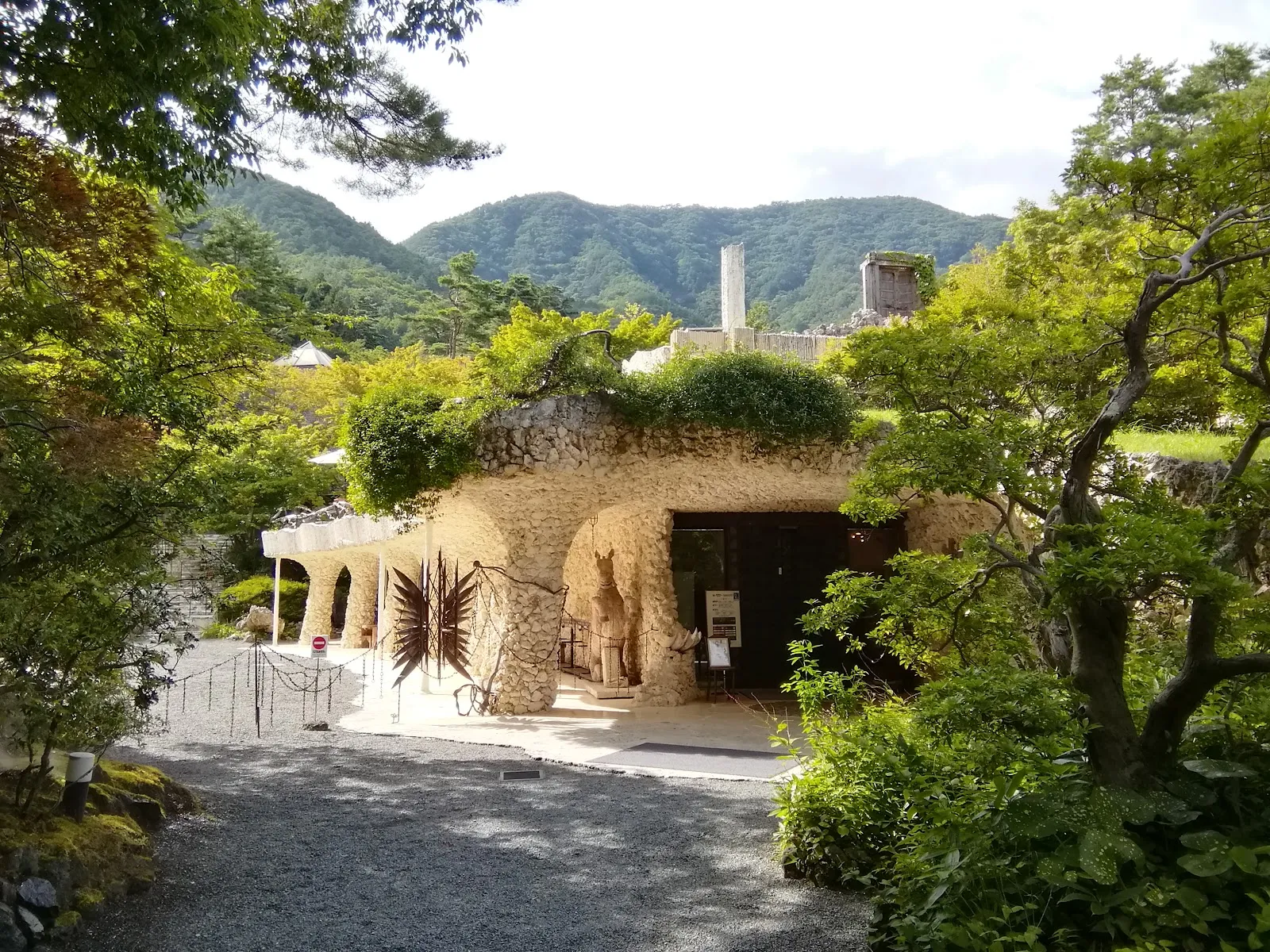
The museum is dedicated to the textile artist Itchiku Kubota and his work with tsujigahana, a dyeing technique that fell out of use. Kubota studied the method and developed his own approach to it, bringing the pattern and colour of the fabric into his kimono designs. Here, the craft is presented as art, with the finished pieces on display rather than as a demonstration of the dyeing process.
The kimono draw on natural forms and the passing of time. Their colour and fine fabric details reward a slow look. The collection is compact, so you can give each work your attention instead of hurrying through a long sequence of galleries.
The current exhibition
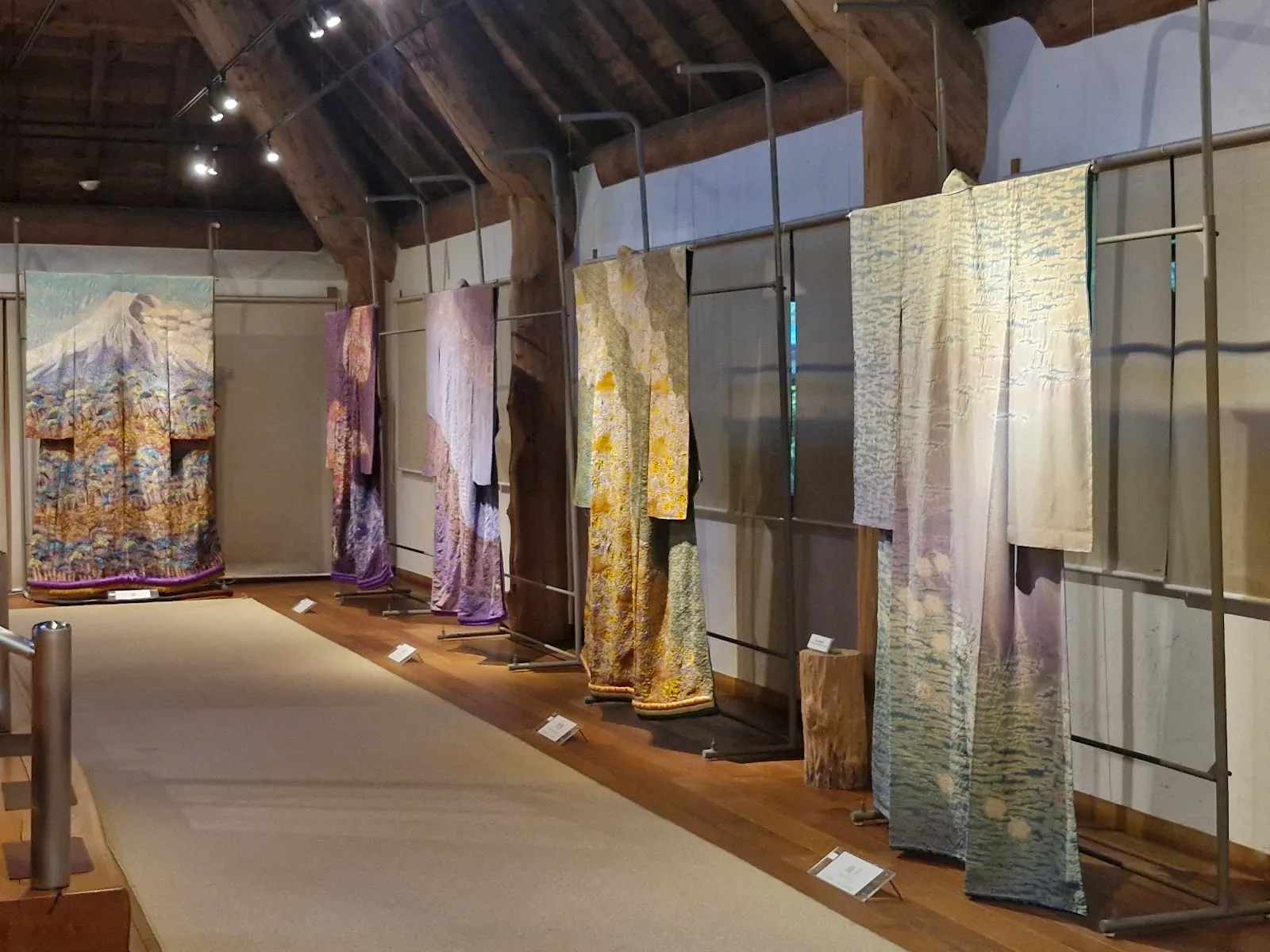
“With the Sunset in Siberia” presents 26 kimono inspired by nature and time. One work to look for is “Burning Sun,” made in 1986. Kubota created it in memory of his time as a prisoner of war in Siberia; the piece expresses endurance and hope after hardship.
The works are shown together in a spacious hall in the pyramid-shaped main building. Photography is not permitted inside, so plan to view the designs directly. Notice how the colours and textures change across the display, and allow time to look closely at the fabric rather than treating the visit as a quick photo stop.
The building and garden
The main hall’s pyramid form gives the museum a distinctive setting for the kimono collection. Outside, paths pass through a garden of moss, stones and water features. The grounds are part of the visit, with details to notice among the planting and ponds; frogs can be heard around the water.
Walk the outdoor paths after seeing the exhibition, when you can take in the building and its surroundings at a quieter pace. In autumn, the foliage adds seasonal colour to the garden. The museum also has an adjoining tearoom serving matcha and traditional Japanese sweets, a place to pause before continuing your visit.
FAQ
What is on display at the Kubota Itchiku Art Museum?
The museum shows kimono art by Itchiku Kubota, including works using his approach to the tsujigahana dyeing technique. The current exhibition, “With the Sunset in Siberia,” includes 26 kimono.
Can you take photos inside the museum?
Photography is not allowed inside the exhibition. You can explore and photograph the outdoor grounds.
Is there a tearoom at the museum?
Yes. The adjoining tearoom serves matcha and traditional Japanese sweets.
When is a good time to visit?
Autumn is a good choice if you want to see the garden foliage in seasonal colour.


