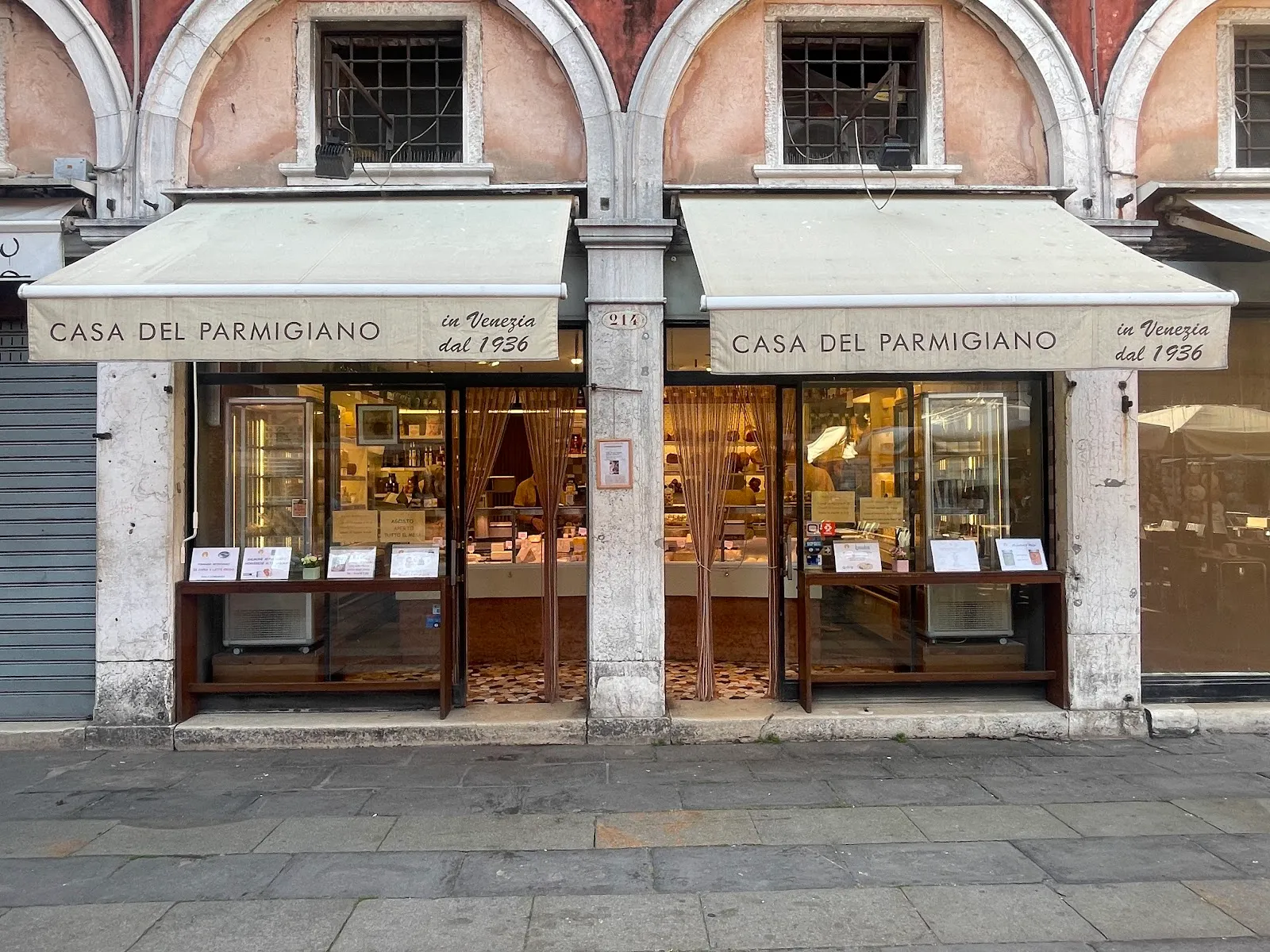
On Murano, the Murano Glass Museum traces the island’s glassmaking tradition through objects from ancient times to contemporary work. It occupies Palazzo Giustinian, the former residence of the bishops of Torcello, and its displays include chandeliers, jewelry, tableware and finely worked glass pieces. Look for archaeological finds and a distinctive dinner-table setting shaped like a garden. The collection is a useful stop before exploring Murano’s glass shops, where the objects you see can give you more context for the craft.
A museum in the former bishops’ palace
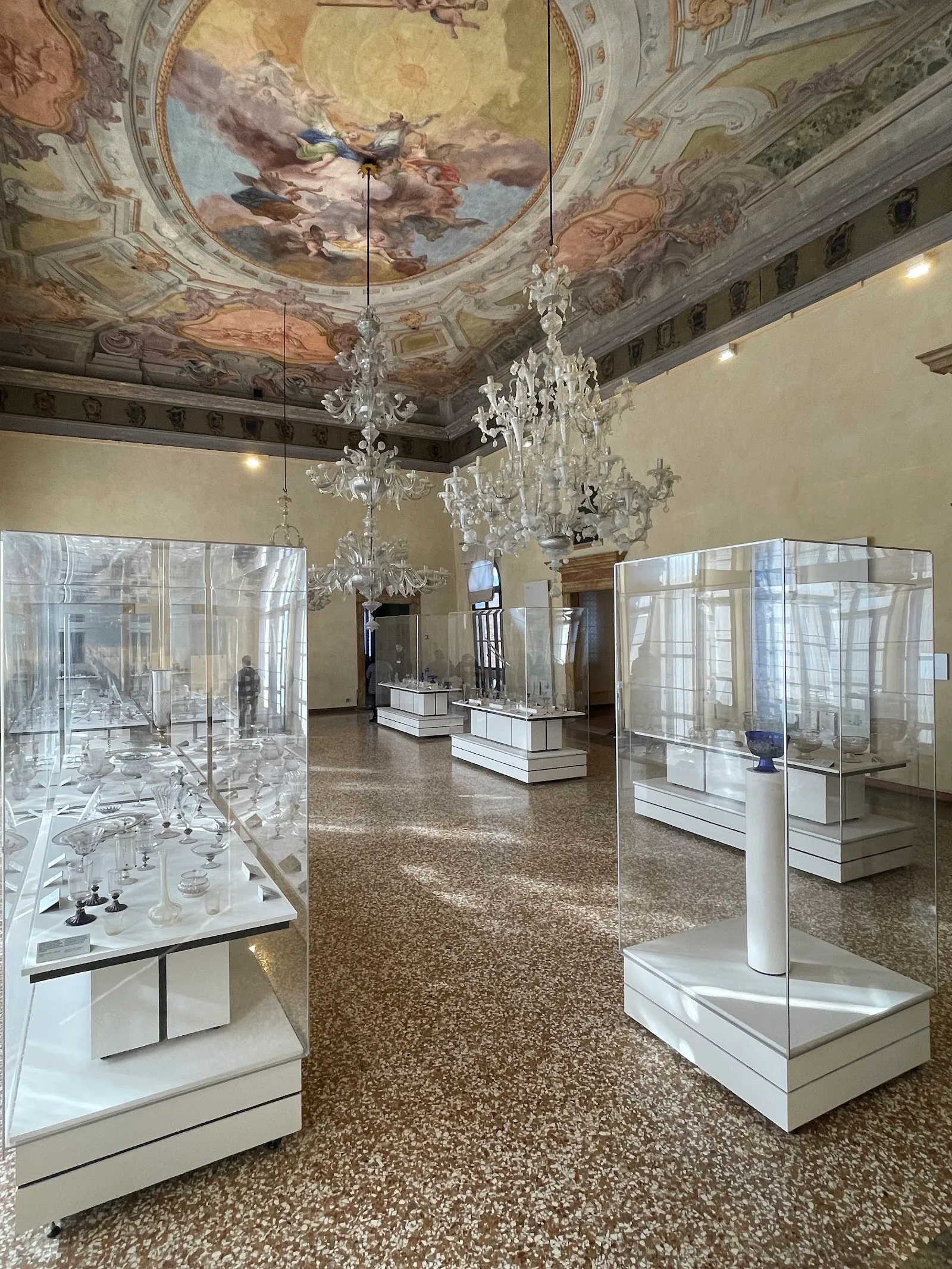
The Murano Glass Museum, or Museo del Vetro, is at Fondamenta Marco Giustinian 8 on Murano, one of Venice’s lagoon islands. Its home, Palazzo Giustinian, was once the residence of the bishops of Torcello. The building’s rooms include ceiling frescoes and glass chandeliers, giving the collection a historic setting tied to the island’s past.
The museum was founded in 1861 by Murano mayor Antonio Colleoni and the abbot Vincenzo Zanetti. Their original aim was to gather records about Murano’s history and life. Donations from local glass furnaces helped build the collection, and the institution later became a museum. The displays were expanded and renovated, with objects presented in arranged exhibition spaces and explanatory notes in Italian and English.
From archaeological glass to modern work
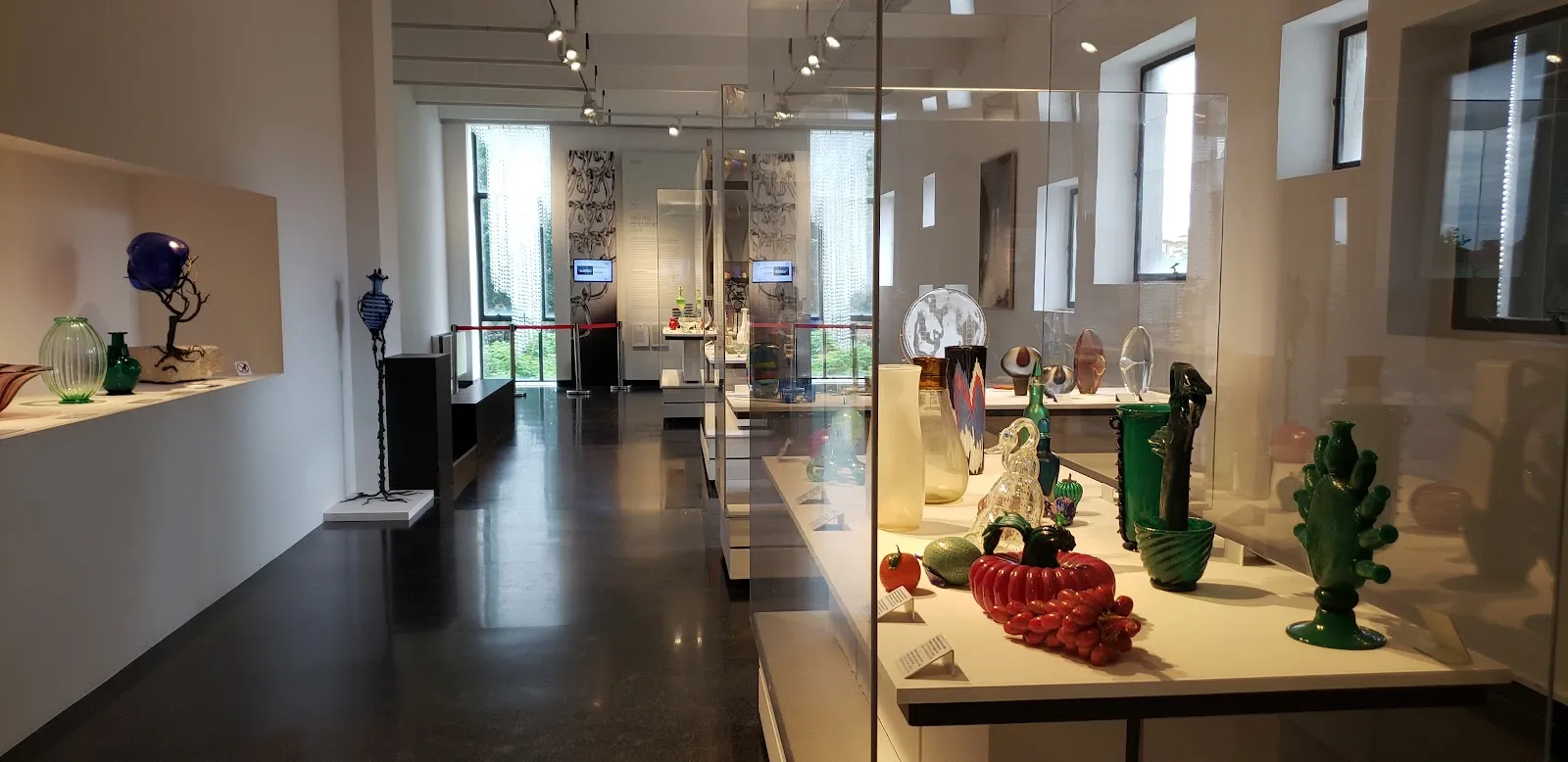
The collection follows glass across a long span of time, from archaeological finds to pieces made in the 20th century and contemporary examples. Early displays include glass from the Roman period. Some archaeological objects came from burial grounds in the ancient Dalmatian cities of Jader, now Zadar, and Aenona, now Nona.
Later rooms show the development of Murano glass through objects made for different periods and purposes. You can compare intricate glassware, chandeliers and jewelry, and see how the material has been shaped into both practical objects and decorative works. The museum’s displays include historical and modern pieces, so the visit gives context for the varied styles found around Murano today.
Details to look for in the galleries
Among the objects highlighted in the collection are chandeliers, carefully worked jewelry and a dinner-table display arranged to resemble a garden. Archaeological finds offer a contrast with the later glass art. Some rooms also contain beads and beadwork, which may interest visitors who work with beads or want a closer look at the detail involved.
The collection includes temporary exhibitions as well as displays on glassmaking techniques. The Muve app provides a self-guided route through the objects, and the museum’s Wi-Fi supports interactive guides. Plan time to read the labels and look at individual pieces closely; the glass is fragile, and some objects show signs of repair.
Making the museum part of a Murano visit
The museum can provide useful background before you browse Murano’s galleries and glass shops. Seeing older and newer pieces together gives you examples of the island’s craft to compare with work on sale nearby. You can also walk from the museum area to nearby galleries and restaurants, making it straightforward to combine the visit with time elsewhere on the island.
For a broader museum itinerary, the material gathered for this guide notes that combined tickets with other Venice museums may be available. Check the current ticket options before you go. If you want a quieter visit, choose a time outside the island’s peak tourist periods.
FAQ
Where is the Murano Glass Museum?
It is at Fondamenta Marco Giustinian 8 on Murano, in Venice. The museum is housed in Palazzo Giustinian, the former residence of the bishops of Torcello.
What can you see at the Murano Glass Museum?
The displays range from archaeological glass to works from the 20th century and contemporary pieces. They include chandeliers, jewelry, tableware, beads and a garden-shaped dinner-table display.
How long do you need at the museum?
Allow about 1 to 2 hours to explore the galleries and read the displays.
Is there a self-guided tour?
Yes. Download the Muve app before your visit to access a self-guided tour. The museum’s Wi-Fi can be used with its interactive guides.