MUSE is Trento's science museum, on the bank of the Adige in the Le Albere district, about 20 minutes on foot from Piazza del Duomo. Renzo Piano designed the building, and its peaked roofline echoes the surrounding mountains. The exhibitions follow a mountain from summit to base, from sun and ice on the upper floors down to a tropical greenhouse with live animals. Along the way are aquariums, dinosaur displays, fossils, hands-on stations and a sensory room for children up to five. A terrace looks over the valley, and most exhibits come with English translations.
A Renzo Piano building in Le Albere
MUSE opened on 27 July 2013 and took over the work of the earlier Tridentine Museum of Natural Sciences. It stands in the Le Albere residential district, south of the historic Palazzo delle Albere, between the railway and the River Adige. Renzo Piano designed both the museum and the district.
The building takes its shape from the valley around Trento. Its peaks follow the outline of the mountains, and large glass walls let daylight into the interior. The structure is fitted with solar panels, wind turbines and a water recycling system, all arranged around a large central atrium.
The museum sits in open green space with urban gardens on all sides and cycle paths nearby. Many visitors walk around the grounds before or after going inside.
From the terrace to the greenhouse
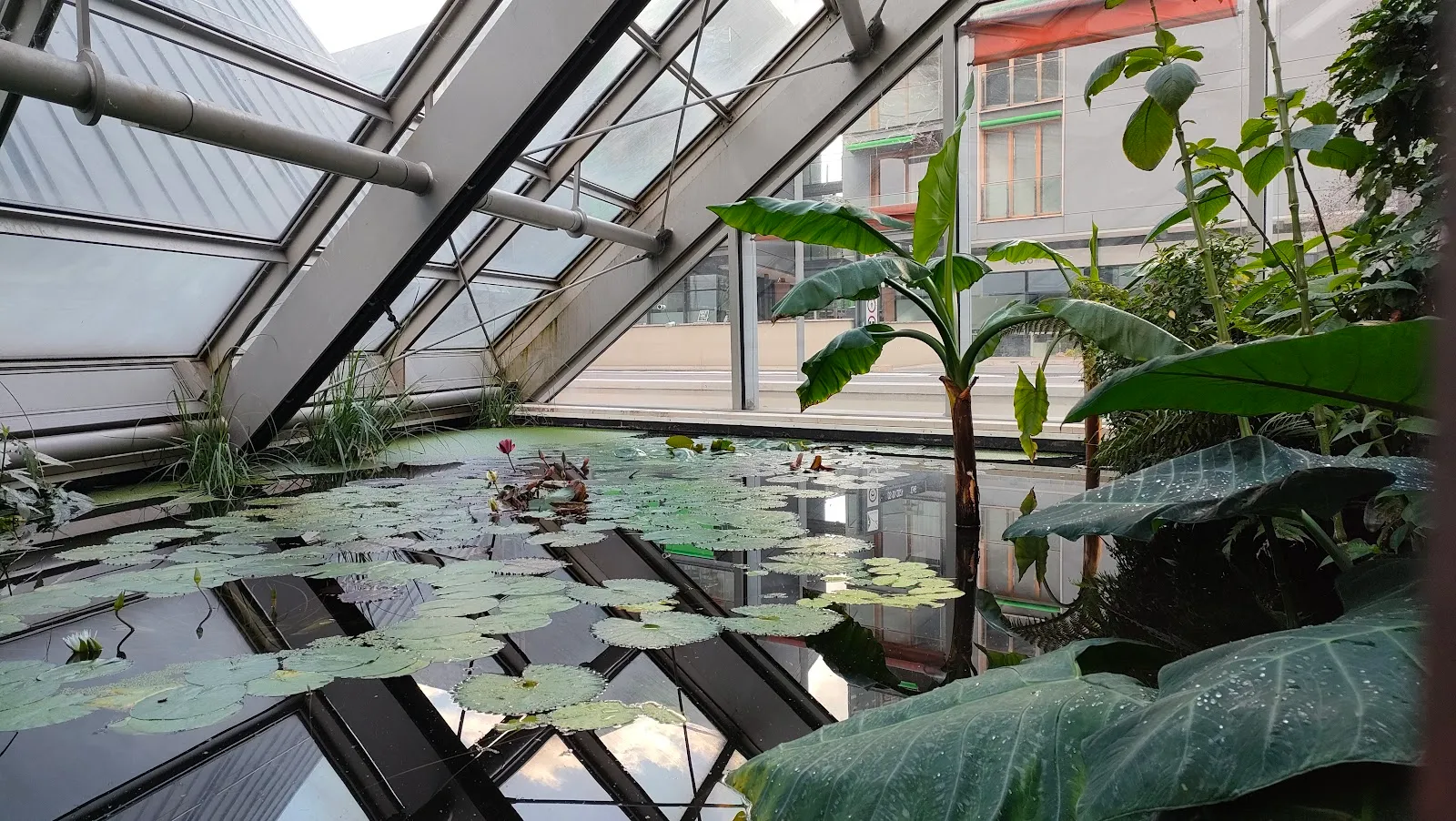
The permanent exhibition uses a mountain as its metaphor for life on Earth, and you travel it from the top. The terrace and the fourth floor deal with sun and ice. From there the route descends through biodiversity, sustainability and evolution, and ends in the basement at the tropical greenhouse.
The greenhouse is warm and humid, with live animals among the plants. It is a sharp contrast to the Alpine themes above it, and especially welcome when snow is on the ground outside.
What to look for inside
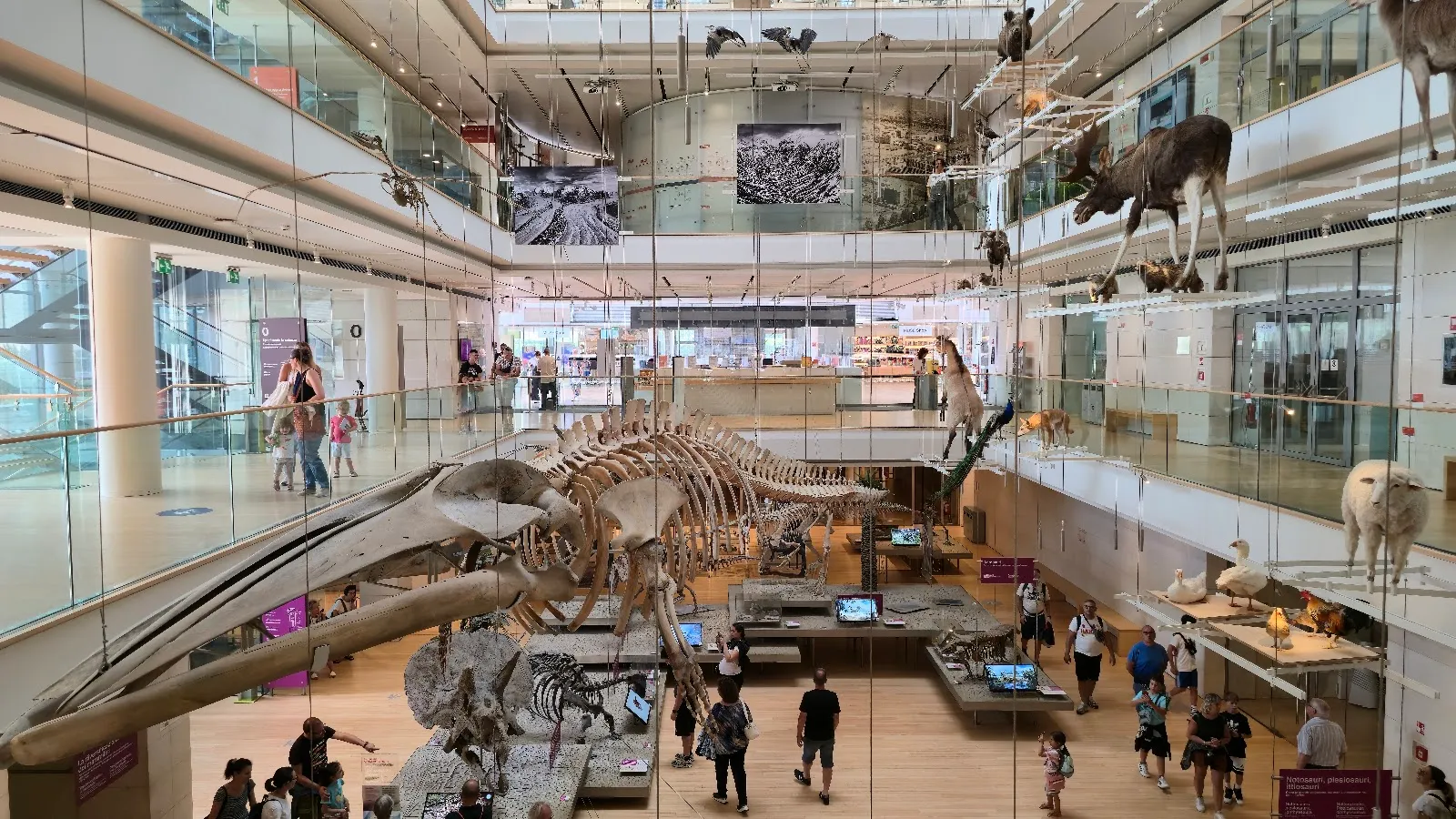
Along the route you meet dinosaurs, early humans, mammals, glaciers and Alpine forests, presented through displays you can look at, touch and listen to. There are several aquariums with fish, and stations on DNA testing and extinct species. A floor with fossils and animal skeletons is among the most absorbing parts for many visitors.
The displays also cover the geology of the Dolomites and the mountain environment in general. Alongside the permanent exhibition, the museum runs temporary exhibitions and special projects with national and international partners. MUSE Lab is where experiments with new technologies take place.
Most exhibits have English translations. The museum is not crowded with objects, so you can move at your own speed.
Visiting with children
The museum is built with families in mind. There are touch-and-feel exhibits throughout, workshops and activities for small children, and a sensory room for children up to five. Restrooms are on every floor, and changing tables are available.
The exhibition rooms are monitored to protect the displays, and staff may ask children to lower their voices. A short word beforehand about handling exhibits gently and speaking quietly helps the visit go smoothly. Check ahead whether any activity for the youngest children needs to be booked.
The terrace and summer events
The terrace is open to enter without charge and gives a view over the Adige Valley. In summer it is also used for evening events. Museum experts lead stargazing sessions with telescopes, away from the city lights, and these cost around €3.
The programme between June and September also includes concerts, theatre and guided walks to learn about local mushrooms. Check the museum's website for current dates before planning around one.
Getting there and practical details
From Piazza del Duomo the walk takes roughly 20 minutes. Free and paid parking is available, both in a car park and on the street. The entrance, restrooms and parking are wheelchair accessible.
A cafe and a gift shop are at the entrance and exit. The museum is closed on Mondays. Tickets are reasonably priced, and buying them ahead is recommended.
FAQ
Is there an entry fee at MUSE?
Yes, there is an admission fee. Tickets are reasonably priced and family packages exist. Booking in advance is recommended. Check the museum's website for current prices.
How long do you need at MUSE?
Allow at least 3 hours. The building looks small from outside but has a lot inside, and a family with children can easily fill more time.
Is MUSE good for children?
Yes. It has hands-on exhibits, workshops, a tropical greenhouse with live animals and a sensory room for children up to five.
Are the exhibits translated into English?
Most exhibits have English translations.
How do you get to MUSE from the centre of Trento?
It is about a 20-minute walk from Piazza del Duomo, in the Le Albere district beside the Adige. Free and paid parking is also available.
Which day is MUSE closed?
MUSE is closed on Mondays. It is open the other six days of the week.