
The Quadriporticus of the theatres is a large square colonnade beside Pompeii’s Grande and Piccolo theaters. Built in the 1st century BC, it sheltered theater audiences from rain and provided space to walk between performances. Rows of columns still outline the courtyard; part of the portico has been restored, while many columns remain broken. The complex was later used by gladiators, who trained and spent time here. Look across the courtyard to see how this open space changed from a theater foyer to part of gladiator life.
A foyer beside two theaters
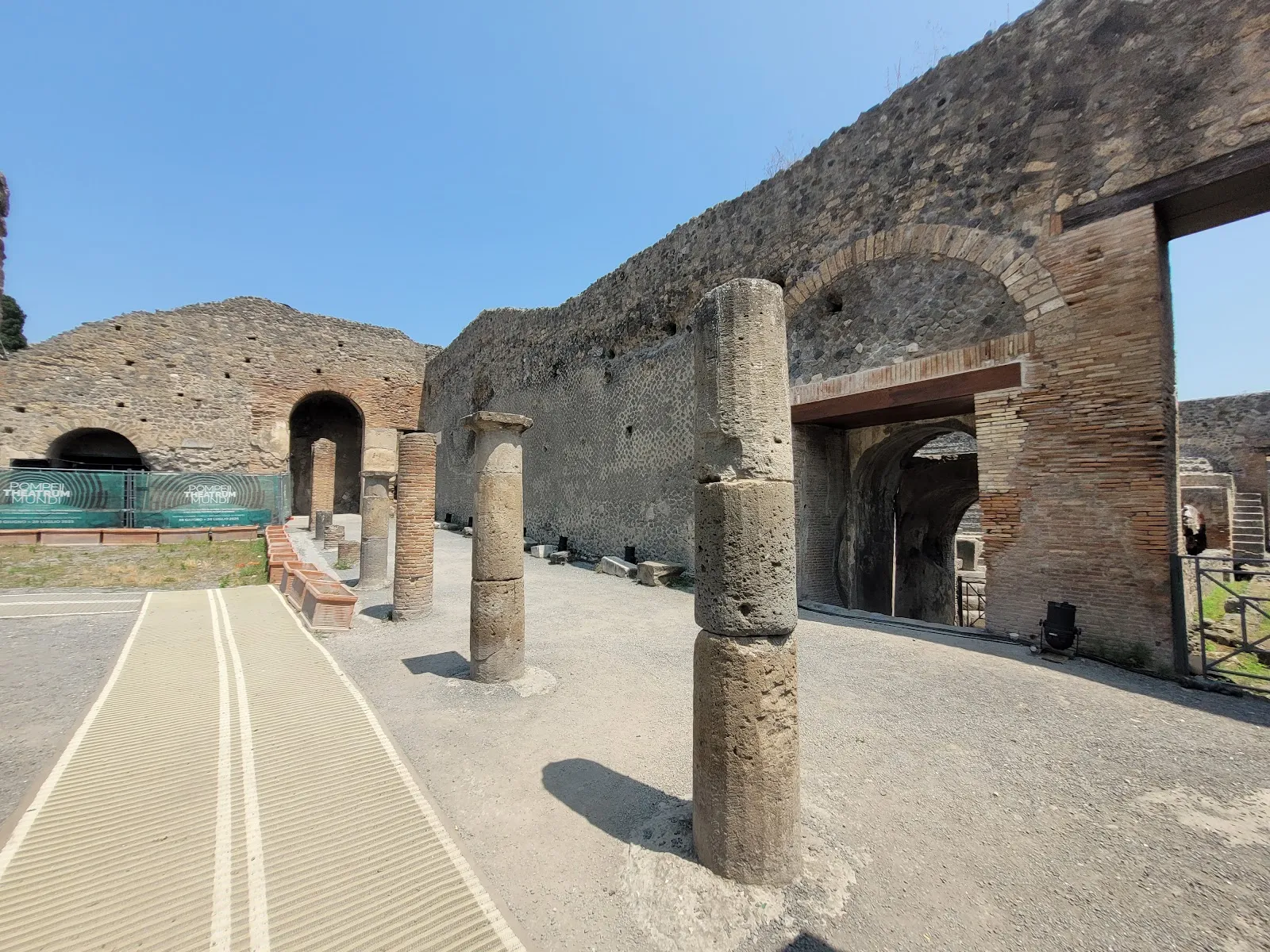
The Quadriporticus was built in the 1st century BC beside the Grande and Piccolo theaters. Its roofed colonnade formed a square around an open courtyard. Theater audiences could take shelter here from rain and walk between performances.
The rows of columns define the courtyard, though many are now broken. Part of the portico has been restored, so you can compare the repaired section with the surviving ruins.
Later use by gladiators
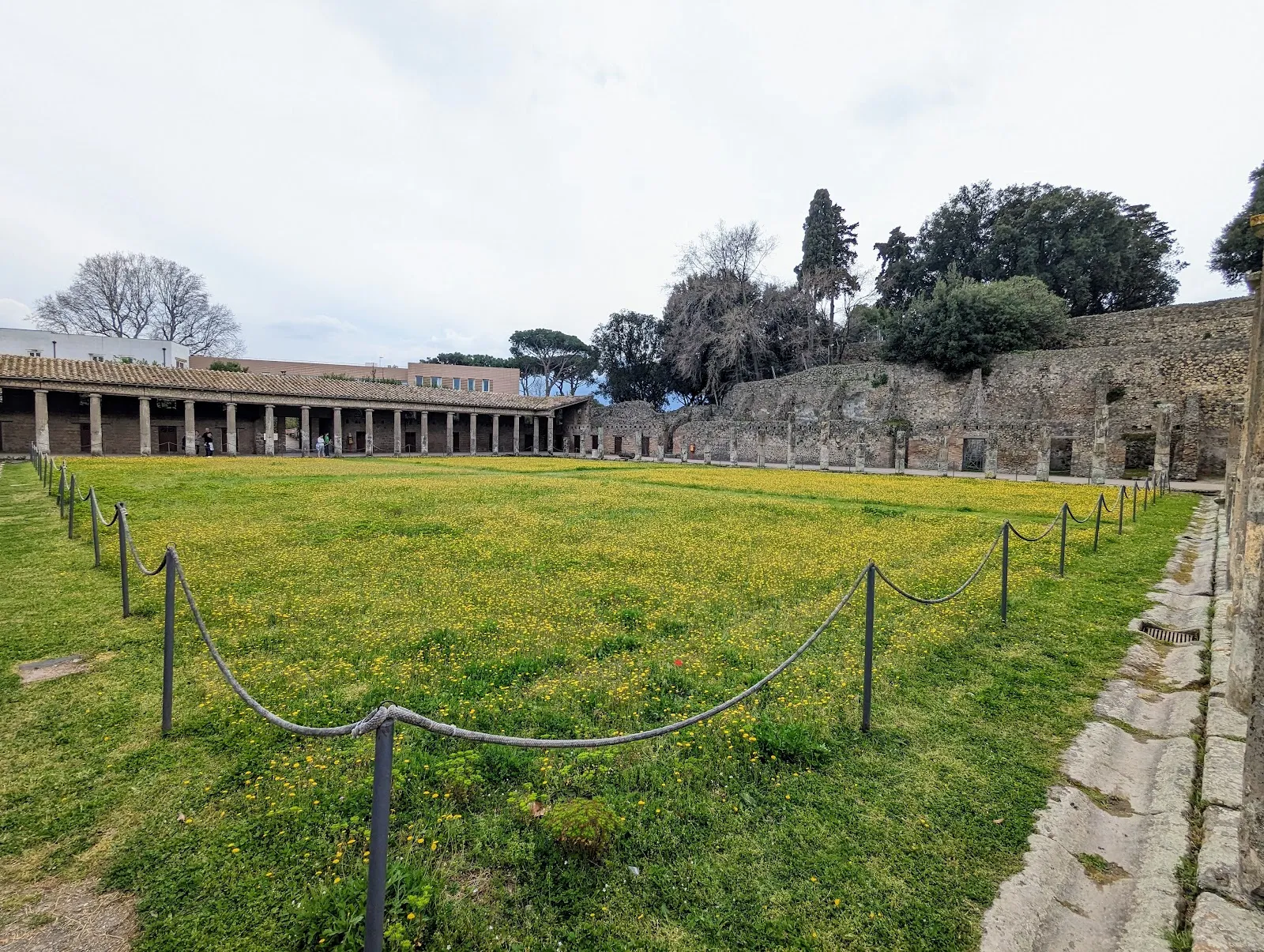
The space later became associated with gladiators. They trained here and used the complex for activities including eating, washing and sparring. This change of use gives the site a link to both theater audiences and gladiatorial life in Pompeii.
FAQ
What was the Quadriporticus used for?
It first served as a sheltered foyer for audiences of the nearby Grande and Piccolo theaters. Later, gladiators used the space.
What can you see at the Quadriporticus?
You can walk around the courtyard and see rows of columns, including a restored section. Many of the columns remain broken.
When is a good time to visit?
Early morning or late afternoon can help you avoid crowds.
Are advance tickets recommended?
Yes. Advance tickets are recommended for the Pompeii site.


