
In Pompeii’s western section, the House of the Tragic Poet is a modest-sized Roman home known for its mosaics and painted decoration. At the entrance, a dog mosaic accompanies the Latin warning Cave Canem, meaning “Beware of the Dog.” Inside, look for mythological frescoes and a floor mosaic showing actors preparing for a performance. Another mosaic depicts Ariadne and Theseus. The art is the reason to pause here: it gives a close view of the decoration found in a private Pompeian house.
The entrance mosaic
The dog mosaic at the entrance is the house’s best-known detail. Its Latin inscription, Cave Canem, translates as “Beware of the Dog.” The image and warning greeted people entering the home, and the mosaic has become one of Pompeii’s familiar symbols.
The house takes its name from a different mosaic, which shows actors assembling backstage before a performance. One figure prepares for a role while another plays a flute. The scene gives the building its theatrical name, even though the dog mosaic is the detail many people look for first.
Mosaics and mythological paintings
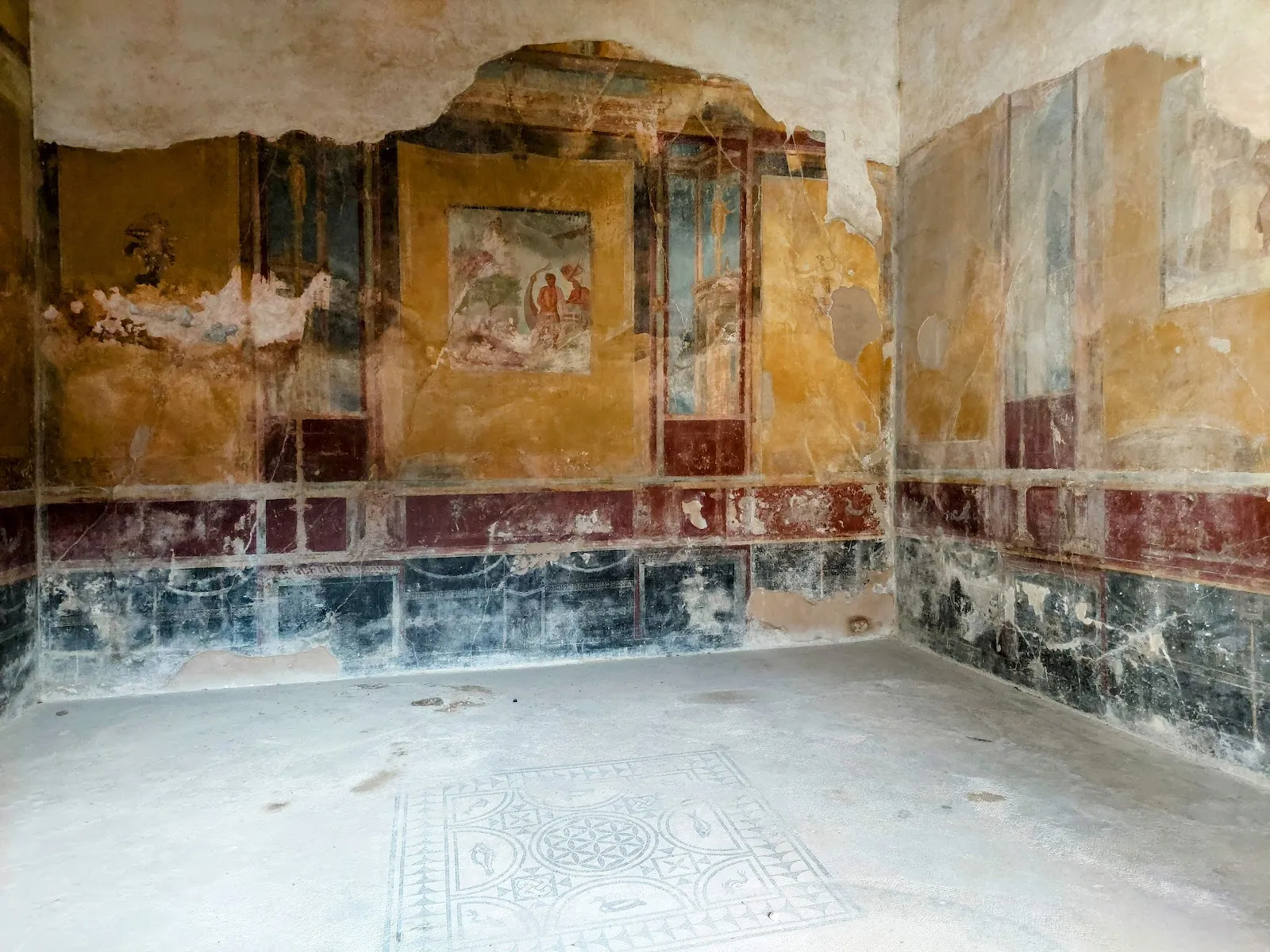
Look beyond the entrance for mosaics in the atrium, tablinum and courtyard. The image of Ariadne and Theseus is another notable floor decoration. Frescoes inside the house include mythological subjects, with large mythic figures painted in the atrium and episodes associated with the Iliad among the scenes noted here.
The richly worked surfaces stand out against the house’s modest size. Together, the mosaics and wall paintings offer a sense of how art and decoration shaped domestic spaces in Pompeii. Some rooms may not be open during a visit. If access is restricted, replicas behind glass can still give you a view of some of the artwork.
A home in ancient Pompeii
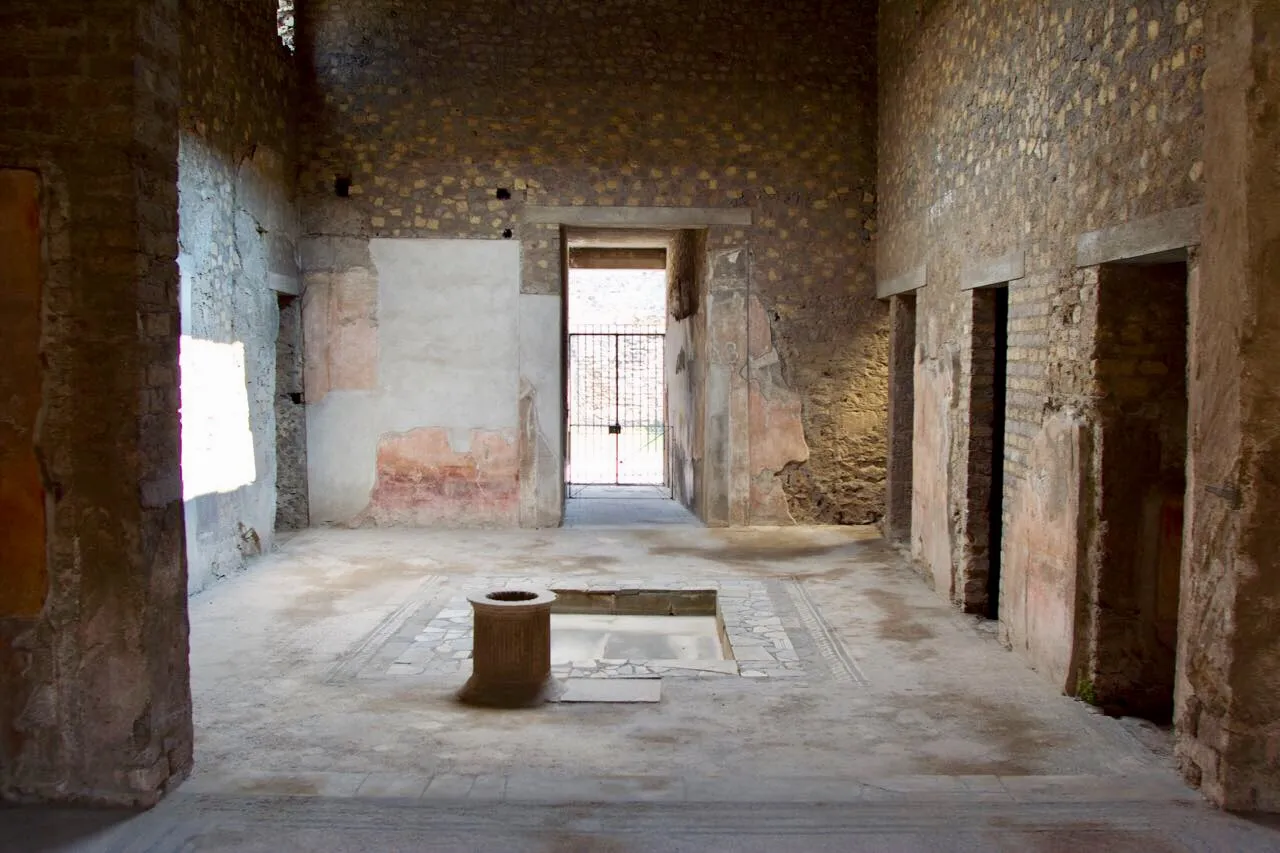
The House of the Tragic Poet is a typical atrium-style residence. Its layout included an atrium where water was collected, a tablinum used as a home office, and a peristyle garden with a household shrine. The dining room, kitchen and a small latrine were also part of the home.
The building is relatively small, but its decoration is unusually elaborate for its scale. A mosaic of actors preparing for a play led archaeologists to consider whether an important poet or writer might have lived here. That connection remains an interpretation, not a confirmed identity for the owner. The artworks, rather than the size of the house, are its clearest draw.
FAQ
What is the House of the Tragic Poet famous for?
It is known for its entrance mosaic of a dog with the Latin warning Cave Canem, or “Beware of the Dog,” as well as its frescoes and other mosaics.
Why is it called the House of the Tragic Poet?
The name comes from a floor mosaic showing actors preparing for a performance. The scene includes one figure getting ready for a role and another playing a flute.
Where is the House of the Tragic Poet in Pompeii?
It is in the western section of the Pompeii archaeological site.


