
The Archaeological Park of Pompeii is an ancient Roman city near modern Pompeii, buried by the eruption of Mount Vesuvius in AD 79. Its streets, houses and public buildings give a close view of Roman life, from the Forum and bathhouses to bakeries and the amphitheatre. Look for frescoes and mosaics in the villas, and visit the Villa of the Mysteries for its preserved paintings. The site is extensive, so choose a few areas to explore instead of trying to cover everything in one visit.
The eruption and the rediscovery
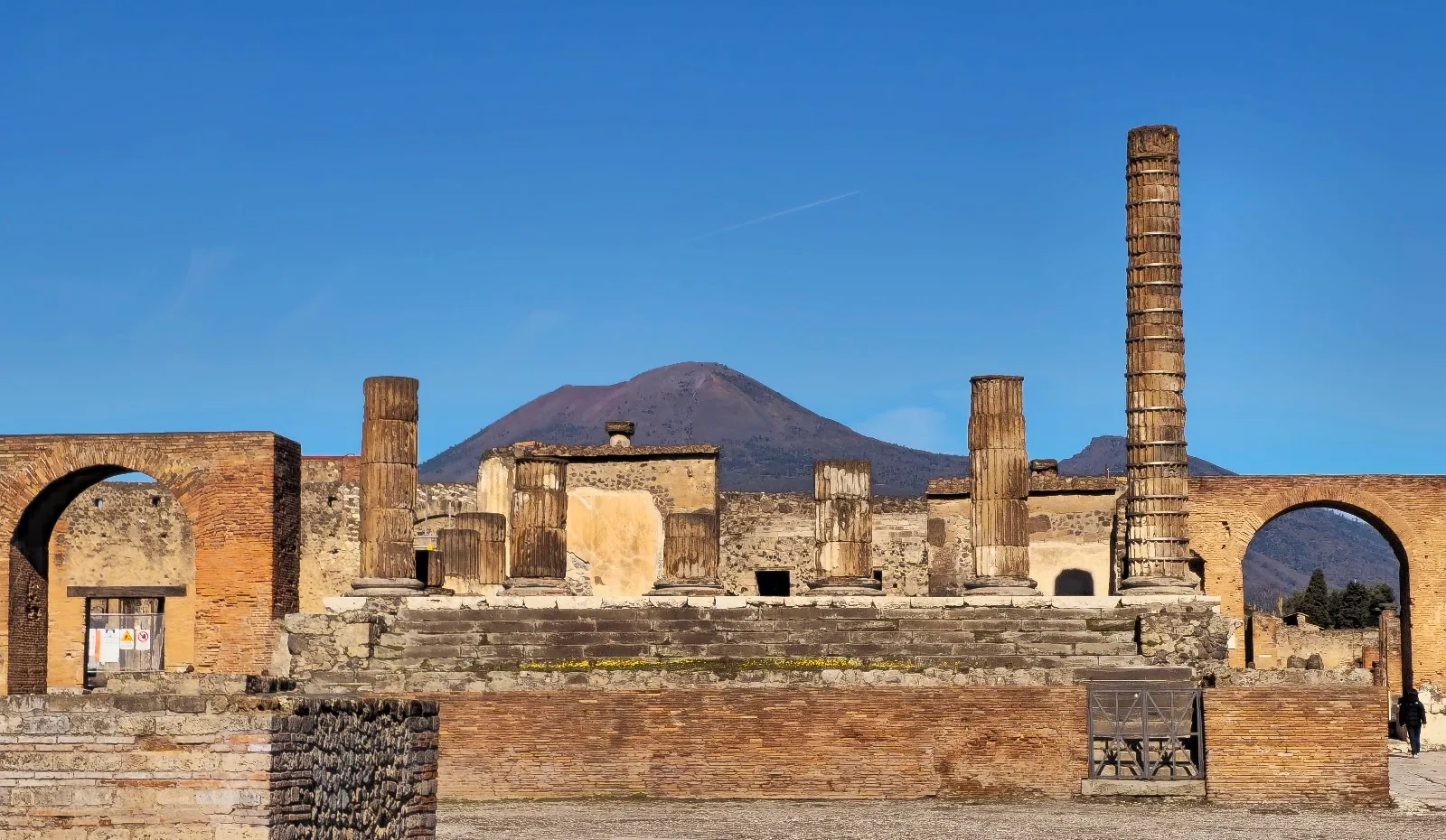
Pompeii was buried when Mount Vesuvius erupted in AD 79. Ash and volcanic debris covered the city, preserving streets, buildings and objects connected with daily life. The remains now give visitors a chance to move through an ancient Roman town rather than view its buildings only as isolated ruins.
The site came back to light during work in the area in the sixteenth century. Excavations began in 1748, and work continued under different governments. In 1763, an inscription confirmed that the remains belonged to Pompeii. Archaeological investigations later expanded, bringing more of the city and its finds into view.
A city of homes and public spaces
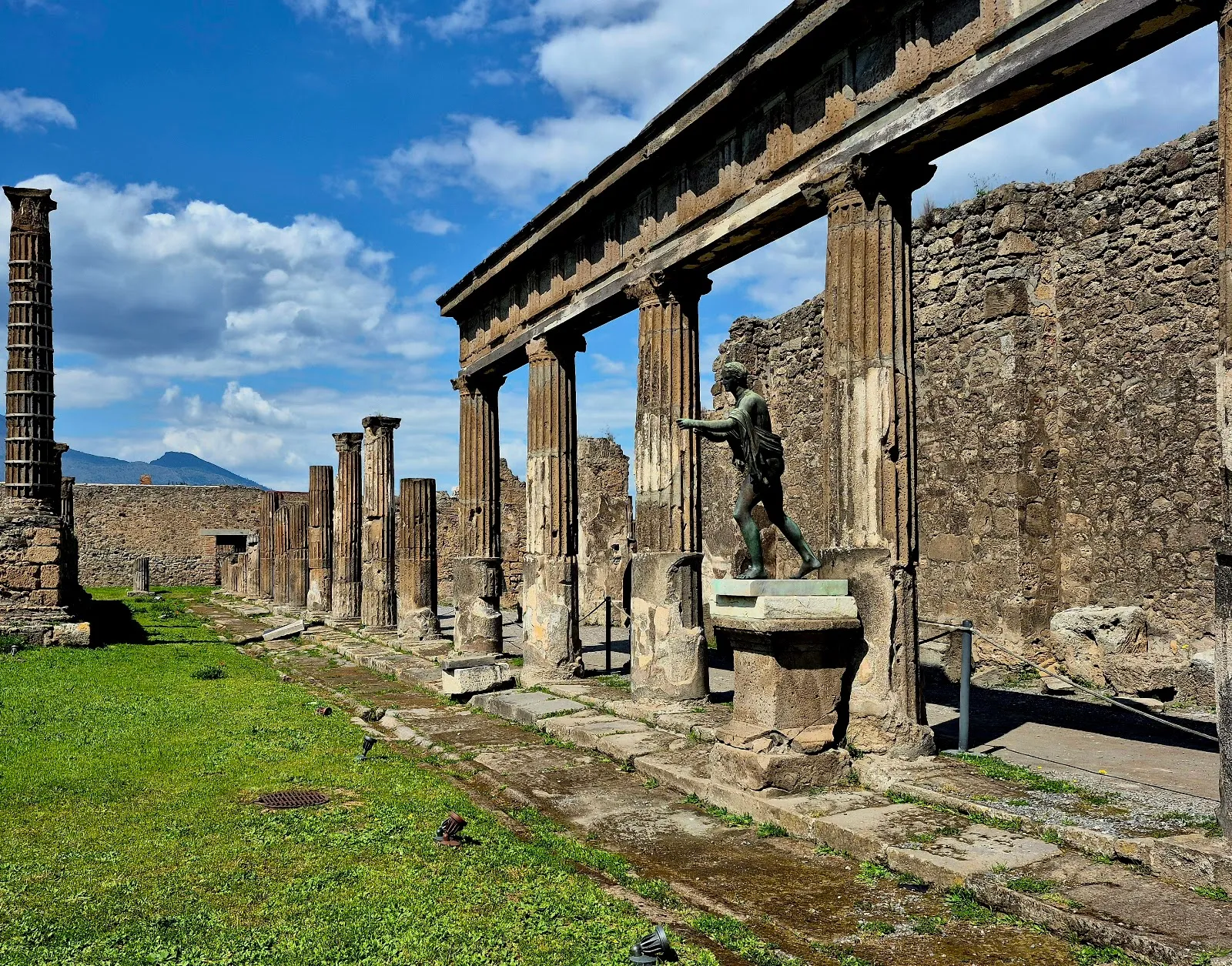
Pompeii’s layout includes residential streets, shops, baths, temples, theatres and civic buildings. The Forum was the city’s central public space. Around it stood major structures, including the Capitolium and Basilica. Walking between these areas helps show how homes, commerce and public life fitted into the same urban setting.
The houses preserve details that can be easy to miss if you move quickly. Look for decorated entrances, mosaics and traces of painted walls. The Villa of the Mysteries is known for its well-preserved frescoes. Bathhouses and bakeries offer another view of daily routines, while the amphitheatre points to public entertainment. The range of buildings is one reason the site rewards a focused visit.
Making sense of the remains
The city’s preservation allows visitors to connect rooms and streets with the lives once lived there. Frescoes, mosaics and household objects provide evidence of decoration and domestic activity; baths, temples and theatres show the city’s shared spaces. Plaster casts also record the shapes of people caught in the eruption. Archaeologist Giuseppe Fiorelli developed the method of filling cavities left in the hardened ash with plaster.
The archaeological area is extensive, and visitors often spend hours walking without seeing every part. Select a few places that interest you, then use the official audio guide to add context as you go. A guided visit is another way to learn about the buildings, but a self-guided route can also work if you prepare in advance. Allow time to pause and rest, especially in hot weather, when the exposed streets offer limited shade.
FAQ
How long should I spend at Pompeii?
Allow about 4 to 5 hours for a visit. The archaeological area is vast, so focus on selected highlights rather than expecting to see it all.
What should I wear and bring to Pompeii?
Wear comfortable shoes for uneven stone streets and bring water. Shade is limited, especially in hot weather.
Is there an audio guide at Pompeii?
An official audio guide is available. Download it before your visit or at the entrance.
What are the main sights in Pompeii?
Key places include the Forum, amphitheatre, bathhouses and Villa of the Mysteries, known for its preserved frescoes.


