
Palazzo Doria Tursi is a 16th-century palace on Via Garibaldi in Genoa, now home to city offices and part of the Strada Nuova Museums. Its Renaissance façade and spacious courtyard are worth seeing even if you do not visit the paid galleries. Museum rooms display paintings, sculpture and decorative arts, with three rooms devoted to Niccolò Paganini and original instruments including his violin, Il Cannone. The palace also belongs to Genoa’s UNESCO-listed Via Garibaldi ensemble, alongside Palazzo Bianco and Palazzo Rosso.
A palace on Via Garibaldi
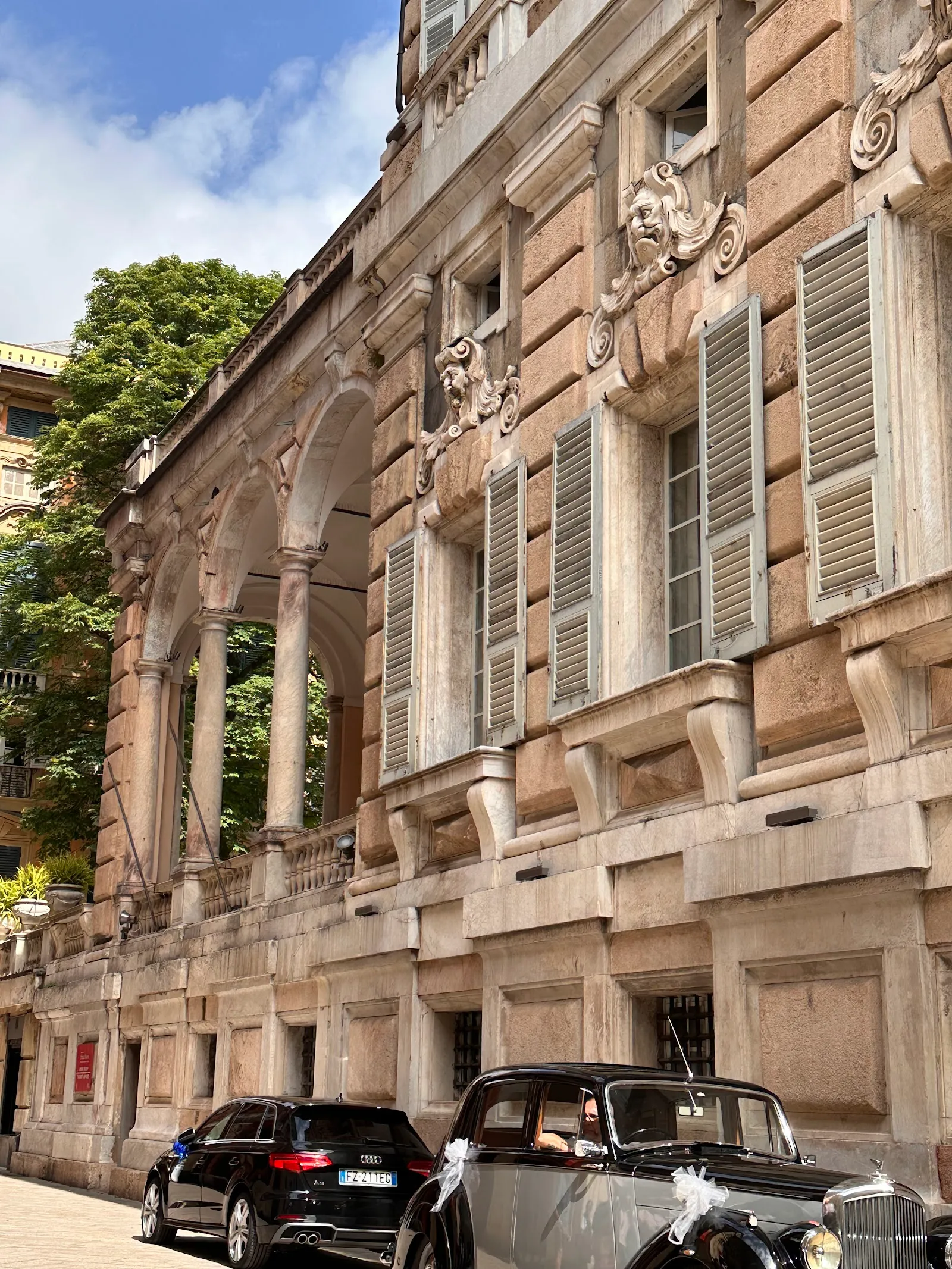
Palazzo Doria Tursi stands on Via Garibaldi, among the historic palaces that form Genoa’s Strada Nuova museum complex. Construction began in the mid-16th century but stopped after the original owner fell into financial difficulty. Gio Andrea Doria acquired the unfinished building and arranged for its completion. The palace later passed to the Savoy family, which bought it in 1820 and commissioned renovations by architect Carlo Randoni.
The building’s scale and façade set it apart along the street. Large loggias extend across two levels, and the palace has two gardens. Its history as a private residence now overlaps with its civic role: Palazzo Doria Tursi has housed Genoa’s city administration since 1848. Parts of the building remain in everyday public use.
The Strada Nuova museum route
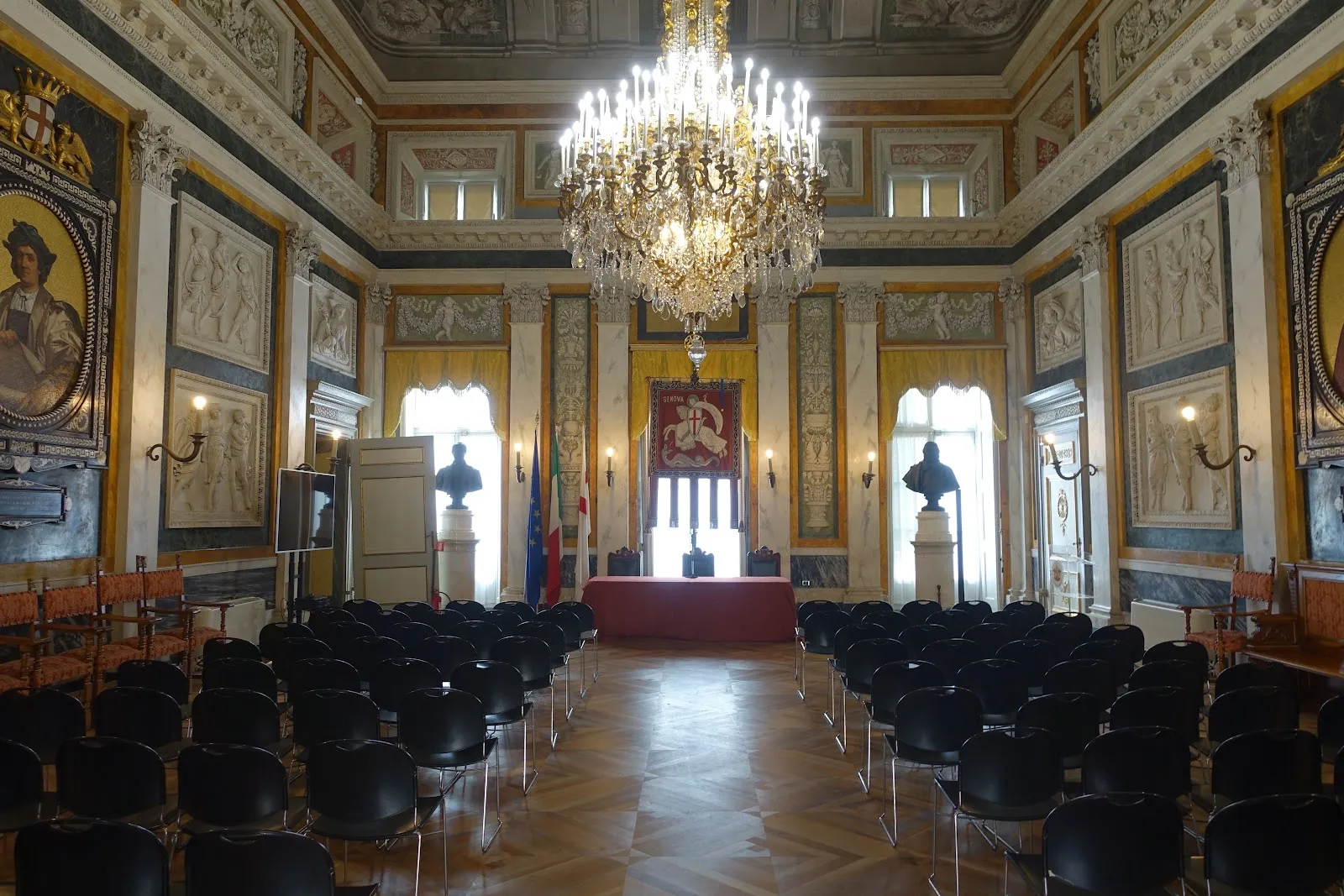
Palazzo Doria Tursi is the final palace in the linked Strada Nuova Museums route, together with Palazzo Bianco and Palazzo Rosso. The buildings contain collections of paintings, sculpture and applied arts dating from the 16th to the 19th centuries. A combined ticket covers all three palaces; check the current ticket details before setting out. The museum route usually starts at Palazzo Bianco, and it is possible to enter Tursi from there without going back out onto the street.
The collections at Tursi include Italian and international paintings, sculptures and decorative objects. Ceramics, vases, coins and historic measuring standards add material culture to the art displays. Among the sculptures is Canova’s Mary Magdalene. The range makes the palace a useful stop for visitors interested in both art and the objects used in daily life.
Paganini’s instruments
Three rooms are dedicated to Niccolò Paganini, the Genoese violinist and composer. The displays include original violins and guitars associated with him, among them Il Cannone, his celebrated violin. The instruments give the rooms a clear focus within a museum whose collections span several kinds of art and craft.
If Paganini’s music or the history of musical instruments is your main interest, allow time to look closely at this section. Visitors who would rather spend less time inside the galleries can still see the courtyard and public areas without buying museum admission. Palazzo Doria Tursi works both as a museum and as an active civic building, so access to public spaces and museum areas is not the same.
FAQ
Can you enter Palazzo Doria Tursi for free?
The courtyard and some public areas can be visited without paying for museum entry. A ticket is needed for the museum galleries.
What is Il Cannone?
Il Cannone is Paganini’s celebrated violin. It is among the original instruments displayed in the palace’s three Paganini rooms.
Is Palazzo Doria Tursi part of a combined museum visit?
Yes. It forms the Strada Nuova Museums with Palazzo Bianco and Palazzo Rosso. A combined ticket covers the three palaces; check current arrangements before visiting.
What can you see inside the museum?
The collections include paintings, sculpture, ceramics, vases, coins, historic measuring standards and other decorative objects. The palace also displays Canova’s Mary Magdalene and instruments associated with Paganini.


