The National Museum of Ireland’s Natural History branch stands on Merrion Street in Dublin 2 and is known as the “Dead Zoo” for its animal skeletons and taxidermy. Its collection spans Irish wildlife, animals from around the world, geology and fossils. Highlights include Irish giant deer skeletons and a blue fin whale specimen. The Victorian building opened in 1857 and has changed little since. The museum is closed for restoration and conservation work, so check its website for current updates before planning a visit.
A Victorian natural history museum
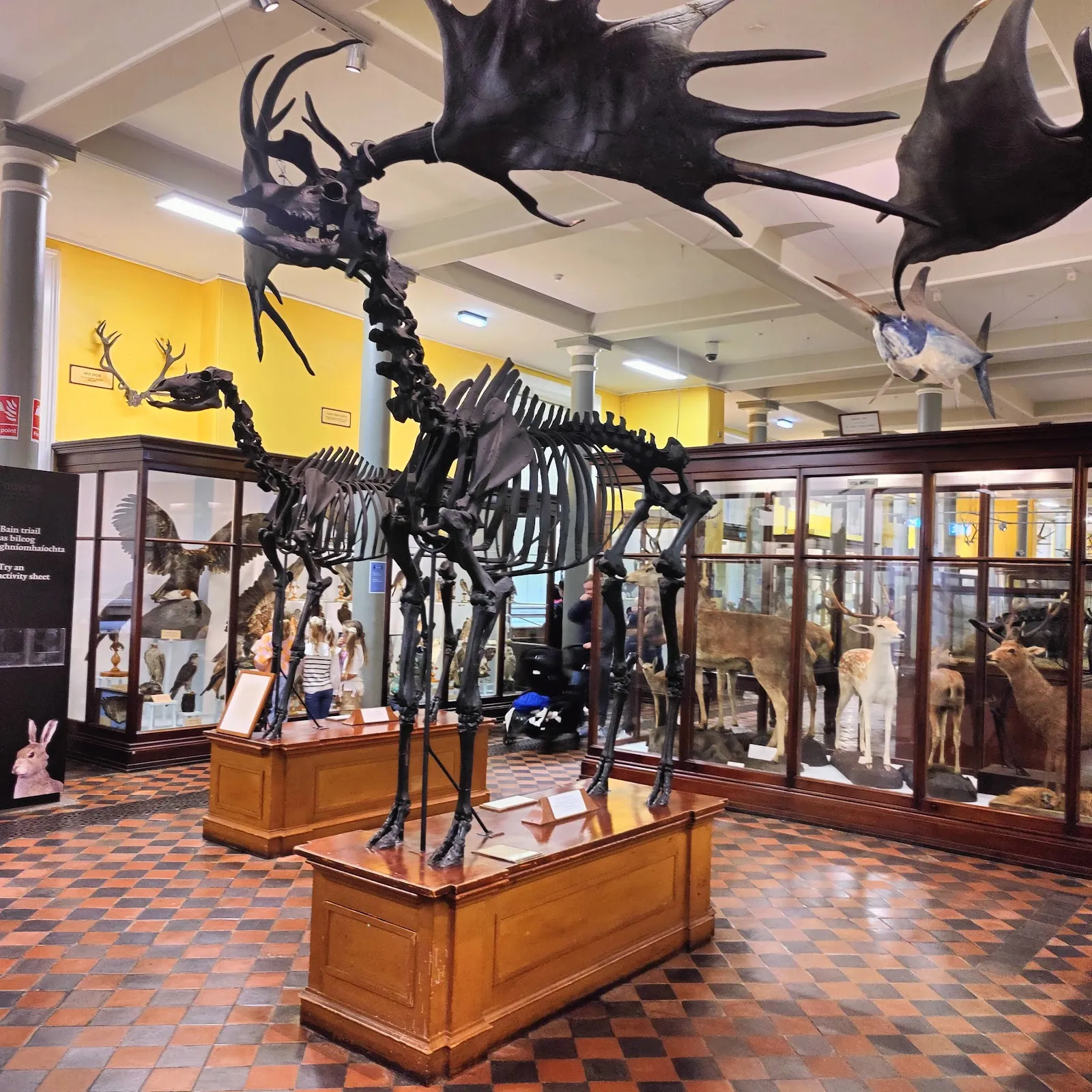
The National Museum of Ireland’s Natural History branch opened on Merrion Street in 1857. Its collections began with zoological and geological specimens gathered by the Royal Dublin Society. The building was created as an extension to Leinster House, which then housed the society.
The museum is known as the Dead Zoo for its collection of animal skeletons and taxidermy. Its displays include Irish wildlife and species from elsewhere in the world, alongside fossils and geological material. The wider collection contains more than two million items, though only a fraction can be displayed at once.
Specimens to look out for
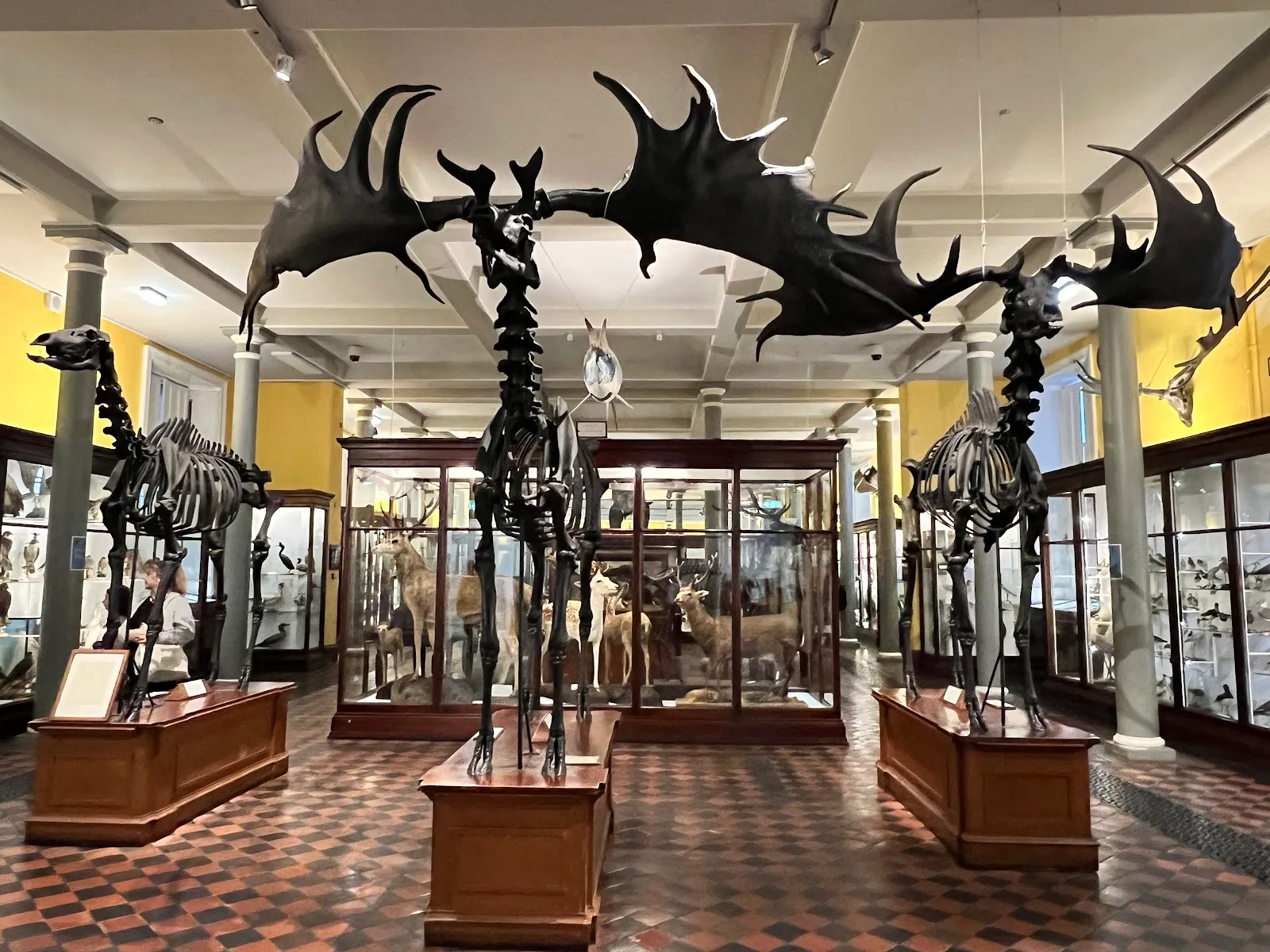
Irish giant deer skeletons are among the most notable displays. The museum also has specimens of mammals, birds, fish and insects, with animals from Ireland and around the world. A blue fin whale specimen, found on a beach in County Sligo, is another highlight in accounts of the collection.
The museum’s Victorian presentation is part of the experience. Glass cases hold animals in carefully arranged displays, and the rooms retain the character of an older museum. The exhibits cover zoology and geology, with displays on Irish wildlife as well as mammals from around the world.
Check before you go
The Merrion Street museum is closed for restoration and conservation work. Some material about the museum also notes that parts of the building have been inaccessible during renovation, so check the official museum website for the latest status before making plans.
While the site is closed, the Dead Zoo Lab at the National Museum of Ireland, Collins Barracks, displays popular specimens from the natural history collection, including some that had not been on view for many years.
FAQ
Is the Natural History Museum in Dublin open?
The Merrion Street museum is closed for restoration and conservation work. Check the official museum website for current updates before visiting.
Why is it called the Dead Zoo?
The nickname refers to its extensive collection of preserved animals, including taxidermy specimens and skeletons.
What can I see at the Natural History Museum?
The collection includes Irish wildlife, specimens from around the world, fossils and geological material. Irish giant deer skeletons are among its highlights.
Is there an alternative while the Merrion Street museum is closed?
The Dead Zoo Lab at Collins Barracks displays popular specimens from the natural history collection, including some that had not been on view for many years.