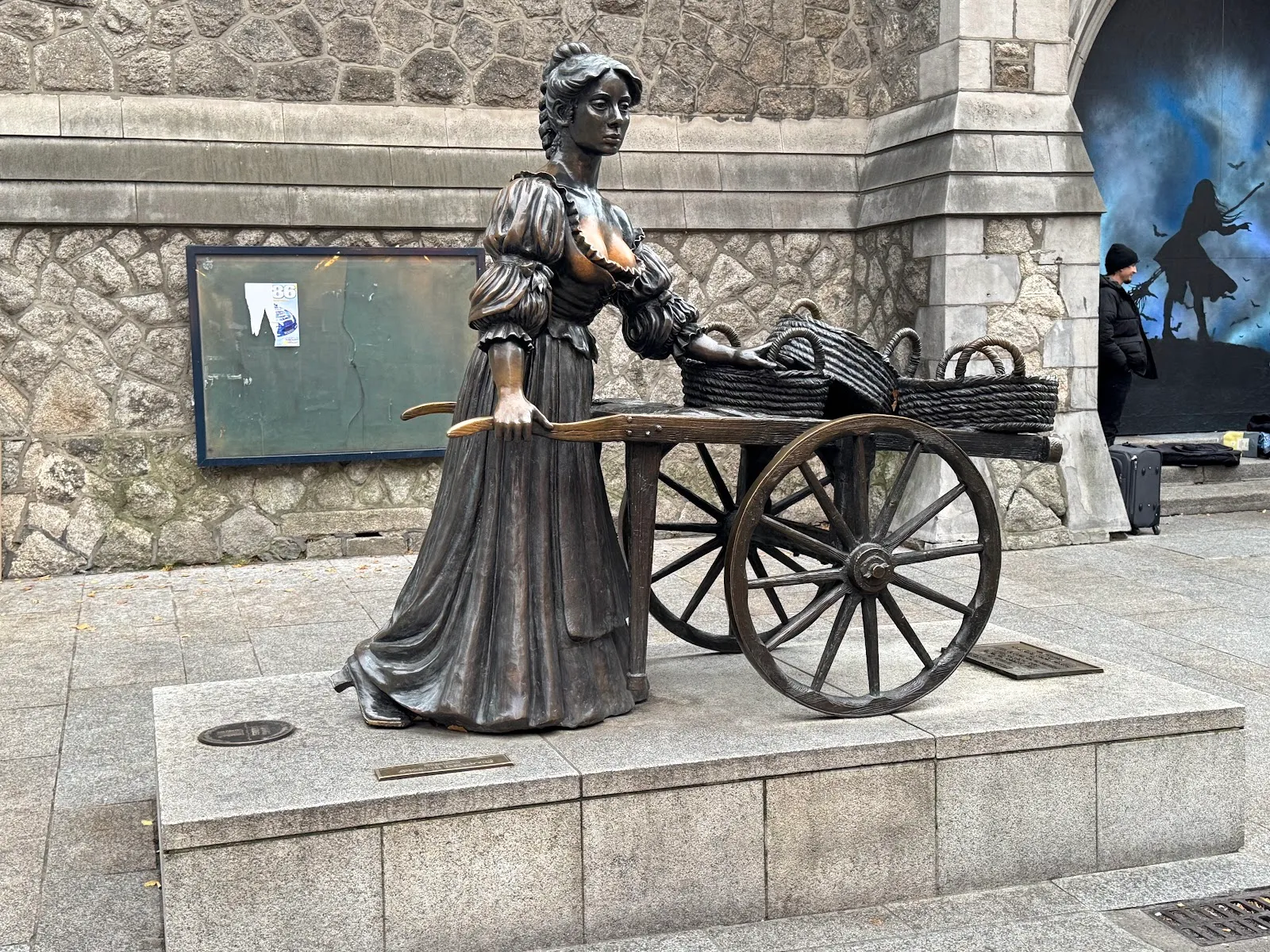
On Suffolk Street near the foot of Grafton Street, the bronze Molly Malone statue depicts the fish seller from Dublin’s well-known ballad, pushing her cart. The song’s story has helped make this a familiar city landmark and a quick stop for a photo. Molly’s real-life identity is uncertain, so the statue is best understood as a figure of Dublin folklore rather than a confirmed portrait. Pause to look at the cart and its details, then continue along Grafton Street for shops and street performers.
Molly Malone and the ballad
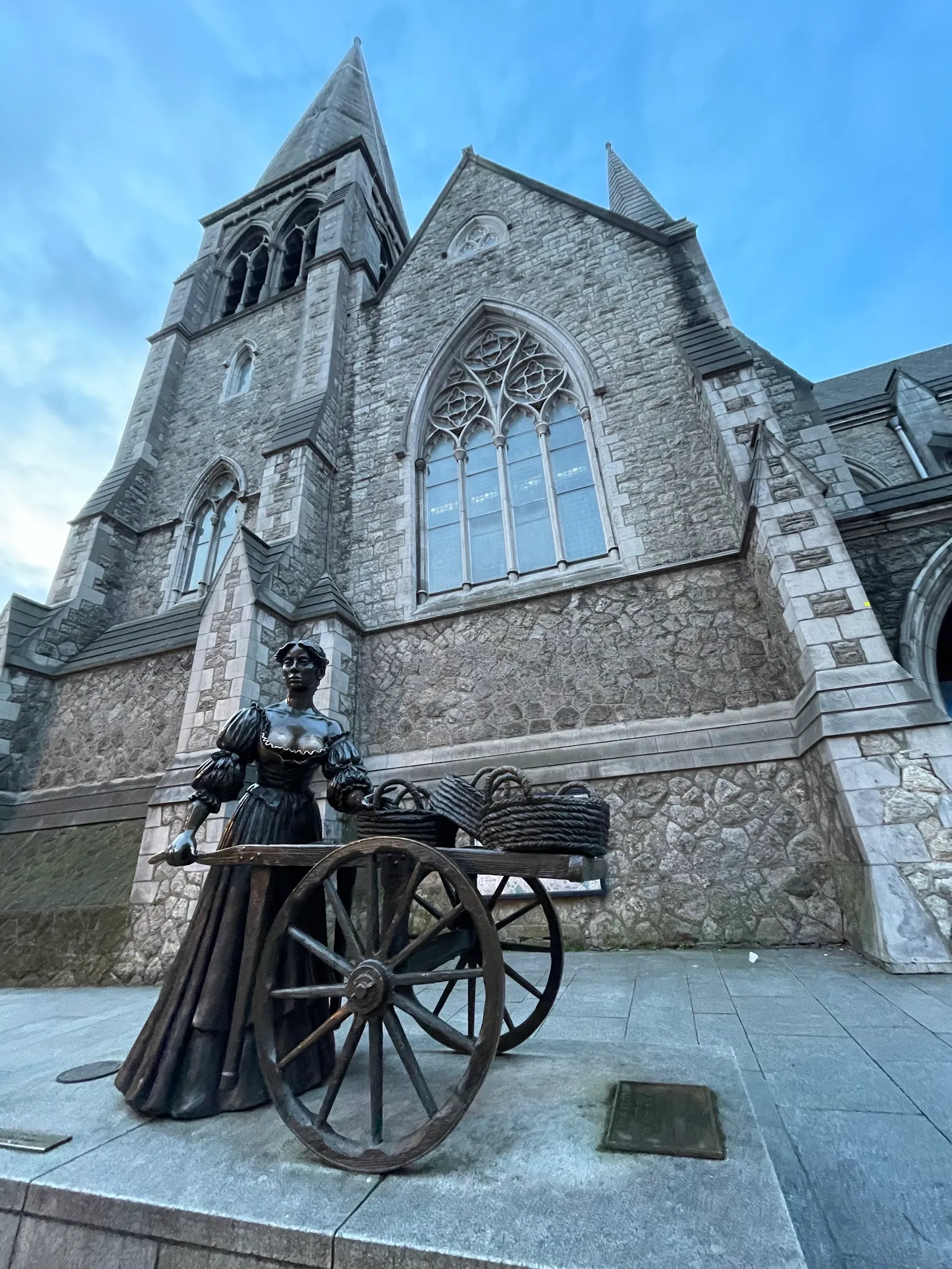
The statue portrays Molly Malone with a cart, recalling the fish seller in the song “Cockles and Mussels.” In the ballad, Molly sells shellfish around Dublin and dies of a fever. Her story is part of the city’s folklore, but it does not establish that she was a real person. The statue gives visitors a visible link to a song widely associated with Dublin.
A stop on Suffolk Street

The bronze monument was erected in 1988 for Dublin’s millennium celebrations. It stands on Suffolk Street, close to the end of Grafton Street, where it is easy to include in a city walk. The surrounding area is lively, and people often pause for photographs. Planters around the statue create some distance between visitors and the sculpture; leave them in place and avoid touching the figure. From here, Grafton Street is a natural next stop for shopping and street performances.
FAQ
Where is the Molly Malone Statue?
It is on Suffolk Street, near the end of Grafton Street in Dublin.
Who does the statue depict?
It depicts Molly Malone, the fish seller associated with the Irish ballad “Cockles and Mussels.” Whether she was a real person is uncertain.
How long should I spend at the Molly Malone Statue?
Allow about 10 to 20 minutes for a look and a photo.
When is a good time to visit?
Early morning or late evening can be quieter and better for photographs.