King’s Inns is a legal education institution on Henrietta Street in Dublin 1, founded in 1541. Its imposing building, designed by James Gandon and completed by Francis Johnston, is known for its Neo-Classical façade and formal halls. Public access can be limited, so look out for Culture Night or other special events if you want to see inside. Outside, find the Hungry Tree, a London plane tree that has grown around part of a cast-iron bench. The grounds also provide a pleasant route between Henrietta Street and Constitution Hill when open.
A legal institution founded in 1541
King’s Inns was founded by Henry VIII in 1541 and is Ireland’s oldest formal institution for legal education. It trains barristers and provides legal education and training to others. The institution’s long connection with Irish law gives the site a place in the history of the country’s courts and legal profession.
The building is on Henrietta Street in Dublin 1. It is also used for events, including weddings, and has served as a filming location. Access for general visitors is not assured, so a special event such as Culture Night can be an opportunity to see more of the interior.
The Neo-Classical building
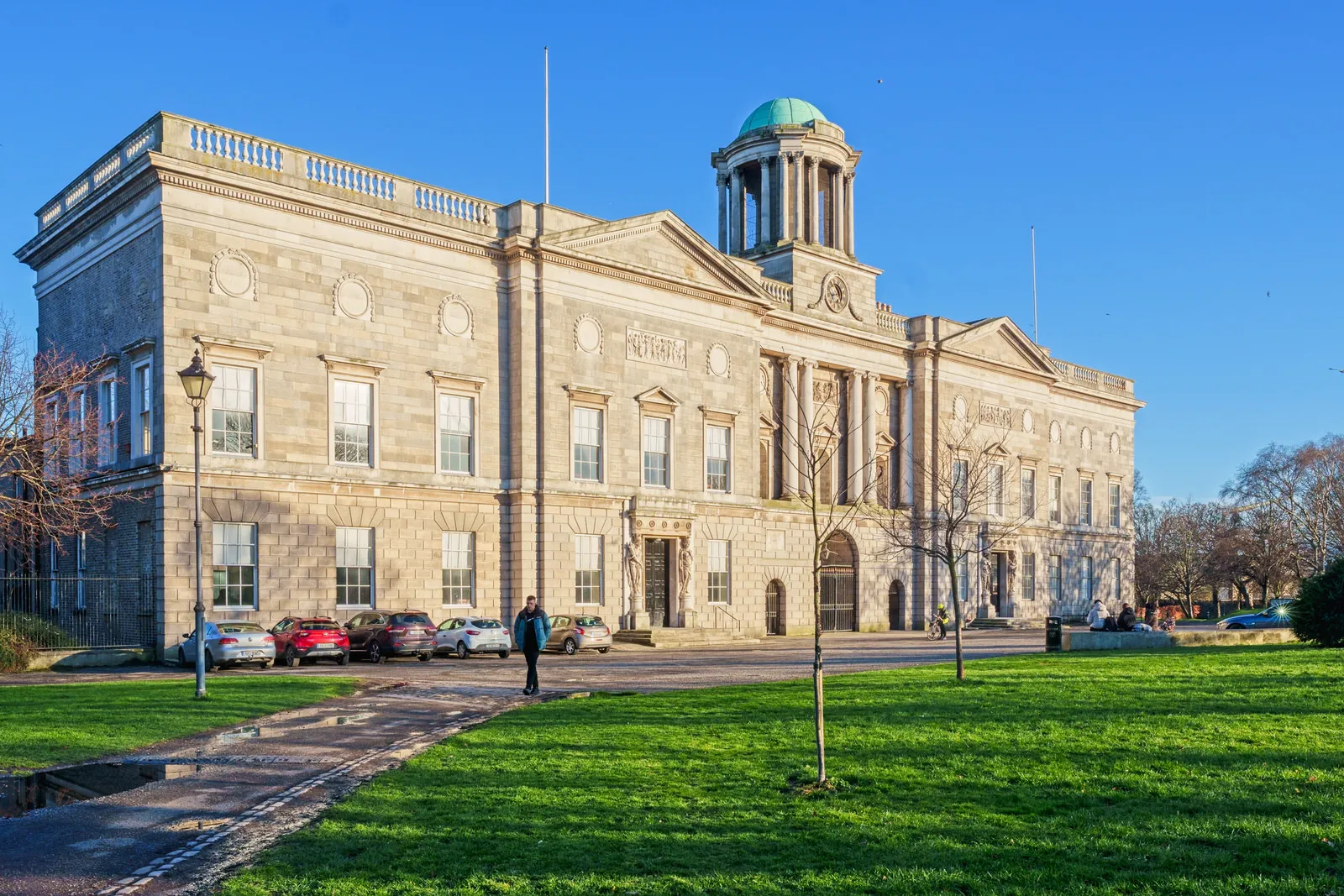
The building was begun in 1800 to designs by James Gandon, initially as a nine-bay structure. Francis Johnston completed it in 1817, adding an arched entrance screen on the eastern side. Further additions widened the building: Frederick Darley added three bays at the north end in 1846, and Jacob Owen added three at the south end in 1849.
Its symmetrical façade has a central entrance block beneath a domed structure, with halls extending behind it in a U-shaped plan. A row of Corinthian columns supports the central tempietto, topped with a copper dome. The exterior combines granite walls with Portland stone details, including cornices and a balustraded parapet. Pediments mark the central block and the sections to either side.
Inside, the halls are part of the building’s appeal, particularly for people attending events. Visitors who have had access describe the interior as formal and richly detailed. If you enter, take time to look at the architectural details both inside and outside.
The Hungry Tree and the grounds
In the grounds, a London plane tree has grown around part of a nearby cast-iron bench. Known as the Hungry Tree, it is an unusual feature to look for on a walk around the site.
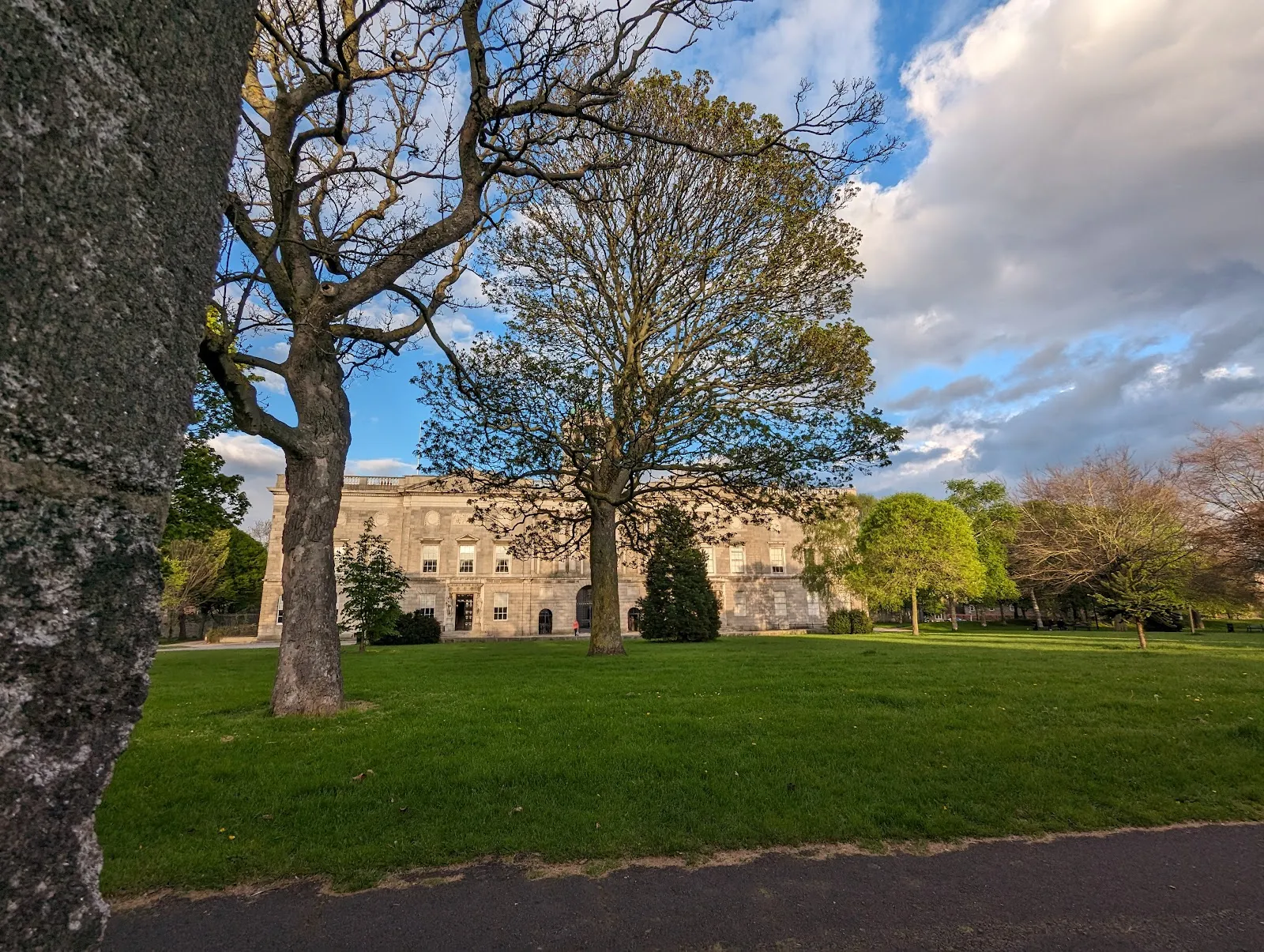
When the grounds are open, the route can connect Henrietta Street with Constitution Hill. The park is also a place to pause on a sunny day. Access can be limited, so check whether the site is open to visitors before making it the focus of a trip.
FAQ
Can the public go inside King’s Inns?
Access is not always available to the public. Culture Night and other special events can provide an opportunity to visit the interior.
What is the Hungry Tree?
It is a London plane tree in the grounds that has grown around part of a cast-iron bench.
Who designed the King’s Inns building?
James Gandon designed the building, begun in 1800. Francis Johnston completed it in 1817, and later additions were made by Frederick Darley and Jacob Owen.
When was King’s Inns founded?
It was founded by Henry VIII in 1541 and is Ireland’s oldest formal institution for legal education.