Cellular Jail is a former British colonial prison on Atlanta Point in Port Blair, now Sri Vijaya Puram, on the Andaman Islands. The British built it between 1896 and 1906 to hold political prisoners far from the Indian mainland, and it is now a national memorial. Three of its seven wings still stand. Inside, you can walk the three-storey cell blocks, see the galleries and library in the entrance block, and visit the gallows. In the evening, a light and sound show tells the story of the freedom struggle.
Why the British built a prison at Port Blair
After the Indian Rebellion of 1857, the British needed somewhere to hold large numbers of prisoners, most of them people who had taken part in the uprising. They revived the penal settlement at Port Blair. The islands were remote, and a prisoner had little chance of reaching anyone outside.
Between 1896 and 1906 the British built the Cellular Jail there, modelled on Pentonville Prison in London. Its purpose was to keep political prisoners and revolutionaries cut off from the outside world. The name Kala Pani, or black waters, comes from that exile across the sea.
The building and the cells
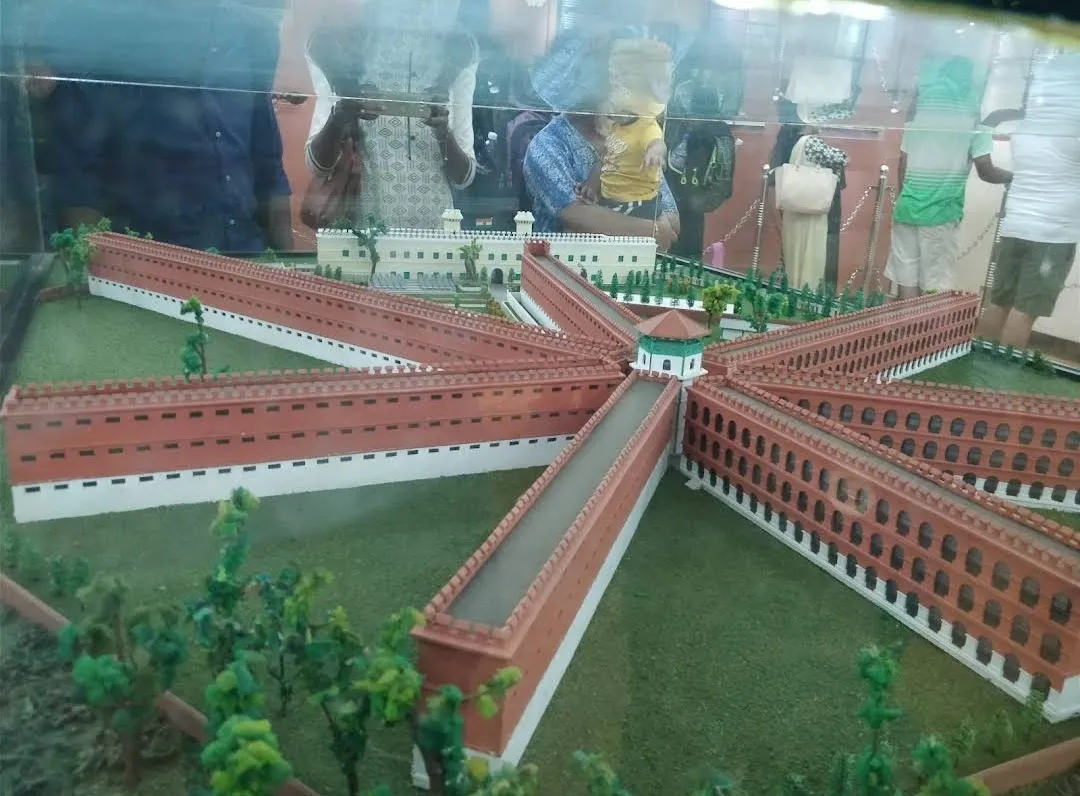
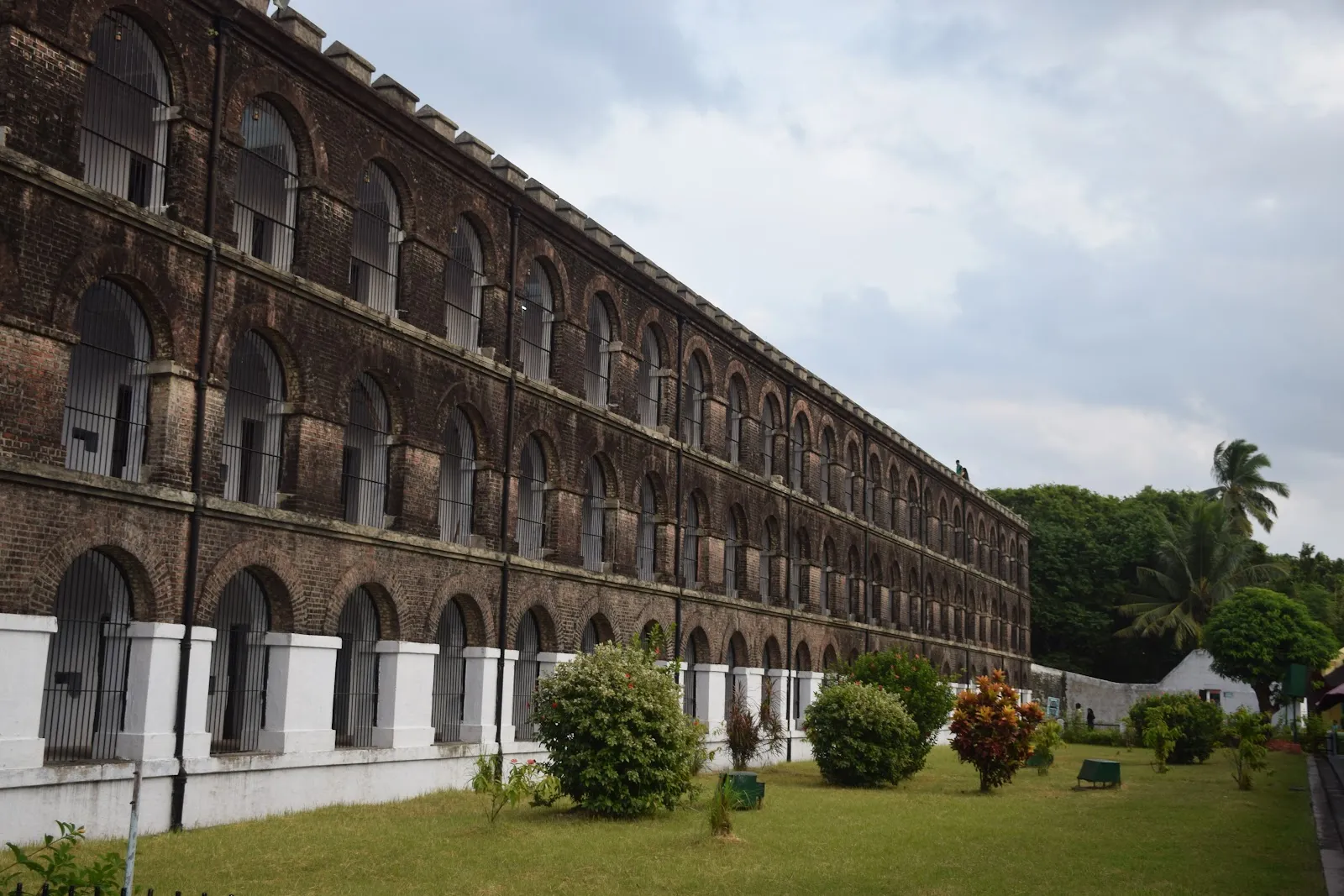
The prison was planned as seven wings, each three storeys high, spreading out from a central tower. The tower is hexagonal and served as a watchtower over all the convicts. The long corridors between the cells have a honeycomb look. The name Cellular comes from the design, because the whole complex was made of individual cells for solitary confinement.
Each cell measured about 13 by 7 by 10 feet and was closed with a heavy iron grill door. Each cell faced the back of another, so prisoners could not see or speak to one another. Contact with the outside world was not allowed either.
Only three of the seven wings remain. After independence the other wings were taken down, and the surviving three were kept as a national memorial at the request of former prisoners.
Who was held here
Many Indian revolutionaries from the independence movement were imprisoned here. Names recorded include Batukeshwar Dutt, Yogendra Shukla and Vinayak Damodar Savarkar. Today the jail is a place of pilgrimage for many Indians, and visitors tend to walk through it quietly.
What to see inside
The entrance block holds the memorial's museum displays. They include a photo gallery of freedom fighters, an art gallery, a Netaji Gallery, an old photographs gallery and a library on the Indian freedom movement. Look for the eternal flame, Swatantrya Jyot, which was set up in memory of the freedom fighters and martyrs.
In the wings you can walk the corridors and look into the cells. The prison's gallows can also be visited, and some displays show items used by the prisoners, such as utensils and clothing. Guided tours are available and add detail about the treatment prisoners received.
The evening light and sound show
After dark, the jail's courtyard becomes the stage for a sound and light show on the freedom struggle. Its narrator is the peepal tree you pass near the entrance, the oldest tree in the jail, which still survives. The story is told as if the tree had watched everything happen.
The show runs in English or Hindi, and tickets are booked online. The 20 to 30 minute early arrival is worth it, as seating fills with the best views first.
FAQ
Is Cellular Jail open every day?
It is closed on Mondays and open the other six days, with a break around midday. Check the posted hours on the page before you plan.
How long do you need at Cellular Jail?
Allow between 1.5 and 3 hours for the galleries, cell wings and gallows. Add time if you plan to stay for the evening show.
Why is Cellular Jail called Kala Pani?
Kala Pani means black waters. The name refers to exile across the sea, as political prisoners were sent to these remote islands, cut off from the mainland.
What language is the light and sound show in?
It is performed in English or Hindi. Book your preferred language online and arrive 20 to 30 minutes early for better seats.
How much of the original prison is left?
Three of the seven wings are still standing and are kept as a national memorial. The rest of the complex was taken down after independence.