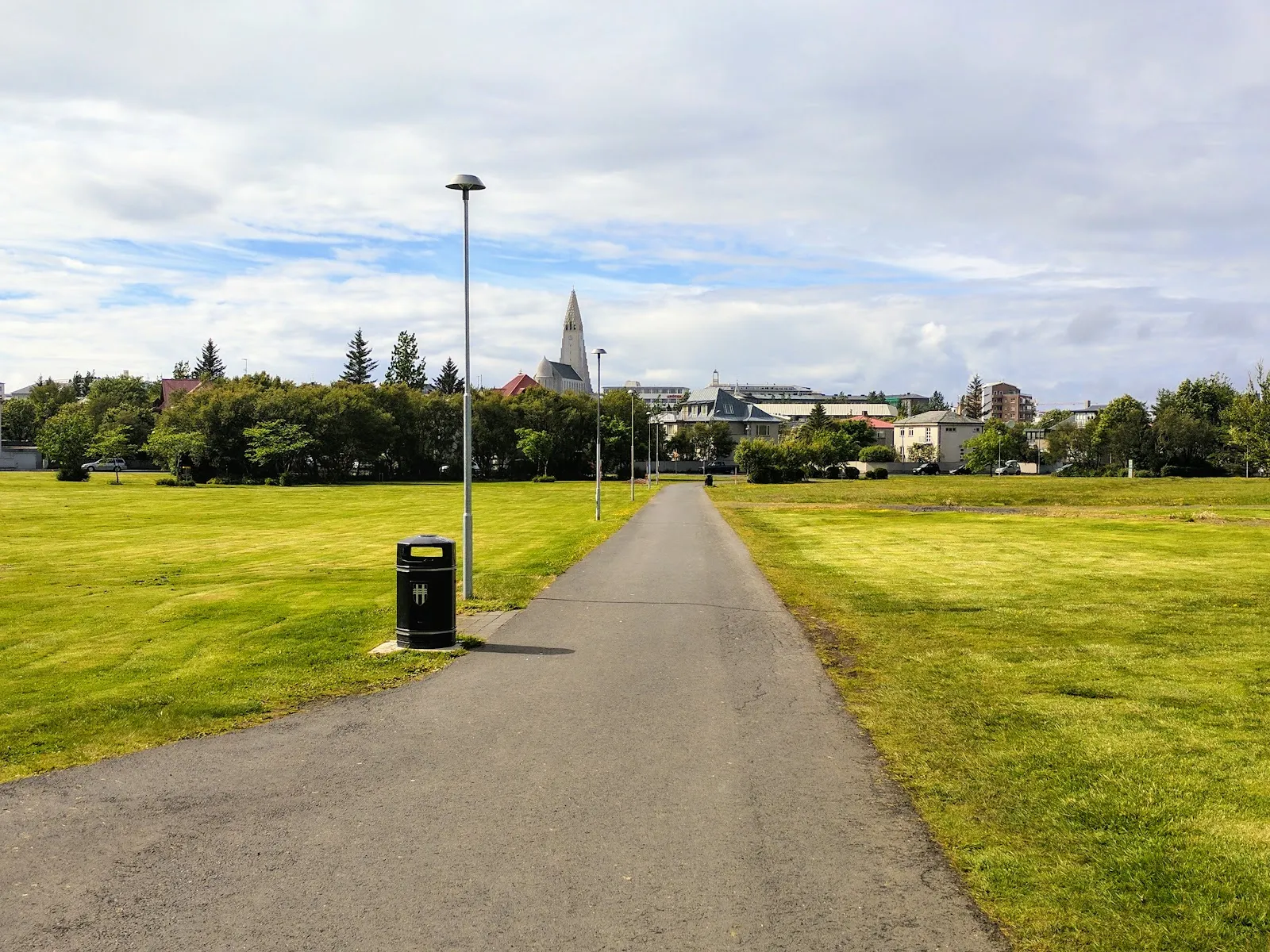
Sun Voyager, or Sólfar, is a stainless-steel sculpture on Reykjavík’s Sæbraut waterfront, near Harpa Concert Hall. Its curved frame resembles a Viking ship, though the artist conceived it as a dreamboat and an ode to the sun, associated with hope and discovery. Look across the water toward Faxaflói Bay and Mount Esja, or walk along the shore and watch the steel catch the light. The sculpture is accessible around the clock and makes a straightforward stop on a Reykjavík waterfront stroll.
A dreamboat by the sea
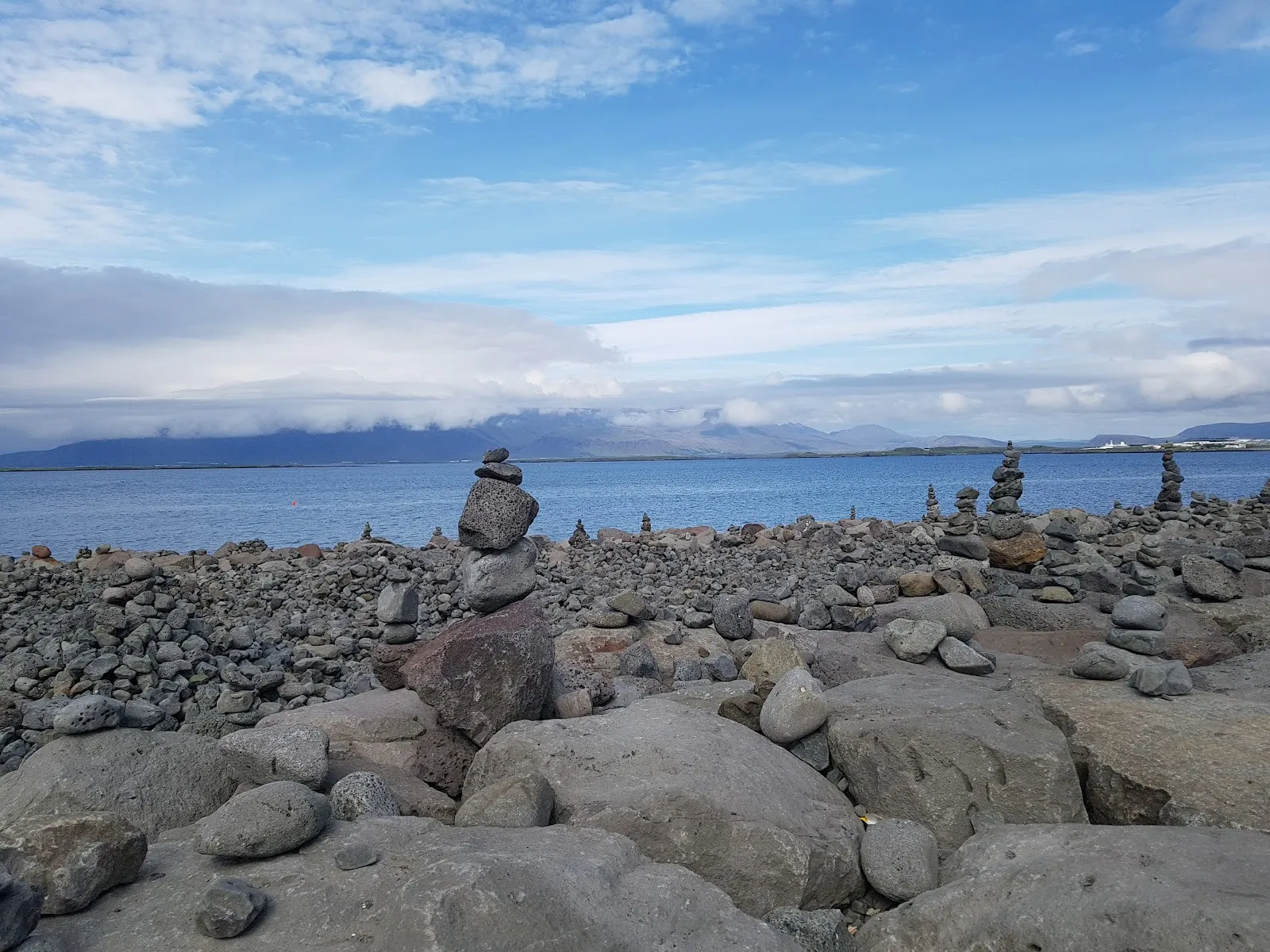
The sculpture’s outline brings a Viking longship to mind, but that is not the meaning its creator gave it. Icelandic artist Jón Gunnar Árnason conceived Sun Voyager, known in Icelandic as Sólfar, as a dreamboat and an ode to the sun. Its ideas include hope, freedom and the promise of discovering new territory.
The work is made of stainless steel and stands on Reykjavík’s northern waterfront along Sæbraut. Its open, curved framework changes in appearance with the light and creates shadows around the structure. From different angles, it can seem to hover above the ground, with the bay and Mount Esja beyond it.
The sculpture was unveiled in 1990, in connection with the 200th anniversary of Reykjavík’s founding. Árnason died a few months before its unveiling. The ship-like form can suggest Iceland’s seafaring past, but the work is a modern sculpture, not a historical Viking vessel.
Finding the sculpture and taking photographs
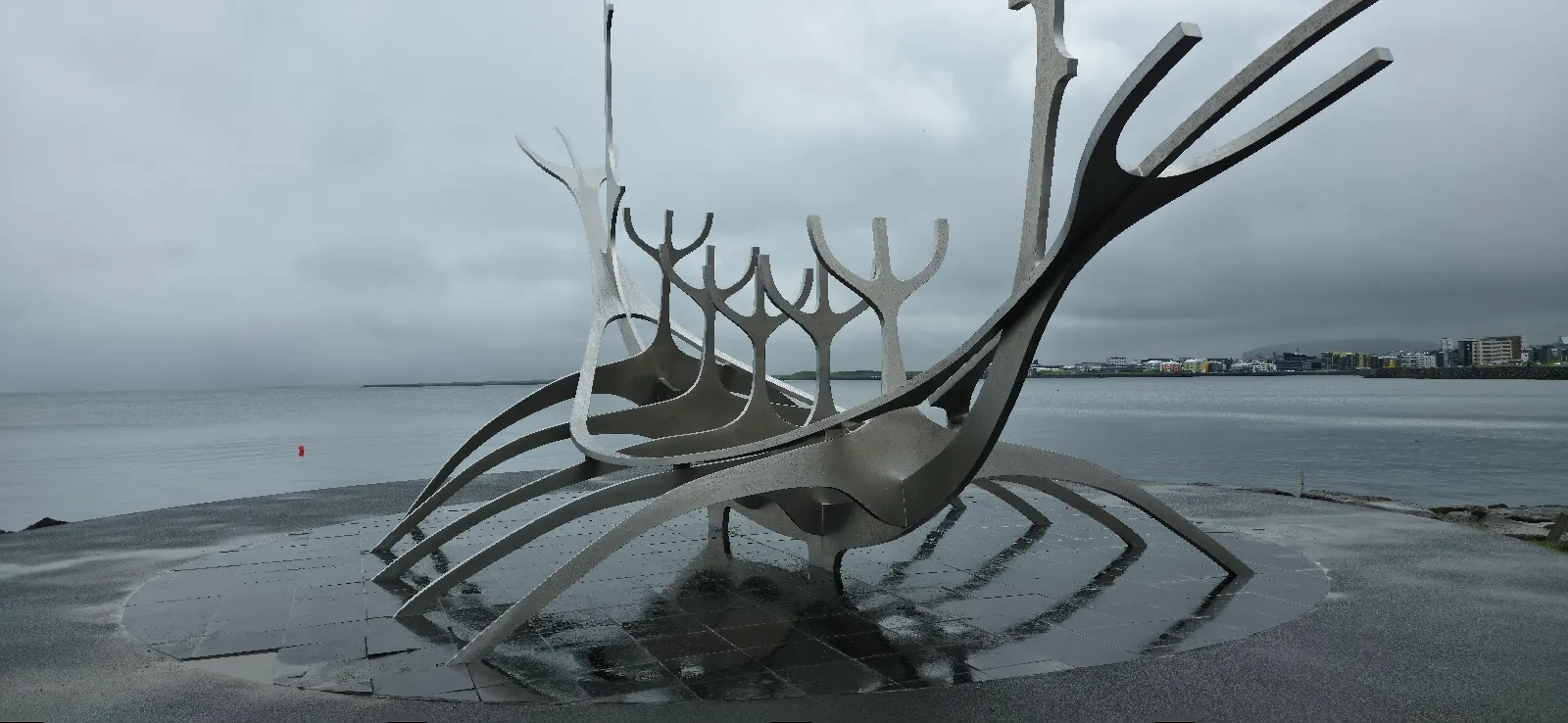
Sun Voyager is close to Harpa Concert Hall and sits directly beside the waterfront path. It is an easy addition to a walk along the coast, with the city’s shoreline on one side and views across the water on the other. The sculpture is on a small headland by Sæbraut, so you can approach it from the promenade and view it from several angles.
At sunrise and sunset, the changing sky can add warm colour to the steel. On clear days, position the water behind the sculpture to include the bay and Mount Esja in the frame. A person beside the structure can help convey its scale; it looks larger in person than it may seem in photographs. The open framework also casts shadows that make close-up views different from wider waterfront shots.
The sculpture is a popular place to take pictures, so allow room for other people to find their own angle. You can also step back along the shore for a view that includes more of the setting rather than focusing only on the steel.
A stop at any hour
The sculpture can be visited at any time, which gives you flexibility to fit it around a walk or a visit to Harpa. A brief look and a few photographs are enough for a quick stop; staying longer lets you watch the light and take in the view over the bay. The surrounding waterfront is also used by joggers and cyclists, so keep to the side of the path when stopping.
The coastal location is sometimes chosen for northern-lights viewing because it has less light pollution than parts of the city. The lights depend on conditions, so treat this as a possible bonus rather than a sure thing. If you are waiting nearby, SKÝ Lounge & Bar is across the street from the sculpture, according to the supplied location information.
The entrance is wheelchair accessible. Parking in the area includes paid parking lots and both paid and free street parking. Sun Voyager is a short, open-air visit, so the main reason to stay is the changing view: the sculpture, the water and Mount Esja together.
FAQ
Is Sun Voyager a Viking ship?
It resembles a Viking ship, but Jón Gunnar Árnason conceived it as a dreamboat and an ode to the sun.
Where is Sun Voyager in Reykjavík?
It stands on the Sæbraut waterfront, near Harpa Concert Hall.
When is the best time to photograph Sun Voyager?
Sunrise and sunset bring changing light to the steel. On a clear day, the sea and Mount Esja make a backdrop.
Can you see the northern lights from Sun Voyager?
The waterfront has less light pollution than parts of the city and can be a place to look for them, but a sighting depends on conditions.