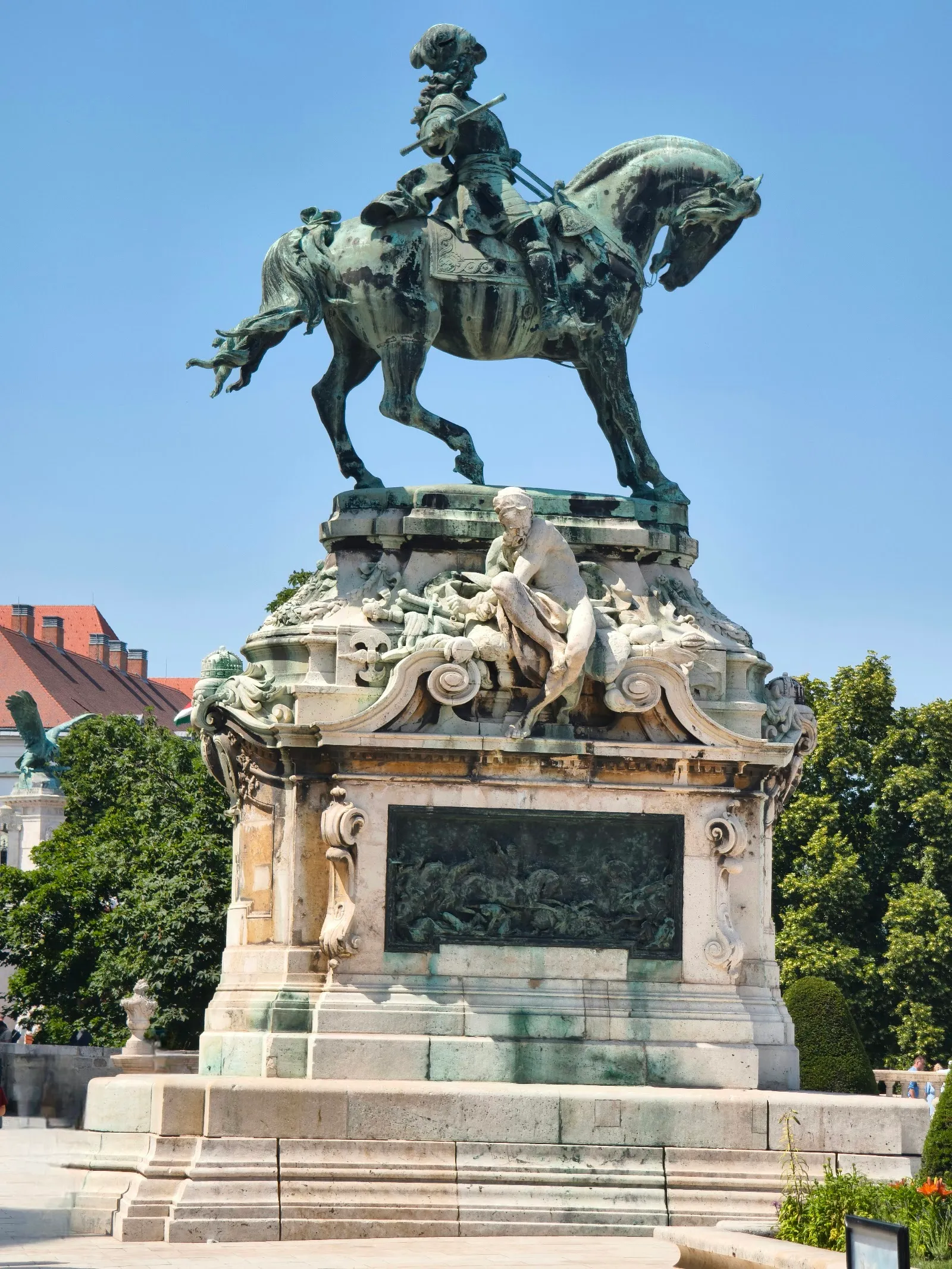
The bronze Statue of Prince Eugene of Savoy stands on a terrace in front of the Royal Palace in Budapest’s Buda Castle district. József Róna’s equestrian sculpture shows the prince holding a baton, with marble figures and bronze battle scenes on its base. Stop to look closely at the workmanship, then take in the view across the Danube towards Pest. The statue and palace are illuminated at night; construction work in the area can affect access, so quieter periods make for a less interrupted visit.
A statue first intended for Zenta
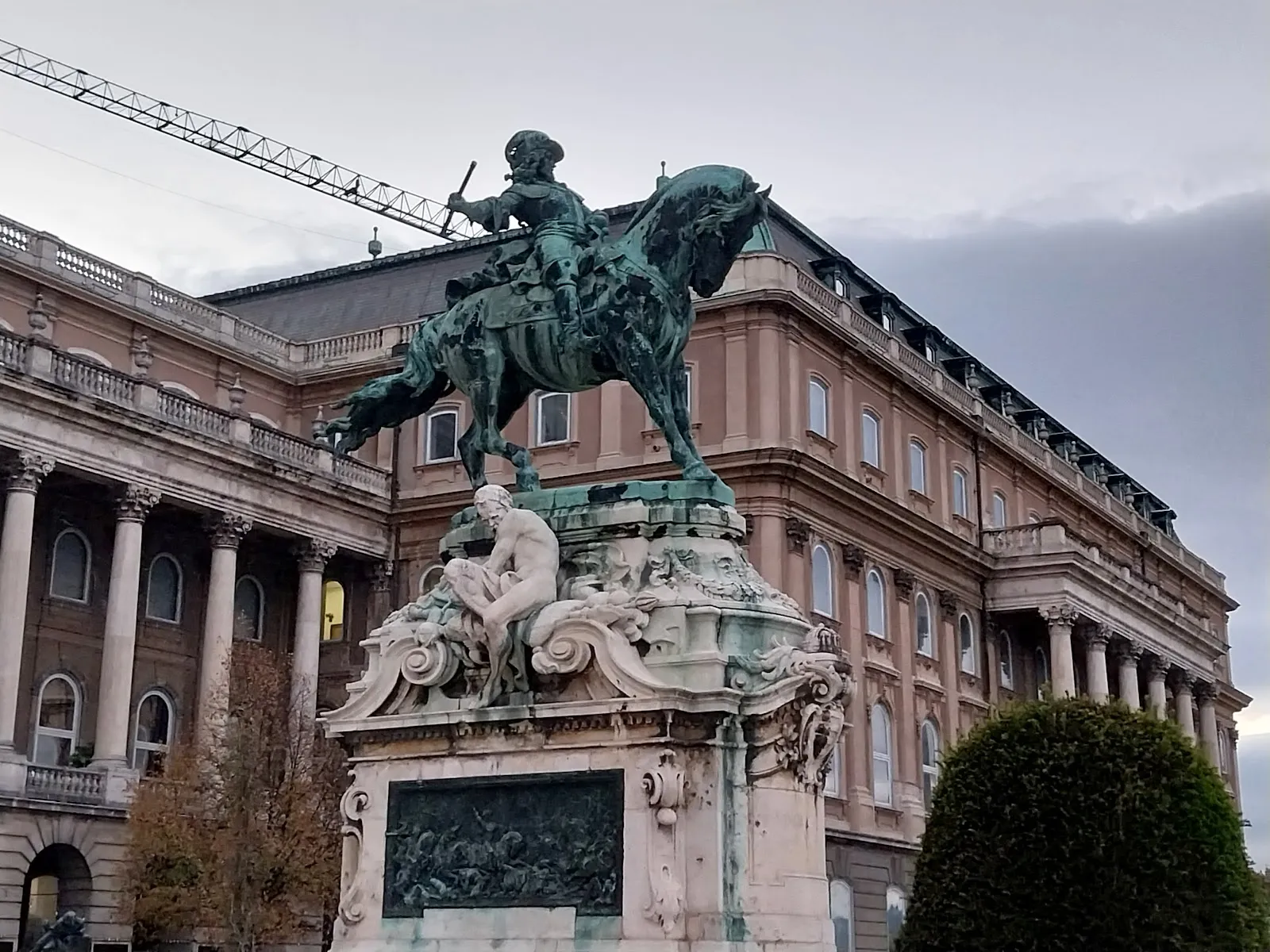
The monument was designed by József Róna in 1897. It was originally made for Zenta, but the town could not afford to buy it. In 1900, the statue was purchased and placed in front of the Royal Palace as a temporary substitute for a planned equestrian statue of King Franz Joseph. That replacement was never completed, and Prince Eugene remains on the terrace.
Prince Eugene of Savoy lived from 1663 to 1736 and was a field marshal in the army of the Holy Roman Empire. A member of the Austrian Habsburg dynasty, he became known as one of the era’s successful military commanders. In 1697, he defeated the last Turkish army in Hungary at the Battle of Zenta, in present-day Serbia.
The horse, plinth and battle scenes
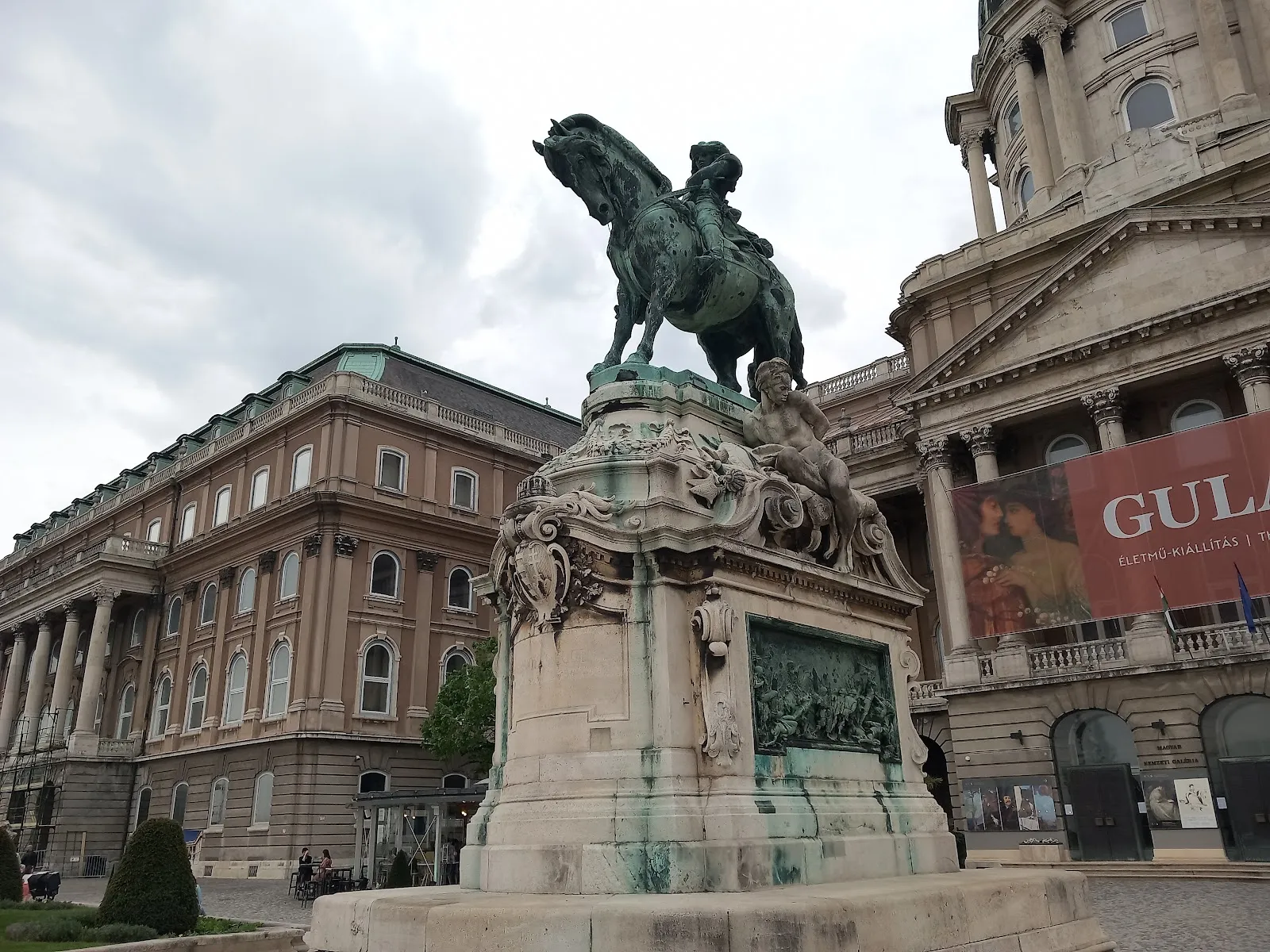
Róna’s bronze figure presents the prince on horseback, baton in hand, in a forward-moving pose. The monument’s scale and the horse’s movement give it a commanding presence on the open terrace. Take a closer look at the base as well as the main figure: its marble sculptures depict captured Turks, and two bronze reliefs show scenes from battle.
One relief depicts soldiers overcoming the earthworks at Zenta. The other shows a cavalry charge. Together, the panels connect the monument’s decorative details with the military history associated with Prince Eugene. The statue is considered one of Budapest’s finest equestrian monuments.
The terrace in daylight and after dark
The statue stands outside the Royal Palace, on a terrace overlooking the Danube valley and Budapest. From here, the river and the Pest district are visible across the water. The elevated position makes the terrace a useful stop for views as well as for the monument itself.
The statue was damaged in 1944 and 1945. It was dismantled in 1968 and restored in 1971. Today, the terrace is also a place to see the sculpture against the palace setting. At night, floodlighting illuminates the statue and the surrounding palace. Sunrise is another time associated with clear views from the terrace.
Construction and restoration work in the area has sometimes restricted access. If you want time to study the sculpture and its base, visiting when the area is quieter can help you avoid interruptions. The site is open around the clock, and its entrance is wheelchair accessible.
FAQ
Where is the Statue of Prince Eugene of Savoy?
It stands on a terrace in front of the Royal Palace in Budapest’s Buda Castle district.
What does the statue’s base show?
The plinth has marble sculptures of captured Turks and two bronze reliefs. One depicts fighting at Zenta, and the other shows a cavalry charge.
When is a good time to see the statue?
Visit at sunrise for the terrace views, or at night to see the statue illuminated. Quieter periods can also mean fewer interruptions from construction work.
Is the statue accessible around the clock?
The site is open 24 hours, and the entrance is wheelchair accessible. Construction work may affect access in the area.