Plan a trip
Language: English
Trip plannerPlan your trip on a map

Top destinations

EnglishDeutschFrançaisEspañolPortuguêsPortuguês (BR)Italiano
Travel advisory · GuatemalaSome governments advise against travel to parts of Guatemala.The warnings cover only these areas: Guatemala City zone 18, 5 km strip along the Mexican border (Pacific Coast to Gracias a Dios crossing), Guatemala City zone 11, Guatemala City zone 12, Guatemala City zone 19, Guatemala City zone 21, Guatemala City zone 24, Guatemala City zone 3, Guatemala City zone 8, Guatemala City zones 5–7, Huehuetenango Department, Izabal, La Democracia, Mixco, Petén, San Antonio Huista, San Marcos Department, Santa Ana Huista, Villa Nueva.Advice depends on your passport. Read your own government's advice before you book.Official advice
Areas with warnings
  • Guatemala City zone 18 · avoid all travel · Canada, Spain, France, Italy, US
  • 5 km strip along the Mexican border (Pacific Coast to Gracias a Dios crossing) · avoid non-essential travel · New Zealand, UK
  • Guatemala City zone 11 · avoid non-essential travel · Spain, Italy
  • Guatemala City zone 12 · avoid non-essential travel · Spain, Italy
  • Guatemala City zone 19 · avoid non-essential travel · France, Italy
  • Guatemala City zone 21 · avoid non-essential travel · Canada, France, Italy
  • Guatemala City zone 24 · avoid non-essential travel · France, Italy
  • Guatemala City zone 3 · avoid non-essential travel · Canada, Spain, France, Italy
  • Guatemala City zone 8 · avoid non-essential travel · Spain, Italy
  • Guatemala City zones 5–7 · avoid non-essential travel · Canada, Spain, France, Italy
  • Huehuetenango Department · avoid non-essential travel · Spain, Italy, US
  • Izabal · avoid non-essential travel · Spain, Italy
  • La Democracia · avoid non-essential travel · New Zealand, UK
  • Mixco · avoid non-essential travel · Spain, France, Italy
  • Petén · avoid non-essential travel · Spain, Italy
  • San Antonio Huista · avoid non-essential travel · New Zealand, UK
  • San Marcos Department · avoid non-essential travel · Spain, Italy, US
  • Santa Ana Huista · avoid non-essential travel · New Zealand, UK
  • Villa Nueva · avoid non-essential travel · Spain, France, Italy, US

Also named by one government: Areas around active, dangerous volcanoes (Germany), Agua Caliente border with Honduras (CA-10) (Canada), Alta Verapaz (Italy), Anguiatu border with El Salvador (CA-12) (Canada), Chiquimula (Italy), El Carmen border with Mexico (CA-02) (Canada), El Ceibo border with Mexico (PET-13) (Canada), El Corinto border with Honduras (CA-13) (Canada), El Florido border with Honduras (CA-11) (Canada), Escuintla (Spain), Guatemala City zone 1 (Canada), Guatemala City zone 13 (Italy), Guatemala City zone 17 (Italy), Guatemala City zone 20 (Italy), Guatemala City zone 22 (Italy), Guatemala City zone 23 (Italy), Ixchiguán (Italy), La Hachadura border with El Salvador (CA-02) (Canada), La Mesilla border with Mexico (CA-01) (Canada), Melchor de Mencos border with Belize (CA-13) (Canada), Quetzaltenango (Italy), San Cristobal border with El Salvador (CA-01) (Canada), San José (Escuintla Department) (Canada), San Pedro Ayampuc (Guatemala Department) (Canada), Siquinilá (Escuintla Department) (Canada), Tajumulco (Italy), Tecun Uman border with Mexico (CA-02) (Canada), Tiquisate (Escuintla Department) (Canada), Villa Canales (Guatemala Department) (Canada)

GovernmentAdviceUpdatedRead the advice
United Kingdom (FCDO)No advice against the whole country (regional advisories)–Read the advice
United States (State Dept)Reconsider travelMar 12, 2026Read the advice
Canada (Global Affairs)Exercise a high degree of caution (regional advisories)–Read the advice
Germany (Auswärtiges Amt)Besondere Vorsicht walten lassen; keine generelle Reisewarnung (regional advisories)Oct 13, 2026Read the advice
New Zealand (SafeTravel)Exercise increased caution (regional advisories)–Read the advice
Ireland (Department of Foreign Affairs)High Degree of Caution–Read the advice
France (Ministry for Europe and Foreign Affairs)vigilance renforcée (en jaune) (regional advisories)–Read the advice

Checked daily from the governments' published advice; last checked Nov 3, 2026. RoamLedger summarises official advice; it is not advice from any government.

Arco de Santa Catalina
Landmark

Arco de Santa Catalina

Arco de Santa Catalina in Antigua Guatemala: the yellow arch, why nuns crossed under it, and when to go for a photo with Volcán de Agua behind.

The Arco de Santa Catalina is a yellow arch that spans 5a Avenida Norte in the centre of Antigua Guatemala. A clock tower sits on top, and on clear days Volcán de Agua rises behind it. It is the best-known image of the city and the surviving part of the old Santa Catalina convent. Stand under the arch, look south toward the volcano, then walk the cobbled streets nearby, lined with shops, cafés and restaurants. Come early, before vendors and tour groups fill the street.

Why the arch was built
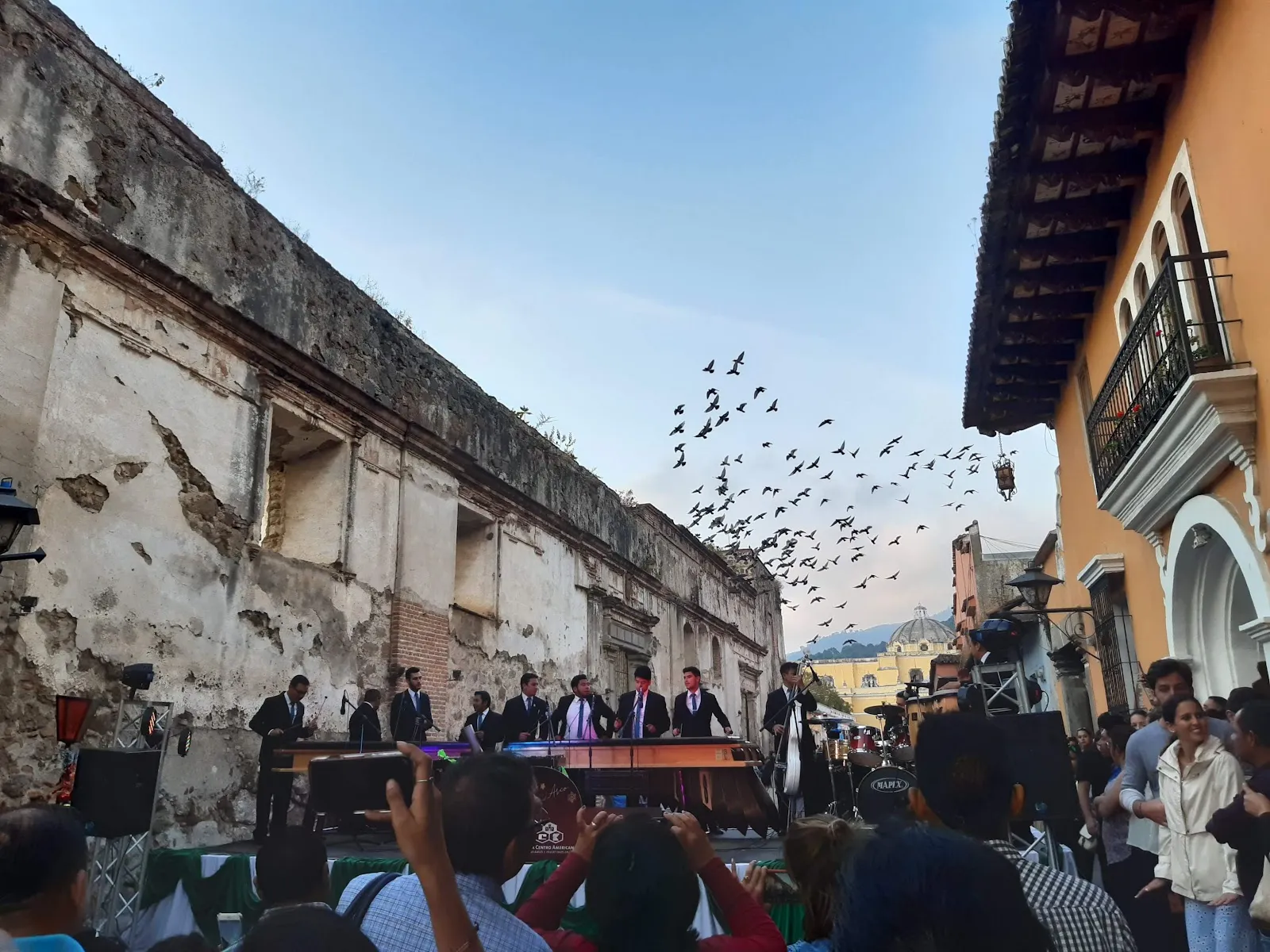
Arco de Santa Catalina

The arch was put up in the 17th century to solve a practical problem. The Santa Catalina convent was closed to the public, and its nuns had taken vows of seclusion. As the community grew, it needed more room and expanded into a building across the street.

The nuns could not simply walk across the street to reach it. The answer was a passage over the roadway, which let the sisters move between the two parts of the convent without being seen. The building on the other side was a school.

The passage is the part of the complex that remains today, and it is now the image most people associate with Antigua.

The clock tower and the 1773 earthquake
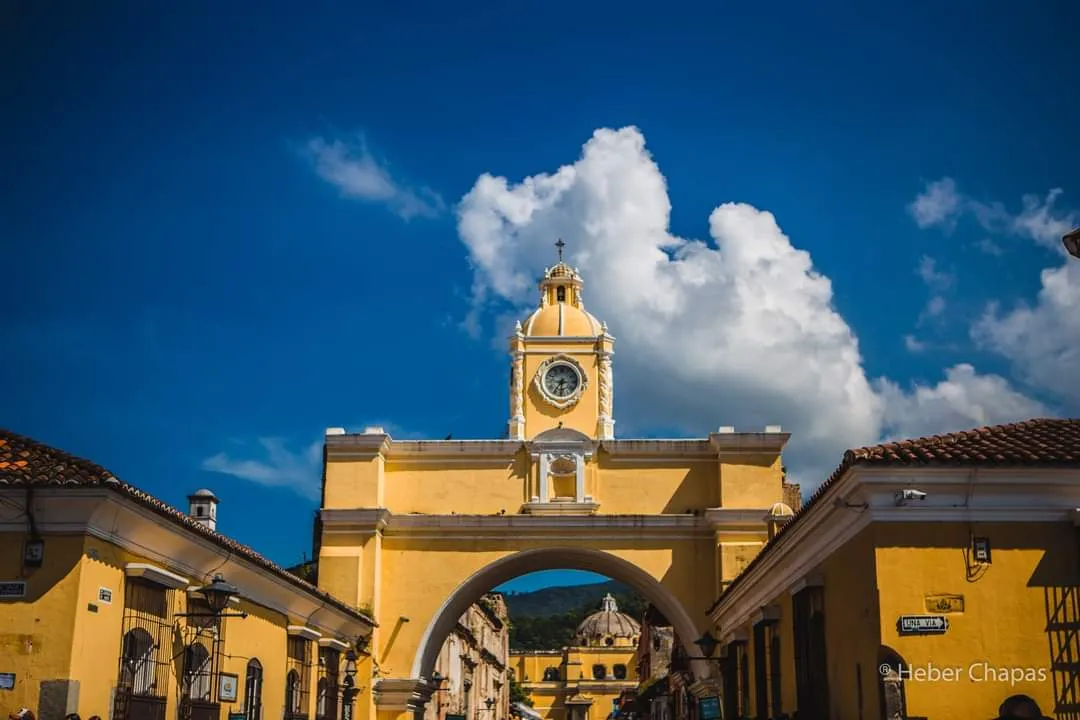
Arco de Santa Catalina

The clock tower on top was not part of the original design. It was added in the 19th century. The mechanism is French-made and has to be wound by hand every three days.

The arch is one of the few colonial structures in the city that stood through the 1773 earthquake, which badly damaged much of Antigua. Its survival is one reason it still shows the colonial character of the town.

The yellow colour and the clean white trim are part of why the arch reads so clearly in photographs.

How a visit works

The arch stands on the street at all hours, so you can see it at sunrise, in daylight or after dark. The light and the mood change through the day, and each time offers a different view of the volcano.

By midday the street is busy with vendors, locals and travellers, and it can be hard to get a clear frame. On weekends the street is closed to vehicles, which opens up the view under the arch.

The Iglesia de La Merced is a short walk away, and the streets around the arch are a good place to continue on foot toward the centre.

FAQ

Is the Arco de Santa Catalina open all day?

The arch stands on the street and can be seen at all hours, so you can visit at sunrise or after dark.

When is the best time to take photos?

Early in the morning, before the vendors and crowds arrive. On weekends, when the street is closed to vehicles, the view under the arch is more open.

Why was the arch built?

It was built so the nuns of the Santa Catalina convent could pass between two buildings across the street without being seen by the public.

When was the clock tower added?

The clock tower was not part of the original arch. It was added in the 19th century.

More must-sees in Antigua Guatemala

Explore all