
At the foot of Delphi’s ancient sanctuary, this museum brings the site’s history into focus through sculptures, architectural fragments and offerings found in the area. Its chronological galleries trace Delphi’s religious, political and artistic life from the sanctuary’s beginnings in the 8th century BC to Late Antiquity. Look for the bronze Charioteer, the Sphinx of Naxos, the Omphalos and the friezes from the Siphnian Treasury. Visit the ruins first if you want to recognize the buildings and sacred spaces behind the objects.
A collection from the sanctuary
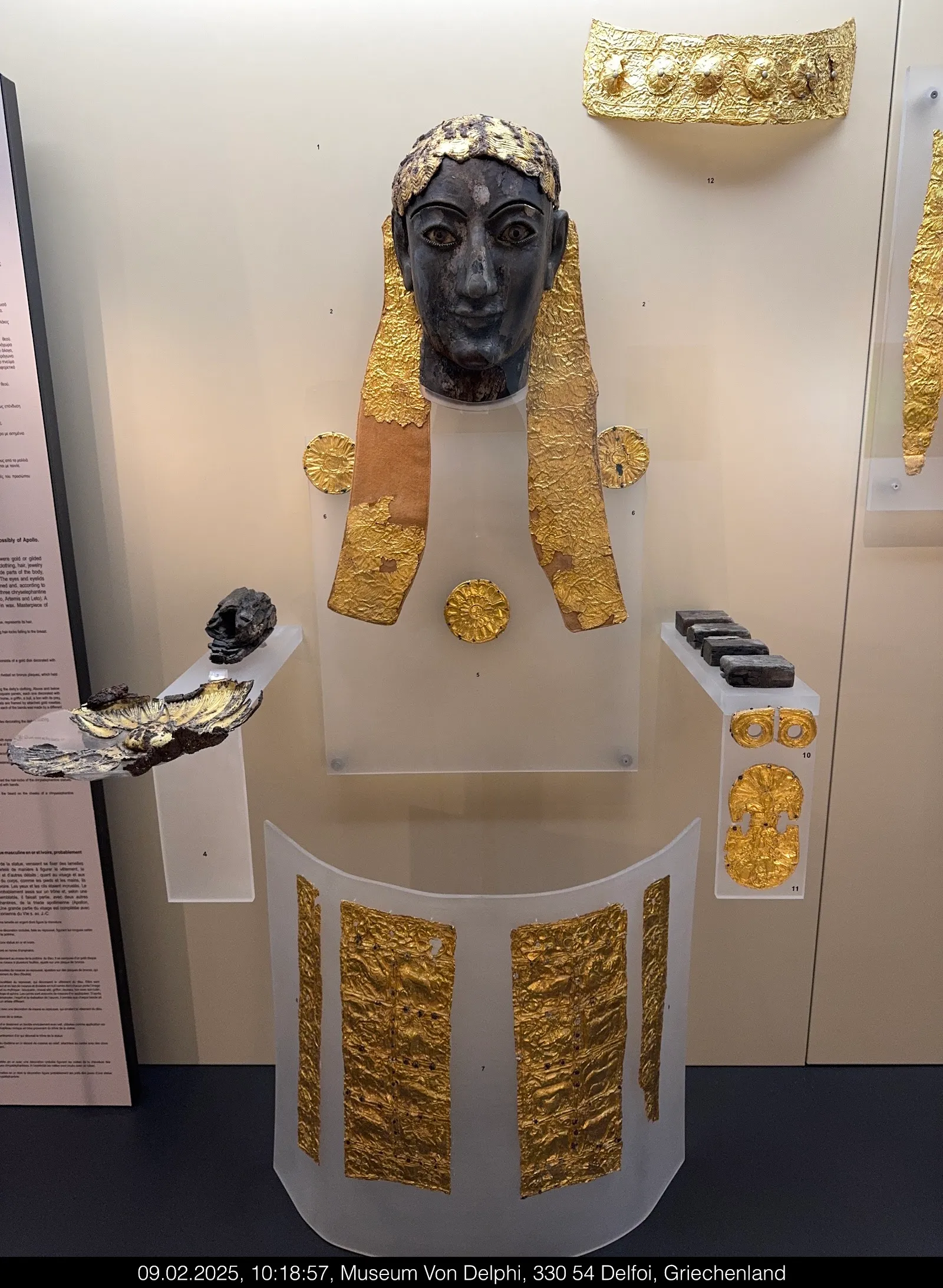
The museum preserves objects uncovered at Delphi, where the sanctuary of Apollo drew dedications from across the ancient Greek world. The collection includes statues, architectural sculpture and smaller offerings. Together, these finds trace the sanctuary’s development from its early history in the 8th century BC through its decline in Late Antiquity.
The displays also help explain Delphi’s place in religious and political life. Powerful Greek communities gave objects to the sanctuary, both as acts of devotion and as public expressions of their standing. The works on view range from monumental sculpture to finely made pieces in precious materials.
Follow the galleries in chronological order
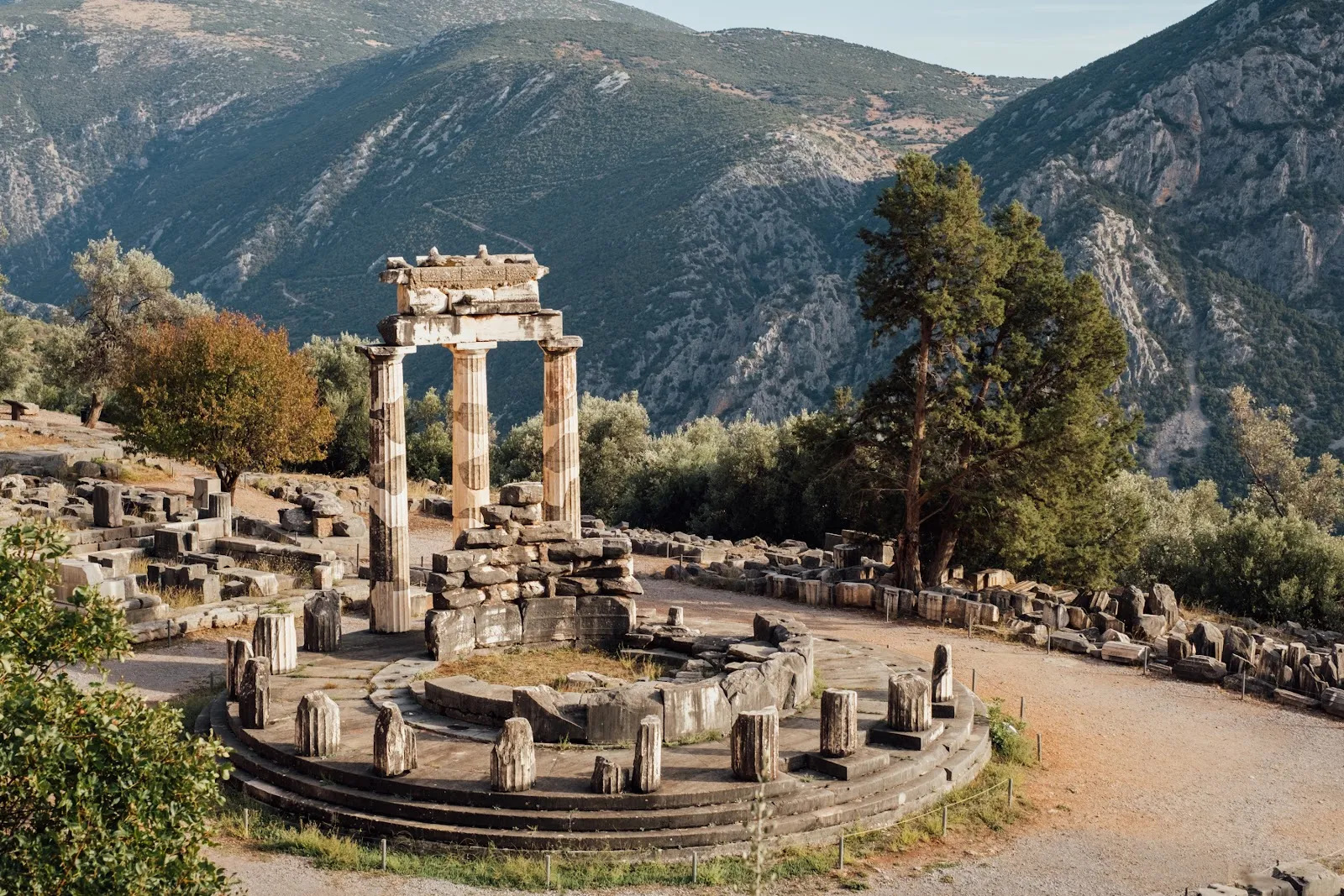
The exhibits are arranged to guide you through changes in Delphi and its art over time. Look beyond the largest statues: fragments from buildings, votive objects and inscriptions add detail to the story of a sanctuary whose wealth and influence changed across the centuries.
The Omphalos is a key object to seek out. This sacred stone was associated with Delphi as the centre of the world. The museum also displays the friezes of the Siphnian Treasury and sculptures connected with the Temple of Apollo. These architectural pieces give a sense of the decoration that once belonged to buildings in the sanctuary.
The Charioteer and other highlights
The bronze Charioteer of Delphi is the collection’s best-known work and has a room of its own. The life-size statue commemorates a victory in the Pythian Games, dated to either 478 or 474 BC. It is one of the rare surviving ancient Greek bronzes, and its careful details make it worth pausing over rather than treating as a quick stop.
Other notable works include the Sphinx of Naxos, the kouroi Kleobis and Biton, and the Three Dancers associated with an acanthus column. The galleries also contain sculpture from the Siphnian Treasury and objects made from gold, silver and ivory. Taken together, these pieces show the range of offerings and craftsmanship represented at Delphi.
Pair the museum with the ancient site
The museum stands beside the archaeological area, making it straightforward to visit both in one outing. Starting at the ruins lets you see the setting first; the museum then gives you objects and architectural fragments that help fill in what has disappeared. The reverse order can also help you recognize the sanctuary’s history before walking through the site.
Allow around 1 to 1.5 hours for the museum itself. Exploring both the galleries and the uphill archaeological site takes longer; the supplied visitor advice recommends allowing at least two hours for the pair. Comfortable shoes and water are useful for the outdoor portion. The cafe is on site, but village tavernas are an alternative for refreshments.
FAQ
What are the main things to see at Delphi Archaeological Museum?
Look for the bronze Charioteer, the Sphinx of Naxos, the Omphalos, the kouroi Kleobis and Biton, and friezes from the Siphnian Treasury.
How long should I spend at the museum?
Allow about 1 to 1.5 hours for the museum. For the museum and archaeological site together, visitor advice recommends at least two hours.
Should I visit the museum or the archaeological site first?
Visiting the archaeological site first gives the museum’s sculptures and architectural fragments a clearer setting. You can also start in the museum to learn about Delphi before walking through the ruins.
Is the museum next to the Delphi archaeological site?
Yes. It is beside the archaeological area, at the foot of the site.


