
The Beatles Story is a museum dedicated to the lives and music of John Lennon, Paul McCartney, George Harrison and Ringo Starr, at Britannia Vaults on Liverpool’s Royal Albert Dock. Its chronological route follows the band from its Liverpool beginnings to worldwide success, using original objects, photographs, interactive displays and recreated settings such as the Cavern Club and Abbey Road Studios. An audio guide adds context as you move through the exhibition. Allow around 1.5 to 2 hours for a typical visit; fans who want time with every display may want longer.
A Liverpool story, told in sequence
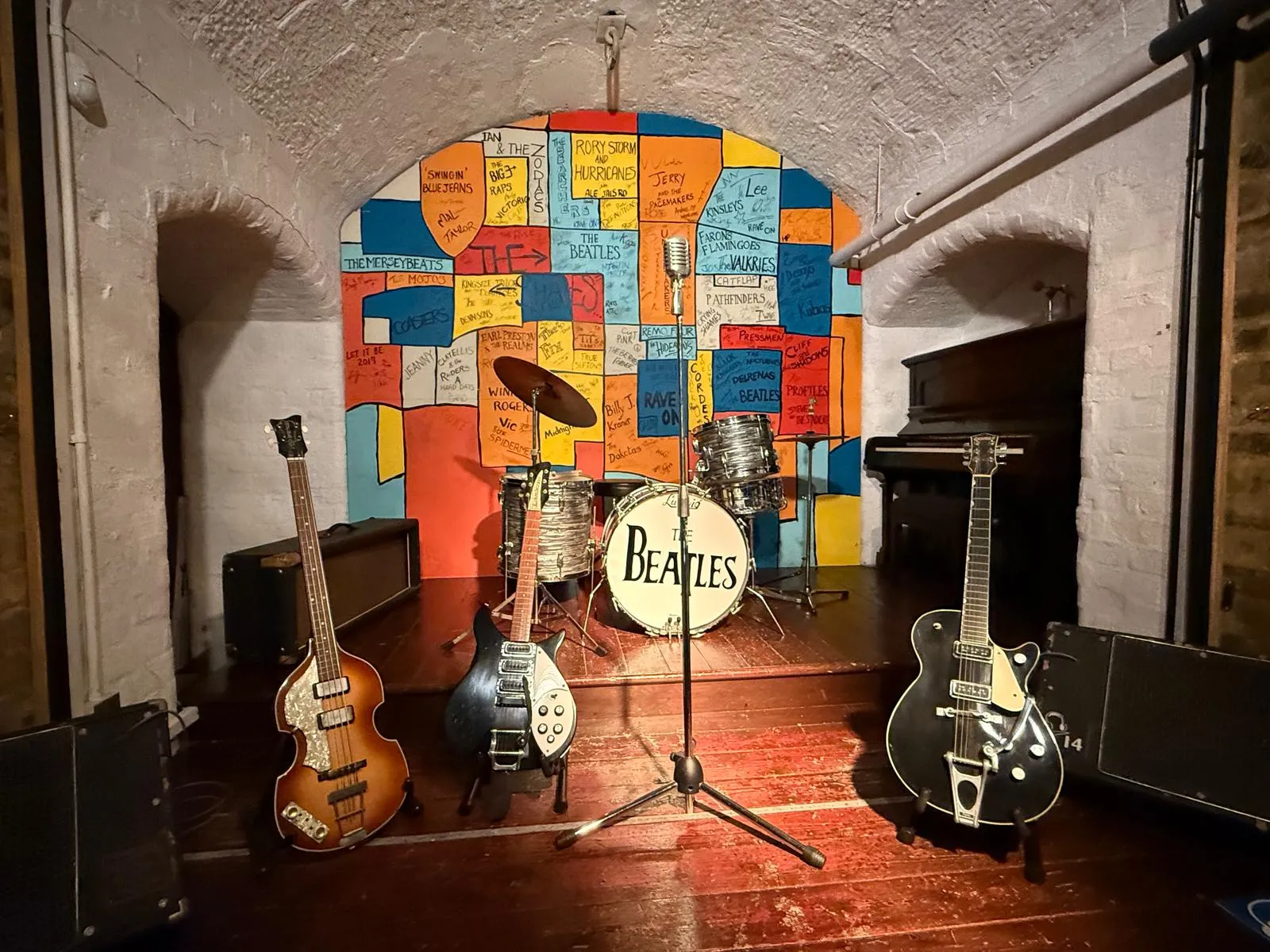
The Beatles Story opened in 1990 at the Royal Albert Dock. Its exhibition follows John Lennon, Paul McCartney, George Harrison and Ringo Starr from their early years in Liverpool through the group’s rise to international fame and its later legacy. The route is arranged as a timeline, so you can follow the changes in the band’s career and the world around it as you move from room to room.
The museum uses photographs, films, audio and objects to tell that story. Rather than relying on display cases alone, it places parts of the band’s history in settings designed to evoke the places and periods they are associated with. This makes the exhibition accessible even if you know the songs better than the details of the band’s early years.
Original objects and recreated places
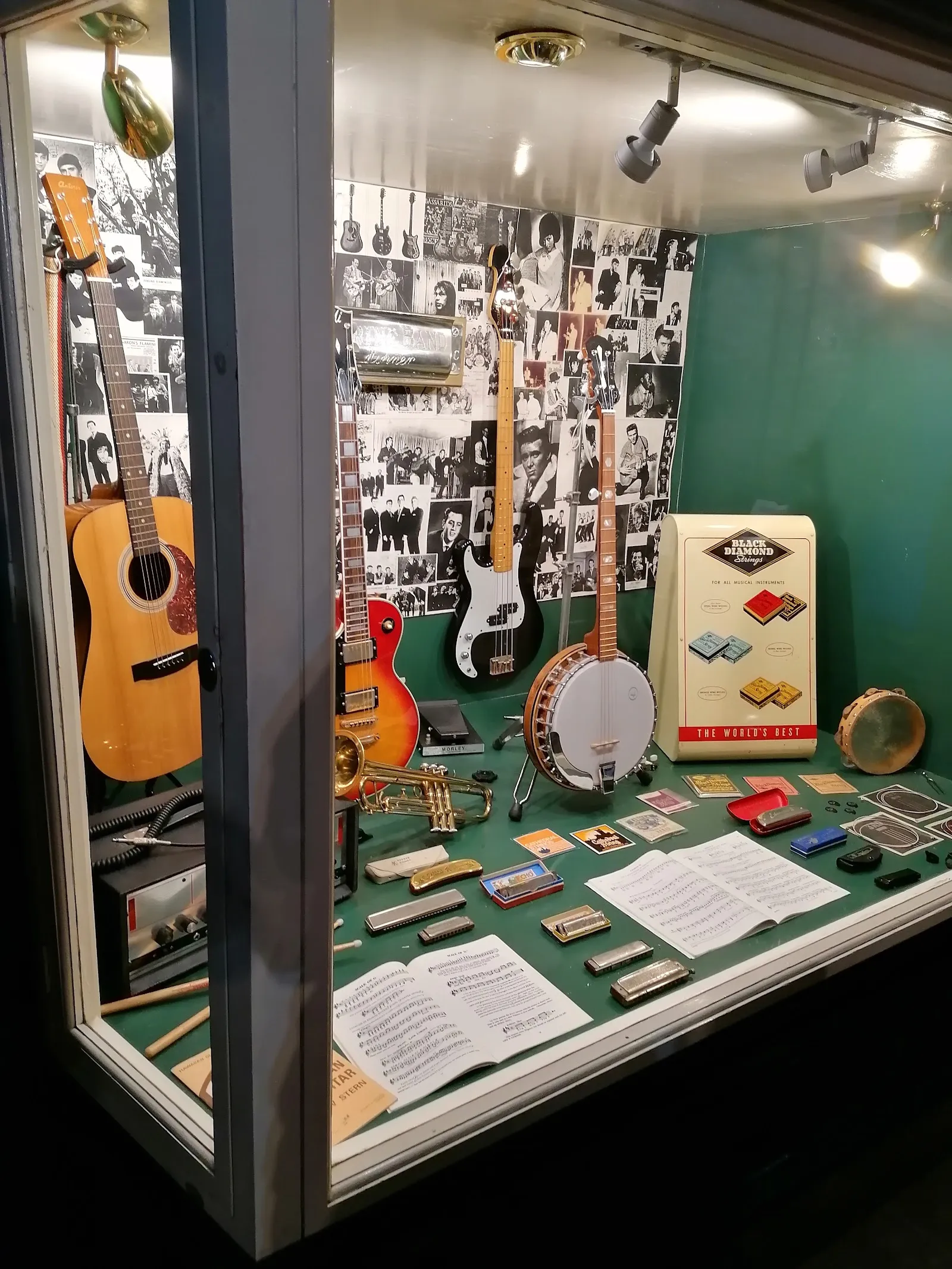
Among the collection are handwritten lyrics, photographs, clothing, records and instruments. Specific items associated with the band include George Harrison’s first guitar and John Lennon’s glasses. These objects give the exhibition a personal scale: they connect a worldwide music story to the people who made it.
Recreated rooms include the Cavern Club and Abbey Road Studios, along with settings linked to the Casbah Coffee Club and Mathew Street. The Cavern recreation evokes the Liverpool venue associated with the band’s early performances; the Abbey Road setting points to a later part of its recording history. The displays also include interactive and multimedia elements, and the exhibition’s route brings these scenes together with archival material.
Using the audio guide
An audio guide is included with admission. It provides commentary for the exhibits and lets you choose material as you go, rather than having to keep pace with a group. Allow time to listen as well as look: the exhibition contains details across its rooms, and the audio adds background to objects and episodes in the band’s history.
The museum is suited to a range of visitors, including people who are curious about the group but are not dedicated fans. The chronological presentation gives newcomers a clear way into the story, while rare objects and photographs offer familiar touchpoints for those who already know the music. The exhibition presents the band’s career and cultural impact, with its focus on memorabilia and the public story of the group.
The Discovery Zone and a visit with children
Families can add the Discovery Zone to their visit. This interactive area gives children ways to engage with the band’s music and imagery, including a large floor piano and a small stage styled after the Cavern Club. Activities also include pop-art making and dress-up. It provides a change of pace from the main exhibition’s chronological displays.
The museum is on the Royal Albert Dock, where other attractions include Tate Liverpool and the Maritime Museum. If you are planning a full day in the area, these are nearby options to combine with the exhibition. The museum also has a café and a shop; both can be accessed without going through the exhibition.
FAQ
How long do you need at The Beatles Story?
Around 1.5 to 2 hours is a useful allowance for a typical visit. If you want to spend longer with the exhibits and audio guide, plan extra time.
Is the audio guide included?
Yes, an audio guide is included with admission. It provides commentary as you move through the exhibition.
Is The Beatles Story suitable for children?
Yes. The Discovery Zone has interactive activities, including a large floor piano, dress-up and a small performance stage.
Should I book tickets in advance?
Booking online ahead of time is recommended, especially for weekends, when the museum can be busy.


