Dunster Castle is a National Trust castle on a wooded hill above the village of Dunster, on the edge of Exmoor National Park in Somerset. The gateway dates from the 13th century, and the house you tour mixes medieval walls with a Gothic-style country home. Look for the leather wall hangings showing Antony and Cleopatra, the carved oak staircase and the Victorian kitchens. Add the terraced gardens, the working watermill and views over the Bristol Channel, and it makes a full day out.
From Norman defence to family home
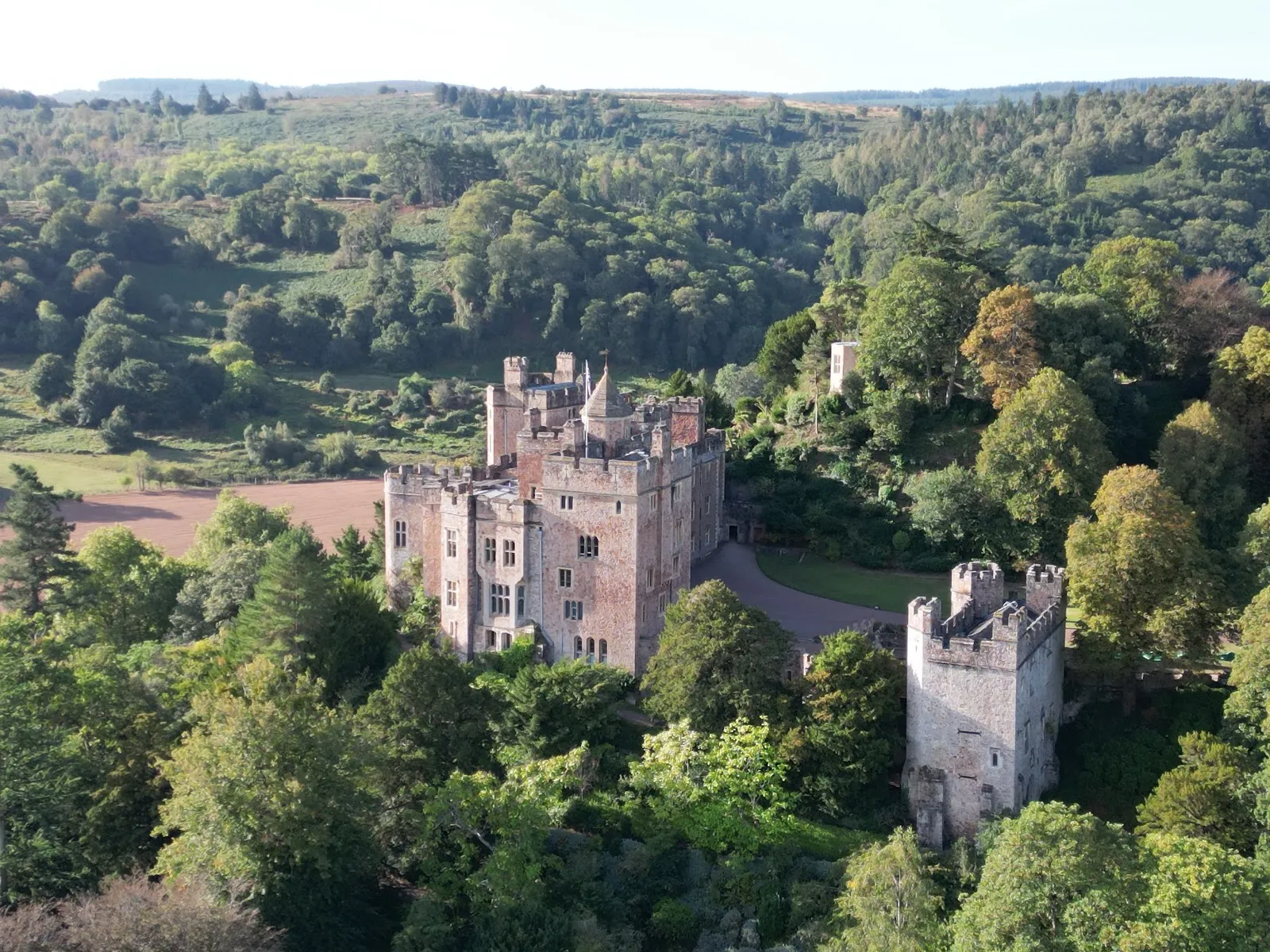
A timber castle was built on this hill by William de Mohun around 1086, after the Norman Conquest. Evidence points to an Anglo-Saxon burgh on the site before that. In the 1130s King Stephen laid siege to the castle, which was held by a son of William de Mohun, also called William. The castle passed to the Luttrell family in 1376, and they lived here for the next 600 years.
The 13th-century gateway is the oldest part of the building still standing. The castle was besieged during the English Civil War, and in 1650 Oliver Cromwell partly destroyed it, leaving the medieval gatehouse and a ruined tower. Much of the house was remodelled in the 19th century. The Luttrells gave the castle to the National Trust in 1976.
Inside the house
The rooms hold paintings, silver, porcelain, furniture and books. A library and a grand central staircase are among the main spaces. The best-known object is the set of leather wall hangings in the dining room, which show the love story of Antony and Cleopatra.
Other rooms include the carved oak staircase, Tudor furnishings, 17th-century plasterwork and a billiard room. The attic rooms are atmospheric. You can also see the Victorian kitchens and a secret passageway.
The crypt, the reservoir and the bats
The crypt has a bat camera, and the bats that spend the summer at the castle are the focus of the summer bat trail for children. The trail ends with a prize.
Beneath the Keep garden lies a vaulted underground reservoir from the Victorian period. It is one of the less expected sights on the site.
Gardens, watermill and parkland
The terraced gardens hold subtropical and Mediterranean plants. The River Garden follows the riverbank, and the South Terrace has Mediterranean planting. The original castle site was levelled into a bowling green, which you can still walk across.
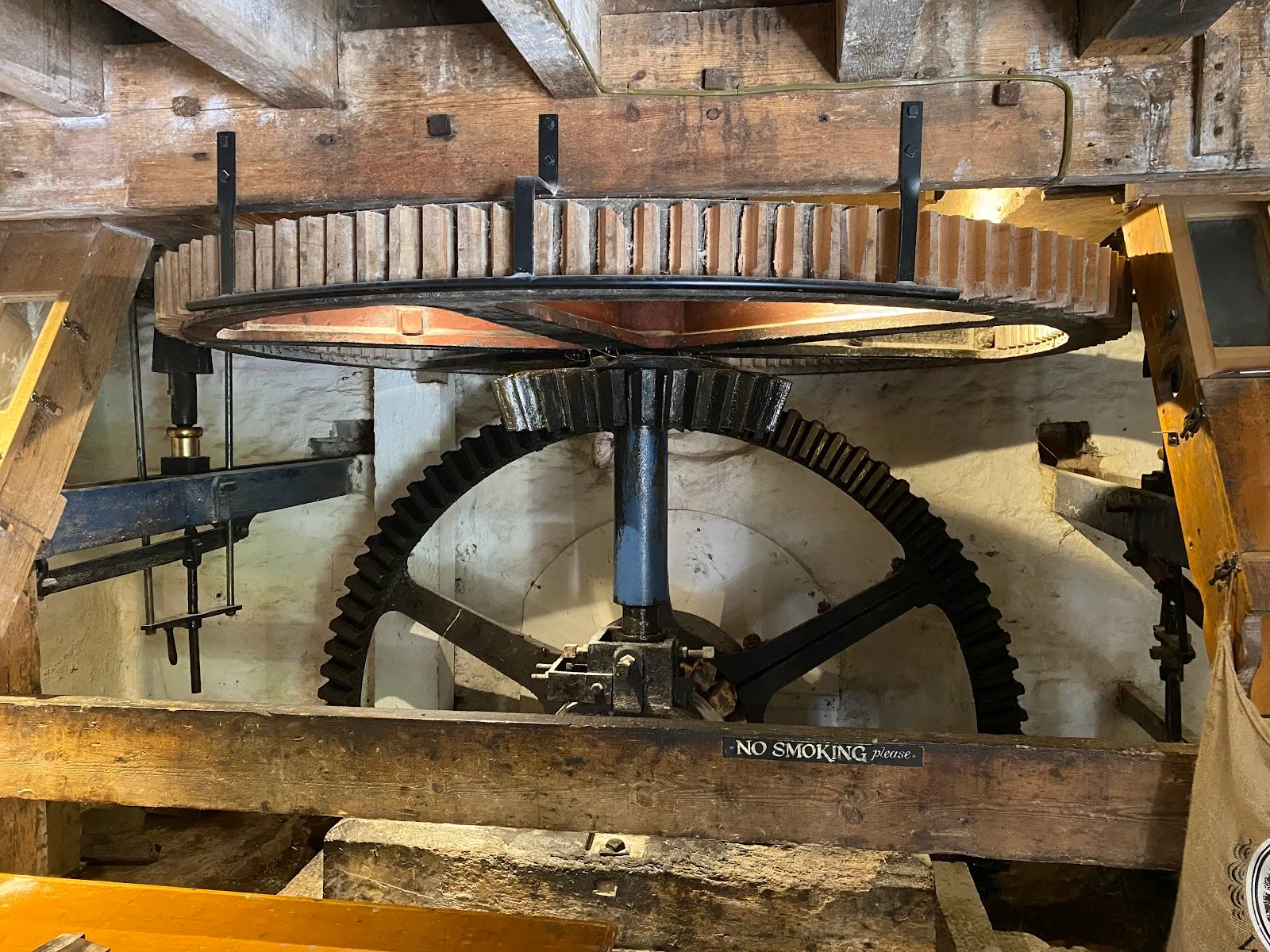
Beyond the walls, about 700 acres of parkland surround the house. There is a natural play area for children. The working watermill is Victorian, and you can buy its flour. Gallox Bridge, an arched medieval packhorse bridge over the River Avill, lies just to the south of the castle.
FAQ
Do I need to book tickets in advance?
The site recommends getting tickets in advance.
How long do you need for a visit?
Plan on at least 2 hours, or longer if you add optional tours. The grounds have more to explore than one visit can cover.
Can I bring my dog?
Dogs are welcome in the grounds but not inside the castle.
Is the castle accessible for wheelchair users?
The site has a wheelchair accessible entrance, accessible parking and wheelchair accessible seating.
Is Dunster Castle good for children?
Yes. There is a natural play area, lawn games and a bat trail in summer.