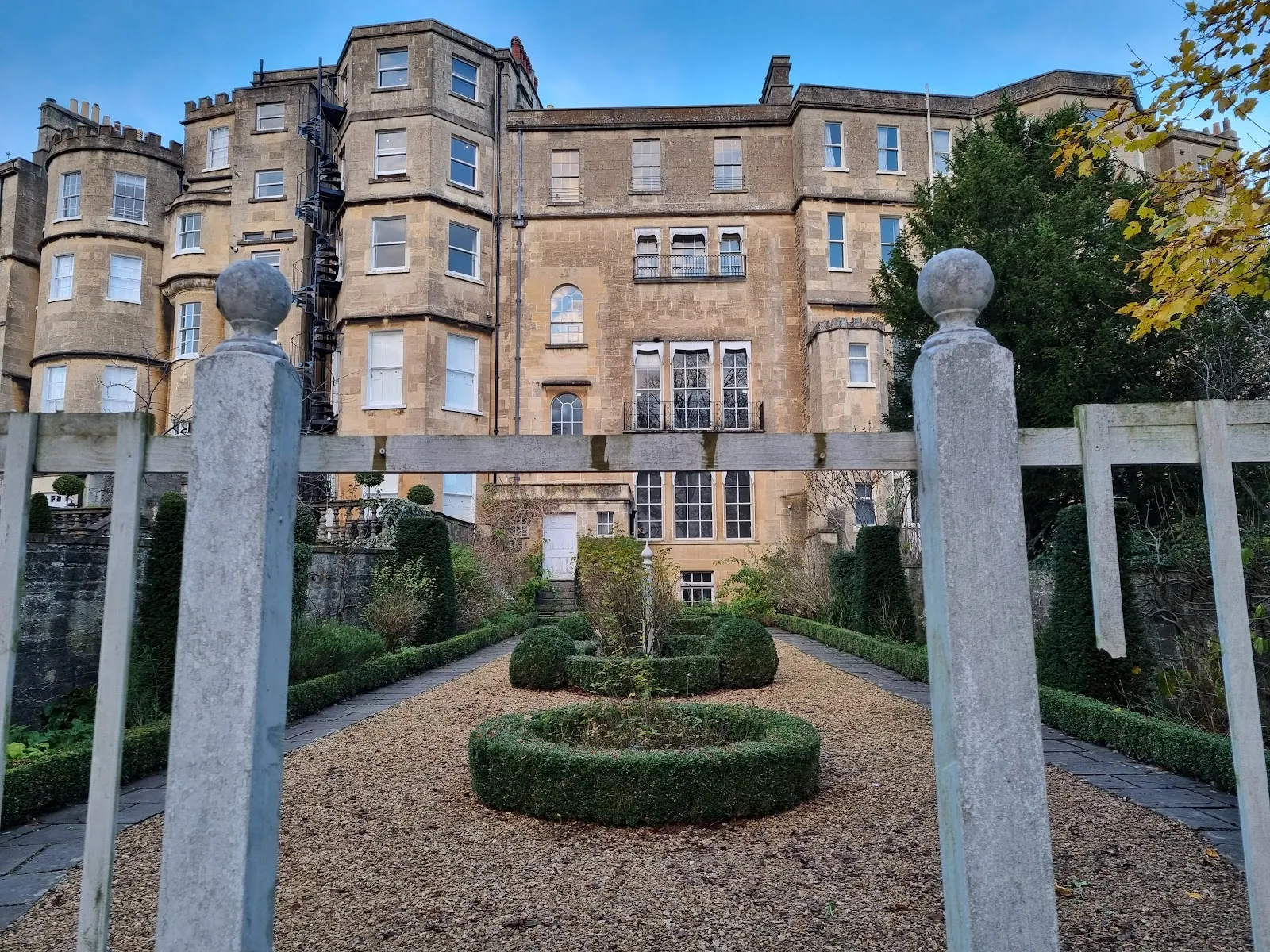
The Royal Crescent is a curved row of 30 Georgian townhouses at 1, The Royal Crescent in Bath, overlooking Royal Victoria Park. Designed by John Wood the Younger and built between 1767 and 1774, its pale Bath stone façade and even line of columns are best seen from across the green. Walk along the crescent to spot details such as the lion door knockers and distinctive façades. For a closer look at Georgian interiors, visit No. 1 Royal Crescent museum.
A crescent of Georgian townhouses
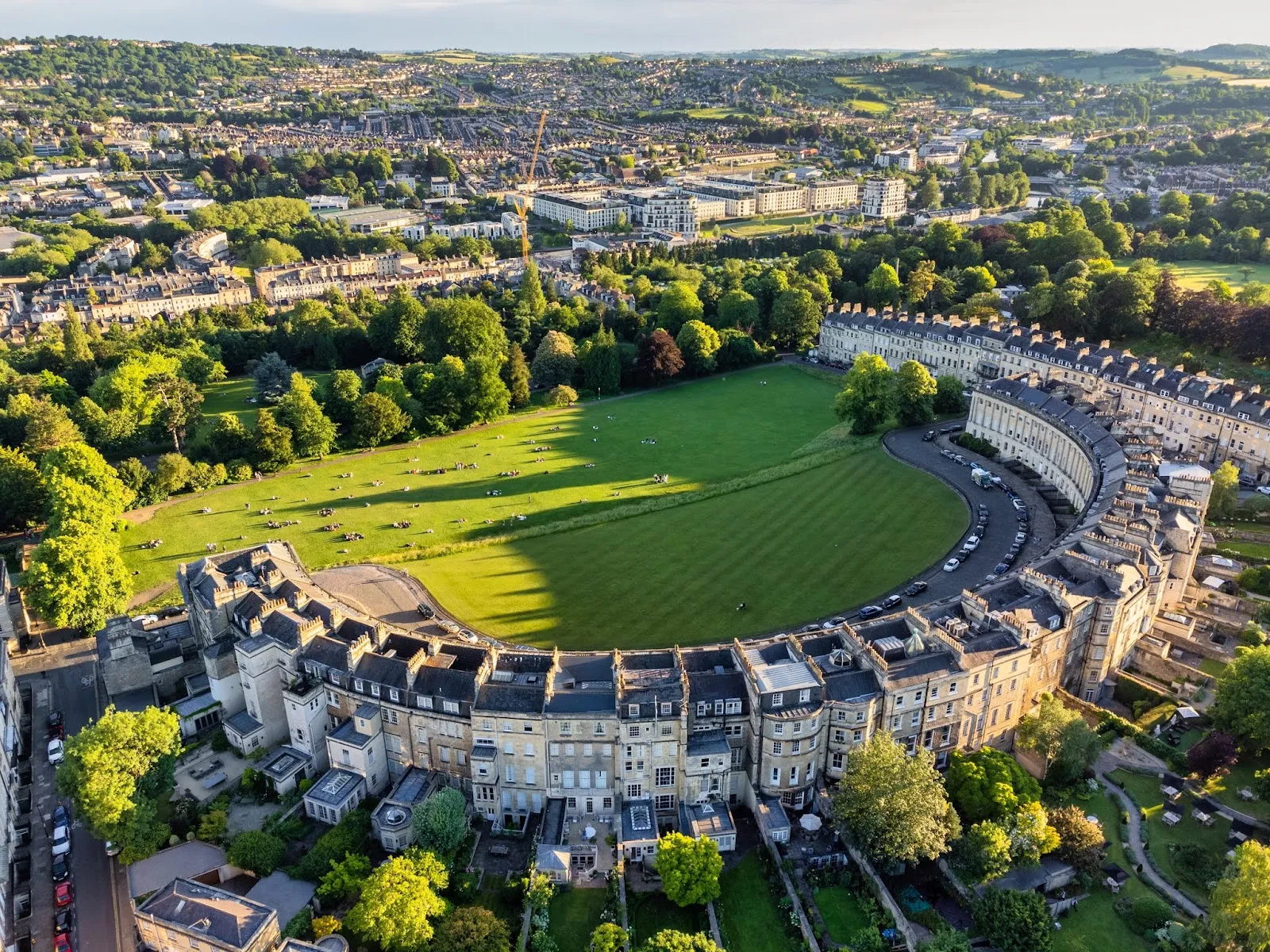
The Royal Crescent is a row of 30 terraced houses that follows a broad curve in Bath. John Wood the Younger designed it, and construction took place between 1767 and 1774. Its unified façade, built from Bath stone, gives the row a formal, measured appearance. Look across the whole sweep before walking closer: from a distance, you can take in the curve; along the frontage, the individual entrances and details become easier to notice.
The Crescent was built for wealthy visitors who came to Bath for the social season. Its grand townhouses gave them accommodation on a scale suited to their country homes, while keeping them in the city. The houses remain part of a residential street, so treat the entrances and frontage with care as you walk by.
The view from the green
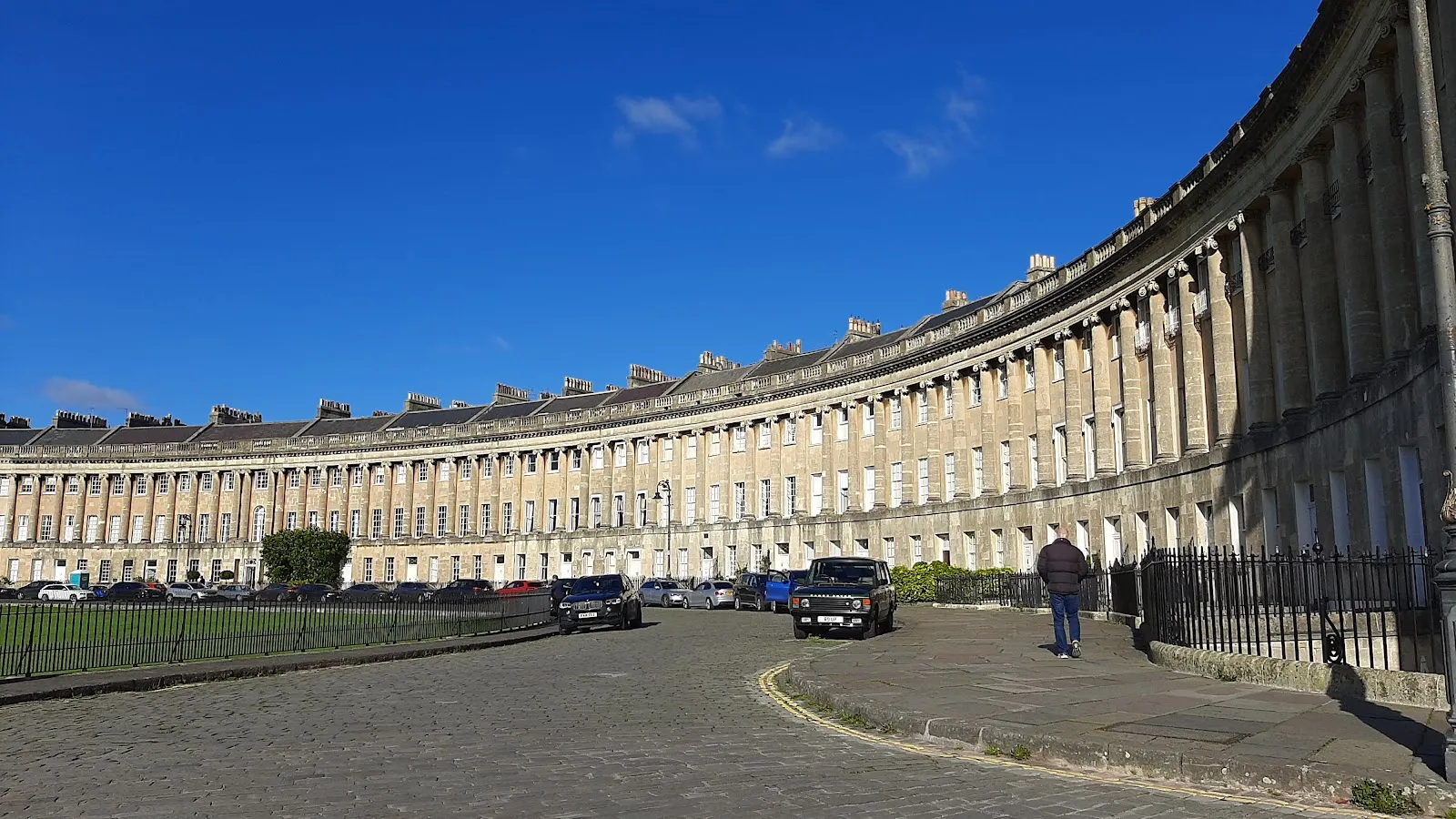
The open space in front gives you room to see the full line of the buildings. The houses originally looked out over parkland. A concealed ditch, known as a ha-ha, was built to keep sheep away from the houses without interrupting the view. The green in front of the Crescent is private, so head to nearby Royal Victoria Park if you want a public park setting.
For a quieter look and clearer photographs, visit early in the morning. The stone and the curve can be appreciated in different weather, but the view across the frontage is central to understanding the design. Once you have taken in the whole row, stroll along the front and look for details including lion door knockers and differences between the façades.
Inside No. 1 Royal Crescent
No. 1 Royal Crescent is a museum where you can see Georgian-style interiors. It gives a closer view of the domestic world behind the formal exterior and adds context to the houses’ original role as accommodation for wealthy visitors to Bath. The museum is a separate stop from viewing the crescent outside, so plan for it if you want to go beyond the architecture of the street.
The exterior can be admired without entering the museum. If your time is short, focus on the view across the crescent and a walk along the frontage. If you want more historical context, make No. 1 part of your visit. The address is 1, The Royal Crescent, Bath.
FAQ
Is the Royal Crescent free to visit?
You can view the Royal Crescent from outside without paying. No. 1 Royal Crescent is a separate museum.
How long do you need at the Royal Crescent?
Allow 30 to 60 minutes to admire the façade, walk along the crescent and look for architectural details. Add time if you plan to visit No. 1 Royal Crescent museum.
When is the best time to visit the Royal Crescent?
Go early in the morning for a quieter visit and photographs.
Can you sit on the lawn in front of the Royal Crescent?
The lawn in front is private. Nearby Royal Victoria Park is a public green space.