In Bogotá’s city centre, the Gold Museum traces how pre-Hispanic communities worked with gold and gave it meaning. Its collection includes more than 34,000 gold objects and thousands of pieces in materials such as ceramics, stone and textiles, from cultures including the Muisca, Quimbaya and Tairona. Look for the Muisca Raft, linked to the El Dorado legend, and the Poporo Quimbaya. Displays also explain the objects’ uses, techniques and spiritual significance, so allow time to explore the themed galleries across several floors.
Goldwork and Indigenous cultures
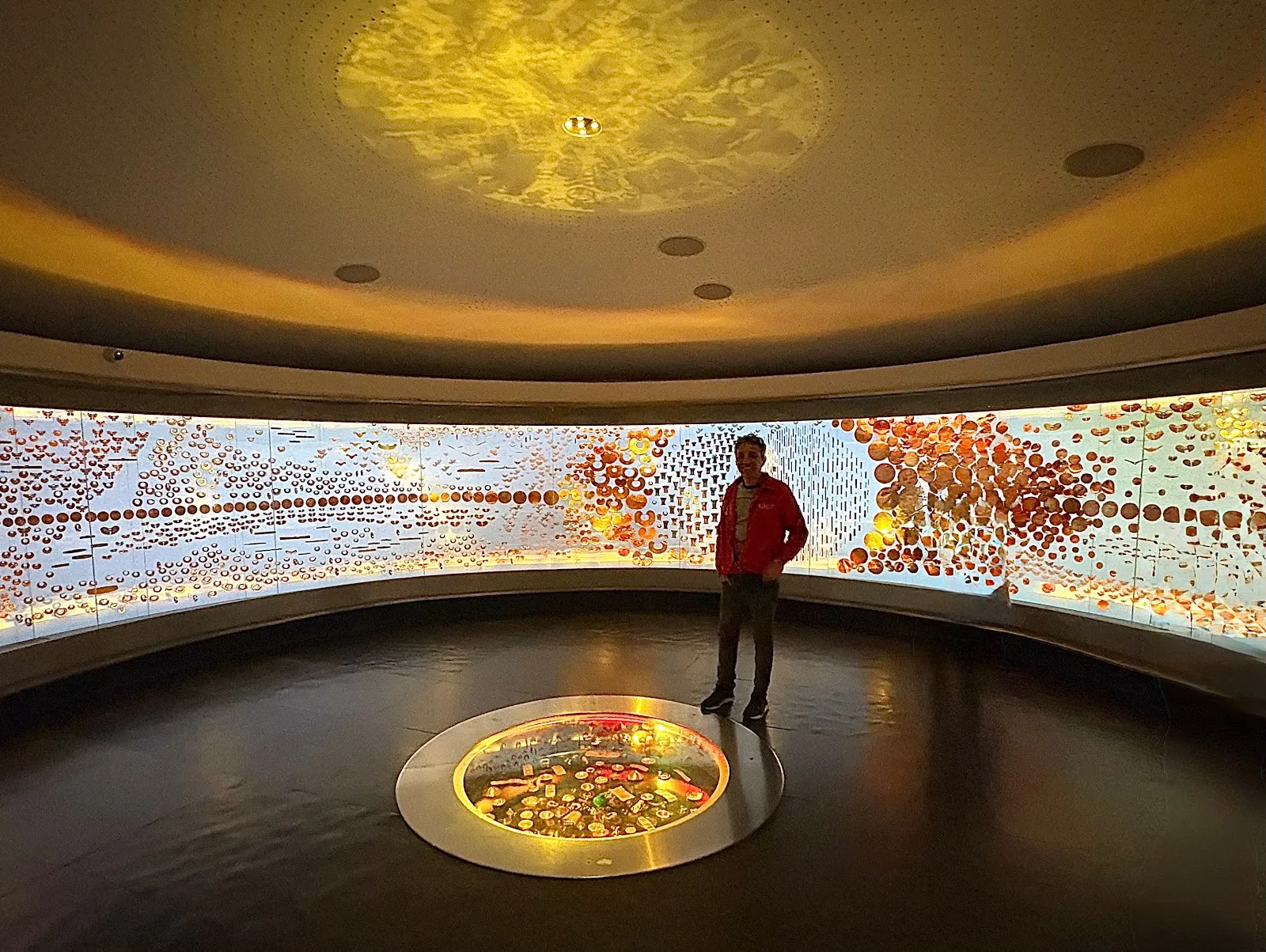
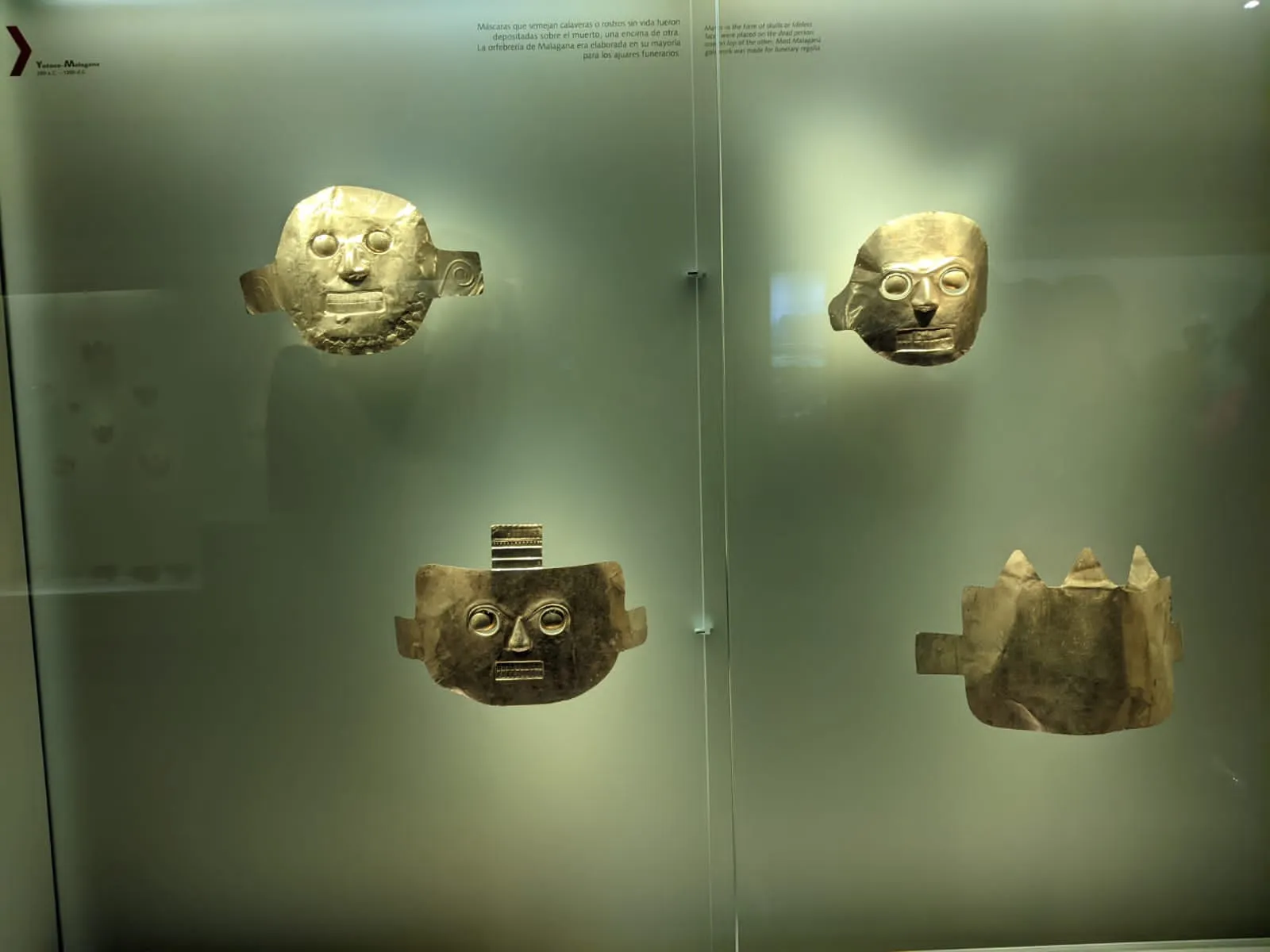
The Gold Museum presents objects made by Indigenous communities in Colombia before the Spanish arrival. Its collection includes more than 34,000 pieces of goldwork, alongside thousands of objects in materials such as ceramics, stone, shell and textiles. The works come from cultures including the Muisca, Quimbaya, Tairona and Zenú.
The displays connect the objects to the people who made and used them. Gold appears as more than a valuable material: the exhibits explore its place in daily life, craft and spiritual practice. Look for explanations of how gold was extracted and shaped, and how techniques produced jewellery, masks, vessels and ceremonial offerings.
The Muisca Raft and El Dorado
One of the collection’s best-known objects is the Muisca Raft, a small gold model associated with the ceremony of a Muisca leader at Lake Guatavita. The object is connected to the story of El Dorado, a legend that helped draw Spanish attention to the region. Its significance lies in the ceremony it represents as well as its finely worked form.
The Poporo Quimbaya is another notable piece. As you move through the galleries, consider how objects made for ritual or community life carry meanings beyond their material. The museum uses its collection to introduce the customs and beliefs of pre-Hispanic societies, rather than presenting goldwork as craft alone.
How the galleries are arranged
The collection is displayed across several floors in themed galleries. The route begins with the history and process of gold in Colombia, including how the metal was worked. Other rooms bring together objects from different Indigenous cultures and explore their uses and symbolism. English and Spanish text accompanies the exhibits, and an audio guide in either language is available for visitors who want more detail.
A dedicated room recreates the setting of Indigenous offering ceremonies. Give yourself time to pause there and to compare objects made from different materials. The quantity of work on display can make a visit feel full, so choose a pace that leaves room for reading the panels rather than trying to see everything quickly.
Planning a visit
The museum is in Bogotá’s city centre, at Cra. 6 #15-88. It is closed on Mondays. Sunday admission is free, but that day can be busier; a weekday visit is a useful option if you prefer to explore with fewer people around. Check the museum’s official website for current visitor information before you go.
The collection is extensive, and a visit of about three hours gives you time for the galleries and their explanations. Families can use the audio guide, which includes a version for children. There is also a souvenir shop with items related to Colombian culture. The building has wheelchair-accessible entrances, elevators and restrooms.
FAQ
How long do you need at the Gold Museum in Bogotá?
Plan for around three hours to explore the extensive collection and read the exhibit explanations.
Is the Gold Museum free on Sundays?
Sunday admission is free. Sundays can be busier than weekdays.
Is the Gold Museum closed on Mondays?
Yes. The museum is closed on Mondays.
Are audio guides available in English?
Yes. Audio guides are available in English and Spanish, including a version for children.
What is the Muisca Raft?
It is a small gold model associated with a Muisca leader’s ceremony at Lake Guatavita and the El Dorado legend.