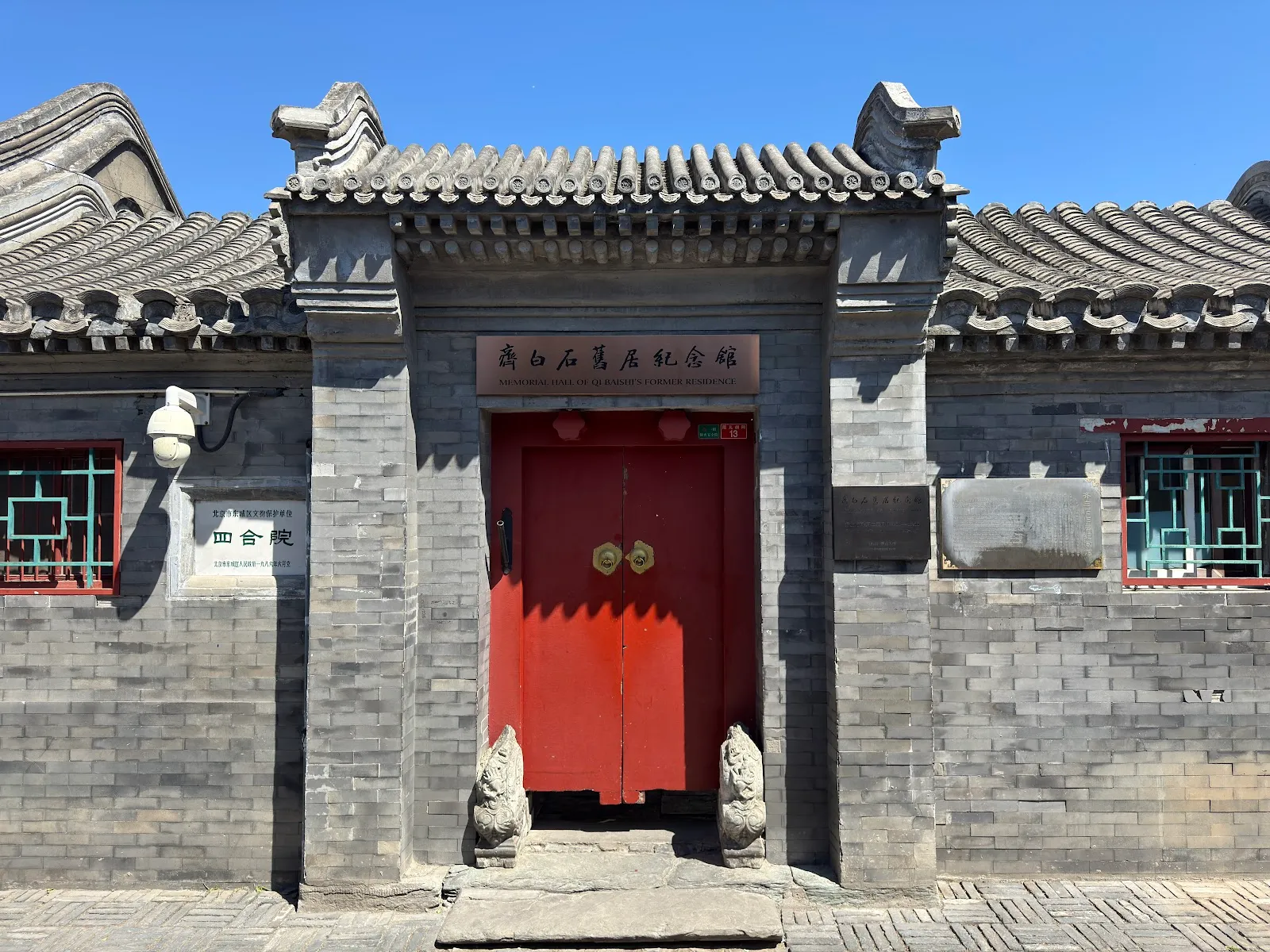
Fayuan Temple is an active Buddhist temple in Beijing’s Xicheng District, known for its long history and its role as a place of worship and Buddhist study. Its halls hold ancient stone inscriptions, including some dating to the seventh century, while monks study and worshipers burn incense around the grounds. The temple is also known for its lilacs, which bloom in April and fill the grounds with fragrance. Come for a quiet visit, and allow time to observe the temple respectfully as a living religious community.
A temple founded in the Tang dynasty
Fayuan Temple dates to 645, during the Tang dynasty, and is counted among Beijing’s oldest Buddhist temples. Its original name was Minzhongsi. The temple was established in connection with a failed military campaign against Koryo, present-day Korea, and dedicated to soldiers who died in the campaign. Accounts connect its founding with Emperor Taizong and an act of repentance for the losses.
The site’s history includes periods of damage and rebuilding. The temple burned in 882 and was rebuilt during the Five Dynasties period. Many of its present-day parts belong to the Qing dynasty. Its long history is also reflected in the range of roles it has held: it has been a place of worship, a prison for Emperor Huizong in the 12th century, a venue for examinations for senior government offices and a botanical garden.
Halls, inscriptions and Buddhist study
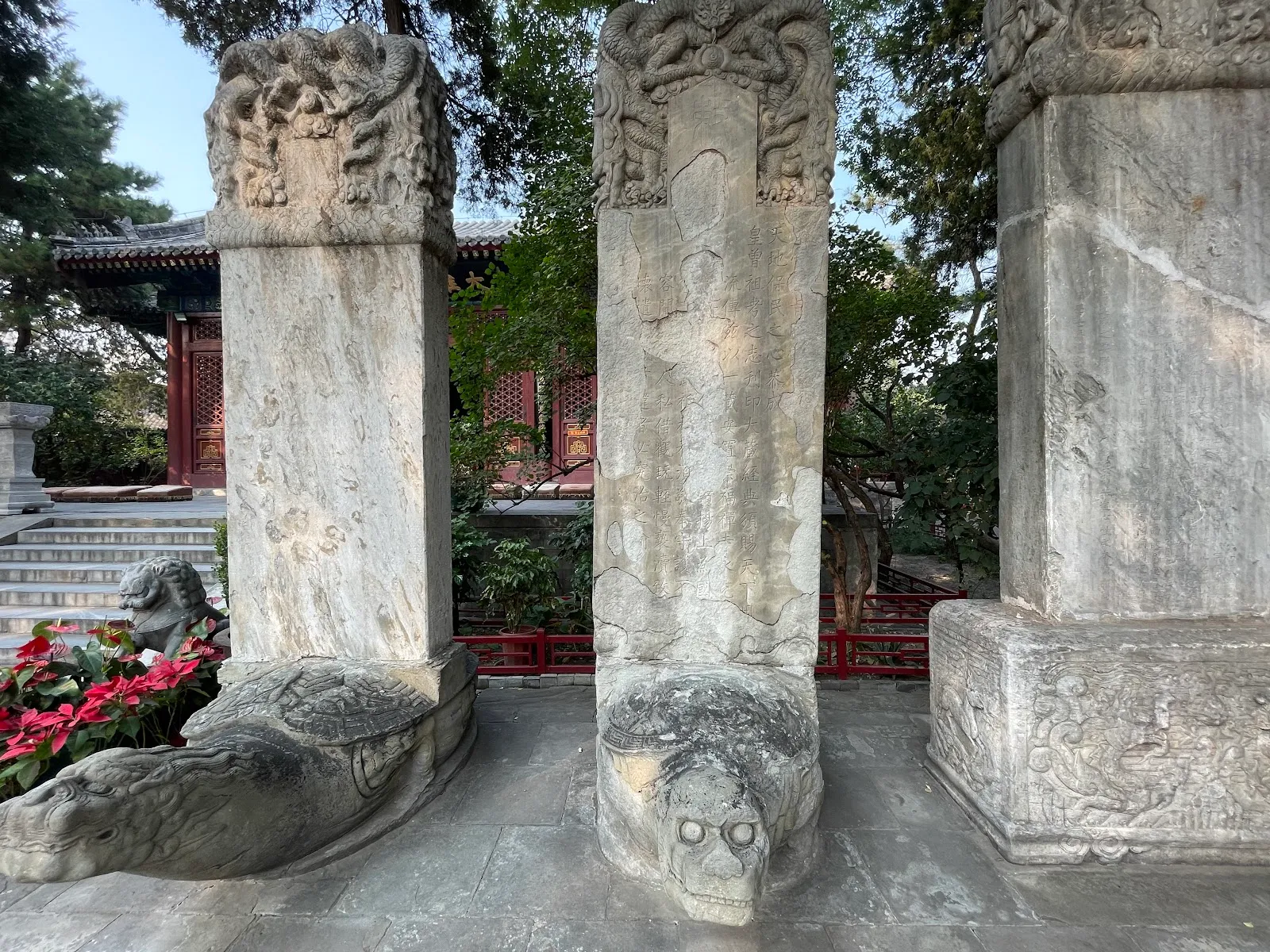
Several halls stand within the temple grounds, and many contain ancient stone inscriptions. The oldest inscriptions date to the seventh century. The buildings that are open include spaces used for worship, where kneeling cushions are set in front of Buddhist altars. The grounds are active, so a visit may include seeing worshipers burn incense and monks move between buildings.
Fayuan Temple is also home to the Buddhist Academy of China and is associated with Buddhist study and research. Young monks study on site, and the temple’s role in Buddhist education continues alongside its religious use. This gives the grounds a working atmosphere rather than the feel of a site preserved only for visitors.
Access to the interior can be limited: exhibit areas and some structures, including the bell and drum towers, may be closed. English signs are limited within the grounds, so the open halls and courtyards are useful reference points as you explore. Treat worship spaces as places of prayer, keep your voice low and avoid interrupting people who are there to worship or study.
Lilacs in the temple grounds
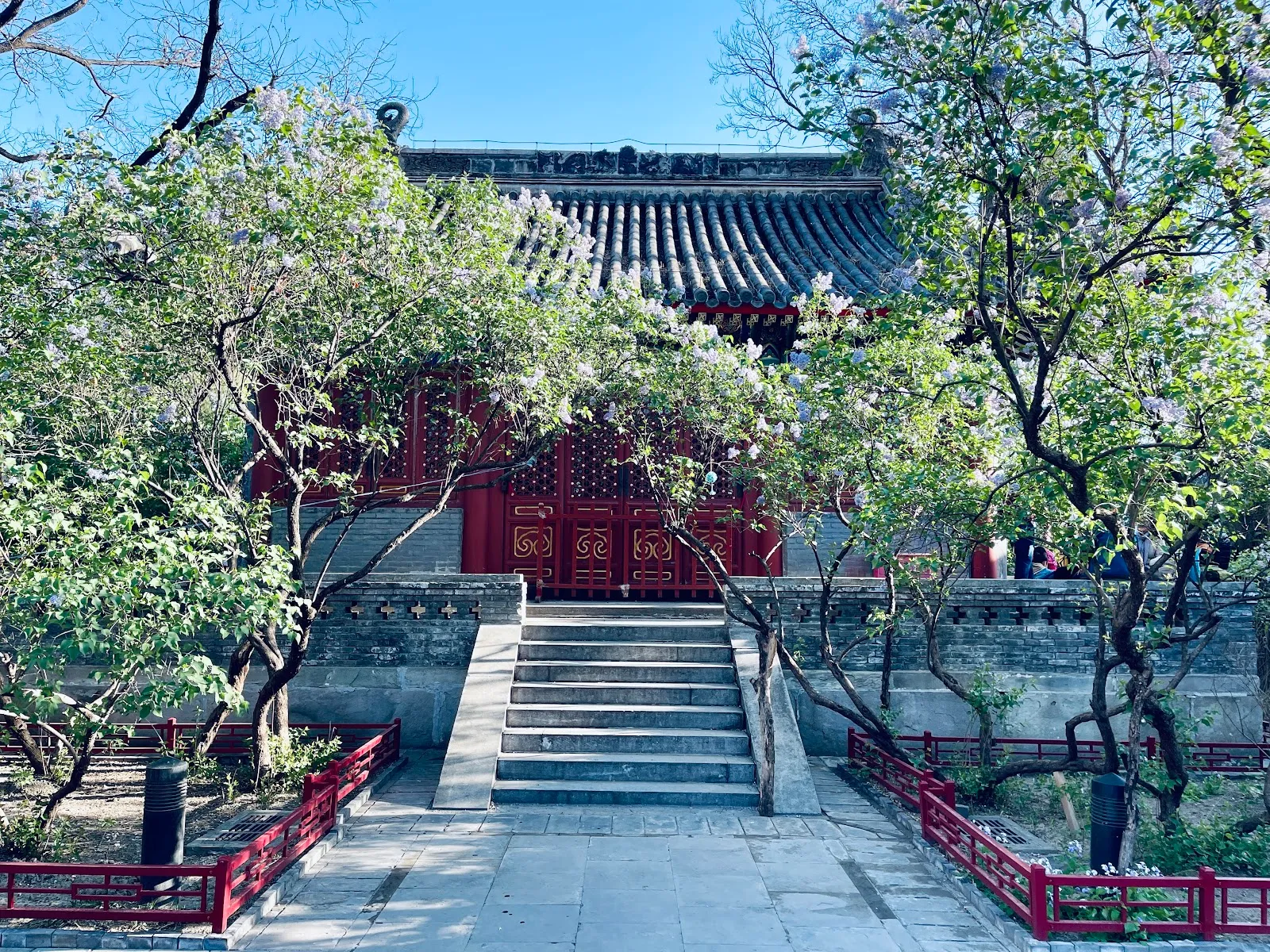
Fayuan Temple is known for its lilacs, and it is one of Beijing’s flower temples. The blossoms are a particular draw in April, when their fragrance spreads through the grounds. The temple has a long connection with flower viewing: visitors have come to see its blooms since the Qing dynasty. The lilacs also attracted poets Xu Zhimo and Rabindranath Tagore, who made a special visit to see them in 1924.
For a visit centered on the flowers, aim for early April, around the Qingming Festival. The exact experience depends on whether the trees are in bloom, so the temple’s appeal also extends beyond flower season: its halls, inscriptions and daily religious life give the grounds their own interest. Move quietly and leave worshipers room to pray, especially around incense and altars.
FAQ
When was Fayuan Temple built?
Fayuan Temple was founded in 645 during the Tang dynasty. Its original name was Minzhongsi.
What can you see at Fayuan Temple?
The grounds have several halls, ancient stone inscriptions and active worship spaces. Monks study at the temple, and worshipers burn incense.
When do the lilacs bloom at Fayuan Temple?
The lilacs bloom in April. Early April, around the Qingming Festival, is a good time to visit for their fragrance.
What time should I visit Fayuan Temple?
Plan to arrive before 3 pm because the temple closes early.