The Halifax Public Gardens are a 16-acre Victorian garden in the middle of downtown Halifax, a short walk from Spring Garden Road. Paths wind past formal flower beds, fountains, ponds and statues, and benches sit along many of them. Admission is free. The gardens are a National Historic Site of Canada, and the original 19th-century design is still largely visible. Make time for the bandstand, the Victoria Jubilee Fountain and the duck pond, and stop at the on-site cafe for a coffee or an ice cream.
From a private garden to a public park
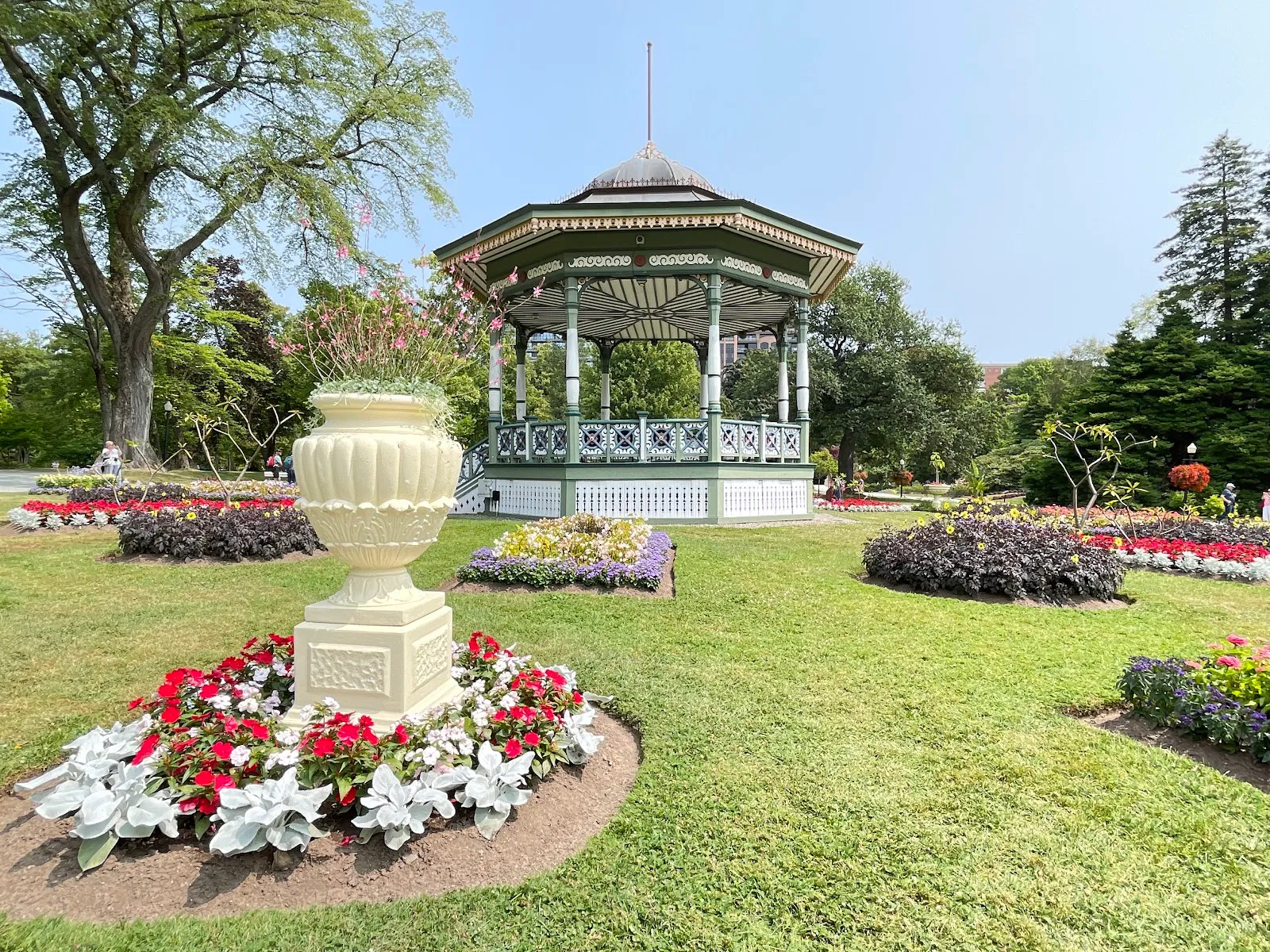
The site began as a private garden in 1753. Its layout was completed in 1875 by Richard Power, who had been gardener to the Duke of Devonshire in Ireland.
The Nova Scotia Horticultural Society is credited with founding the gardens. The public garden opened in 1867, the year of Canadian Confederation. It was designated a National Historic Site of Canada in 1984.
What to look for inside
Look for the wrought iron gates at the main entrance, where Spring Garden Road meets South Park Street. The gates came from Scotland and once marked the main entrance.
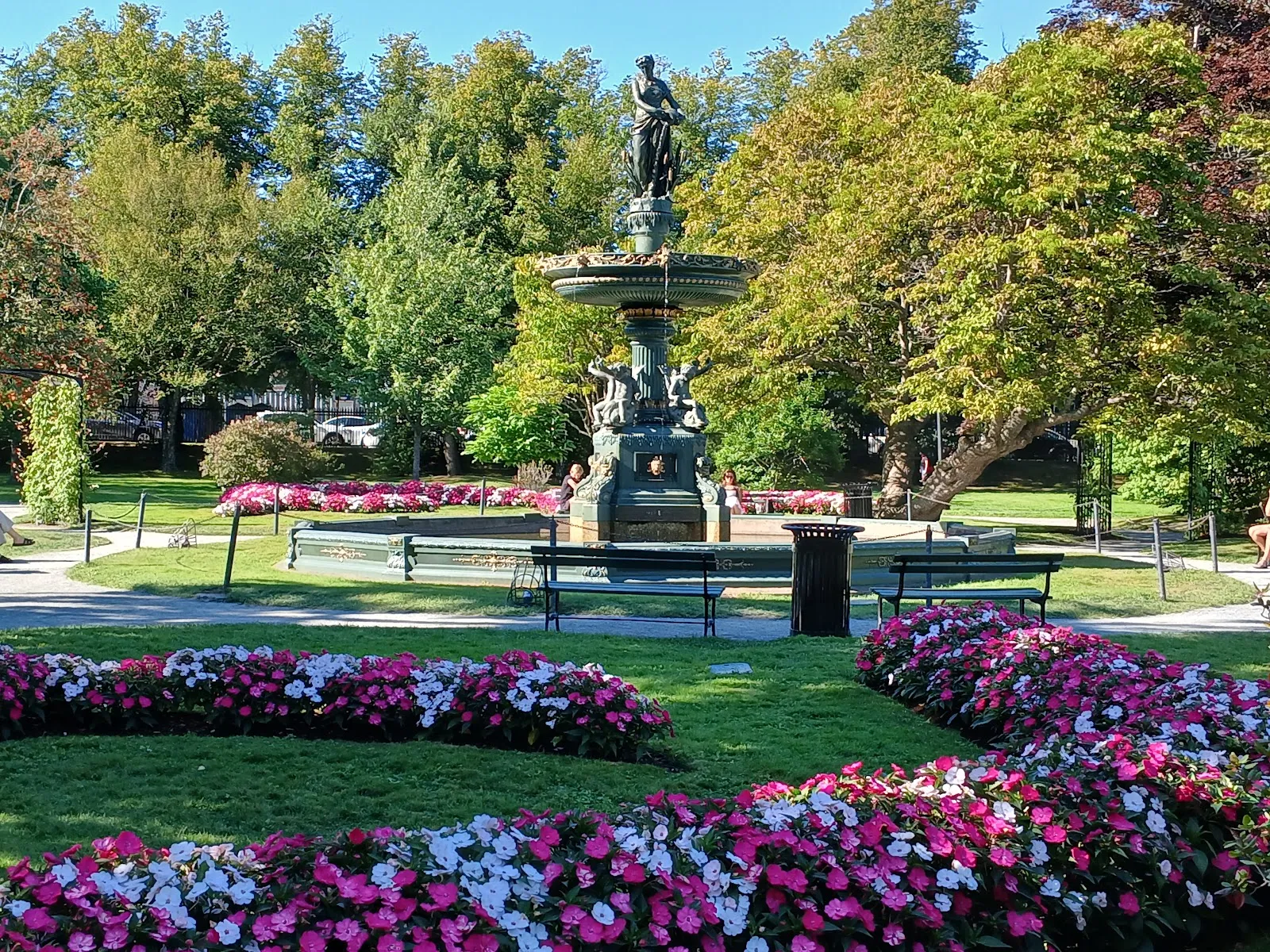
The bandstand, built in 1887 and designed by Halifax architect Henry Busch, stands in the centre of the gardens. That year the gardens marked Queen Victoria's Golden Jubilee with the bandstand and the Victoria Jubilee Fountain. The fountain shows the nymph Egeria surrounded by four water babies.
Carpet beds, an agave garden, small bridges and statues fill the rest of the grounds. The statues include Roman goddesses, among them Diana, goddess of the woodland. Memorials and war monuments stand here too, and visiting dignitaries have planted trees over the years.
The original design and the changes
Storms have damaged parts of the gardens over time, and natural change has altered some plantings. The nineteenth-century plan still shows in the bedding patterns, the serpentine paths, the geometric beds and the tree specimens.
The collection includes exotic foliage, Victorian favourites and subtropical species. In summer, tropical plants such as pineapple, banana and coffee appear among the beds.
Music, tours and bird walks
In summer, free concerts take place at the bandstand on Sunday afternoons. A jazz band has played there during a city jazz festival.
A free one-hour historical and horticultural tour runs daily at four set times. From May to October, free guided bird walks take place on Wednesday mornings.
Visiting in practice
The main entrance, the seating and the restrooms are wheelchair accessible. A gender-neutral restroom is also on site.
The grassy area on the south side has room to spread out, and it is a popular picnic spot in summer. The cafe sits inside a historic building and serves coffee and ice cream, so you can take a treat along the paths.
FAQ
Is there an entry fee?
No. Admission to the Halifax Public Gardens is free. Some parking spots are paid, so check the signs before you park.
Can I have a picnic in the gardens?
Yes. The grassy area on the south side has room to spread out, and the gardens are a popular picnic spot in summer.
Is the garden wheelchair accessible?
The main entrance, the seating and the restrooms are wheelchair accessible.
Can I feed the ducks?
No. Feeding the ducks is not allowed, so enjoy them from the edge of the pond.