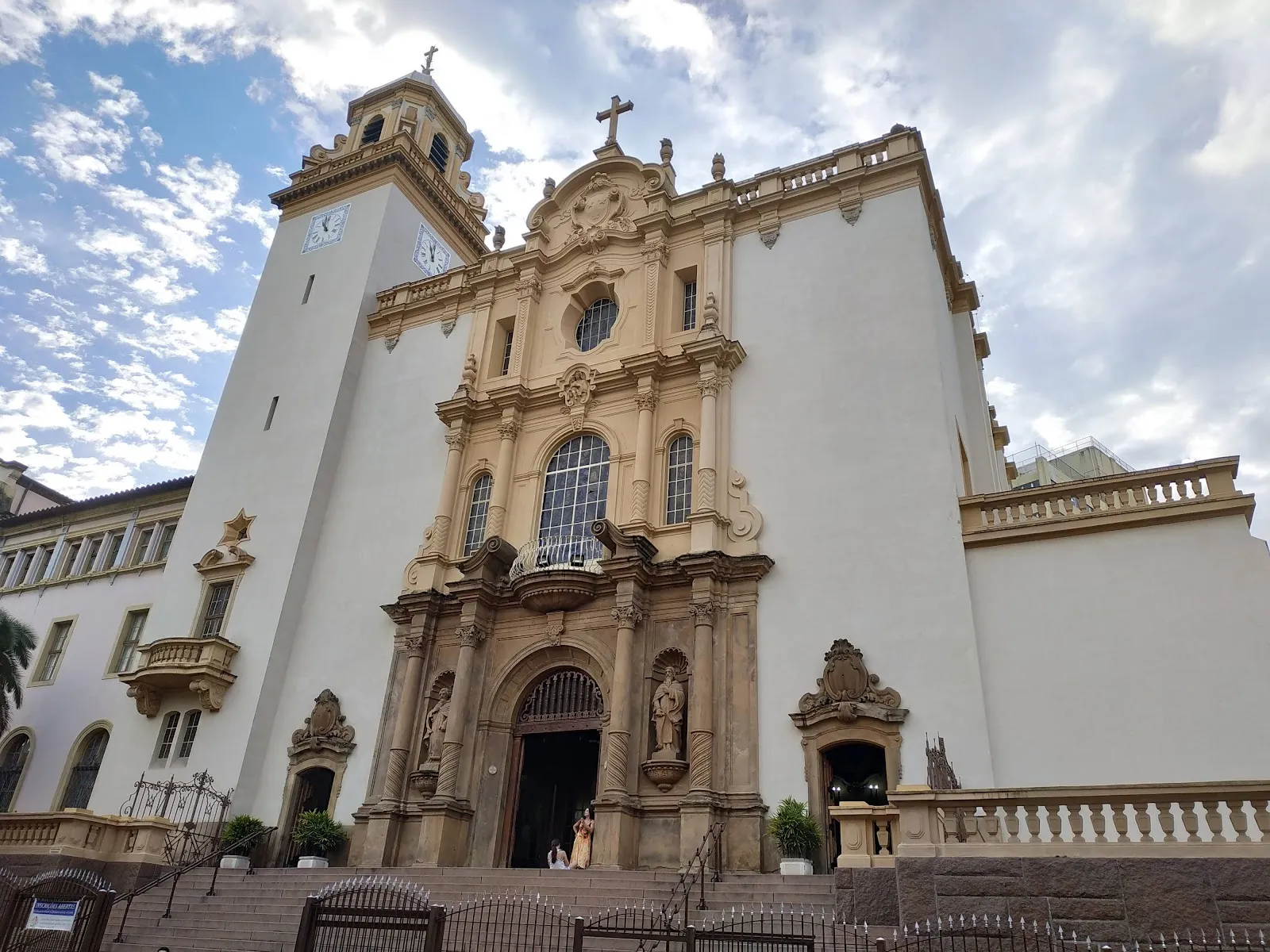
Mosteiro de São Bento is a Benedictine monastery in São Paulo’s historic centre, on Largo São Bento. Founded in 1598, it is known for a church whose early 20th-century design brings together Neo-Romanesque and Norman-Byzantine influences. Inside, look for the painted and carved decoration, stained glass and a large organ with about 6,000 pipes. Sunday Mass is accompanied by Gregorian chant. The monastery also has a bakery selling breads and sweets; bring cash if you plan to buy something.
A monastery with centuries of history
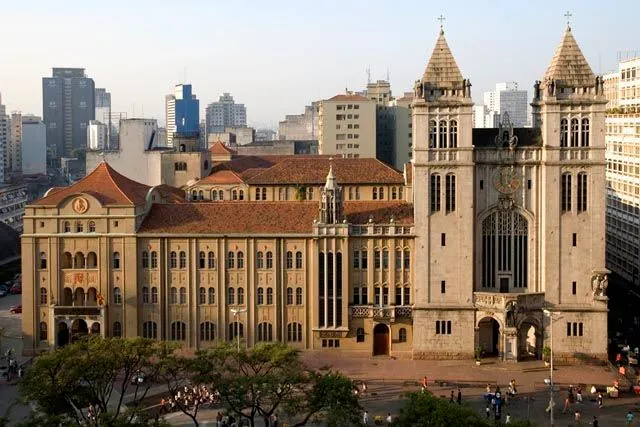
The Benedictines established their presence at this site in 1598. The abbey was created in 1634, and its chapel was dedicated to Saint Benedict. The monastery is part of São Paulo’s Historic Triangle, the old central area whose three points are marked by major religious buildings.
The current church was completed in 1922. Its design is associated with German architect Richard Berndl and combines Norman-Byzantine and Neo-Romanesque influences. The present façade belongs to the 20th century, so the site’s long history is not matched by an equally old exterior.
Inside the church
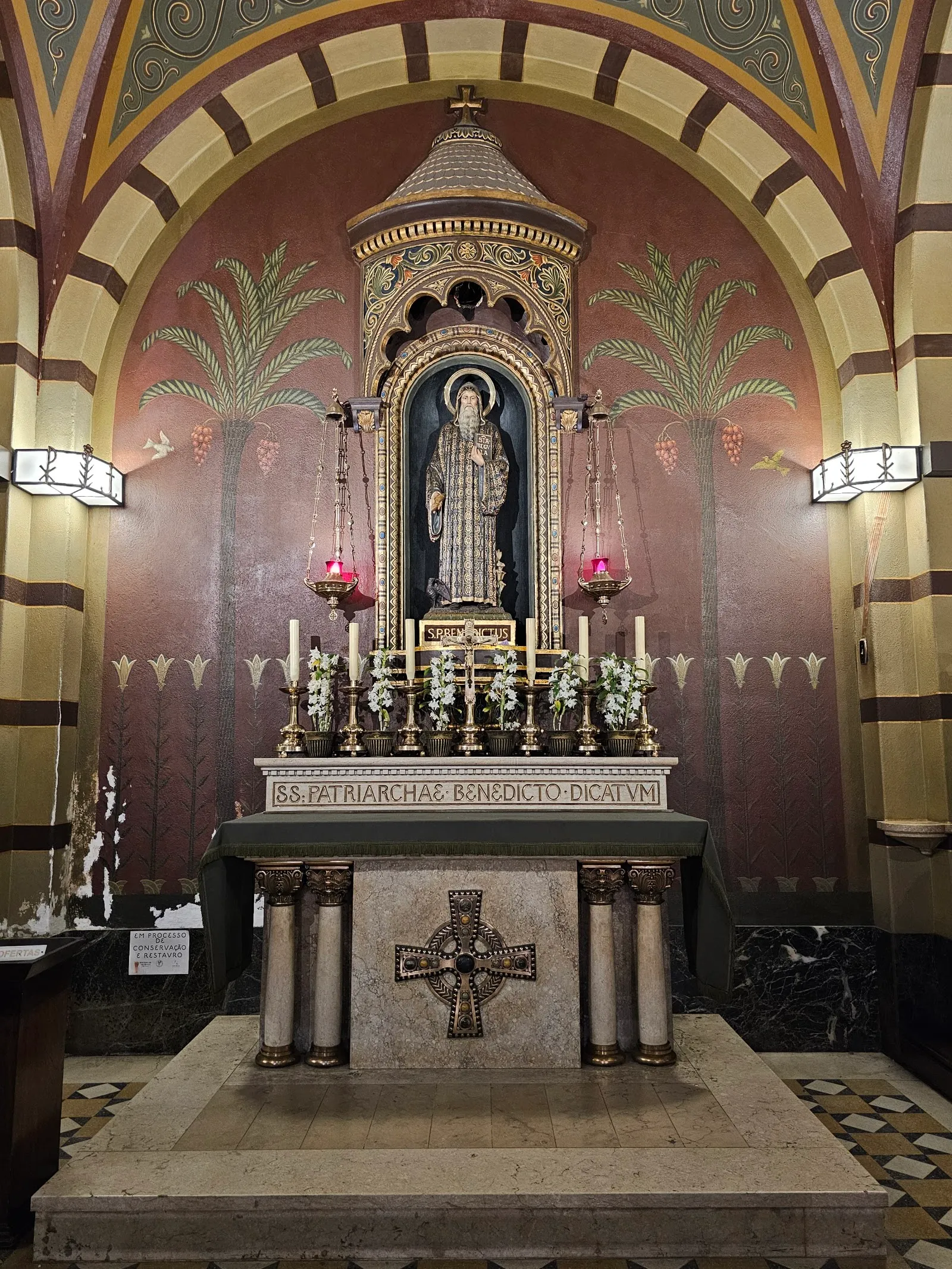
The church interior is known for its painted and carved decoration, religious imagery and stained-glass windows. Look up to take in the high arches and decorated ceiling, then notice the artworks and sculptures associated with Benedictine artists. The building’s visual character comes from the detail across the interior, not only from its overall scale.
A large organ with about 6,000 pipes is another notable feature. The church also holds an image of the Kasperovo Virgin, described as decorated with pearls from the Black Sea. These devotional works sit within a church that remains part of the monastery’s religious life.
Mass and Gregorian chant
Gregorian chant can be heard during Mass, with Sunday morning services a particular draw. The singing, stained glass and church interior shape the experience; this is a service in an active place of worship, so visitors should keep their conduct respectful.
Arrive early for Sunday Mass if you want a seat, as the congregation can be large. Service times can change, so check the monastery’s website before planning your visit around one.
The monastery bakery
The monastery is also known for its bakery, which sells breads, cakes, cookies and jams. Bakery purchases help support the monastery’s activities. If you want to take something home, bring cash: cards are not accepted for purchases there.
FAQ
When can you hear Gregorian chant at Mosteiro de São Bento?
Gregorian chant accompanies Mass, particularly the Sunday morning service. Check the monastery’s website for current service details.
How long should you spend at Mosteiro de São Bento?
Allow about 30 to 60 minutes to see the church. Add time if you plan to attend Mass or visit the bakery.
Can you buy food at the monastery?
Yes. The monastery bakery sells breads, cakes, cookies and jams. Bring cash, as cards are not accepted for purchases.
Is there an entry fee?
Admission is free. Advance tickets are recommended, so check the monastery’s website before your visit.