
St Bavo's Cathedral stands on Sint-Baafsplein in central Ghent, facing the Belfry across the square. Its Gothic tower rises 89 metres, and the interior holds the Ghent Altarpiece, painted by Hubert and Jan van Eyck and completed in 1432. The church itself is free to enter. The altarpiece area has its own paid ticket. Allow time for the stained glass, the tall vaults and the crypt, where the oldest remains of the site are kept.
From the 10th century to the Gothic church
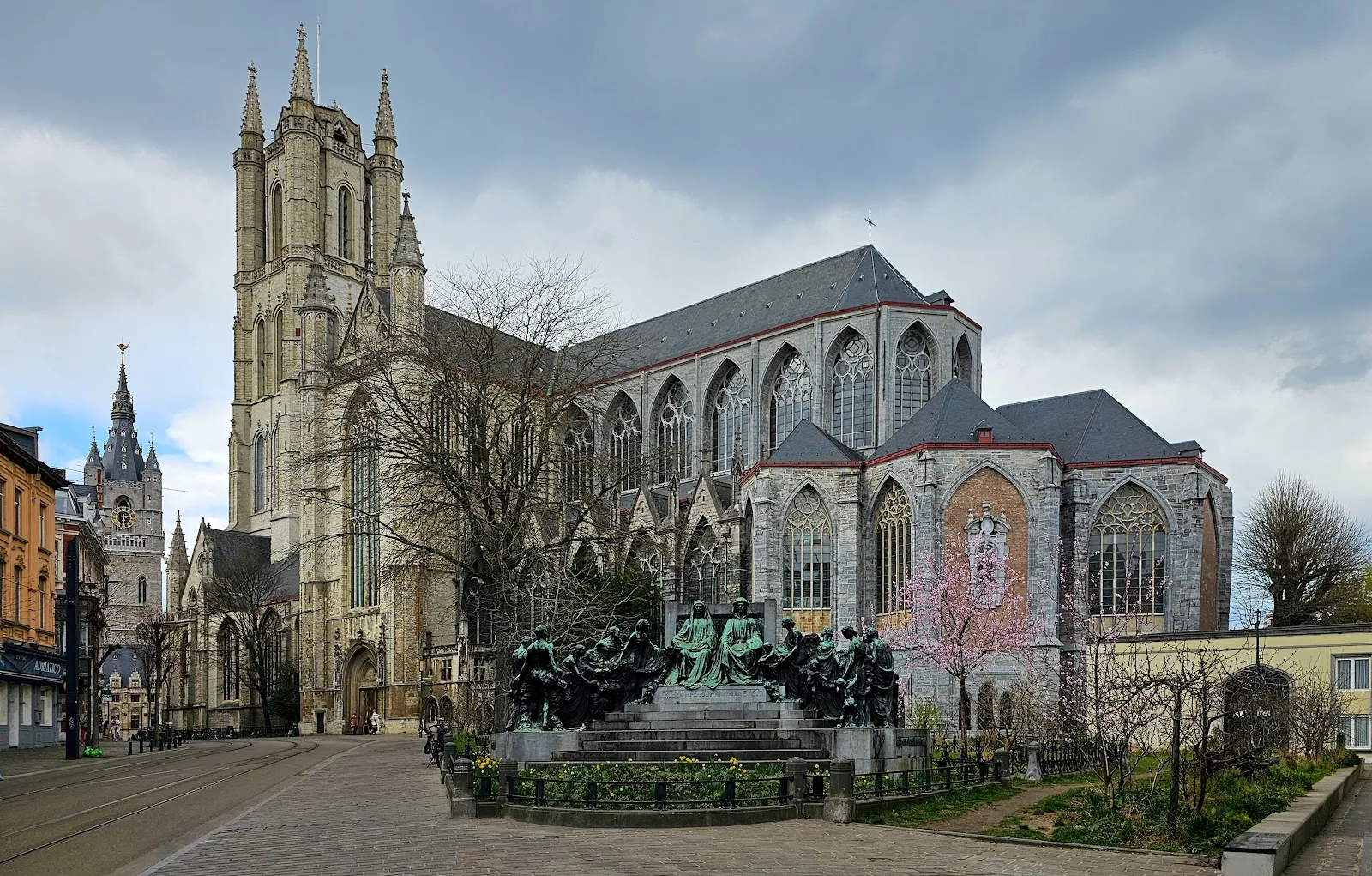
The site has held a church since the 10th century. A wooden chapel dedicated to Saint John the Baptist came first, and a Romanesque church later replaced it. When Ghent grew rich and powerful in the Middle Ages, the city commissioned a much larger church in the Gothic style, and the building grew over several centuries.
The crypt still shows remains of the earlier chapel. The choir, the radiating chapels, the transepts and the tower mostly date from the 14th to the 16th centuries.
Charles V, Holy Roman Emperor and ruler of the Spanish Empire, was born in Ghent in 1500 and baptized in this church.
The Ghent Altarpiece
The altarpiece, The Adoration of the Mystic Lamb, was painted by the brothers Hubert and Jan van Eyck and completed in 1432. It was made for this church. Its panels show scenes from the Bible, including John the Baptist, the Virgin Mary, and Adam and Eve. The central image of the lamb is the one most visitors come to see.
The commissioner, church warden Joos Vijd, and his wife Elisabeth Borluut appear in the painting as well. Specialists treat the work as a key example of Flemish Primitive painting, and its detail and colour are the main reason it draws crowds.
The painting has a turbulent history. It has been stolen, damaged and moved over the centuries, and it has survived fires and wars. Today it is displayed in its own area, behind glass.
Inside the church
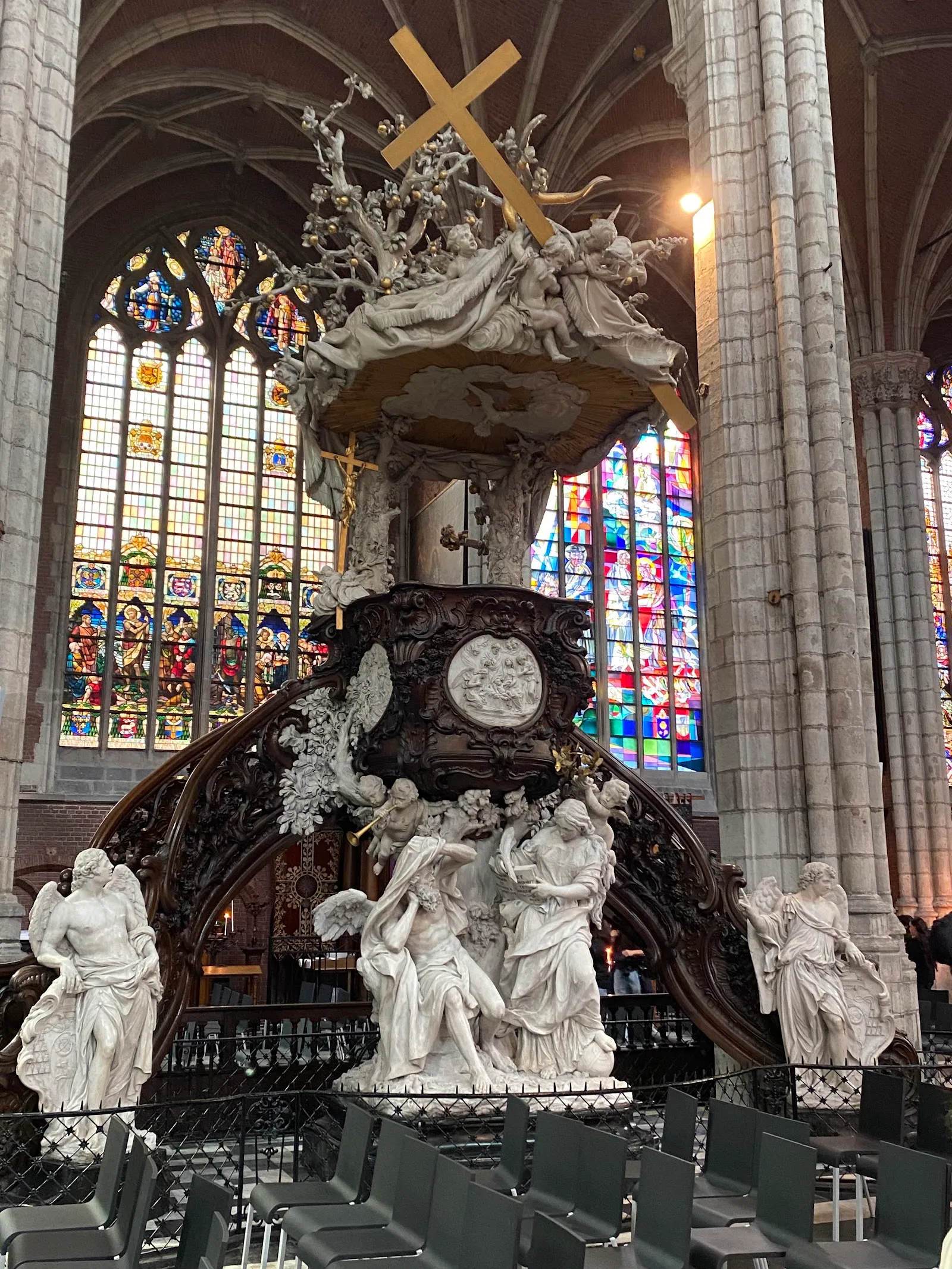
Beyond the altarpiece, the interior holds a marble pulpit, a Baroque altar from the eighteenth century, the Calvary triptych and the tombs of Ghent bishops. Paintings by Peter Paul Rubens are also here, including The Conversion of Saint Bavo.
The cathedral has a large organ. The Gothic vaults and the stained glass windows are the parts many visitors spend the most time looking at, so leave room in your visit to walk slowly.
The church sits over earlier buildings, so the layout can feel uneven. Take your time moving between the nave, the chapels and the crypt.
How a visit works
The church is free to enter, and the altarpiece area has a separate paid ticket. A virtual reality tour in the crypt explains the history of the altarpiece before you see it. It is not long, and it helps with the detail in the panels. The augmented reality tour takes a little longer and gives more context on the cathedral's growth.
The entrance has a ramp, the interior floors are flat and the aisles are wide. A bronze tactile model with Braille and tactile paving at the crossings help visually impaired visitors. Underground parking nearby has accessible spaces and a lift to the square. The altarpiece area is wheelchair accessible, but the crypt has a steep staircase.
The site suits children, and the audio guide can hold their attention through the panels. Card payment is accepted, and Wi-Fi and an accessible restroom are available.
FAQ
Is there an entry fee?
Entry to the church is free. The Ghent Altarpiece has its own paid ticket, and the site recommends buying it in advance.
How long do you need?
A visit usually takes 30 minutes to 1.5 hours. Allow more time if you take the augmented reality tour.
Is the cathedral wheelchair accessible?
The entrance has a ramp, the interior floors are flat, and the altarpiece area is wheelchair accessible. The crypt has a steep staircase.
When is the best time to visit?
Weekdays are better, because you avoid the large tour groups.
Is it a working church?
Yes, it is an active place of worship. Dress modestly and keep noise down during your visit.


