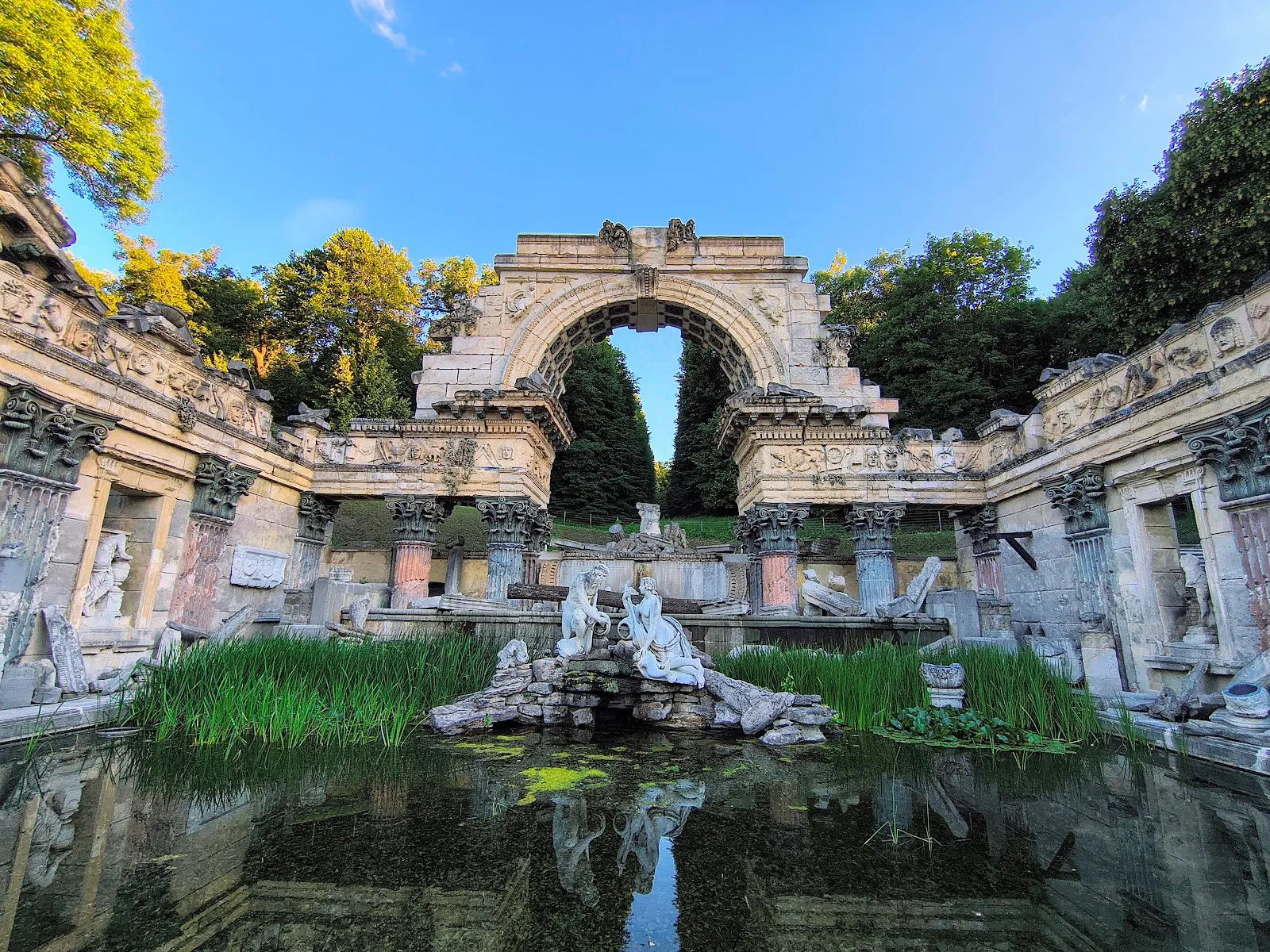
At Burgring 7, opposite the Kunsthistorisches Museum, Vienna’s Natural History Museum pairs a grand historic interior with galleries on dinosaurs, minerals, meteorites and animal life. Look for the Venus of Willendorf, a small prehistoric figurine, and the Dinosaur Hall, where skeletons and moving Allosaurus models draw the eye. Interactive activities add interest for children, and benches in the galleries give you places to pause. Allow several hours: there is plenty to explore, and the café under the dome makes a convenient break.
The museum and its collections
The Natural History Museum stands on Maria-Theresien-Platz, directly opposite the Kunsthistorisches Museum. The two buildings were designed as architectural counterparts. Their shared setting makes it easy to see both from the square, though the collections inside are very different.
The museum opened in 1889. Its collections began with objects gathered by the Habsburgs and have been built up over more than 250 years. Today, the galleries cover geology, minerals, fossils, zoology and human history. The scale is considerable, so a visit focused on a few subjects can work better than trying to take in every room at once.
Venus of Willendorf and the prehistoric galleries
One of the museum’s best-known archaeological objects is the Venus of Willendorf, displayed in the Venus Cabinet. The small limestone figurine was found in 1908 in Willendorf, in Lower Austria’s Wachau valley, and is about 29,500 years old. Its compact size makes it easy to overlook among the larger displays, so give the cabinet a deliberate stop.
The dinosaur and prehistoric reptile galleries include fossils and large skeletons, alongside moving, life-sized dinosaur models. The Allosaurus models roar, adding movement and sound to the hall. For children, interactive activities provide another way to engage with the exhibits; adults can also follow the collections through fossils, minerals and specimens from different branches of natural history.
Meteorites, animals and the building
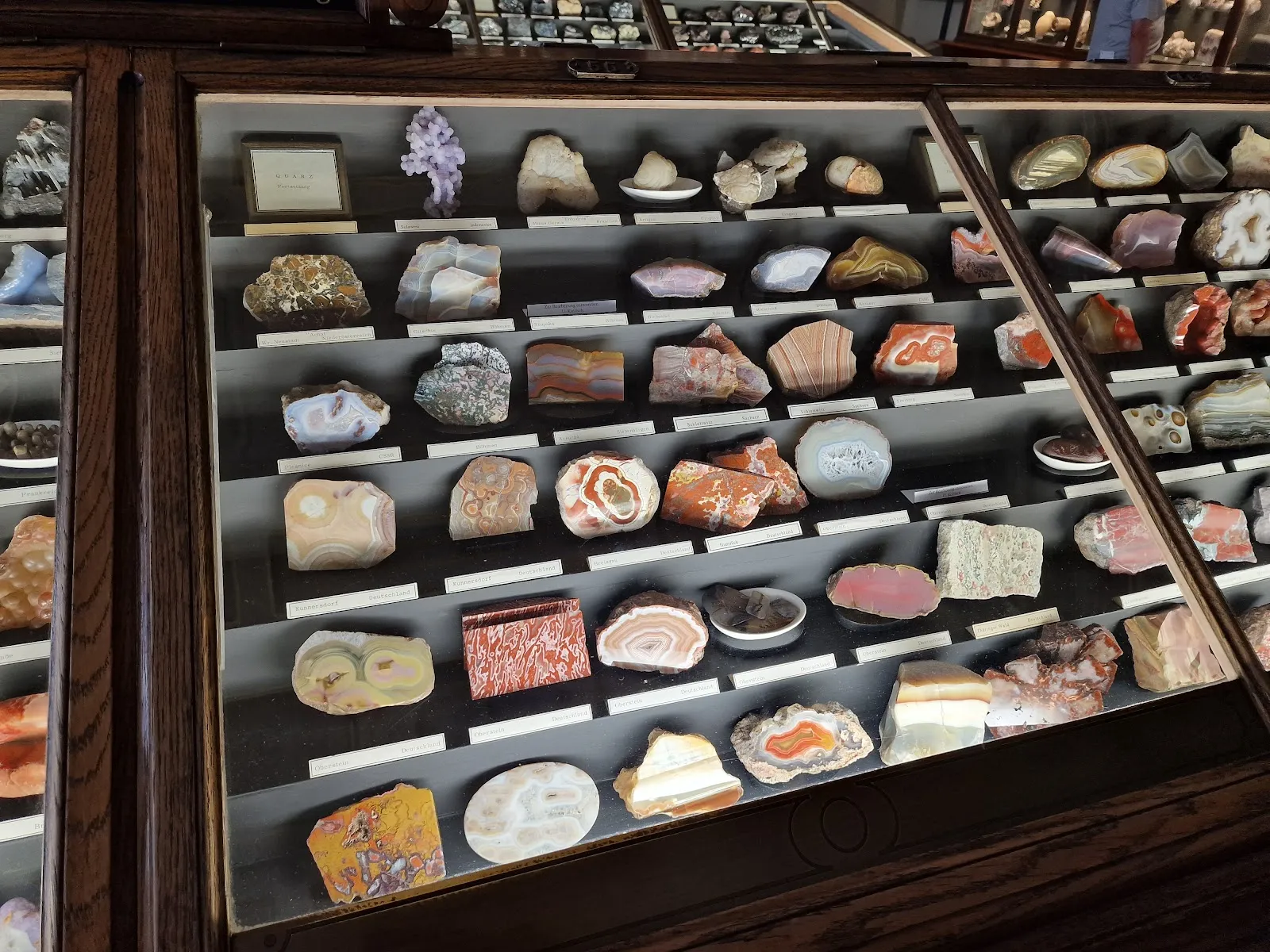
The meteorite collection is a major reason to visit. It includes material from the Moon and Mars, alongside a broad range of other specimens. Nearby displays of minerals and precious stones offer a different kind of detail: colour, shape and texture rather than skeletons and fossils.
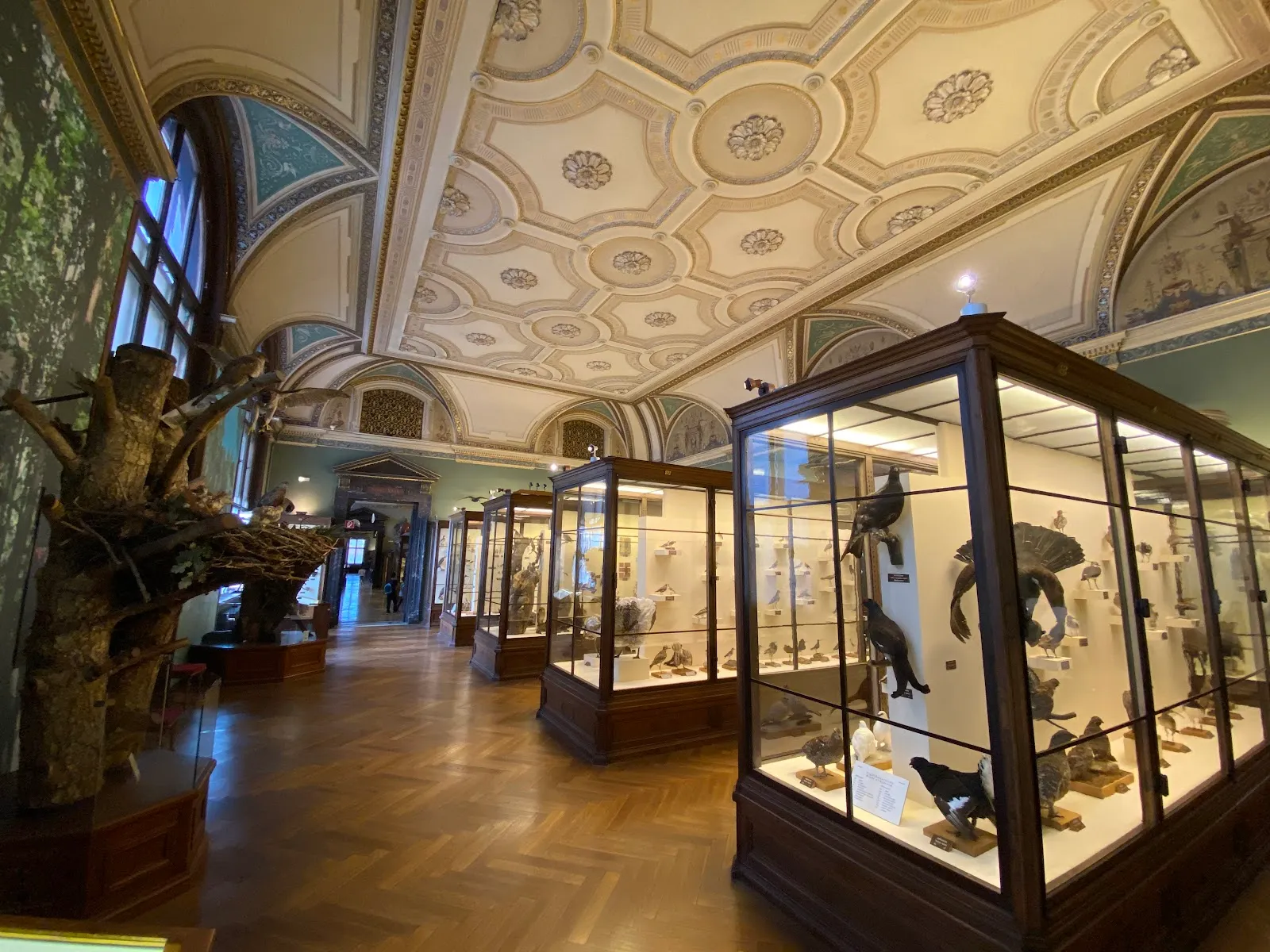
Animal galleries include taxidermy from around the world, with examples of extinct species as well as a wide range of fauna. The museum’s decorated interior is part of the experience too. Marble staircases, painted ceilings and ornate halls give the building a palatial character. Benches in the rooms make it possible to rest while moving through the exhibitions.
When you need a break, the café beneath the dome is an option inside the museum. A restaurant on the upper floor is also noted as a place to stop for a meal or drink after exploring.
FAQ
How long should I spend at the Natural History Museum Vienna?
Allow at least 3 to 4 hours to explore the exhibitions. The galleries cover several areas, from dinosaurs and meteorites to minerals and animal life.
Is the Natural History Museum Vienna closed on any day?
Yes. The museum is closed on Tuesdays. On Wednesdays it stays open later, until 8 pm.
Do children pay admission?
Children up to age 19 are admitted free.
What are the museum’s main highlights?
Look for the Venus of Willendorf, the meteorite collection and the dinosaur galleries, including moving Allosaurus models.