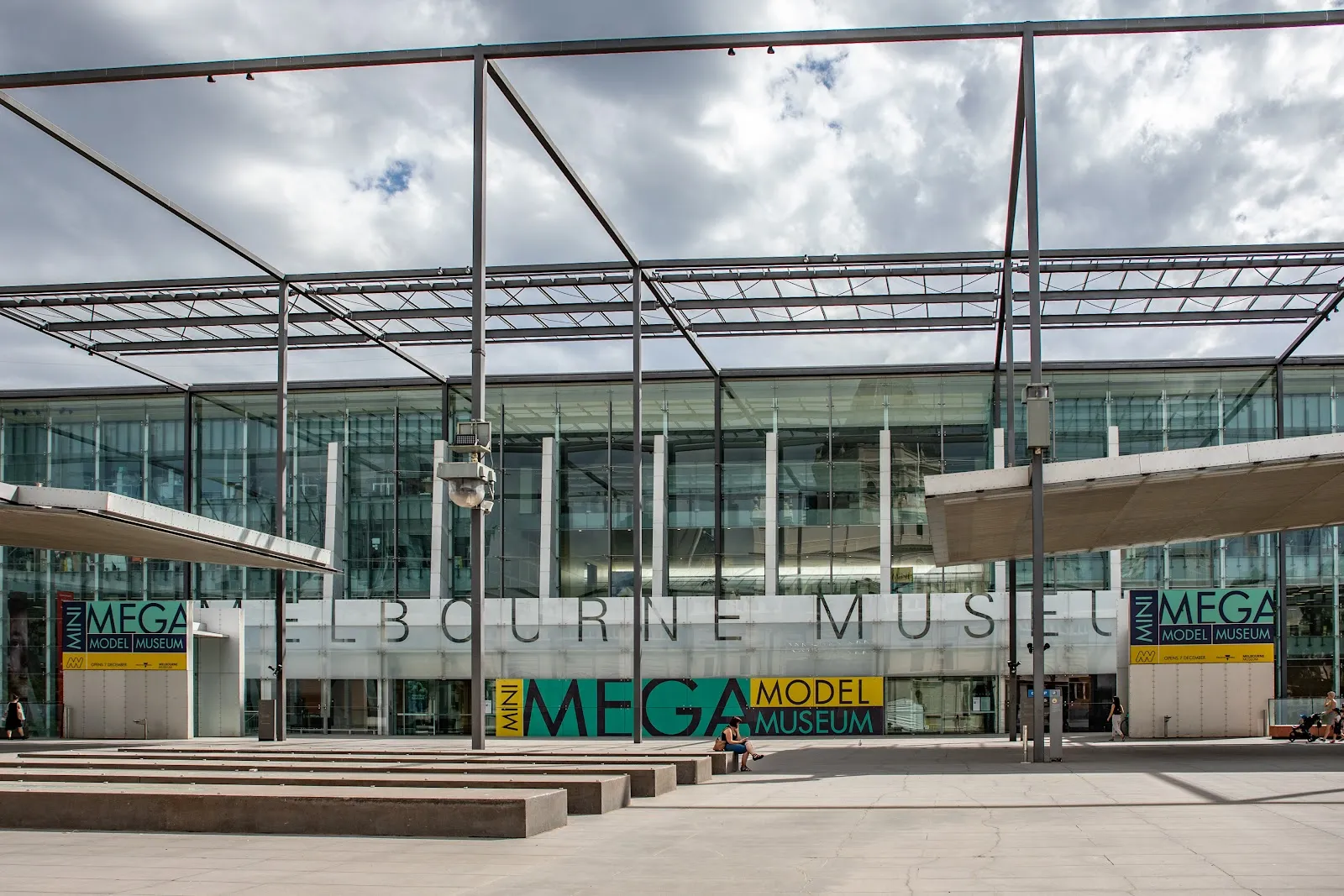
Melbourne Museum is a natural and cultural history museum in Carlton Gardens, at 11 Nicholson Street, Carlton. Its galleries cover Victoria’s environment, science, Melbourne’s past and Aboriginal culture. Look for the dinosaur skeletons, the Melbourne Gallery and Bunjilaka Aboriginal Cultural Centre, where First Peoples’ stories and history are presented through objects and Aboriginal voices. The Forest Gallery offers a quieter change of pace, while interactive displays and live animals make the visit engaging for children. With so much to explore, allow several hours rather than trying to see every gallery in one short visit.
Galleries across nature and culture
The museum brings natural history, science and cultural collections together under one roof. Its galleries range from the evolution of life in Victoria to the city’s social history, with displays about the natural environment, technology and culture. Permanent collections sit alongside temporary and touring exhibitions, so the subjects on view can change.
In the Melbourne Gallery, objects and stories trace the city’s development, from its early history to familiar figures and cultural moments. Phar Lap, the racehorse whose story is closely tied to Australia, is among the museum’s notable displays. The variety of subjects means you can move between city history and natural science without leaving the building.
Bunjilaka and First Peoples’ stories
Bunjilaka Aboriginal Cultural Centre presents Aboriginal history and culture through objects, storytelling and Aboriginal voices. The First Peoples exhibition introduces visitors to Aboriginal languages and identity, with stories passed between generations. Its Many Nations section brings together a large collection of artefacts and includes a hands-on activity area for children.
Give this part of the museum time. It provides an opportunity to engage with Aboriginal perspectives and histories as a central part of the visit, rather than treating them as a brief addition to other galleries. The museum also has a Te Pasifika Gallery, alongside its exhibitions on Victoria’s natural and cultural history.
Dinosaurs, living displays and a forest indoors
The Dinosaur Walk brings visitors close to large prehistoric skeletons, including a triceratops. Elsewhere, Bugs Alive! presents insects and other small creatures, and live animal displays add movement to the natural history galleries. The range of exhibits suits families, but adults travelling without children can also follow the science and environmental displays.
The Forest Gallery gives the visit a different rhythm: it is an indoor forest space with Victorian plants and animals. It can be a welcome place to pause between galleries. For younger children, the Pauline Gandel Children’s Gallery has hands-on activities, including spaces designed for babies and preschoolers.
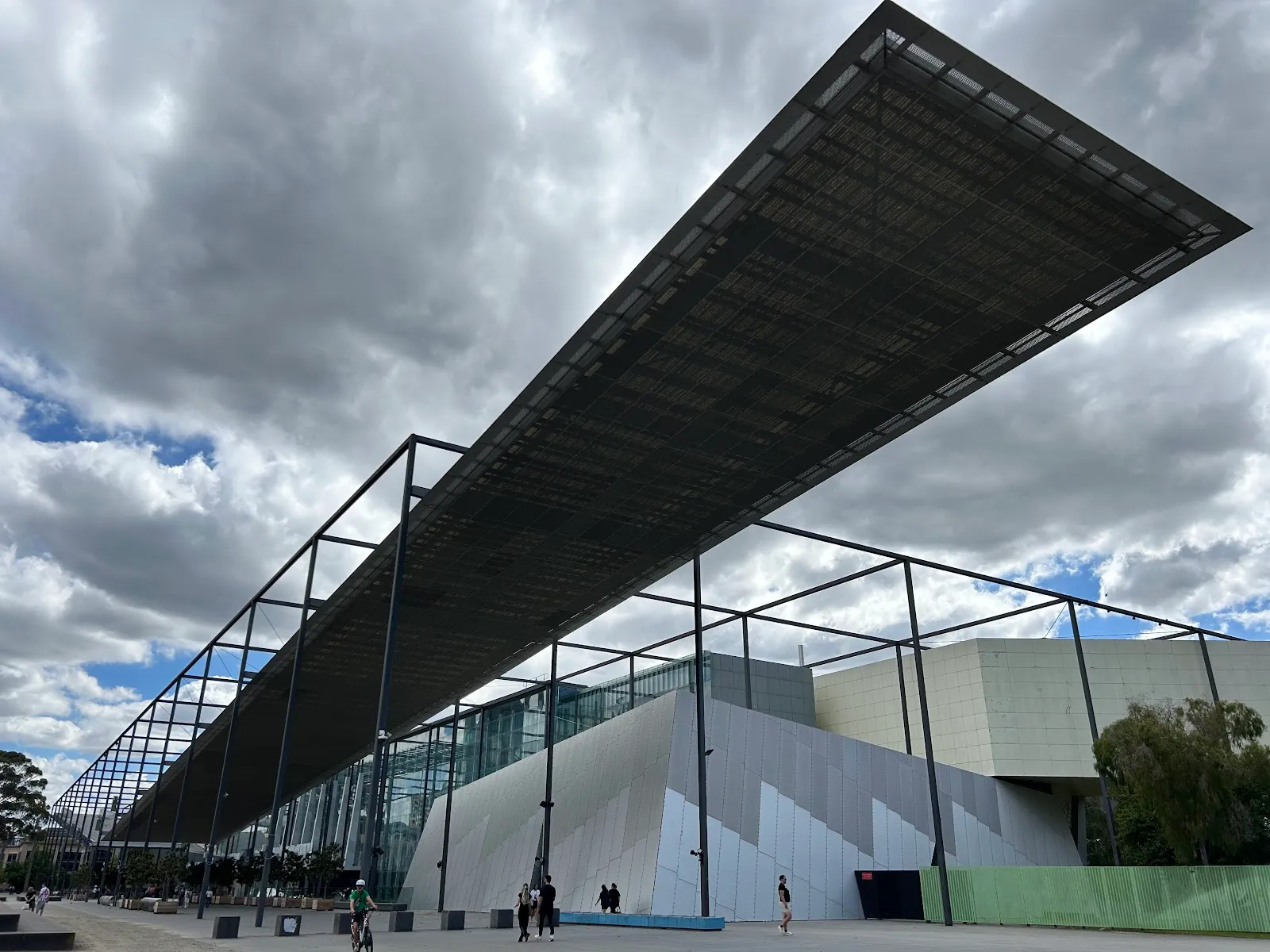
The museum’s contemporary building was designed by Denton Corker Marshall and completed in 2000. Its large, angular roofline sets it apart from the historic Royal Exhibition Building nearby. The two buildings sit within Carlton Gardens, creating a contrast between modern museum architecture and the older exhibition hall.
FAQ
Where is Melbourne Museum?
It is at 11 Nicholson Street, Carlton, in Carlton Gardens, beside the Royal Exhibition Building.
How long should I spend at Melbourne Museum?
Allow around three to six hours. The galleries are extensive, and visitors often choose to return rather than cover everything in one visit.
What are the main things to see at Melbourne Museum?
Highlights include the Dinosaur Walk, the Melbourne Gallery, Bunjilaka Aboriginal Cultural Centre and the Forest Gallery.
Is Melbourne Museum suitable for children?
Yes. It has interactive displays, live animal exhibits and the Pauline Gandel Children’s Gallery, which includes activities for young children.