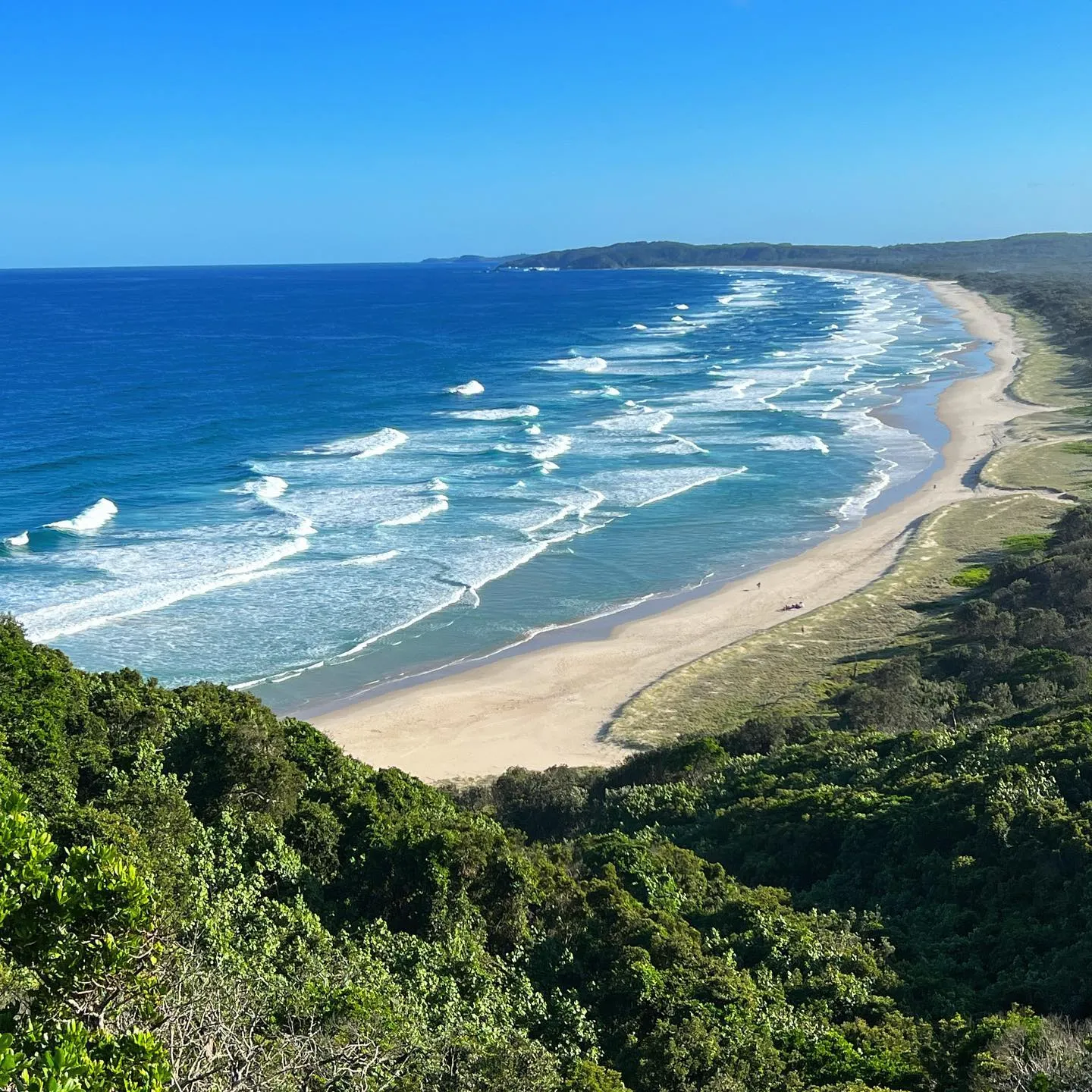
Cape Byron Lighthouse sits at the easternmost point of mainland Australia, on the headland beyond Byron Bay's beaches. Completed in 1901, it guided ships along a dangerous stretch of coast and is now automated. The headland is part of the Cape Byron State Conservation Area. Most people come for the lookouts over the ocean and bay and for the coastal walk from the beach. Allow time for the lighthouse, its small museum and a stop to watch for whales, dolphins and sunsets.
Built in 1901 to guide ships
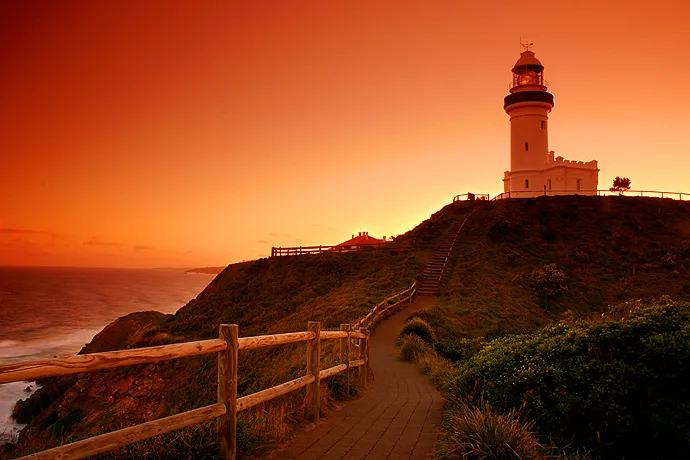
The lighthouse was completed in 1901 to warn ships away from a dangerous stretch of coast. The plans were drawn up by Charles Harding, a colonial architect, and the tower was built from pre-fabricated concrete blocks.
Resident keepers ran the light until 1989. Since then the light has been automated, and no keeper lives on site. The keepers' former residence now holds a small museum about the building and the maritime history of the bay.
The headland is part of the Cape Byron State Conservation Area, managed by the NSW National Parks and Wildlife Service. The Bundjalung people are the traditional custodians of Byron Bay, and the cape is an important place for them. Keep to the marked tracks and treat the headland with care.
Inside the lighthouse and museum
Guided tours take visitors inside the lighthouse during the day. A tour runs about 20 minutes. The guide covers the building's history, how keepers worked the light, and the ships lost along this coast.
Children under five are not admitted to the tour. Older children tend to find the keeping and shipwreck stories the most interesting part of the visit.
The small museum in the former keepers' residence is the place to look at the maritime history of the bay in more detail. Check the opening times on this page before you go, as the grounds close at sunset.
The walk from the beach
The Cape Byron Walking Track is a 3.7 km loop. Walkers can start from Clarkes Beach, Main Beach, The Pass or Wategos. The route runs through coastal rainforest and past several lookouts before reaching the lighthouse. The track has steps and steep inclines, and it is classed as a grade 3 walk.
The Pass has a cafe where you can buy coffee and a bite to eat before the climb. Wategos Beach lies along the route, so the walk can start or pause there.
If the steps are too much, the access road takes you to the top, and you can walk the final section from the car park. A stroller is easier on the road than on the steep track.
Wildlife through the year
Humpback whales travel north along this coast from May to November on their way to breeding grounds. Watching is most popular from June to September, when the whales come close to shore. Dolphins are a common sight all year, and turtles and rays are often seen in the water.
Wallabies, goannas and brush turkeys live in the bush around the cape. Binoculars or a telescope make it easier to spot whale dorsal fins and tails, and to tell the species apart.
About 40 feral goats once lived on the cliffs. The first lighthouse keeper is thought to have brought them in 1903. The last of the herd was removed in 2006, but one one-horned female goat, known as Wategoat, avoided capture. A lone horn found on the cape in 2013 suggests she died of natural causes.
Getting to the top by road
A road leads to the top, which suits people who prefer not to walk or who need easier access. The site has wheelchair accessible parking, an accessible entrance and accessible seating.
The car park is small, and parking is paid. Spaces are hardest to find on weekends and holidays, and the queue of cars back down the hill can take time. If the car park is full, you can park lower down the hill and walk up.
FAQ
Is there an entry fee?
Walking up the track to the lookouts is free. Driving to the top means paying for parking, which is limited in size.
How long do you need?
Allow about 1 to 2.5 hours. The full 3.7 km loop walk takes longer, and the lighthouse tour runs about 20 minutes.
Can you go inside the lighthouse?
Guided tours run inside the lighthouse during the day. Children under five are not admitted to the tour.
When is the best time to see whales?
Humpback whales pass along this coast from May to November. Watching is most popular from June to September, when the whales come close to shore.
Is the lighthouse good for children?
Children can enjoy the walk and the tour, but the steps and steep sections are demanding with a stroller. Driving to the car park and walking the last section is an option.