Travel advisory · AlgeriaSome governments advise against travel to parts of Algeria.The warnings cover only these areas: 50 km strip along the Libyan border, 50 km strip along the Tunisian border, Illizi province, Libyan border zone, Tebessa and south (Tunisian border), Tindouf, Malian border zone, Moroccan border zone, Nigerien border zone.Advice depends on your passport. Read your own government's advice before you book.Official advice
- 50 km strip along the Libyan border · avoid all travel · Canada, New Zealand
- 50 km strip along the Tunisian border · avoid all travel · Canada, New Zealand, US
- Illizi province · avoid all travel · UK, US
- Libyan border zone · avoid all travel · Germany, Spain, France
- Tebessa and south (Tunisian border) · avoid all travel · Germany, France
- Tindouf · avoid all travel · Spain, France, US
- Malian border zone · avoid non-essential travel · Germany, Spain
- Moroccan border zone · avoid non-essential travel · Canada, France
- Nigerien border zone · avoid non-essential travel · Germany, Spain
Also named by one government: 200 km strip along the Malian border (Canada), 200 km strip along the Mauritanian border (Canada), 200 km strip along the Nigerien border (Canada), 30 km strip along the Libyan border (UK), 30 km strip along the Malian border (UK), 30 km strip along the Mauritanian border (UK), 30 km strip along the Nigerien border (UK), 50 km strip along the Malian border (New Zealand), 50 km strip along the Mauritanian border (New Zealand), 50 km strip along the Nigerien border (New Zealand), Bordj Badji Mokhtar (US), Chaambi mountains (UK), In Guezzam (US), In Salah (US), Land border zones (general) (France), Mauritanian border zone (Germany), Mountainous areas of Tebessa (US), Ouargla province (UK), Remote areas of the Sahara Desert (US), Tamanrasset (US), Western Sahara border zone (Germany), 250 km strip along the Libyan border (US), 250 km strip along the Malian border (US), 250 km strip along the Mauritanian border (US), 250 km strip along the Nigerien border (US), 30 km strip along the Tunisian border (UK), Aïn Defla wilaya (France), Aurès massif (France), Batna wilaya (France), Chréa massif (France), Hassi Messaoud region (France), Sétif wilaya (France), Tunisian border zone (Spain)
| Government | Advice | Updated | Read the advice |
|---|---|---|---|
| United Kingdom (FCDO) | No advice against the whole country (regional advisories) | – | Read the advice |
| United States (State Dept) | Exercise increased caution (regional advisories) | Aug 25, 2026 | Read the advice |
| Canada (Global Affairs) | Exercise a high degree of caution (regional advisories) | – | Read the advice |
| Germany (Auswärtiges Amt) | Increased caution in the rest of the country (regional advisories) | Oct 13, 2026 | Read the advice |
| New Zealand (SafeTravel) | Exercise increased caution (level 2 of 4) (regional advisories) | – | Read the advice |
| France (Ministry for Europe and Foreign Affairs) | No advice against the whole country outside the listed areas (regional advisories) | – | Read the advice |
Checked daily from the governments' published advice; last checked Nov 2, 2026. RoamLedger summarises official advice; it is not advice from any government.

Algeria
Algeria is a North African country of Mediterranean coast, Roman ruins and desert, and the visa and route need settling before you go.
Algeria is the largest country in Africa by area, with a Mediterranean coast in the north and the Sahara covering most of the south. Algiers, the capital, is known for its casbah, a hillside quarter of narrow lanes above the harbor, listed by UNESCO. In the north, the Roman cities of Timgad and Djémila are among the country's best-known ancient sites. Further south, the Tassili n'Ajjer plateau holds prehistoric rock paintings and engravings.
A common plan splits the trip in two: the coast, Algiers and the Roman sites in the north, and a separate trip into the desert. Most visitors need a visa arranged before arrival, and travel in the south is more tightly controlled, so settle the route and any permits before you book. Spring and autumn suit the north best, while the Sahara is very hot in summer. Give the north and the desert separate days, since the distances are long.
Five things to know before Algeria
- Apply for a visa before you travel
UK passport holders must have a visa before they travel, applied for through the Algerian consulate. Other passports differ, so confirm the rule for yours with the consulate before you book. Visas and entry
- Book the deep south through an approved agency
Desert trips in the deep south run with a licensed local agency. Some southern airports issue a tourist visa on arrival if you hold a confirmed booking with an approved agency; ask the consulate which agencies qualify.
- Check the border areas to avoid
The UK advises against all travel within 30 km of the borders with Libya, Mali, Mauritania and Niger, and near parts of the Tunisian border. Plan desert routes around them. UK travel advice
- Carry cash dinars and declare large sums
Cards work in few places outside big hotels, so most spending is in cash. Foreign cash above €5,000 or the equivalent must be declared when you enter and leave.
- Plan around Ramadan
During Ramadan many cafes and restaurants close by day and opening hours shorten. The dates move earlier each year, so check them before you book.
Algeria travel guides
Practical guides from writers who live there.
Consulate visas, agency letters and the visa on arrival for southern tours.
Read the guideTravel insuranceCover for remote desert trips, including evacuation from the south.
Read the guidePhones and eSIMLocal SIMs and data outside Algiers, Oran and Constantine.
Read the guideMoney and cardsWhy cash dinars rule and how to handle the €5,000 declaration.
Read the guideGetting aroundTrains along the north coast and domestic flights to the Sahara.
Read the guide
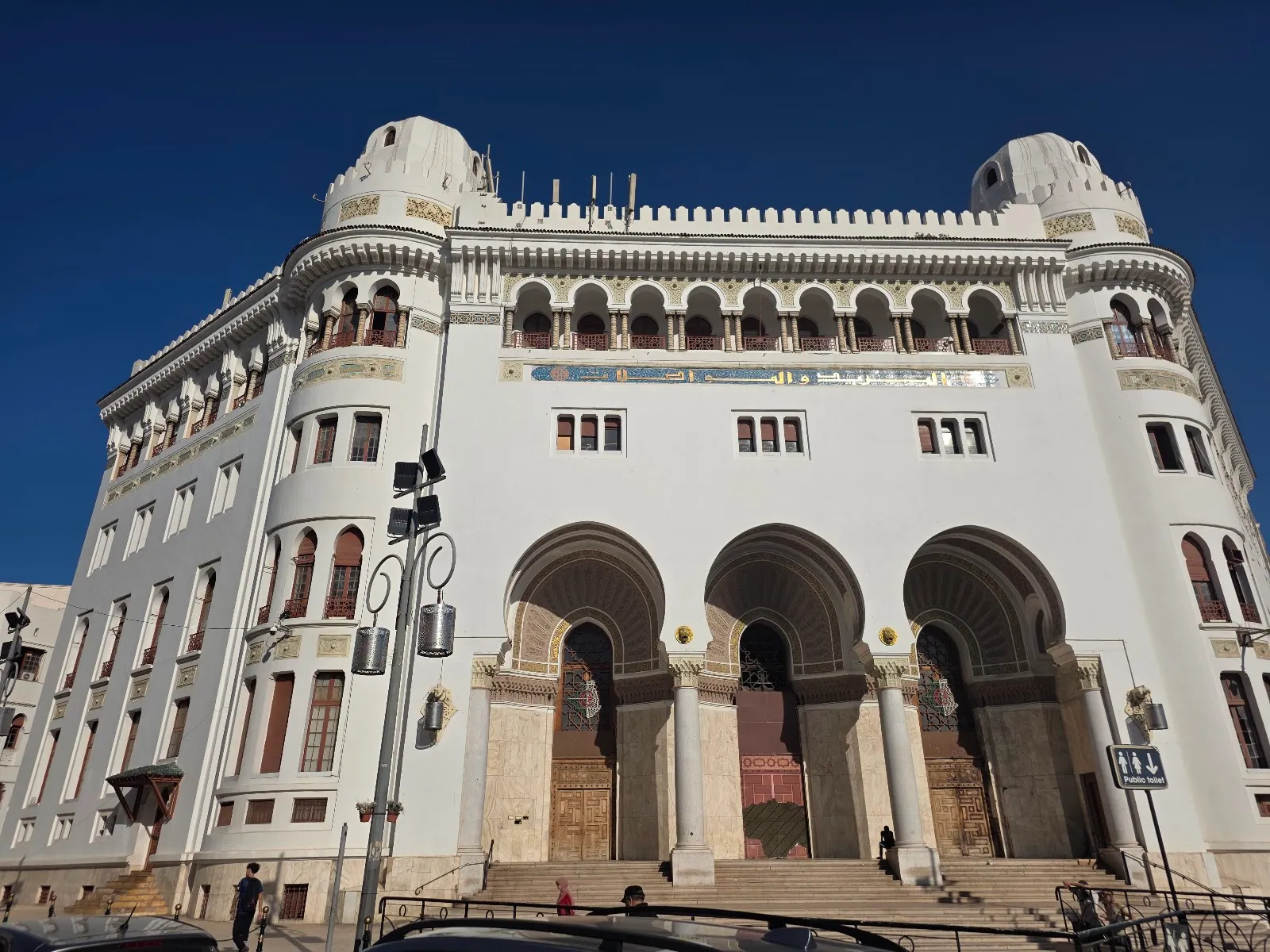
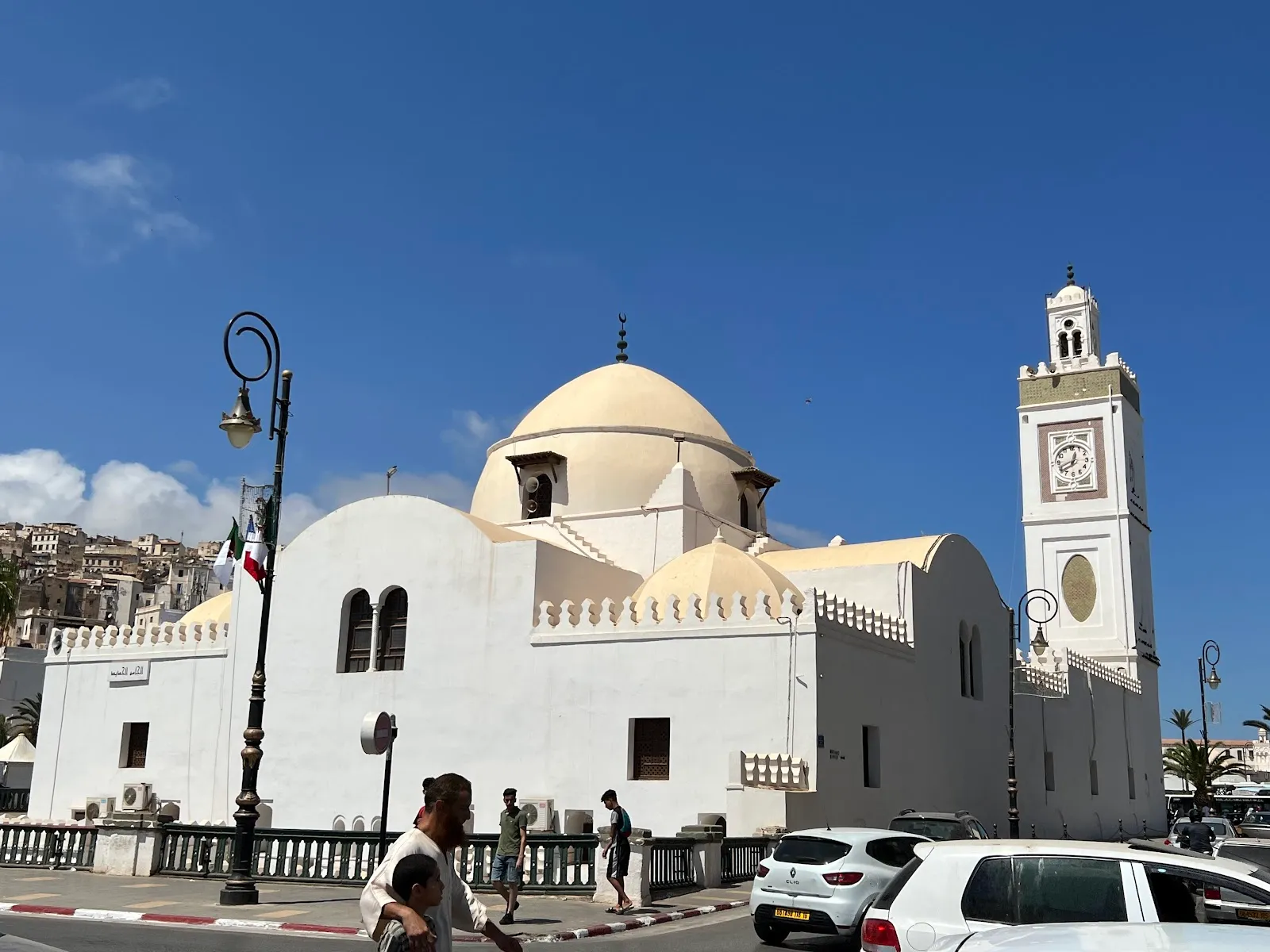

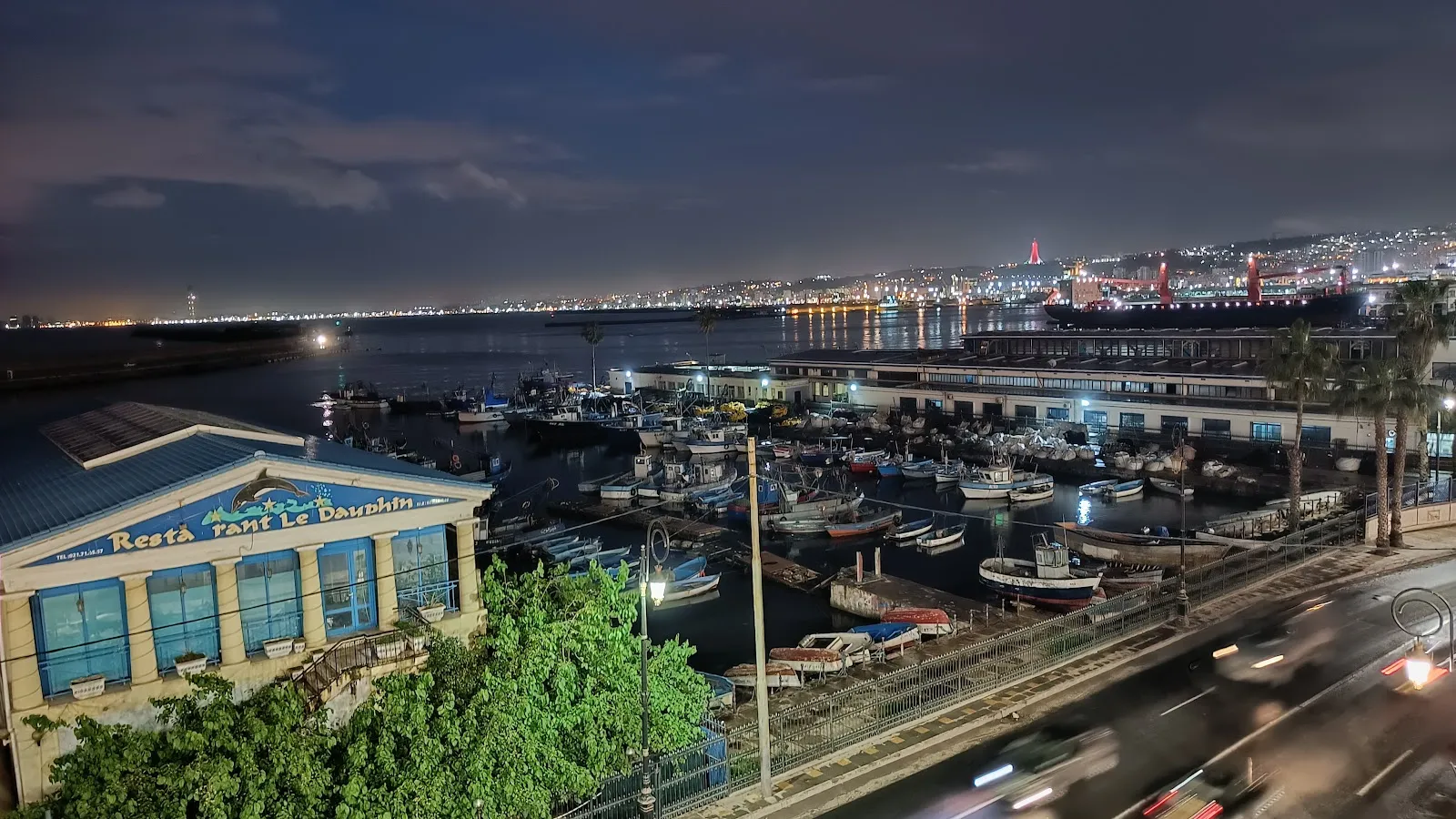
Destinations in Algeria
When to go
- Rainy days
- Days with storms
- Best
- JanuaryPartly cloudy11 rainy daysHigh16°Low9°Cool, wetJanuaryPartly cloudy
- High
- 16°
- Low
- 9°
- Precipitation
- 86 mm
- Rainy days
- 11
- Snowy days
- 0
- Days with storms
- 0
Cool, wet
- FebruaryPartly cloudy7 rainy daysHigh17°Low9°Cool, wetFebruaryPartly cloudy
- High
- 17°
- Low
- 9°
- Precipitation
- 51 mm
- Rainy days
- 7
- Snowy days
- 0
- Days with storms
- 0
Cool, wet
- MarchPartly cloudy11 rainy daysHigh19°Low10°MildMarchPartly cloudy
- High
- 19°
- Low
- 10°
- Precipitation
- 75 mm
- Rainy days
- 11
- Snowy days
- 0
- Days with storms
- 0
Mild
- AprilPartly cloudy8 rainy daysHigh21°Low12°Mild, greenAprilPartly cloudy
Best
- High
- 21°
- Low
- 12°
- Precipitation
- 63 mm
- Rainy days
- 8
- Snowy days
- 0
- Days with storms
- 0
Mild, green
- MayClear7 rainy daysHigh24°Low15°WarmMayClear
Best
- High
- 24°
- Low
- 15°
- Precipitation
- 52 mm
- Rainy days
- 7
- Snowy days
- 0
- Days with storms
- 0
Warm
- JuneClear2 rainy daysHigh29°Low19°HotJuneClear
- High
- 29°
- Low
- 19°
- Precipitation
- 10 mm
- Rainy days
- 2
- Snowy days
- 0
- Days with storms
- 0
Hot
- JulyClear0 rainy daysHigh33°Low23°Hot, humidJulyClear
- High
- 33°
- Low
- 23°
- Precipitation
- 1 mm
- Rainy days
- 0
- Snowy days
- 0
- Days with storms
- 0
Hot, humid
- AugustClear1 rainy dayHigh33°Low23°HottestAugustClear
- High
- 33°
- Low
- 23°
- Precipitation
- 4 mm
- Rainy days
- 1
- Snowy days
- 0
- Days with storms
- 0
Hottest
- SeptemberClear5 rainy days1 day with stormsHigh30°Low21°WarmSeptemberClear
- High
- 30°
- Low
- 21°
- Precipitation
- 23 mm
- Rainy days
- 5
- Snowy days
- 0
- Days with storms
- 1
Warm
- OctoberClear7 rainy daysHigh26°Low18°Warm, clearOctoberClear
Best
- High
- 26°
- Low
- 18°
- Precipitation
- 32 mm
- Rainy days
- 7
- Snowy days
- 0
- Days with storms
- 0
Warm, clear
- NovemberPartly cloudy11 rainy daysHigh21°Low14°Mild, desert seasonNovemberPartly cloudy
Best
- High
- 21°
- Low
- 14°
- Precipitation
- 98 mm
- Rainy days
- 11
- Snowy days
- 0
- Days with storms
- 0
Mild, desert season
- DecemberPartly cloudy9 rainy daysHigh18°Low11°Cool, wetDecemberPartly cloudy
- High
- 18°
- Low
- 11°
- Precipitation
- 68 mm
- Rainy days
- 9
- Snowy days
- 0
- Days with storms
- 0
Cool, wet
Average daily high and low in Algiers, 2016–2025. Rainy day: 1 mm of rain or more.
Right now in Algeria
Local time, today's weather and the exchange rate, refreshed through the day.

17
- Feels like
- 16°
- Humidity
- 64%
- Wind
- 7 km/h
- Chance of rain
- 5%
Algeria
12:22 AM
Tuesday, November 3
- Today24°13°5%Tuesday: Cloudy. High 24°, Low 13°. Chance of rain 5%.
- Wed21°16°45%Wednesday: Rain. High 21°, Low 16°. Chance of rain 45%.
- Thu21°15°27%Thursday: Cloudy. High 21°, Low 15°. Chance of rain 27%.
- Fri23°14°9%Friday: Fog. High 23°, Low 14°. Chance of rain 9%.
- Sat24°14°0%Saturday: Cloudy. High 24°, Low 14°. Chance of rain 0%.
- Sun28°13°0%Sunday: Cloudy. High 28°, Low 13°. Chance of rain 0%.
Updated 10:30 PM local time · Powered by WeatherAPI.com · Weather data by Open-Meteo.com
Money
Mid-market rate1 USD = 135.9 DZD
Rates from Nov 2, 2026 · Rates By Exchange Rate API

Before you go to Algeria
Algeria FAQ
Do I need a visa for Algeria?
UK passport holders do and must apply to an Algerian consulate before travel. A tourist visa on arrival is possible at some southern airports with a confirmed booking with an approved local agency. Check the rule for your passport.
Can I travel independently in Algeria?
In the north, largely yes: trains and buses link Algiers, Oran and Constantine. Trips into the deep south normally run with a licensed agency and guide.
When is the best time to visit the Algerian Sahara?
October to March, when desert days are warm and nights are cold. From May to September the south is extremely hot.
Can I use a credit card in Algeria?
Only in some large hotels and shops. Plan to pay in cash and change euros at banks or hotel bureaux.
What should I wear in Algeria?
Clothes that cover shoulders and knees are the norm in towns, villages and religious sites. Beach resorts are more relaxed.