Power plugs and voltage by country
Pick where you are coming from and where you are going to see if you need an adapter or a voltage converter. Socket types, voltage and frequency for every country we cover.
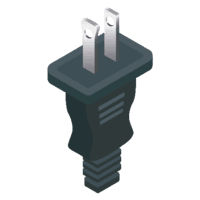 Type AType A is mainly used in North and Central America, China and Japan. This socket only works with plug A.
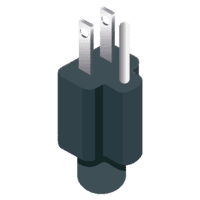 Type BType B is like type A but with an extra prong for grounding. This socket also works with plug A.
- Voltage
- 110 V
- Frequency
- 60 Hz
- Plug types
- A, B
Adapter or converter: three checks
- Match the plug to the socketAn adapter changes the shape of the plug so it fits the socket. It does not change the electricity. If none of the sockets at your destination takes your plug type, you need an adapter.
- Compare the voltageCountries supply either 100–127 V or 220–240 V. If home and destination are in the same group, your appliances work. If they differ, anything made for one voltage needs a converter.
- Read the label on the deviceFind the word INPUT on the charger or on the back of the appliance. “100–240 V, 50/60 Hz” means it works anywhere with only an adapter. A single figure such as “120 V” or “230 V” means it is made for one voltage.
All countries
No countries match these filters.
Plug types around the world
The letters are the IEC names. Socket drawings are simplified.
- Type AType A is mainly used in North and Central America, China and Japan. This socket only works with plug A.Main socket in 51 countries
- Type BType B is like type A but with an extra prong for grounding. This socket also works with plug A.Main socket in 45 countries
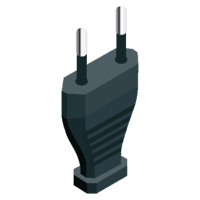 Type CType C is also known as the standard "Euro" plug. This socket also works with plugs E and F.Main socket in 130 countries
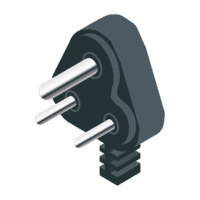 Type DType D is mainly used in India, Sri Lanka, Nepal, and some African countries. This socket only works with plug D.Main socket in 31 countries
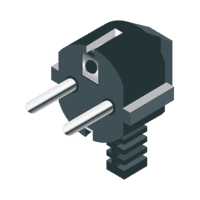 Type EType E is of French origin. This socket also works with plug C and with plug F, if it has an additional pinhole.Main socket in 38 countries
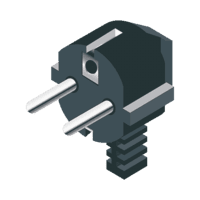 Type FType F is also known as "Schuko". This socket also works with plugs C and E.Main socket in 64 countries
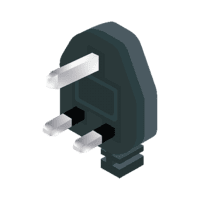 Type GType G is of British origin. This socket only works with plug G.Main socket in 48 countries
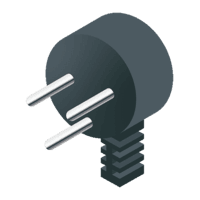 Type HType H is unique to Israel but it also works with plug C.Main socket in 2 countries
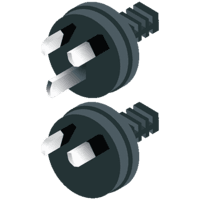 Type IType I is mainly used in Australia, New Zealand, China, the South Pacific and Argentina. This socket only works with plug I.Main socket in 15 countries
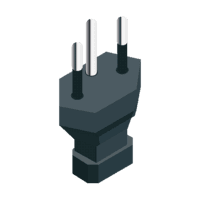 Type JType J is mainly used in Switzerland and Liechtenstein. This socket also works with plug C. Plug N will not fit.Main socket in 5 countries
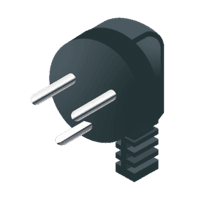 Type KType K is of Danish origin. This socket also works with plugs C, E and F.Main socket in 6 countries
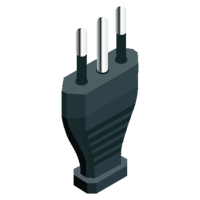 Type LType L is of Italian origin. This socket also works with plug C.Main socket in 8 countries
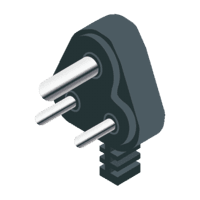 Type MType M looks like plug D, but with larger pins. This socket only works with plug M.Main socket in 8 countries
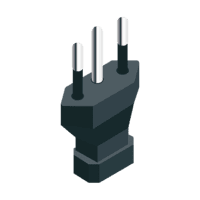 Type NType N is used in Brazil and South Africa. This socket also works with plug C.Main socket in 2 countries
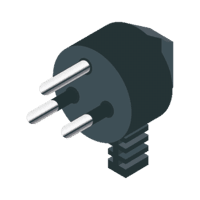 Type OType O is unique to Thailand but it also works with plugs C, E and F.Main socket in 1 country
Voltage and frequency by country
Mains electricity comes in two groups. Of the 220 countries we cover, 174 supply 220–240 V and 37 supply 100–127 V, mostly in the Americas, plus Japan and Taiwan. Another 9 have both, depending on the region or the building.
Frequency is 50 Hz in most of the world and 60 Hz in most of the Americas and parts of Asia. Chargers marked 50/60 Hz work on both. Clocks and some motors made for one frequency run fast or slow on the other.
Countries on 100–127 V
- American Samoa
- Anguilla
- Aruba
- Barbados
- Bermuda
- Bonaire
- British Virgin Islands
- Canada
- Cayman Islands
- Colombia
- Costa Rica
- Curaçao
- Dominican Republic
- Ecuador
- El Salvador
- Guatemala
- Haiti
- Honduras
- Jamaica
- Japan
- Liberia
- Marshall Islands
- Mexico
- Nicaragua
- Palau
- Panama
- Puerto Rico
- Saba
- Sint Eustatius
- Suriname
- Taiwan
- The Bahamas
- Trinidad & Tobago
- Turks & Caicos
- US Virgin Islands
- USA
- Venezuela
Countries with both voltages
- Antigua & Barbuda
- Belize
- Bolivia
- Brazil
- Cuba
- French Polynesia
- Guyana
- Morocco
- St-Martin & Sint Maarten
Plugs and power FAQ
What is the difference between an adapter and a converter?
An adapter only changes the shape of the plug so it fits the socket. A converter changes the voltage. Most travellers need only an adapter.
Do I need a voltage converter?
Not for phones, laptops and cameras: their chargers take 100–240 V. Appliances made for one voltage, such as hair dryers and kettles, need a converter when you move between a 100–127 V country and a 220–240 V country.
Can I use a 120 V hair dryer in a 230 V country?
Not on its own. A hair dryer made only for 110–120 V overheats and can burn out on 220–240 V. Use a converter rated for its wattage, or a dual-voltage dryer with the switch set to the higher voltage. The other way round, a 230 V dryer on 120 V runs weak.
Is a universal travel adapter enough?
For the plug shape, usually. Most universal adapters cover types A, C, G and I, which fit the sockets of most countries. They do not fit every socket: type D and type M, used in India and South Africa, are common gaps. A universal adapter does not change the voltage.
Will a three-pin plug fit a two-pin socket?
No. A grounded plug needs a grounded socket of the same type, or an adapter. Two-pin plugs usually fit the grounded socket of the same family.
Why do some countries list two voltages?
Some countries supply different voltages in different regions or buildings. Brazil, for example, has both 127 V and 220 V. Check the label on the socket, or ask where you are staying, before you plug in an appliance made for one voltage.
Where does this data come from?
Plug types use the IEC letters, type A to O. Voltage and frequency are the standard mains supply of each country. Driving side and dialing codes come from Wikidata.