
Mt Kilimanjaro National Park
Africa's highest mountain, climbed by trekkers who cross rainforest, moorland and high desert on the way to Uhuru Peak.
We may earn a commission. It never decides our picks.
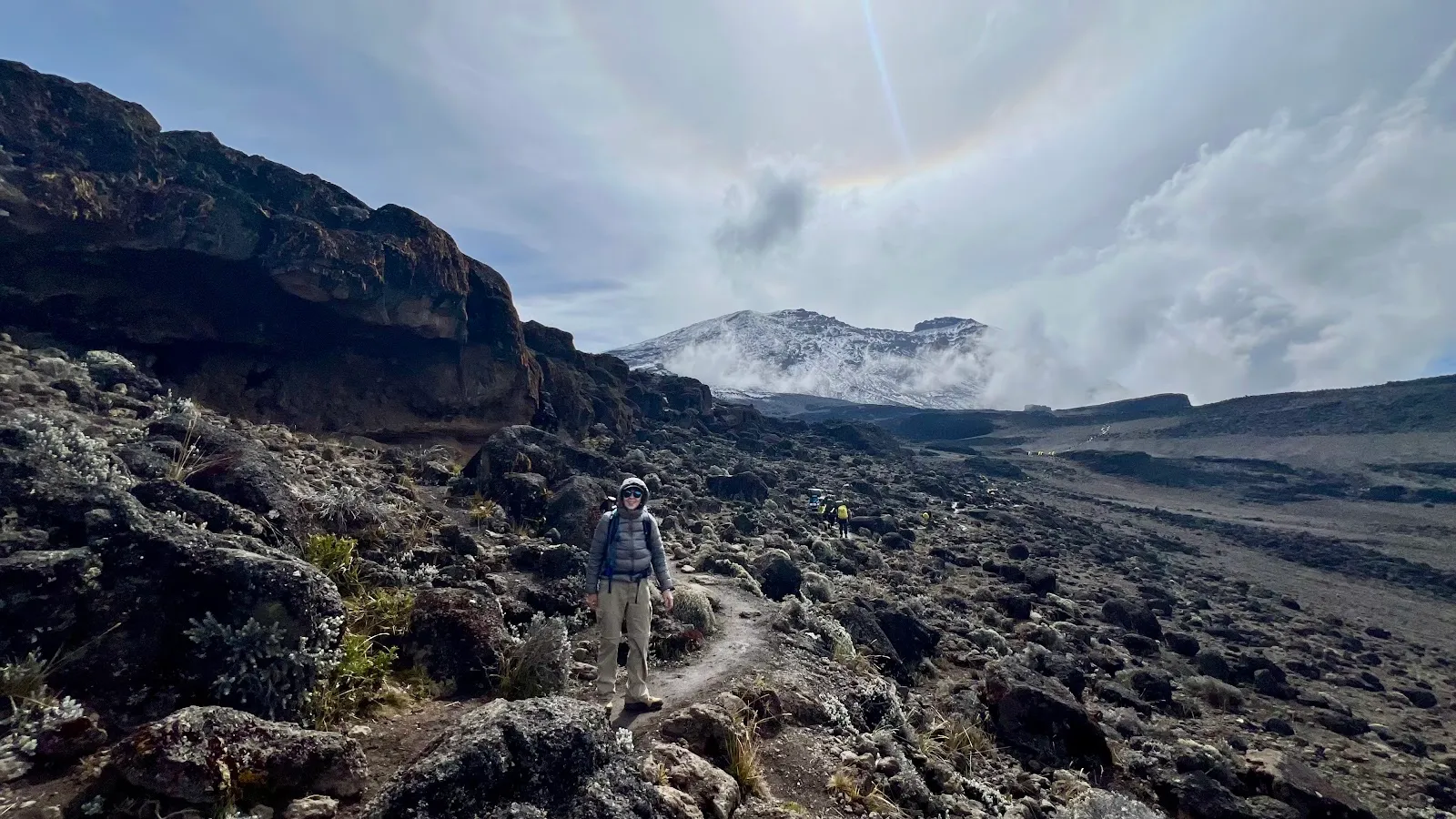
Kilimanjaro National Park covers the upper slopes of Mount Kilimanjaro, in northeastern Tanzania near the Kenya border. The mountain is a volcano with three cones. Uhuru Peak, on the Kibo cone, is the highest point in Africa at about 5,895 meters. The park was established in 1973. People come mainly to climb, and most climbers base themselves in Moshi on the south side or in Arusha, a larger city nearby.
Routes take several days and pass through clearly different zones, from forest where you may see monkeys to high desert near the summit. Every climb needs a licensed guide, and porters carry most of the gear. Altitude is the main challenge, so the route you choose matters: longer routes give your body more time to adjust. Most climbers plan around the dry seasons, June to September and January to February, and allow 5 to 8 days on the mountain, plus a day or two in Moshi or Arusha before and after.
Mt Kilimanjaro National Park in five
- Book a registered operator and licensed guideIndependent climbing is not allowed on Kilimanjaro, so every climber goes with a registered operator and a licensed guide. Check the operator's registration before you pay a deposit.Tours and tickets
- Ask what the park fees includePark, camping and rescue fees may sit outside the package price. Ask the operator to list each fee in writing before you compare quotes.
- Carry small bills for tipsGuides and porters are tipped at the end of the climb. Bring clean, small notes for the tips.Money and costs
- Get an eSIM before the trailheadMobile signal reaches the gate towns and lower trails but fades on the upper routes. Set up a data plan before you leave home so you can message from Moshi.Phones and eSIM
- Check the altitude limit on your insuranceMany policies cap cover at a set altitude, and Uhuru Peak is 5,895 m. Confirm in writing that the policy covers the summit and helicopter evacuation.Travel insurance

Need to know
- Currency
- Tanzanian shilling (TZS)
- Entry
- Visa needed for most passports; eVisa or visa on arrival, by nationality Read more
- Emergency
- 112 general emergency; keep your operator's rescue number too
- Tipping
- Expected for guides and crew at the end of the climb
- Time
- UTC+3, no daylight saving
Weather by month
- Best
- Good
- Mixed
- Poor
- JanuaryDry, clear
- FebruaryDry, warm
- MarchLong rains
- AprilLong rains
- MayRains ending
- JuneDry season
- JulyPeak climbing
- AugustBusy, cold nights
- SeptemberClear, busy
- OctoberDry, warm
- NovemberShort rains
- DecemberHoliday crowds
Right now in Mt Kilimanjaro National Park
Local time, today's weather and the exchange rate, refreshed through the day.

15
- Feels like
- 15°
- Humidity
- 79%
- Wind
- 6 km/h
- Chance of rain
- 100%
Kilimanjaro National Park
04:01 AM
Tuesday, November 3
- Today4°-2°100%Tuesday: Rain. High 4°, Low -2°. Chance of rain 100%.
- Wed5°-1°95%Wednesday: Rain. High 5°, Low -1°. Chance of rain 95%.
- Thu4°-2°39%Thursday: Rain. High 4°, Low -2°. Chance of rain 39%.
- Fri4°-5°45%Friday: Drizzle. High 4°, Low -5°. Chance of rain 45%.
- Sat4°-5°76%Saturday: Drizzle. High 4°, Low -5°. Chance of rain 76%.
- Sun4°-2°100%Sunday: Drizzle. High 4°, Low -2°. Chance of rain 100%.
Updated 12:49 AM local time · Powered by WeatherAPI.com · Weather data by Open-Meteo.com
Money
Mid-market rate1 USD = 2,635 TZS
Rates from Nov 2, 2026 · Rates By Exchange Rate API
Before you go to Mt Kilimanjaro National Park
Rules for Mt Kilimanjaro National Park, checked
Plan around Mt Kilimanjaro National Park
Entry, money and park rules for the whole country
Read the guideTours and ticketsOperators, permits and what a package includes
Read the guideVisas and entryVisa and eVisa rules before you fly
Read the guideMoney and costsCash, cards and tipping for the crew
Read the guidePacking listsLayers for the cold summit night
Read the guideTravel insuranceCover for altitude and evacuation
Read the guideMt Kilimanjaro National Park FAQ
Do I need a guide to climb Kilimanjaro?
Yes. Climbers must go with a licensed guide through a registered operator. You cannot book the park or the huts on your own.
How many days do I need on Kilimanjaro?
Most routes take 5 to 8 days. The longer routes give your body more time to adjust to altitude, which is the main risk on the mountain.
When is the best time to climb Kilimanjaro?
June to September is the main dry season, and January to February is a second dry window. March to May is the long rains.
Which route should I choose?
Machame is a common choice for its scenery and time to acclimatize. Marangu is the route with huts rather than tents.
Is the summit cold?
Yes. The night climb to Uhuru Peak at 5,895 m is often below freezing, so pack warm layers, gloves and a hat.
Do I need a visa for Tanzania?
Most passports need a visa, either an eVisa or a visa on arrival depending on nationality. Check the official immigration site before you book flights.