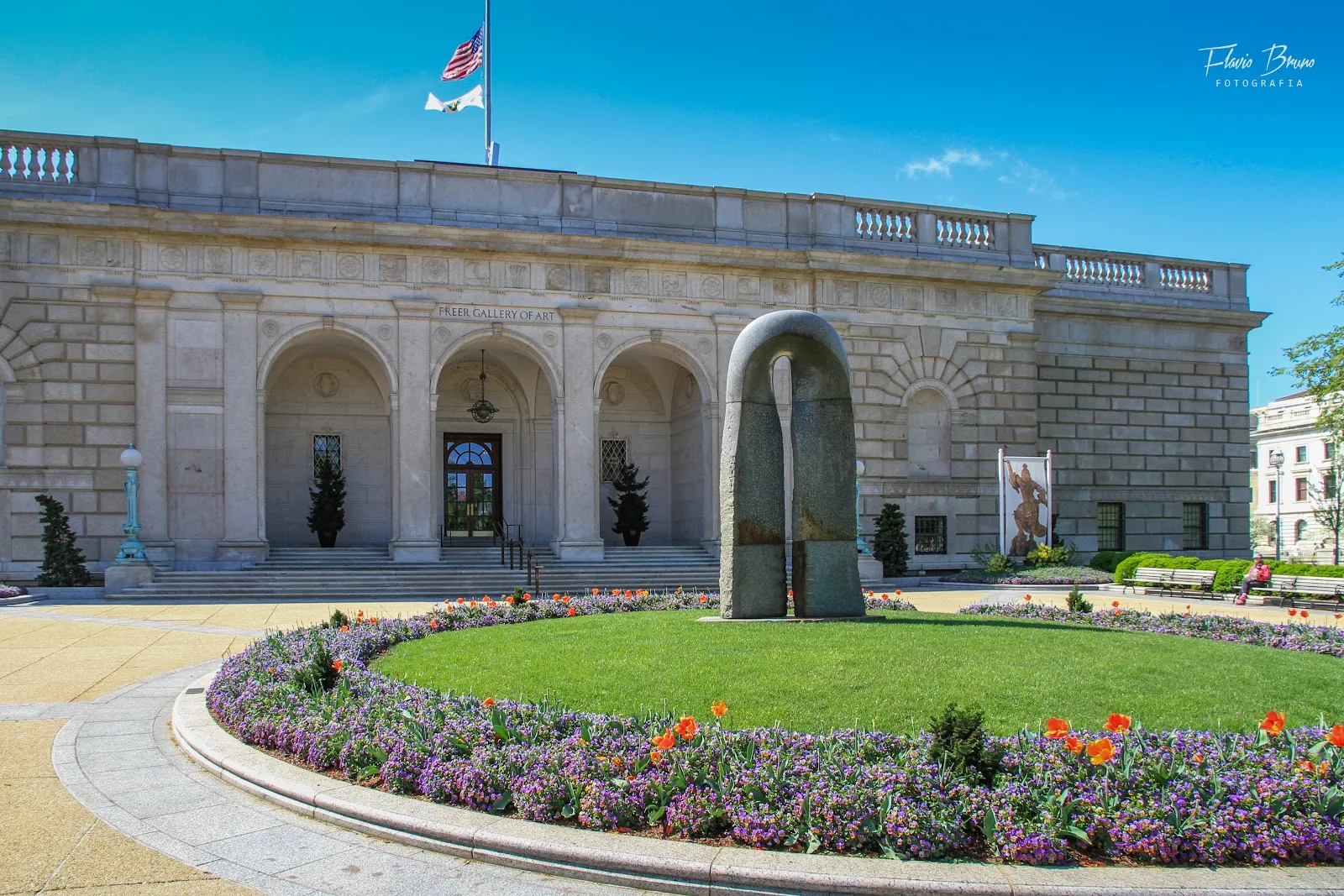
On the National Mall, the National Museum of Asian Art brings together the Freer Gallery of Art and the Arthur M. Sackler Gallery. Its collections range across Asia and the Islamic world, with works spanning ancient periods to the present. Look for the Peacock Room, a richly decorated interior by James McNeill Whistler, as well as Japanese prints, Chinese jades and a Tibetan Buddhist shrine room. The two buildings hold more galleries than their entrances suggest, and a garden with a pond offers a quiet pause between rooms. Admission is free.
Two galleries on the National Mall
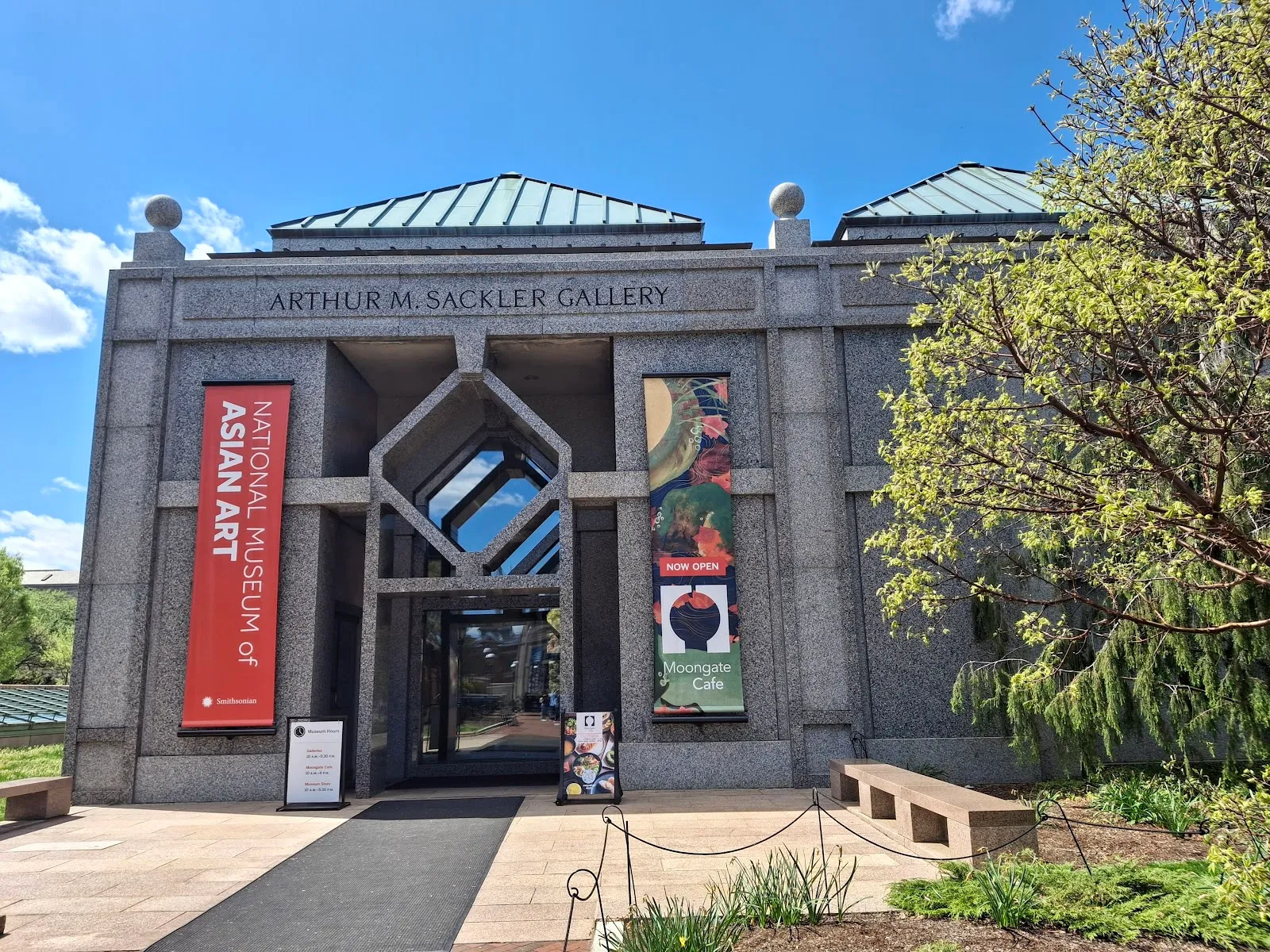
The National Museum of Asian Art comprises the Freer Gallery of Art and the Arthur M. Sackler Gallery, two buildings devoted to art from Asia and related cultures. The Freer opened in 1923 as the first Smithsonian museum dedicated to fine art. The Sackler Gallery opened in 1987. Together, their collections span a broad range of regions and periods, from ancient objects to modern works.
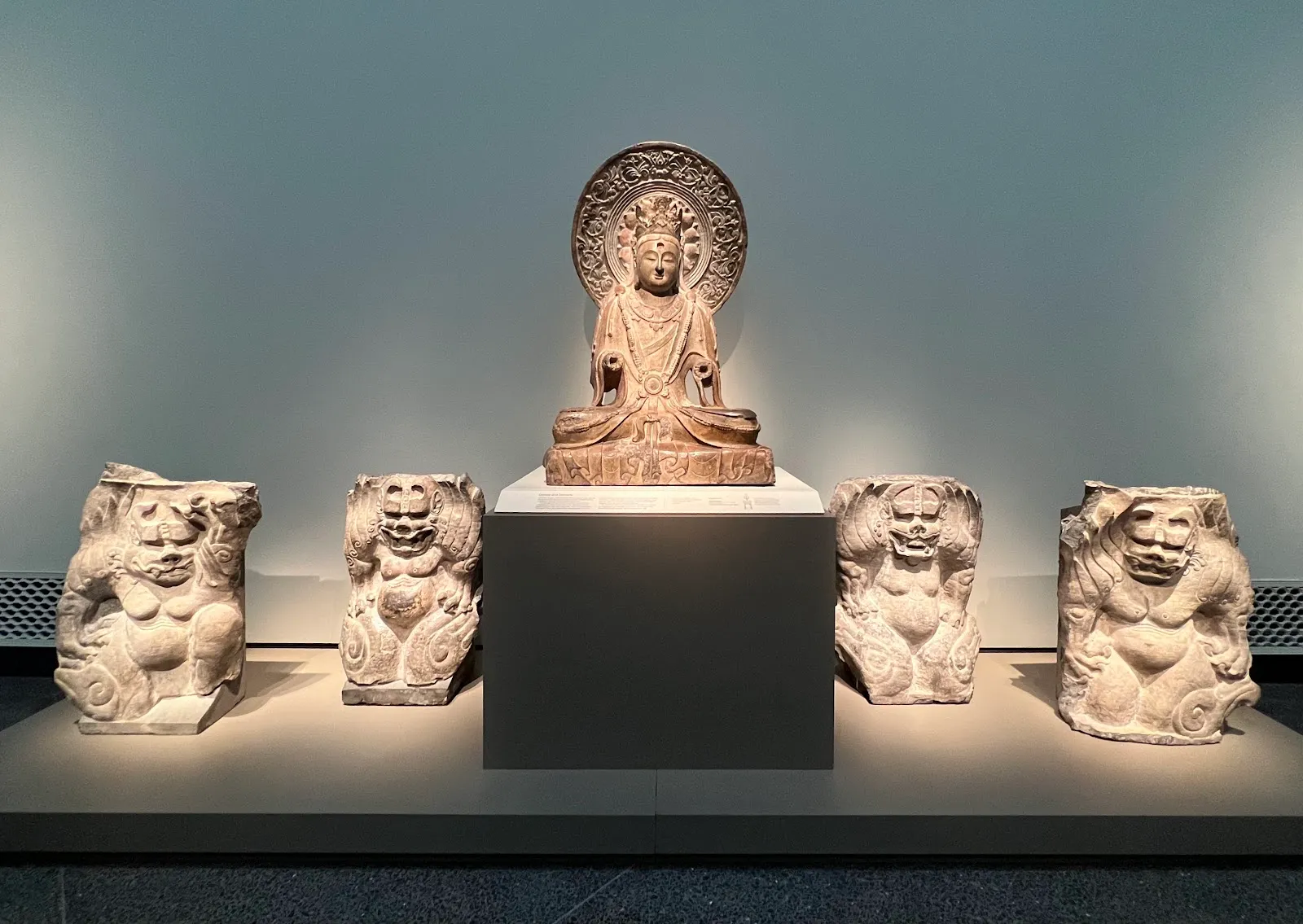
The galleries include art from China, Japan, Korea, South and Southeast Asia, the Islamic world and the ancient Near East. You will find paintings, sculpture, ceramics and other objects across several floors. The collection also includes works from ancient Egypt and American art, including pieces associated with James McNeill Whistler. Displays change, so the rooms and current exhibitions may differ from one visit to another.
Look for the Peacock Room and other highlights
The Peacock Room is one of the museum’s best-known interiors. James McNeill Whistler created the richly decorated room in the Victorian era; it was moved from a London home and reassembled in Washington. Its patterned surfaces and decorative objects make it a distinct change of scale from the surrounding galleries.
Other galleries bring together different forms and traditions. Japanese prints, Chinese jades, Indian miniature paintings and Japanese screens are among the collection highlights. A Tibetan Buddhist shrine room provides another kind of setting, while displays of ceramics, sculpture and textiles show the range of materials represented here. The museum also holds objects that illustrate cultural exchange across regions, including trade links between Buddhist and Islamic communities.
Plan your route through the buildings
The museum is larger than it can appear at first, with galleries extending onto lower floors. Begin downstairs if you want to avoid overlooking those rooms, then work through the upper galleries. There is no single route that takes you neatly through every section, and reaching another floor or gallery may mean doubling back. Give yourself time to navigate rather than planning a tight stop between other National Mall visits.
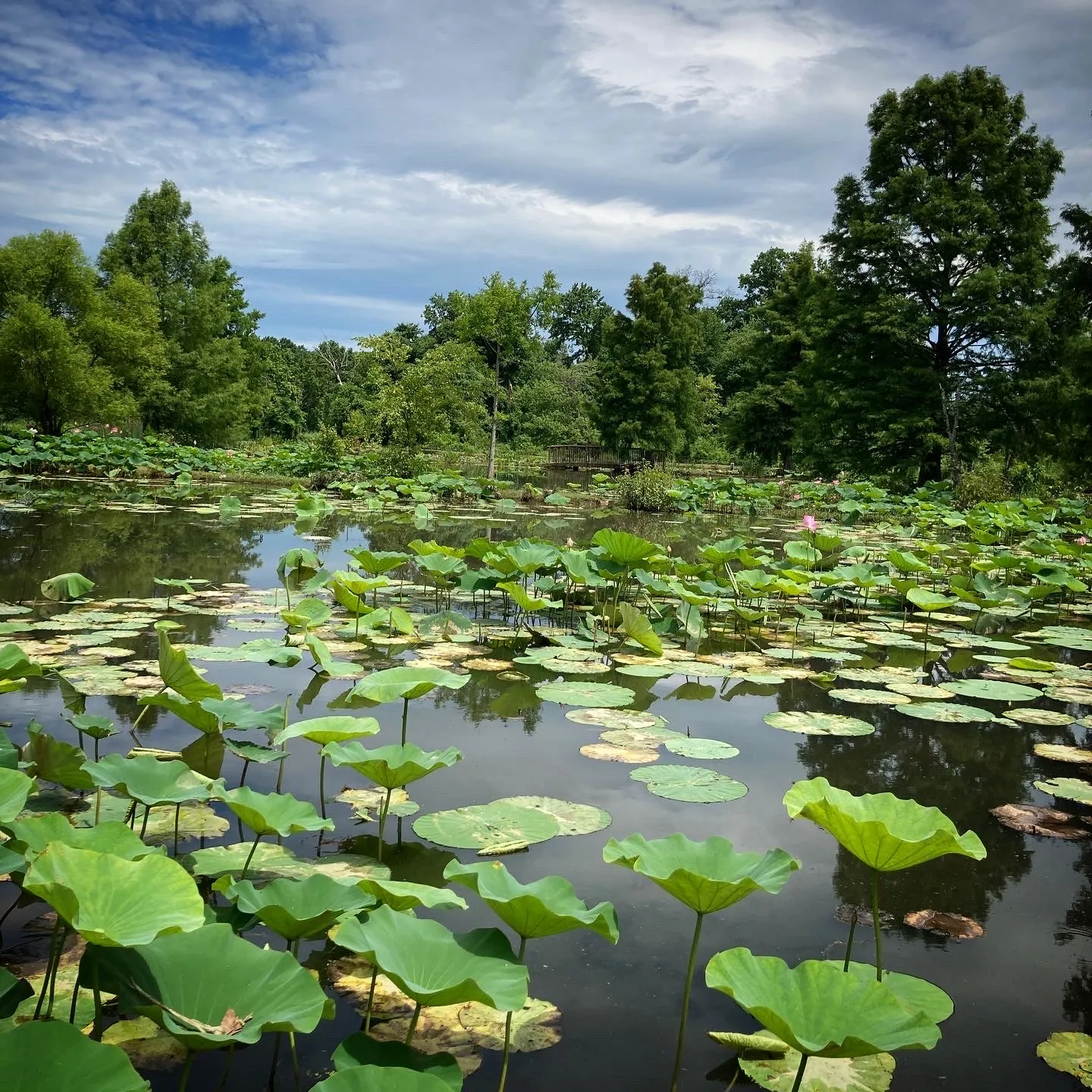
Admission is free. The museum has a café and a shop, and the outdoor garden provides a place to pause between galleries. A pond in the garden is home to koi. The museum is at 1050 Independence Ave SW, on the National Mall. Check the museum’s website before setting out for current entry arrangements and exhibition information.
FAQ
Is admission to the National Museum of Asian Art free?
Yes. Admission is free. Check the museum’s website before visiting for current entry arrangements.
How long should I spend at the museum?
Allow at least three hours to explore the galleries. The collection spans two buildings and several floors.
What are the museum’s main highlights?
The Peacock Room, Japanese prints, Chinese jades and a Tibetan Buddhist shrine room are among the highlights.
Where is the National Museum of Asian Art?
It is at 1050 Independence Ave SW on the National Mall in Washington, DC.