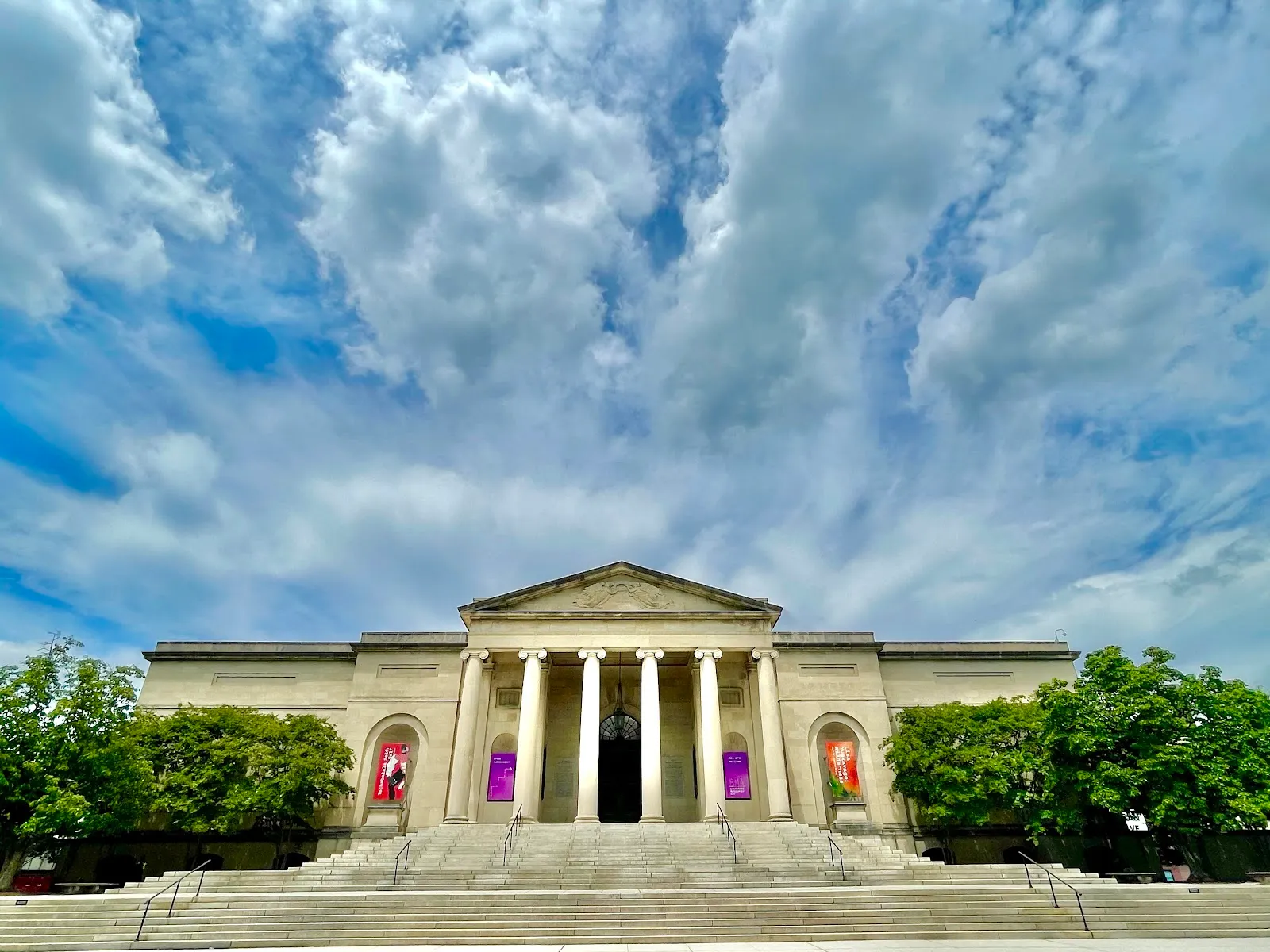
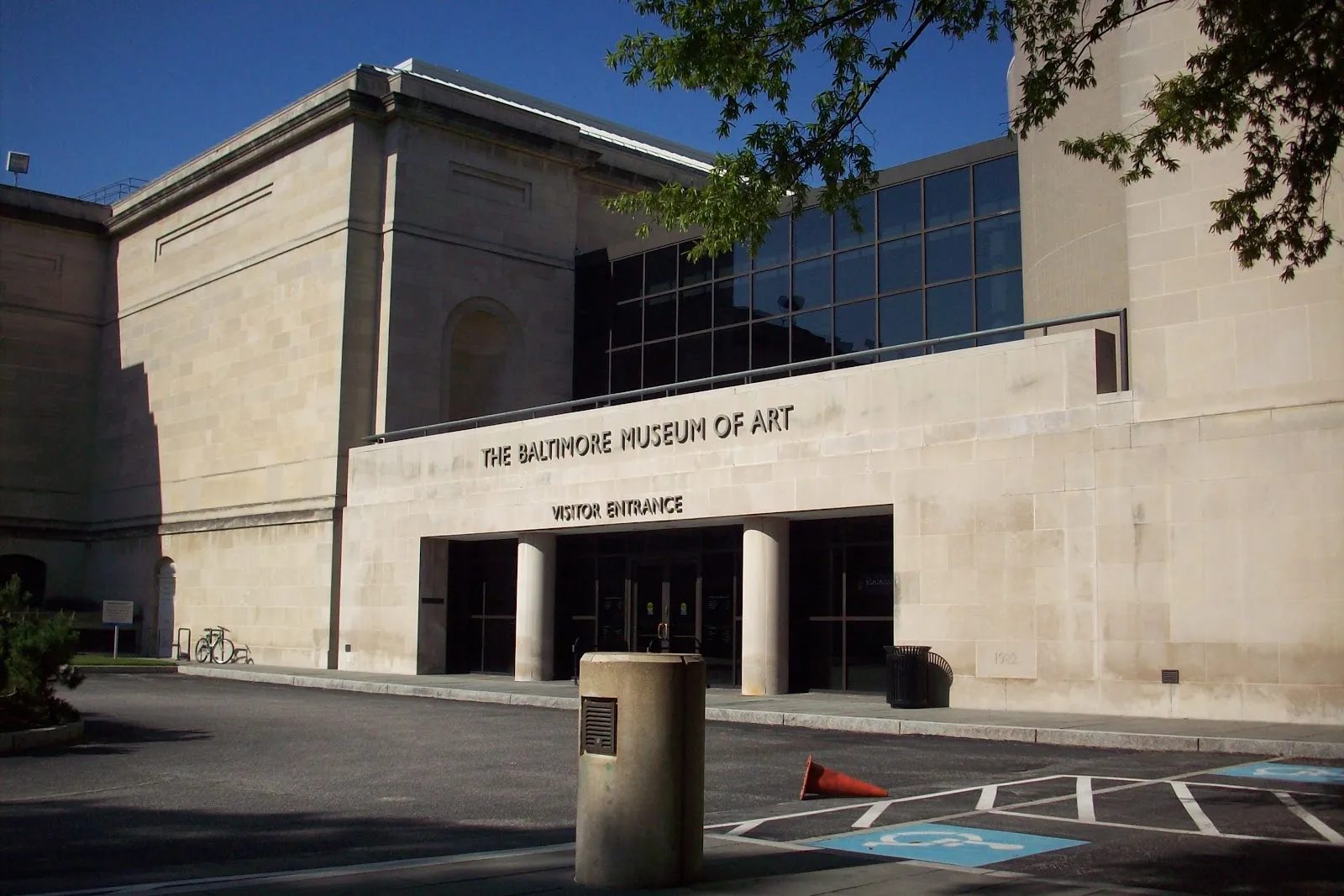
The Baltimore Museum of Art is at 10 Art Museum Drive, beside the Johns Hopkins University campus. Its collection spans ancient art to contemporary work, with paintings, sculpture, textiles, ceramics and more. Look for Henri Matisse’s work, the Cone Sisters’ collection, and pieces by Picasso, Monet and Van Gogh. Outside, two sculpture gardens bring art into landscaped grounds. General admission is free, so you can spend a few hours exploring without paying to enter; some special exhibitions may require a separate ticket.
A collection across periods and regions
Founded in 1914, the Baltimore Museum of Art has grown from a single artwork into a collection of more than 90,000 objects. Its holdings span paintings, photographs, drawings, prints, sculpture and decorative arts, with work from Africa, Asia, Europe, the Americas and the Pacific Islands. Ancient mosaics sit within a collection that also includes modern and contemporary art.
The galleries cover a wide range of interests and materials. You can encounter ceramics, textiles, jewelry, furniture, stained glass and ceremonial objects alongside paintings and sculpture. African and Indigenous art have dedicated rooms, while the broader collection includes European Old Masters and works from the 19th century onward. Because the collection is extensive, the museum displays only part of it at any one time.
The Cone Sisters and Henri Matisse
One of the museum’s central collections came from Baltimore sisters Claribel and Etta Cone, early collectors of modern art. Their holdings include work by Henri Matisse, Pablo Picasso, Edgar Degas and other artists. The collection is especially known for its Matisse works, and the museum holds the largest public collection of his work.
Look for pieces by Matisse among the paintings and prints, then take time with the other artists represented in the Cone collection. The museum also has works by Vincent van Gogh, Claude Monet, Paul Cézanne and Andy Warhol. Together, these holdings make the galleries a useful stop for anyone interested in the shift from older European painting to modern art.
The building and its outdoor art
The museum occupies a monumental building designed by architect John Russell Pope. Its columned exterior and Fox Court, the main lobby, provide a formal setting before you reach the galleries. Inside, room colors and the arrangement of works help define each exhibition space.
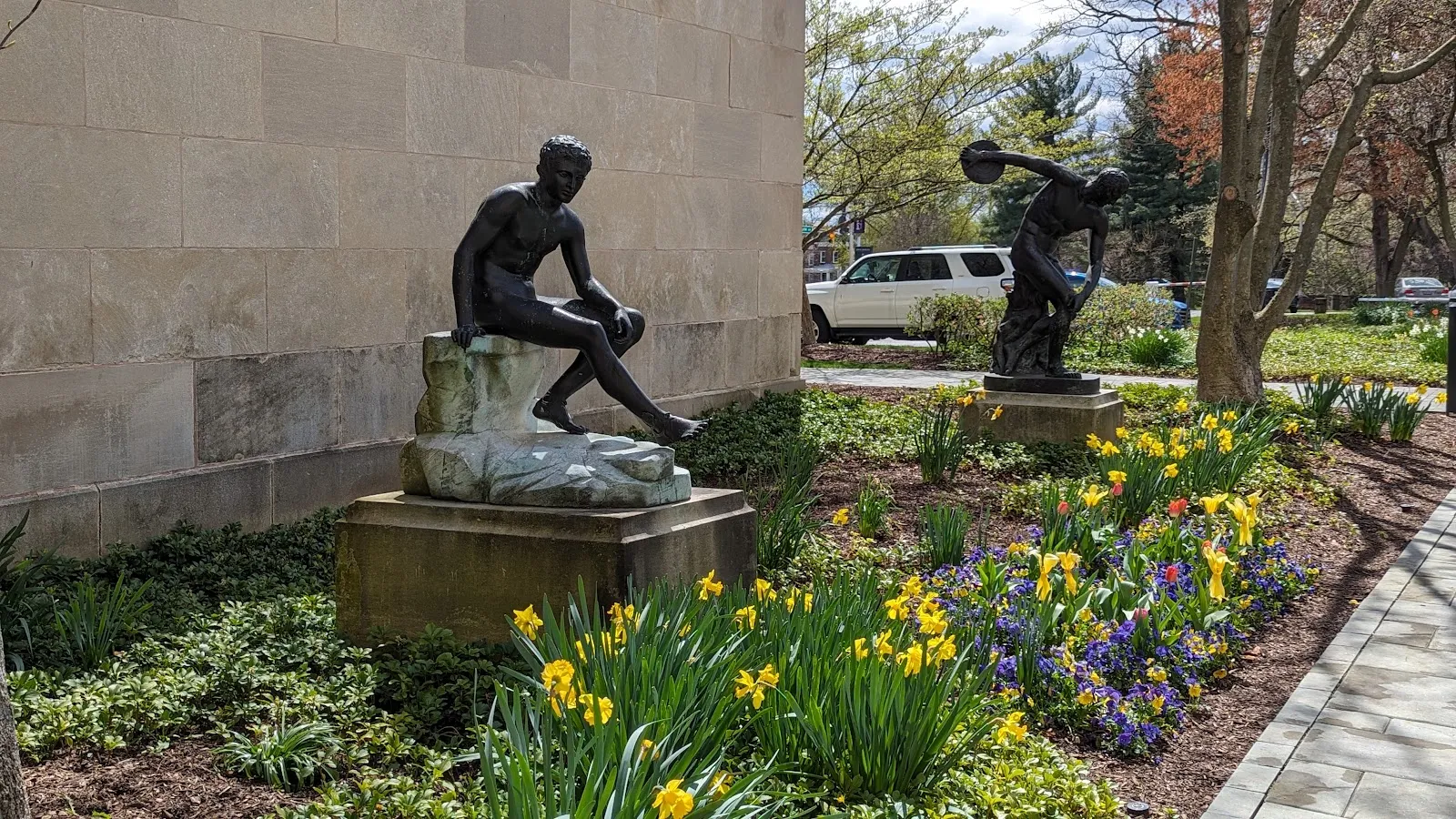
Two landscaped sculpture gardens extend the visit outdoors. Sculptures sit among planted areas, with fountains and places to pause. The gardens are also used for summer jazz events. If the weather is suitable, leave time to walk the outdoor grounds after seeing the indoor collection; the gardens add a different way to encounter sculpture without leaving the museum.
Planning your visit
General admission is free, while some special exhibitions may have a separate charge. Check the museum’s website before your visit if a particular exhibition is part of your plan. The museum is closed Monday and Tuesday. On Thursday, it stays open until 9pm; on other open days, it closes at 5pm.
The on-site parking lots are small, so arriving early can help if you want to use them. Street parking is available nearby as another option. Once inside, allow a few hours if you want to cover more than the headline collections: the galleries span several floors and artistic traditions, and the outdoor sculpture gardens add time to the visit. Gertrude’s restaurant is on site, and the museum also has a shop.
FAQ
Is admission to the Baltimore Museum of Art free?
General admission is free. Some special exhibitions may require a separate ticket.
How long should you spend at the Baltimore Museum of Art?
Allow 2 to 3 hours to explore the galleries and sculpture gardens.
When is the Baltimore Museum of Art open late?
The museum stays open until 9pm on Thursdays. It is closed on Mondays and Tuesdays.
Is there parking at the Baltimore Museum of Art?
There are small paid parking lots on site, and street parking is available nearby. Arrive early if you plan to use the lots.