Planifier un voyage
Langue: Français
Planificateur de voyagePlanifiez votre voyage sur une carte

Destinations incontournables

EnglishDeutschFrançaisEspañolPortuguêsPortuguês (BR)Italiano
Avis aux voyageurs · KenyaNairobi se trouve dans ou près d'une zone où les gouvernements déconseillent tout voyage sauf essentiel : Eastleigh (Nairobi), Kibera (Nairobi), Mathare (Nairobi), Pangani (Nairobi).Les conseils dépendent de votre passeport. Consultez ceux de votre propre gouvernement avant de réserver.Conseils officiels
Zones signalées
  • Frontière avec l'Éthiopie · éviter tout voyage · Espagne, France, Nouvelle-Zélande
  • Frontière avec le Soudan du Sud · éviter tout voyage · Espagne, France, Nouvelle-Zélande
  • Zones côtières au nord de Malindi · éviter tout voyage · Canada, France, Nouvelle-Zélande, États-Unis
  • Comté de Garissa · éviter tout voyage · Canada, Allemagne, Espagne, Italie, Nouvelle-Zélande, États-Unis
  • Comté de Lamu · éviter tout voyage · Espagne, Nouvelle-Zélande, États-Unis
  • Comté de Lamu, hors île de Lamu et île de Manda · éviter tout voyage · Canada, Allemagne, France, Royaume-Uni
  • Comté de Mandera · éviter tout voyage · Canada, Allemagne, Espagne, Italie, Nouvelle-Zélande, Royaume-Uni, États-Unis
  • Comté de Tana River, hors parc national de Tsavo · éviter tout voyage · Italie, États-Unis
  • Comté de Wajir · éviter tout voyage · Canada, Allemagne, Espagne, Italie, Nouvelle-Zélande, États-Unis
  • Comté de Baringo · éviter les voyages non essentiels · Allemagne, Italie
  • Côte entre la rivière Tana et la rivière Galana · éviter les voyages non essentiels · Espagne, Royaume-Uni
  • Zones côtières du comté de Tana River · éviter les voyages non essentiels · Canada, Nouvelle-Zélande
  • Eastleigh (Nairobi) · éviter les voyages non essentiels · Espagne, France, Italie, Nouvelle-Zélande, États-Unis
  • Kibera (Nairobi) · éviter les voyages non essentiels · Canada, Espagne, France, Nouvelle-Zélande, États-Unis
  • Mathare (Nairobi) · éviter les voyages non essentiels · Espagne, France
  • Nord du comté de Tana River · éviter les voyages non essentiels · Allemagne, Royaume-Uni
  • Pangani (Nairobi) · éviter les voyages non essentiels · France, Italie
  • Comté de Turkana · éviter les voyages non essentiels · Allemagne, Espagne
  • Comté de West Pokot · éviter les voyages non essentiels · Allemagne, Italie, États-Unis

Également signalé par un seul gouvernement : Zones frontalières avec la Somalie (Nouvelle-Zélande), Comté de Garissa, hors Garissa-ville, Lagdera et certaines parties de Balambala (Royaume-Uni), Comté de Kilifi au nord de la route C103 (États-Unis), Zone maritime jusqu'à 72°E et 15°S (France), Comté de Marsabit, à moins de 110 km des frontières avec le Soudan du Sud et l'Éthiopie (Canada), Comté de Marsabit, à moins de 50 km de la frontière éthiopienne (États-Unis), Bande frontalière avec la Somalie, jusqu'à 100 km à l'intérieur du Kenya (France), Circonscriptions de Tarbaj et de Wajir East (Royaume-Uni), Comté de Turkana, à moins de 110 km des frontières avec le Soudan du Sud et l'Éthiopie (Canada), Comté de Turkana, à moins de 50 km de la frontière éthiopienne (États-Unis), Comté de Wajir, à moins de 60 km de la frontière somalienne (Royaume-Uni), Ouest du comté de Turkana (États-Unis), Régions arides et isolées du nord du Kenya (Italie), Sous-comtés de Mukutani, Muchongoi, Bartabwa, Tiaty East et Tiaty West (Espagne), Comté d'Elgeyo Marakwet (Italie), Sous-comtés de Marakwet Est et Marakwet Ouest (Elgeyo Marakwet) (Espagne), Garissa (Royaume-Uni), Comté de Laikipia (Italie), Sous-comtés d'Olmoran, Ng'arua et Mukogodo (Laikipia) (Espagne), Île de Lamu (Allemagne), Île de Manda (Allemagne), Comté de Marsabit (Espagne), Mombasa (Italie), Zones périphériques du comté d'Isiolo (France), Zones périphériques du comté de Turkana (France), Zones périphériques du comté de West Pokot (France), Régions périphériques du comté de Marsabit (France), Routes terrestres entre Lamu et Malindi (Italie), Comté de Samburu : zones de Loroki et Kirisia (Espagne), Sous-comtés de Turkana Sud, Turkana Est et Loima (Espagne), À l'ouest du comté de Garissa (France), À l'ouest du comté de Mandera (France), À l'ouest du comté de Wajir (France), Sous-comtés de Pokot Nord et Sigor (West Pokot) (Espagne), À moins de 75 km de la frontière Kenya-Somalie (Irlande)

GouvernementConseilsMis à jourLire les conseils
Royaume-Uni (FCDO)No advice against the whole country (regional advisories)–Lire les conseils
États-Unis (State Dept)Reconsider travel19 oct. 2026Lire les conseils
Canada (Affaires mondiales)Exercise a high degree of caution (regional advisories)–Lire les conseils
Allemagne (Auswärtiges Amt)Increased caution nationwide; partial travel warnings for specific areas (regional advisories)19 oct. 2026Lire les conseils
Nouvelle-Zélande (SafeTravel)Exercise increased caution (regional advisories)–Lire les conseils
Irlande (ministère des Affaires étrangères)High Degree of Caution (regional advisories)–Lire les conseils
France (ministère de l'Europe et des Affaires étrangères)Vigilance renforcée (reste du territoire) (regional advisories)–Lire les conseils

Vérifié quotidiennement d'après les conseils publiés par les gouvernements ; dernière vérification le 2 nov. 2026.RoamLedger résume les conseils officiels ; il ne s'agit pas de conseils émanant d'un gouvernement.

National Museum of Kenya
Musée

National Museum of Kenya

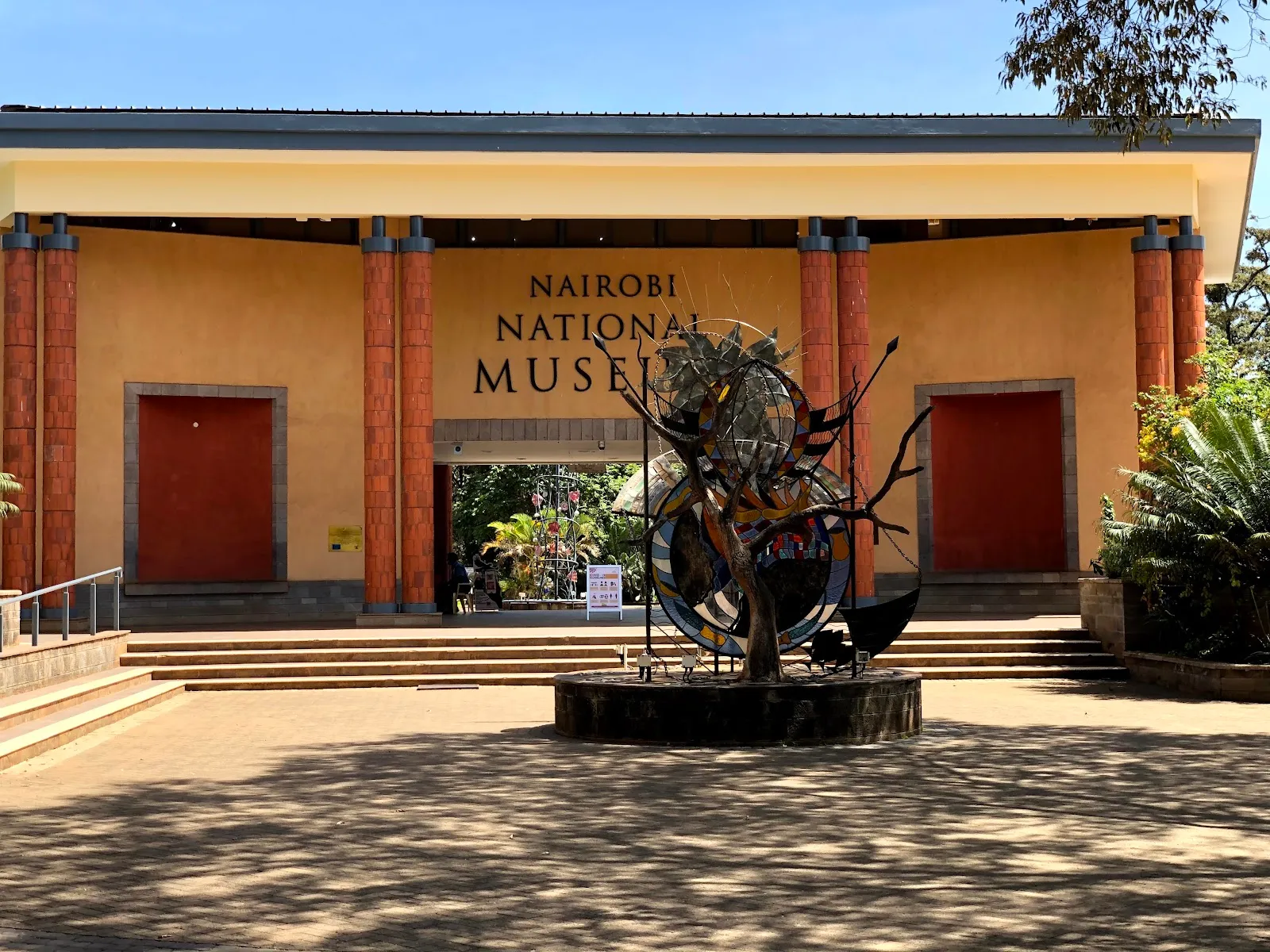
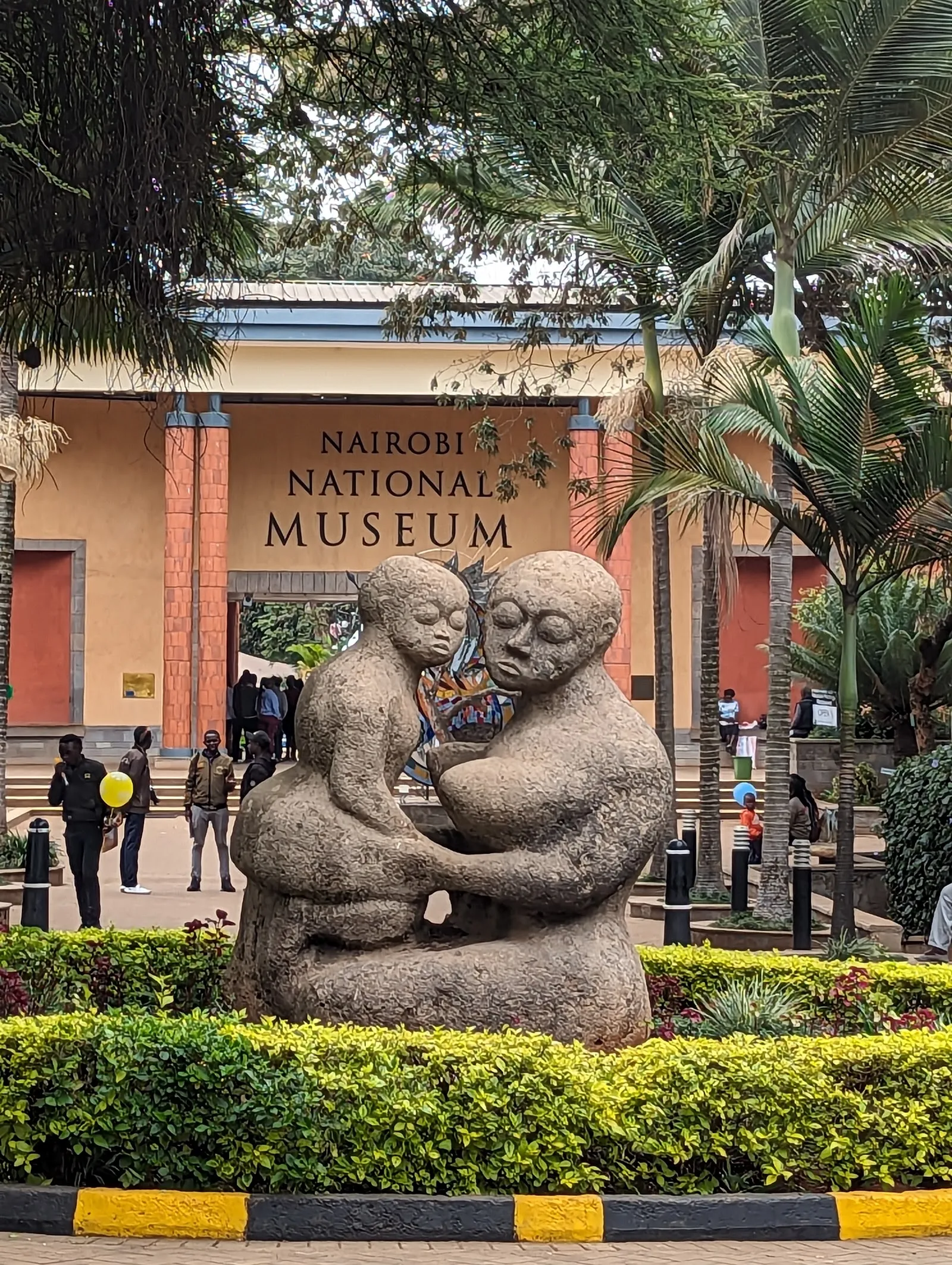
The National Museum of Kenya sits on Museum Hill, a short drive from downtown Nairobi, and covers the country's history from early human fossils to contemporary art.

The National Museum of Kenya sits on Museum Hill, a short drive from downtown Nairobi, and covers the country's history from early human fossils to contemporary art. The early man section holds fossils found in Kenya, and the Hall of Mammals shows giraffes, elephants, zebras and okapi in dioramas. Set aside time for the botanical gardens and the Snake Park next door, which can be included on a combined ticket. Plan a morning or afternoon.

Early human fossils
National Museum of Kenya

The early man section is the museum's best-known draw. Richard and Mary Leakey's work near Lake Turkana in the 1960s led to the discovery of the skull and bones of Homo habilis, a species believed to be an early ancestor of humans. Their findings helped establish the Rift Valley as a possible Cradle of Humankind, although South Africa's Sterkfontein Caves and Ethiopia's Hadar region also claim the title.

The fossils on display include pieces found in Kenya, such as a proconsul fossil dated to 18 million years ago. That find encouraged archaeologists to consider Kenya as a possible birthplace of humankind. Homo erectus remains are displayed together in one place.

Mammals, birds and dioramas
National Museum of Kenya

The Great Hall of Mammals has dioramas of giraffes, elephants, zebras and okapi, and most of the country's mammal species are arranged along the walls. The museum also holds more than 900 stuffed birds and mammals, and a bird gallery is among its highlights.

Some of the taxidermy is old and needs care. It is best seen as a record of the collection rather than a polished display.

Ethnic displays cover Kenya's many communities, with tribal artifacts from across the country, and the museum holds some of the best-preserved examples in the country. A permanent exhibition focuses on Kenya's heritage and communities.

The Geology Gallery holds a large collection of rocks and minerals, with displays on tectonic plates and the life cycle of a volcano. The art collection includes a display of work by Joy Adamson, the author of Born Free, and an artist-in-residence program.

The Louis Leakey auditorium hosts music, visual arts and film shows, along with art workshops.

The Snake Park and the gardens

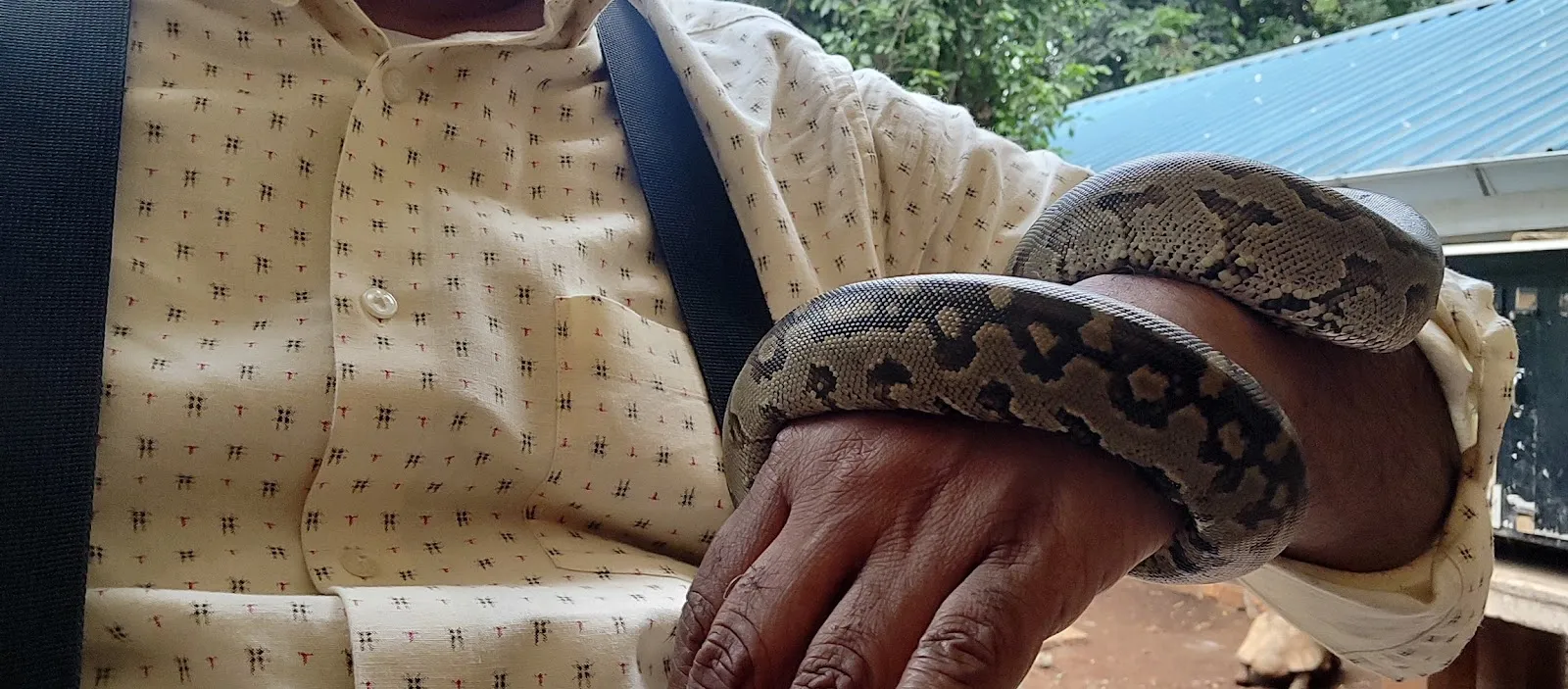
The Snake Park sits next to the museum and has live snakes, an aquarium and turtles. A combined ticket covers the museum and the park. If you only want the galleries, ask at the desk about ticket options before you pay.

The botanical gardens surround the museum, and a nature trail runs through them. The trail is home to the largest python in Kenya. An outdoor amphitheater on the grounds has wide views toward the Ngong Hills.

A short history of the building

The museum began with specimens kept by a group of naturalists, who needed a place to store and preserve their collections. Those collections later moved to a larger building, and the current building dates from 1929.

The museum is the flagship of the National Museums of Kenya, a network of museums and sites across the country. Among its displays is the tusker Ahmed, who was kept under round-the-clock guard by armed rangers during the poaching crisis of the 1980s.

Planning the visit

The museum is on Kipande Road, known locally as Museum Hill, a short drive from downtown Nairobi. Parking is on site, and there is also a free parking lot.

The entrance, elevator, restroom and parking lot are wheelchair accessible. A changing table is available for babies. A restaurant with a terrace serves Kenyan food, a good stop after the galleries.

FAQ

How long do you need at the National Museum of Kenya?

Plan two to three hours. Some visitors spend a full morning or afternoon there.

Is the museum wheelchair accessible?

Yes. The entrance, elevator, restroom and parking lot are wheelchair accessible.

Is there parking?

Yes. There is on-site parking and a free parking lot.

Can I visit the Snake Park too?

Yes. The Snake Park is next to the museum and can be visited on a combined ticket.

Is the museum good for children?

Yes. It is family-friendly, and it runs workshops for children on pottery and beadwork.
Autres incontournables à Nairobi

Tout explorer