Reise planen
Sprache: Deutsch
ReiseplanerPlane deine Reise auf einer Karte

Top-Reiseziele

EnglishDeutschFrançaisEspañolPortuguêsPortuguês (BR)Italiano
Reisehinweis · KeniaNairobi liegt in oder nahe einem Gebiet, für das Regierungen von allen außer unbedingt notwendigen Reisen abraten: Eastleigh (Nairobi), Kibera (Nairobi), Mathare (Nairobi), Pangani (Nairobi).Die Empfehlung hängt von Ihrem Reisepass ab. Lesen Sie vor der Buchung die Hinweise Ihrer eigenen Regierung.Offizielle Hinweise
Gebiete mit Warnungen
  • Grenze zu Äthiopien · alle Reisen vermeiden · Spanien, Frankreich, Neuseeland
  • Grenze zum Südsudan · alle Reisen vermeiden · Spanien, Frankreich, Neuseeland
  • Küstengebiete nördlich von Malindi · alle Reisen vermeiden · Kanada, Frankreich, Neuseeland, USA
  • Kreis Garissa · alle Reisen vermeiden · Kanada, Deutschland, Spanien, Italien, Neuseeland, USA
  • Kreis Lamu · alle Reisen vermeiden · Spanien, Neuseeland, USA
  • Kreis Lamu ohne Lamu-Insel und Manda-Insel · alle Reisen vermeiden · Kanada, Deutschland, Frankreich, Vereinigtes Königreich
  • Kreis Mandera · alle Reisen vermeiden · Kanada, Deutschland, Spanien, Italien, Neuseeland, Vereinigtes Königreich, USA
  • Kreis Tana River (ohne Tsavo-Nationalpark) · alle Reisen vermeiden · Italien, USA
  • Kreis Wajir · alle Reisen vermeiden · Kanada, Deutschland, Spanien, Italien, Neuseeland, USA
  • Kreis Baringo · nicht notwendige Reisen vermeiden · Deutschland, Italien
  • Küste zwischen Tana River und Galana River · nicht notwendige Reisen vermeiden · Spanien, Vereinigtes Königreich
  • Küstengebiete des Countys Tana River · nicht notwendige Reisen vermeiden · Kanada, Neuseeland
  • Eastleigh (Nairobi) · nicht notwendige Reisen vermeiden · Spanien, Frankreich, Italien, Neuseeland, USA
  • Kibera (Nairobi) · nicht notwendige Reisen vermeiden · Kanada, Spanien, Frankreich, Neuseeland, USA
  • Mathare (Nairobi) · nicht notwendige Reisen vermeiden · Spanien, Frankreich
  • Nördlicher Teil des Countys Tana River · nicht notwendige Reisen vermeiden · Deutschland, Vereinigtes Königreich
  • Pangani (Nairobi) · nicht notwendige Reisen vermeiden · Frankreich, Italien
  • Turkana County · nicht notwendige Reisen vermeiden · Deutschland, Spanien
  • Bezirk West Pokot · nicht notwendige Reisen vermeiden · Deutschland, Italien, USA

Außerdem von einer Regierung genannt: Gebiete an der Grenze zu Somalia (Neuseeland), Kreis Garissa ohne Garissa-Stadt, Lagdera und Teile von Balambala (Vereinigtes Königreich), Kreis Kilifi nördlich der Straße C103 (USA), Seegebiet bis 72° O und 15° S (Frankreich), Kreis Marsabit innerhalb von 110 km zu den Grenzen zum Südsudan und zu Äthiopien (Kanada), Kreis Marsabit innerhalb von 50 km zur äthiopischen Grenze (USA), Grenzstreifen zu Somalia, bis zu 100 km ins kenianische Inland (Frankreich), Wahlkreise Tarbaj und Wajir East (Vereinigtes Königreich), Kreis Turkana innerhalb von 110 km zu den Grenzen zum Südsudan und zu Äthiopien (Kanada), Kreis Turkana innerhalb von 50 km zur äthiopischen Grenze (USA), Kreis Wajir innerhalb von 60 km zur somalischen Grenze (Vereinigtes Königreich), Westlicher Kreis Turkana (USA), Aride und abgelegene Regionen Nordkenias (Italien), Unterkreise Mukutani, Muchongoi, Bartabwa, Tiaty East und Tiaty West (Spanien), Elgeyo-Marakwet County (Italien), Unterbezirke Marakwet East und Marakwet West in Elgeyo-Marakwet (Spanien), Garissa (Vereinigtes Königreich), Laikipia County (Italien), Unterbezirke Olmoran, Ng'arua und Mukogodo (Laikipia) (Spanien), Insel Lamu (Deutschland), Insel Manda (Deutschland), Marsabit County (Spanien), Mombasa (Italien), Randgebiete des Countys Isiolo (Frankreich), Randgebiete des Countys Turkana (Frankreich), Randgebiete des Countys West Pokot (Frankreich), Randgebiete des Countys Marsabit (Frankreich), Landrouten zwischen Lamu und Malindi (Italien), Samburu County: Gebiete Loroki und Kirisia (Spanien), Unterbezirke Turkana Süd, Turkana Ost und Loima (Spanien), Westlich des Countys Garissa (Frankreich), Westlich des Countys Mandera (Frankreich), Westlich des Bezirks Wajir (Frankreich), Unterbezirke Pokot North und Sigor (West Pokot) (Spanien), Innerhalb von 75 km zur kenianisch-somalischen Grenze (Irland)

RegierungHinweiseAktualisiertHinweise lesen
Vereinigtes Königreich (FCDO)No advice against the whole country (regional advisories)–Hinweise lesen
Vereinigte Staaten (State Dept)Reconsider travel19. Okt. 2026Hinweise lesen
Kanada (Global Affairs)Exercise a high degree of caution (regional advisories)–Hinweise lesen
Deutschland (Auswärtiges Amt)Increased caution nationwide; partial travel warnings for specific areas (regional advisories)19. Okt. 2026Hinweise lesen
Neuseeland (SafeTravel)Exercise increased caution (regional advisories)–Hinweise lesen
Irland (Außenministerium)High Degree of Caution (regional advisories)–Hinweise lesen
Frankreich (Ministerium für Europa und Auswärtige Angelegenheiten)Vigilance renforcée (reste du territoire) (regional advisories)–Hinweise lesen

Täglich anhand der veröffentlichten Hinweise der Regierungen geprüft; zuletzt geprüft am 2. Nov. 2026.RoamLedger fasst offizielle Hinweise zusammen; es handelt sich nicht um Empfehlungen einer Regierung.

National Museum of Kenya
Museum

National Museum of Kenya

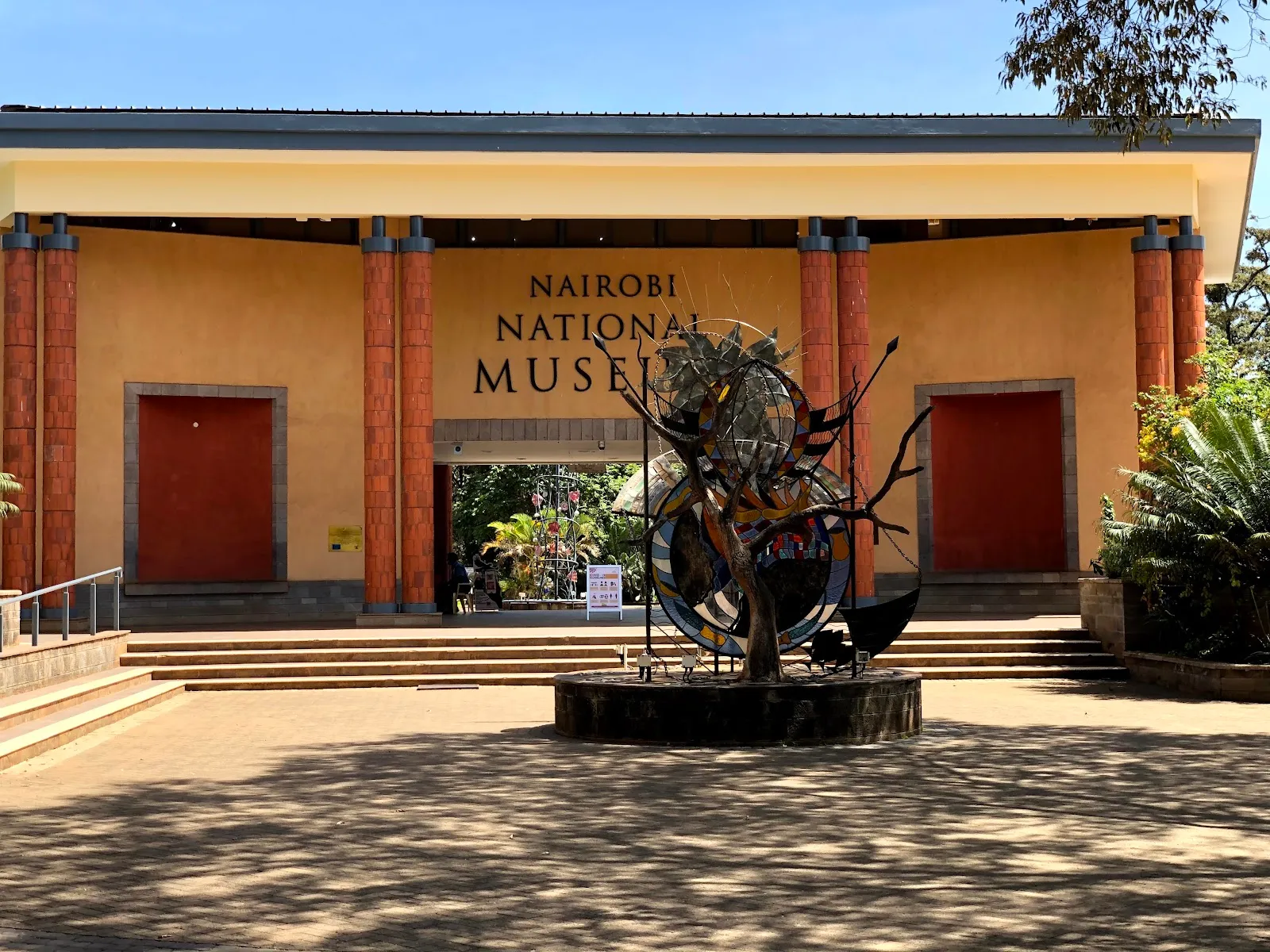
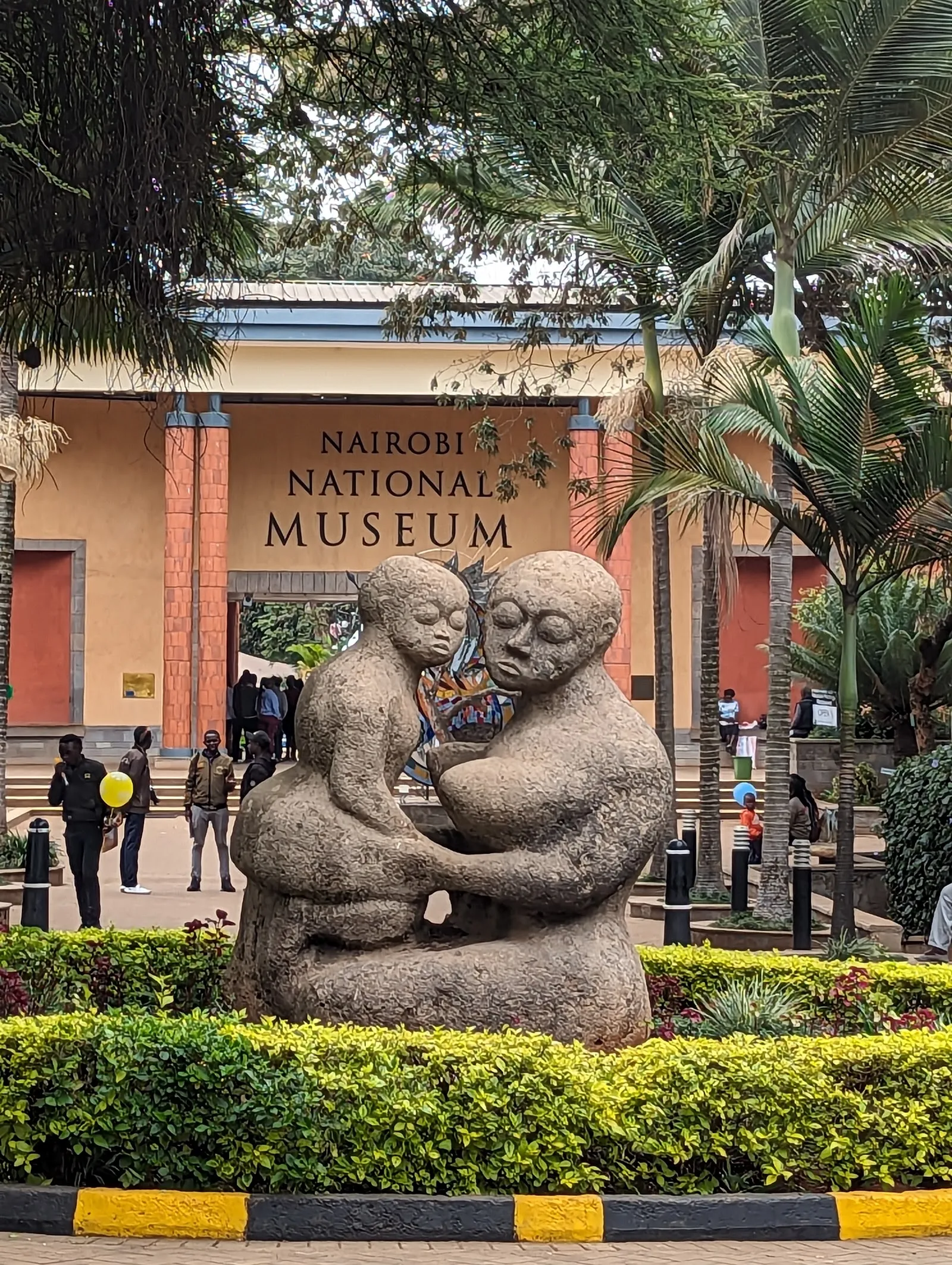
The National Museum of Kenya sits on Museum Hill, a short drive from downtown Nairobi, and covers the country's history from early human fossils to contemporary art.

The National Museum of Kenya sits on Museum Hill, a short drive from downtown Nairobi, and covers the country's history from early human fossils to contemporary art. The early man section holds fossils found in Kenya, and the Hall of Mammals shows giraffes, elephants, zebras and okapi in dioramas. Set aside time for the botanical gardens and the Snake Park next door, which can be included on a combined ticket. Plan a morning or afternoon.

Early human fossils
National Museum of Kenya

The early man section is the museum's best-known draw. Richard and Mary Leakey's work near Lake Turkana in the 1960s led to the discovery of the skull and bones of Homo habilis, a species believed to be an early ancestor of humans. Their findings helped establish the Rift Valley as a possible Cradle of Humankind, although South Africa's Sterkfontein Caves and Ethiopia's Hadar region also claim the title.

The fossils on display include pieces found in Kenya, such as a proconsul fossil dated to 18 million years ago. That find encouraged archaeologists to consider Kenya as a possible birthplace of humankind. Homo erectus remains are displayed together in one place.

Mammals, birds and dioramas
National Museum of Kenya

The Great Hall of Mammals has dioramas of giraffes, elephants, zebras and okapi, and most of the country's mammal species are arranged along the walls. The museum also holds more than 900 stuffed birds and mammals, and a bird gallery is among its highlights.

Some of the taxidermy is old and needs care. It is best seen as a record of the collection rather than a polished display.

Ethnic displays cover Kenya's many communities, with tribal artifacts from across the country, and the museum holds some of the best-preserved examples in the country. A permanent exhibition focuses on Kenya's heritage and communities.

The Geology Gallery holds a large collection of rocks and minerals, with displays on tectonic plates and the life cycle of a volcano. The art collection includes a display of work by Joy Adamson, the author of Born Free, and an artist-in-residence program.

The Louis Leakey auditorium hosts music, visual arts and film shows, along with art workshops.

The Snake Park and the gardens

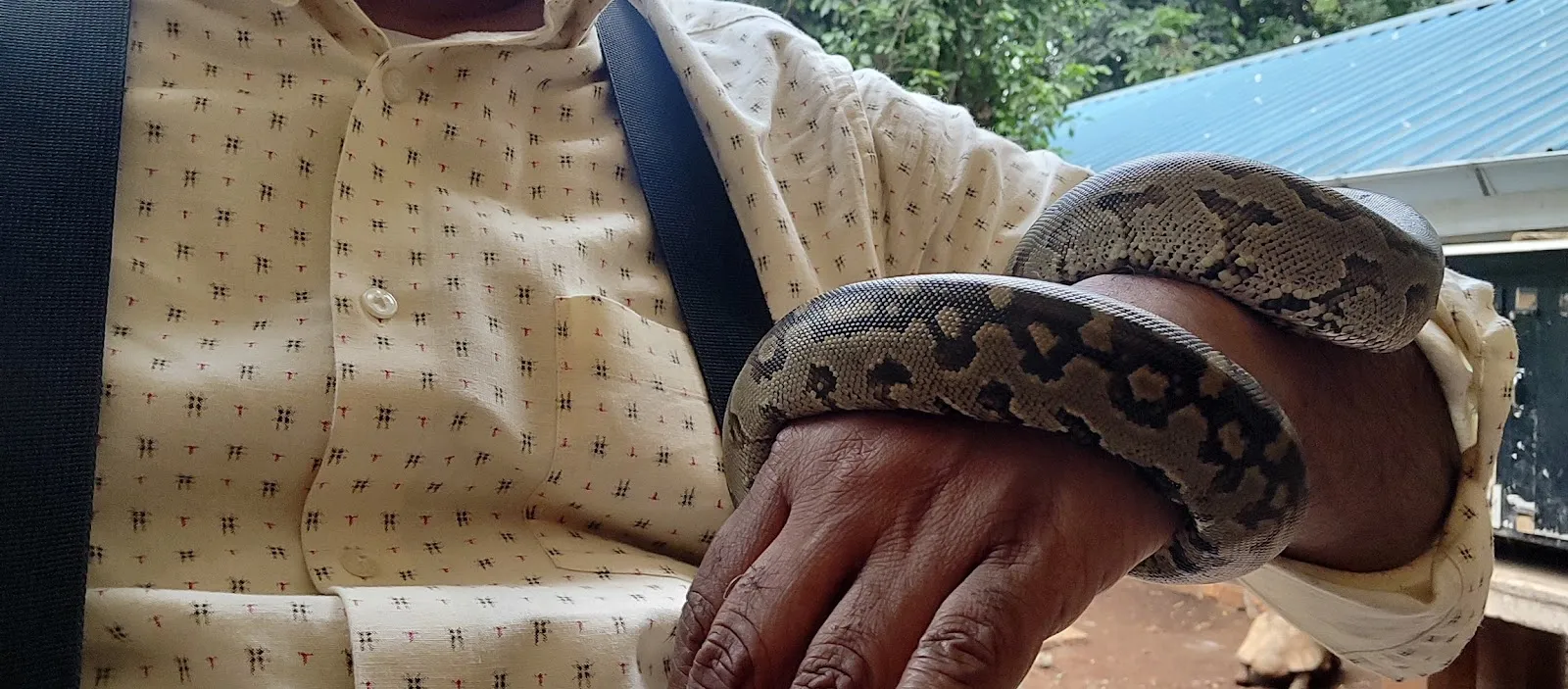
The Snake Park sits next to the museum and has live snakes, an aquarium and turtles. A combined ticket covers the museum and the park. If you only want the galleries, ask at the desk about ticket options before you pay.

The botanical gardens surround the museum, and a nature trail runs through them. The trail is home to the largest python in Kenya. An outdoor amphitheater on the grounds has wide views toward the Ngong Hills.

A short history of the building

The museum began with specimens kept by a group of naturalists, who needed a place to store and preserve their collections. Those collections later moved to a larger building, and the current building dates from 1929.

The museum is the flagship of the National Museums of Kenya, a network of museums and sites across the country. Among its displays is the tusker Ahmed, who was kept under round-the-clock guard by armed rangers during the poaching crisis of the 1980s.

Planning the visit

The museum is on Kipande Road, known locally as Museum Hill, a short drive from downtown Nairobi. Parking is on site, and there is also a free parking lot.

The entrance, elevator, restroom and parking lot are wheelchair accessible. A changing table is available for babies. A restaurant with a terrace serves Kenyan food, a good stop after the galleries.

Häufige Fragen

How long do you need at the National Museum of Kenya?

Plan two to three hours. Some visitors spend a full morning or afternoon there.

Is the museum wheelchair accessible?

Yes. The entrance, elevator, restroom and parking lot are wheelchair accessible.

Is there parking?

Yes. There is on-site parking and a free parking lot.

Can I visit the Snake Park too?

Yes. The Snake Park is next to the museum and can be visited on a combined ticket.

Is the museum good for children?

Yes. It is family-friendly, and it runs workshops for children on pottery and beadwork.
Weitere Highlights in Nairobi

Alle entdecken