
The House of Menander is a large, richly decorated Roman home in Pompeii, named for a portrait of the Greek playwright in its portico. Its rooms and courtyards give a close look at the residence of a wealthy family, with frescoes drawing on the Iliad, the Odyssey and Greek mythology. Look for the atrium’s rainwater pool, the household shrine and the peristyle courtyard. The house also has a small thermal area and a basement thought to have been used as a cellar.
A wealthy Pompeian residence
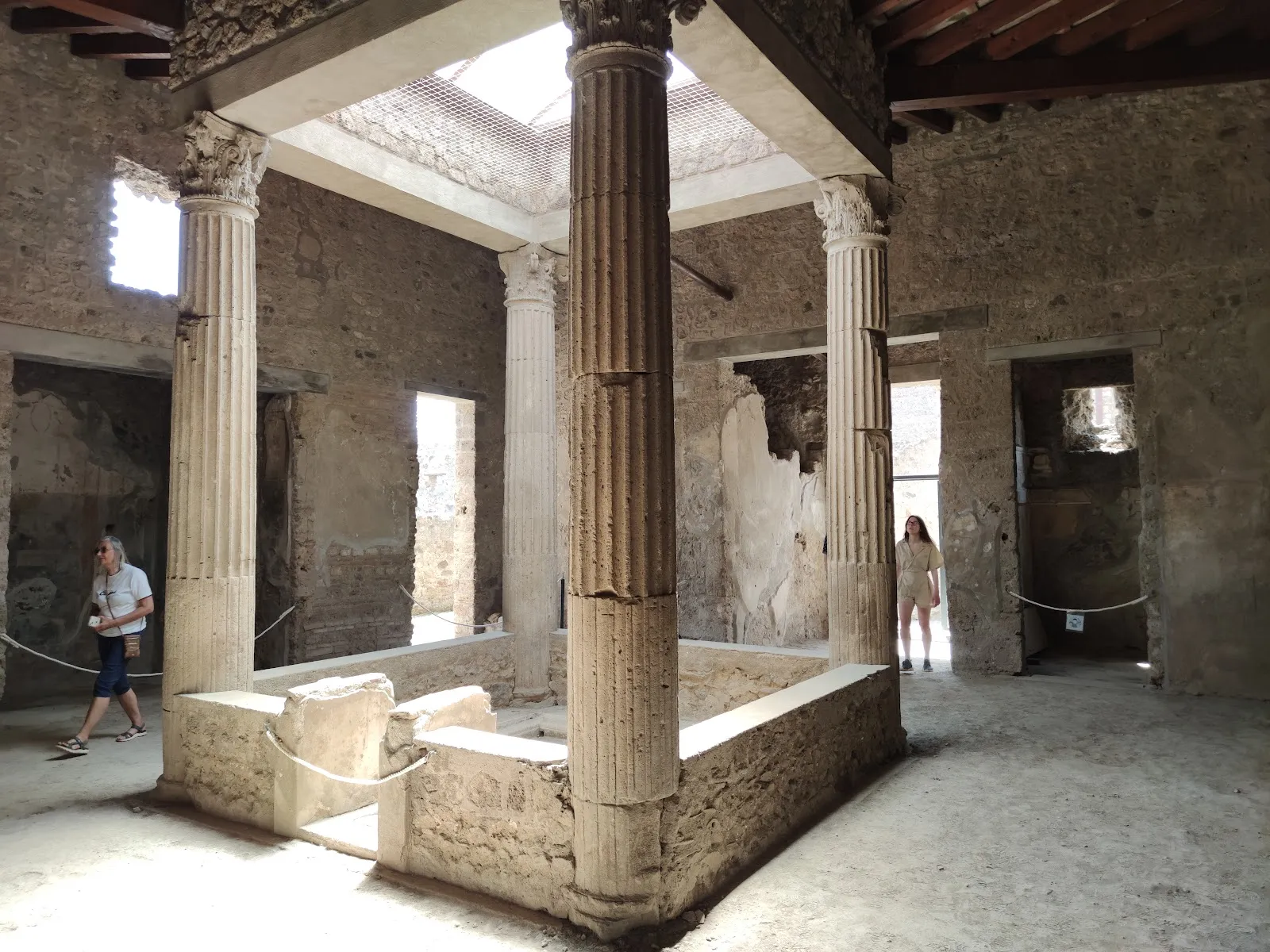
The House of Menander covers about 1,800 square metres and is among the largest and most complex private homes in Pompeii. Its size, decorated rooms and courtyards reflect the wealth of the family who lived there. The house stood in a part of the city associated with business, and its layout included spaces beyond the main living rooms, such as rooms for servants, storage and animals.
The name comes from a portrait of Menander, an Athenian playwright, in the portico. The identification is not certain: another interpretation is that the image may represent the house’s original owner. Either way, the portrait gives the residence its familiar name and is one of the details to look for as you move through the complex.
Frescoes, mosaics and courtyards
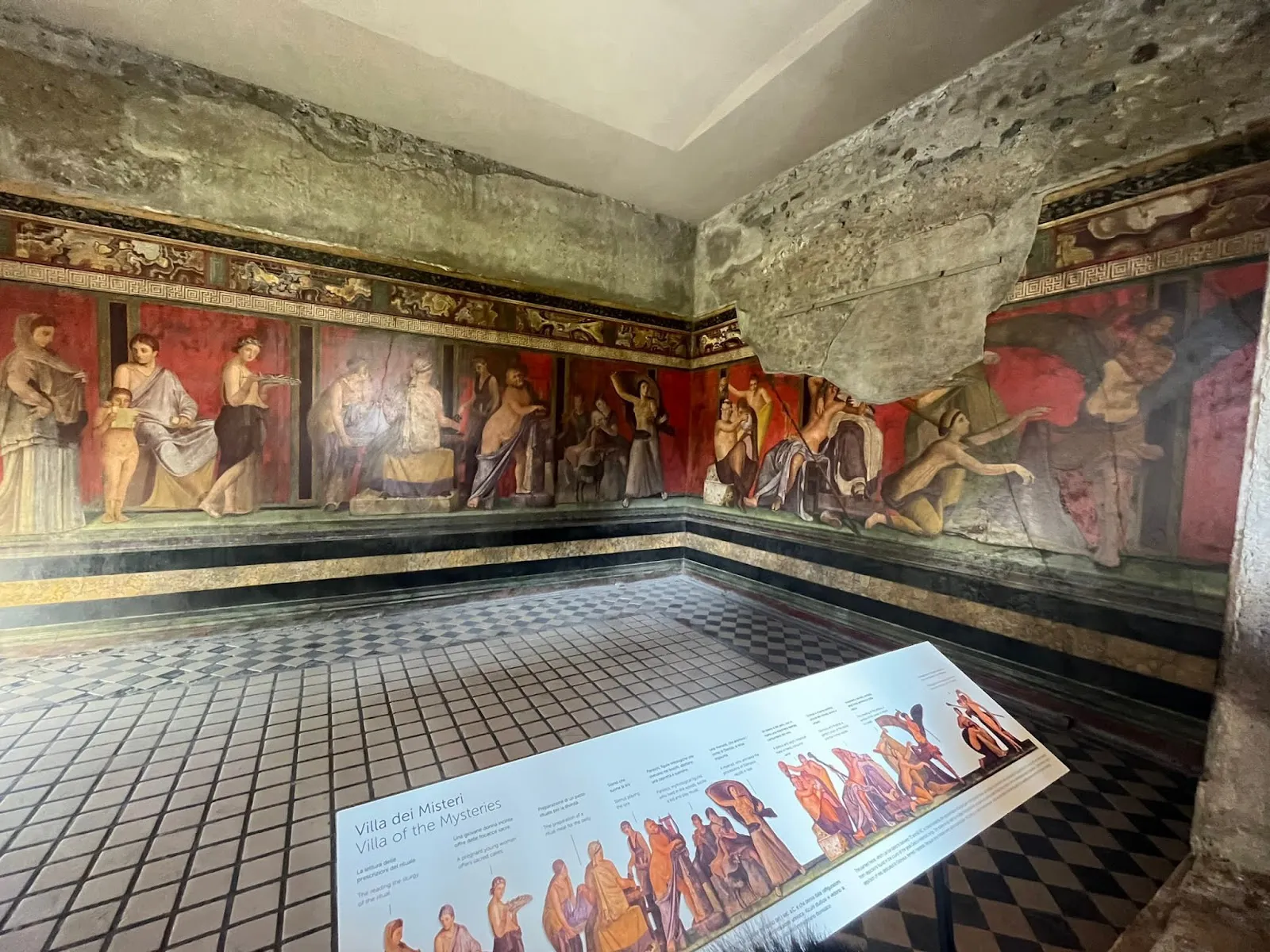
Paintings from Greek stories are among the house’s most notable features. Frescoes show episodes associated with the Trojan War and the Iliad and Odyssey, including Cassandra warning the Trojans against bringing the wooden horse inside the city. These scenes reflect the place Greek literature held in Roman culture. Look around the atrium and interior rooms for further painted decoration, as well as floor mosaics.
The atrium’s impluvium, a shallow pool designed to collect rainwater from the roof, remains in place. A lararium, the small household shrine for guardian spirits, can also be seen in the courtyard. Beyond the atrium, the peristyle courtyard is enclosed by columns; its garden has been landscaped as part of restoration work at Pompeii. The house’s rhodium-shaped peristyle is another feature of its distinctive plan.
Further rooms and features
The residence included a private thermal area, with a basement beneath it that may have served as a cellar. These spaces add to the picture of a home designed for a high-ranking household, with areas for daily domestic use as well as formal rooms and gardens.
A small display of skeletal remains has been noted within the house. Pompeii’s archaeological site also contains an old cart and storage jars, though their exact location within the complex is not specified here. The House of Menander is part of a much larger visit through Pompeii, so allow time to look at its details without treating the house as a standalone museum.
FAQ
Why is it called the House of Menander?
The name refers to a portrait of the Greek playwright Menander in the portico. Some accounts suggest the portrait may instead depict the original owner.
What are the main things to see inside?
Look for frescoes based on the Iliad and Odyssey, the atrium’s rainwater pool, the household shrine and the columned peristyle courtyard.
Is there a garden at the House of Menander?
Yes. A peristyle courtyard is enclosed by columns, and its garden has been landscaped as part of restoration work at Pompeii.
Is the House of Menander wheelchair accessible?
The entrance is listed as wheelchair accessible. The archaeological site has uneven terrain, so comfortable shoes are advised for walking.


