
Casa dei Vettii is a large Roman house on Vicolo dei Vetti in Pompeii, associated with the wealthy merchants Aulus Vettius Restitutus and Aulus Vettius Conviva. Its rooms open onto an atrium and a peristyle garden, with frescoes of mythological figures, landscapes and scenes of daily life. Look closely at the decorated walls, including the Cupid frieze, and the garden, which helps show how architecture, art and outdoor space came together in a prosperous Pompeian home.
A home built from trade wealth
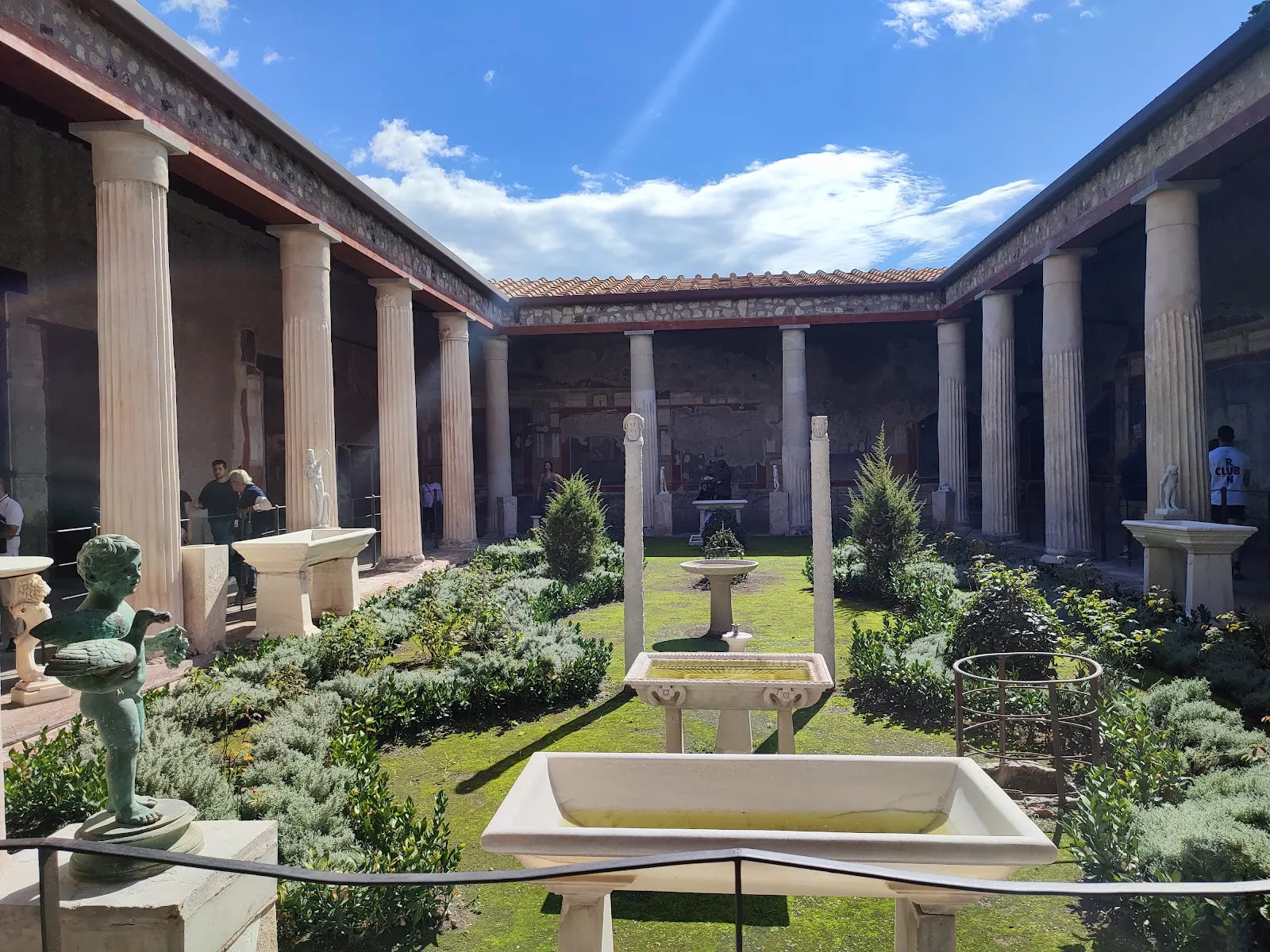
Casa dei Vettii is named for Aulus Vettius Restitutus and Aulus Vettius Conviva, two wealthy merchants associated with the house. They were freedmen, formerly enslaved people who had made their fortunes through trade. Their home gives a view of prosperity in Pompeii beyond the traditional aristocracy.
The residence dates to the first century BC and covers more than 1,300 square metres. Its entrance, atrium, garden, dining room and other chambers form a sequence of spaces that combined domestic life with display. The layout and decoration offer a way to read the house as both a home and a statement of its owners’ success.
Rooms, atrium and garden
The entrance leads into an atrium with a central impluvium, a basin that collected rainwater. Beyond it, a peristyle garden is framed by rooms and colonnades. The garden is one of the house’s memorable spaces, bringing planted outdoor areas into the home’s arrangement.
The house also contains a triclinium, or dining room, alongside several other decorated rooms. Kitchen utensils have been noted among the finds, a reminder that the residence was a working household as well as an elaborately finished one. Move from room to room at an unhurried pace to take in the different paintings and architectural details.
Frescoes and decorative details
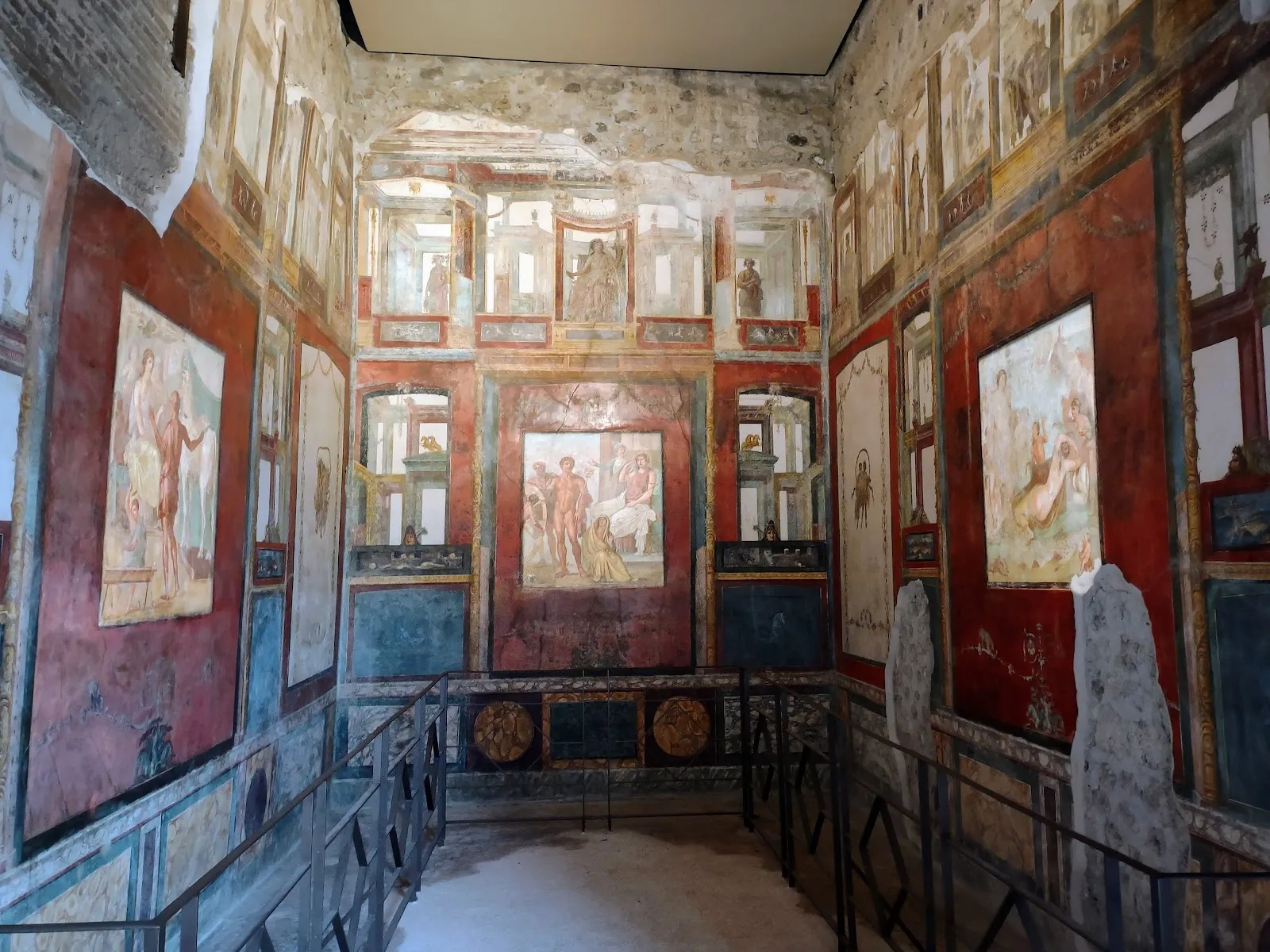
Painted walls are a major reason to visit. Their subjects include mythological figures, landscapes and scenes of daily life. The Cupid Rooms contain a frieze about 15 centimetres high, showing cupids preparing for a banquet. Another well-known detail is a fresco associated with Priapus.
Look across the rooms for the way painting and ornament vary from one space to another. Together with sculpture, the frescoes give the house much of its character and help convey the scale of decoration in a wealthy Pompeian residence. A guide can add context to the imagery and the house’s history; if you visit independently, allow time to examine the walls closely.
FAQ
Who lived in Casa dei Vettii?
The house is associated with Aulus Vettius Restitutus and Aulus Vettius Conviva, wealthy merchants who were freedmen.
What can you see inside Casa dei Vettii?
The house has an atrium with a central impluvium, a peristyle garden, a triclinium and decorated rooms. Frescoes include mythological figures, landscapes, daily-life scenes and a frieze of cupids preparing for a banquet.
When is a good time to visit Casa dei Vettii?
Early morning or late afternoon is suggested for avoiding crowds.
Is Casa dei Vettii wheelchair accessible?
The site lists an accessible entrance and accessible parking.


