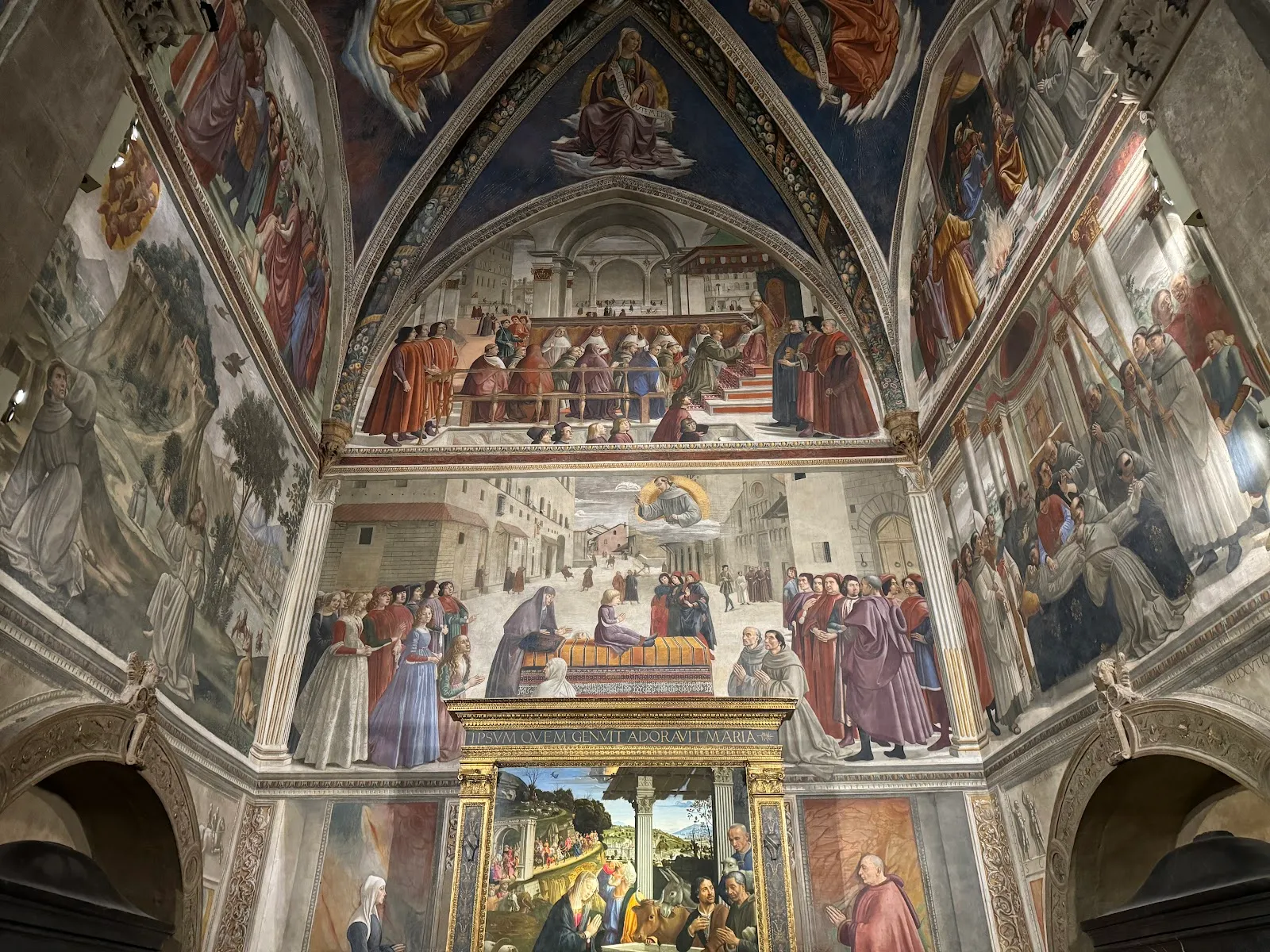
Piazza del Duomo is Florence’s central square, home to the Cathedral of Santa Maria del Fiore, the Baptistery of San Giovanni and Giotto’s Campanile. The cathedral’s pink, white and green marble facade and Brunelleschi’s red-tiled dome draw the eye from across the square. Look closely at the buildings’ stonework, then step inside the cathedral or plan a climb up the dome or bell tower. Cafes and street performers add activity around the monuments, though the square can be crowded.
The cathedral and its dome
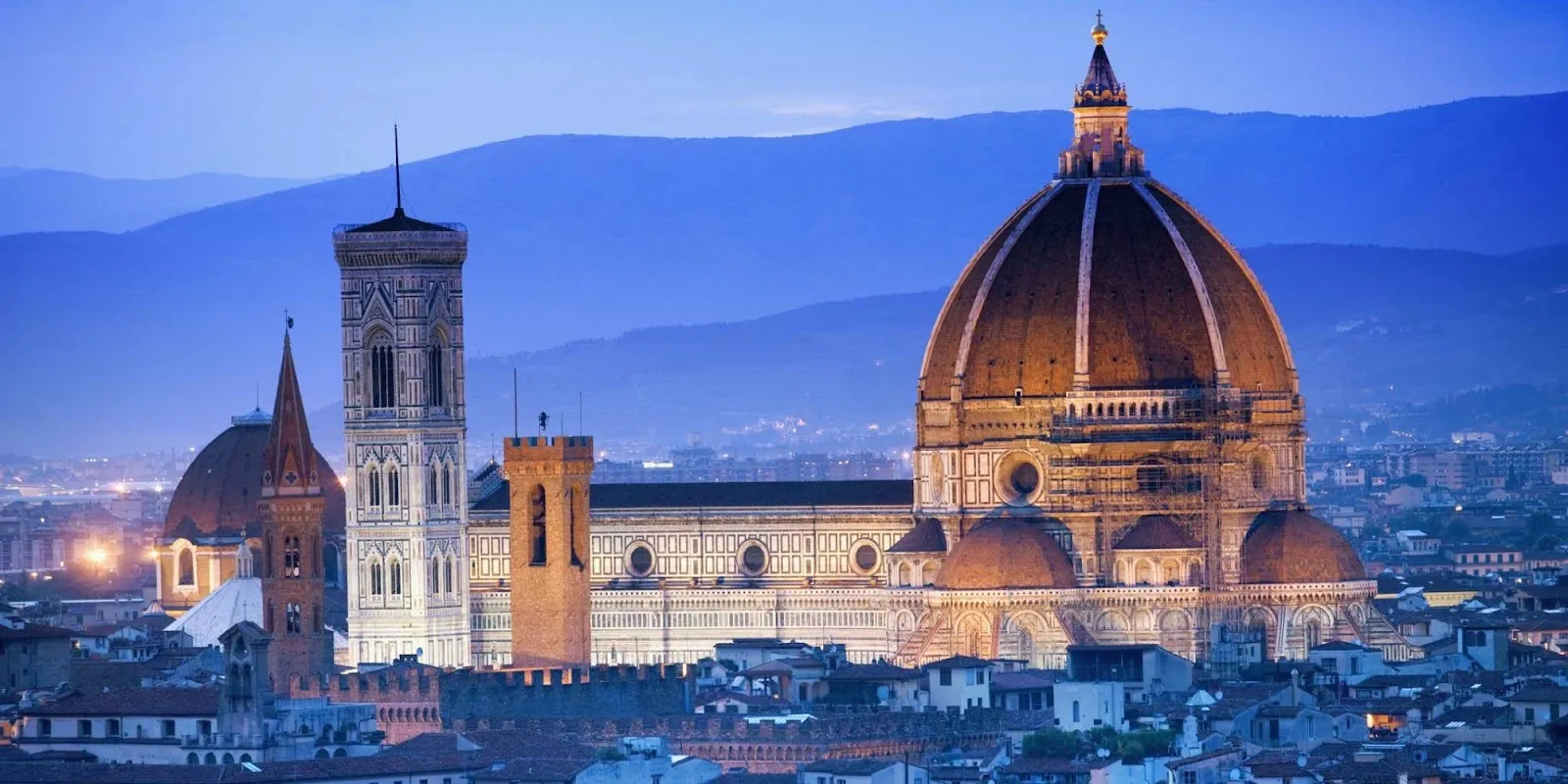
Work on the Cathedral of Santa Maria del Fiore began in 1296 under the architect Arnolfo di Cambio. The building took more than a century to complete. Filippo Brunelleschi’s dome was finished in 1436, giving the cathedral its distinctive red-tiled crown and a place among the defining works of Renaissance architecture.
The dome is built as two interconnecting shells. Its scale and construction made it a major architectural achievement, and it remains the most recognisable feature of Florence’s skyline. From the square, look up at its profile above the cathedral’s multicoloured marble facade. Inside, the Last Judgment fresco is painted in the dome’s interior. Visitors who climb the dome pass between its shells on the way to the top, where there are views across Florence. The climb involves more than 450 steps.
The buildings around the square
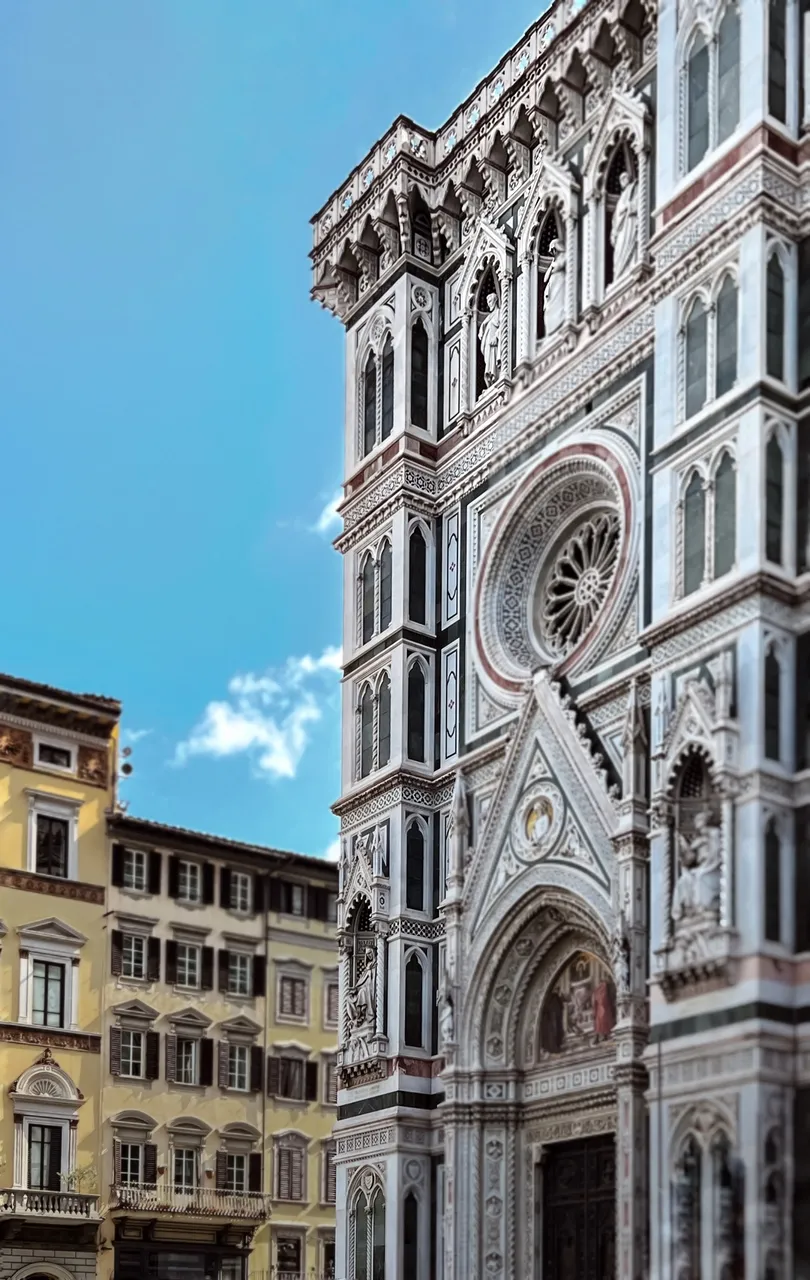
The cathedral is part of a group of monuments that also includes the Baptistery of San Giovanni and Giotto’s Campanile. The bell tower stands beside the cathedral, while the Baptistery is directly in front of it. Their close arrangement makes it easy to compare the buildings’ forms and decoration as you walk around the piazza.
The Baptistery is an octagonal building in the Florentine Romanesque style, constructed in the 11th and 12th centuries. Its doors include Lorenzo Ghiberti’s gilded bronze panels, known as the Gates of Paradise. The panels depict scenes from the Old Testament. Giotto’s Campanile is the square’s other defining landmark; visitors can climb it for a view over the city.
Planning a visit inside
The piazza itself is open to walk through, while access to the cathedral complex’s other sites is ticketed. The cathedral has free entry, but the dome, bell tower, Baptistery and museum require tickets. Advance booking is recommended if you intend to visit the dome or climb a tower. Multi-site tickets are another option if you want to see several parts of the complex.
The cathedral’s interior has large columns, open spaces and artwork, including the fresco beneath the dome. The Opera del Duomo Museum covers the making of the dome and the history of the complex. Visiting the museum before a climb can give context to Brunelleschi’s construction. Allow time to move between the separate sites, and be prepared for stairs if you choose either climb.
A busy square in central Florence
Piazza del Duomo is a useful starting point for exploring Florence’s historic centre. The monuments fill much of the view at street level, and the square’s popularity can make it difficult to see the whole group at once. Early morning and later evening are quieter times to take in the architecture.
Street performers and cafes bring activity to the surrounding streets. If you want a broader view of the cathedral and nearby buildings, walk around the piazza and look from different angles. For a more focused visit, choose in advance which parts of the complex matter most to you: the cathedral interior, the dome climb, the Baptistery, the bell tower or the museum.
FAQ
Is Piazza del Duomo free to visit?
Walking around the square is free. The cathedral has free entry, while the dome, bell tower, Baptistery and museum require tickets.
Should I book tickets for the Duomo complex in advance?
Advance booking is recommended if you plan to enter ticketed sites or climb the dome or bell tower.
How many steps are there to the top of Brunelleschi’s dome?
The climb involves more than 450 steps.
When is Piazza del Duomo quieter?
Early morning and later evening are quieter times to visit.